
GuideBallistic missile defense flight phasesRevision 1Updated
Ballistic Missile Defense Flight Phases: Boost, Midcourse, and Terminal
Intercepting a ballistic missile requires striking a hypersonic target during its boost, midcourse, or terminal flight phase. Each segment presents unique physical vulnerabilities and severe technical challenges for defense architectures.
By Layla Zaher

Share this story
In short
- Ballistic missiles travel through three distinct flight phases: boost, midcourse, and terminal.
- The boost phase offers a large, vulnerable target but provides an interception window of less than five minutes.
- The midcourse phase lasts up to 20 minutes for ICBMs, making it the primary focus of national defense systems despite the challenge of decoys.
Ballistic missile defense relies on a highly complex, globally distributed architecture of sensors and interceptors designed to strike targets traveling at extreme velocities. By seamlessly combining space-based early warning systems with ground-based radars and kinetic kill vehicles, modern defense networks attempt to destroy incoming threats before they can reach their intended targets.[1]
A ballistic missile follows a predictable trajectory governed by gravity and momentum, fundamentally differing from cruise missiles that are powered throughout their entire flight. The flight path is strictly divided into three distinct segments: the boost phase, the midcourse phase, and the terminal phase.[10]
Each phase presents unique physical characteristics, vulnerabilities, and severe technical challenges for interception. Defending against an intercontinental ballistic missile (ICBM) requires a layered approach, as a single defensive system cannot reliably cover the entire flight profile of a weapon traveling at 15,000 miles per hour.[6]
The stakes of interception are exceptionally high, as these delivery systems are designed to carry nuclear, biological, or chemical payloads across vast distances. Since the end of the Cold War, the proliferation of sophisticated missile technology has driven continuous investment in multi-layered defense architectures worldwide.[6]
The Physics of Ballistic Trajectories
A ballistic missile is powered only during its initial ascent, after which it coasts unpowered through space on a sub-orbital trajectory. This parabolic arc relies entirely on the immense inertia generated during the launch to carry the payload to its final destination.[10]
For intercontinental flights, the missile exits the Earth's atmosphere entirely, reaching altitudes as high as 1,200 kilometers during the midcourse phase. This exo-atmospheric journey allows the weapon to traverse thousands of miles without the drag of atmospheric friction slowing it down.[10]
The range of the missile dictates the duration and altitude of its flight phases. Short-range ballistic missiles (SRBMs) may travel less than 1,000 kilometers and barely reach the fringes of space, while ICBMs cover global distances and spend the majority of their flight time in the vacuum of space.[10]
Because the missile is unguided after the boost phase, its path is highly predictable to early-warning radars. However, this predictability is offset by the sheer velocity of the weapon, which re-enters the atmosphere at hypersonic speeds ranging from Mach 8 to Mach 20.[10]
To counter these threats, the United States operates a globally deployed ballistic missile defense system that integrates multiple layers of sensors and interceptors. As Keith L. Englander, a former technical director for the Missile Defense Agency, noted in 2017, the architecture is "layered because it offers several opportunities" to destroy warheads across all flight stages.[2]
The Boost Phase: High Visibility, Short Window
The boost phase is the initial segment of flight, lasting from launch until the rocket engines exhaust their fuel. During this period, the missile is accelerating rapidly against the Earth's gravity, making it the slowest and most vulnerable it will be during its entire journey.[6]
This phase typically lasts between one and five minutes, depending on the size of the missile and the type of propellant used. Solid-propellant rockets burn out in roughly three to four minutes, reaching burnout speeds of 7 kilometers per second at altitudes of 150 to 200 kilometers.[8]
The intense heat generated by the rocket motors creates a massive infrared signature that is easily detected by space-based early warning systems. Satellites such as the Space-Based Infrared System (SBIRS) and the Defense Support Program (DSP) monitor known launch areas and can detect a launch almost instantaneously.[11]
Intercepting a missile during the boost phase is often considered the ideal solution for missile defense. A successful strike destroys the missile while it is still intact, preventing the deployment of multiple warheads or countermeasures, and ensuring that any debris falls short of the intended target.[8]
Despite these advantages, boost-phase intercept is exceptionally difficult to execute due to the severely compressed timeline. Because the window of opportunity is less than 300 seconds, interceptors must be positioned geographically close to the launch site and possess extreme acceleration capabilities.[12]
As physicist Richard L. Garwin observed in a 2000 analysis, an interceptor would need to engage the target "within the 250-second burn time of an ICBM." This geographic constraint means that terrestrial interceptors would often need to be stationed within hostile territory or immediately off the coast of an adversary.[13]
To overcome these geographic limitations, defense planners have explored airborne and space-based concepts. In 2017, the Missile Defense Agency solicited proposals for a high-altitude, long-endurance unmanned aircraft capable of carrying a high-energy laser to destroy boosting missiles from 63,000 feet.[5]
However, airborne platforms operating near enemy airspace face severe survivability challenges against modern anti-access and area-denial networks. Consequently, boost-phase defense remains a highly constrained capability, viable primarily against theater-level threats or in scenarios permitting permissive overflight.[12]
The Midcourse Phase: The Longest Engagement
Once the booster engines shut down and separate from the payload, the missile enters the midcourse phase. This is the longest segment of the flight, lasting up to 20 minutes for an ICBM, and takes place entirely outside the Earth's atmosphere.[6]
During this exo-atmospheric coast, the missile's payload—often referred to as the "bus"—can maneuver to release multiple independently targetable reentry vehicles (MIRVs). It also deploys penetration aids, such as radar-reflecting balloons and infrared decoys, designed to confuse defensive sensors.[8]
The deployment of these countermeasures creates a complex target cloud that can stretch for miles in the vacuum of space. Because there is no atmospheric drag to separate heavy warheads from lightweight decoys, all objects in the cloud travel at the exact same speed and follow similar trajectories.[8]
Discriminating the actual lethal warhead from the surrounding noise is the primary technical challenge of midcourse defense. Ground-based radars, such as the Long Range Discrimination Radar in Alaska, use advanced gallium nitride technology to track these objects and identify the true threat.[1]
The United States relies primarily on the Ground-Based Midcourse Defense (GMD) system to protect the homeland during this phase. The system utilizes Ground-Based Interceptors housed in silos in Alaska and California, which launch Exoatmospheric Kill Vehicles to physically collide with the incoming warheads.[4]
The Aegis Ballistic Missile Defense system, utilizing the Standard Missile-3 (SM-3), provides an additional layer of midcourse protection from naval vessels and ashore installations. These interceptors are designed to engage targets in the vacuum of space, relying on kinetic energy rather than explosive warheads to destroy the threat.[11]
Because the midcourse phase offers the longest time window, it allows defensive networks to track the target, calculate an intercept trajectory, and launch multiple interceptors if the first attempt fails. This "shoot-look-shoot" doctrine is critical for maximizing the probability of a successful kill against a complex threat.[6]
However, the vast distances involved mean that midcourse interceptors must cover thousands of miles to reach their targets. The GMD system's interceptors are essentially large rockets themselves, requiring sophisticated command and control networks to guide them to a precise point in space.[4]
The Terminal Phase: The Final Defense Layer
The terminal phase begins when the warhead re-enters the Earth's atmosphere and plunges toward its target. This is the shortest and most intense phase of the flight, often lasting less than a minute before impact.[11]
As the warhead descends, it encounters extreme atmospheric friction, generating intense heat and decelerating slightly. This atmospheric drag provides a crucial advantage for defenders, as it strips away lightweight decoys and balloons, revealing the heavier, lethal warhead to tracking radars.[8]
Despite the improved discrimination, terminal interception is incredibly demanding due to the hypersonic speeds involved. Warheads can re-enter the atmosphere at speeds between Mach 8 and Mach 20, leaving defensive systems with only seconds to detect, track, and engage the target.[10]
The Terminal High Altitude Area Defense (THAAD) system is the primary U.S. capability for engaging threats in this final stage. THAAD is a highly mobile, truck-deployed system that uses kinetic energy to destroy short- and medium-range ballistic missiles both inside and just outside the atmosphere.[7]
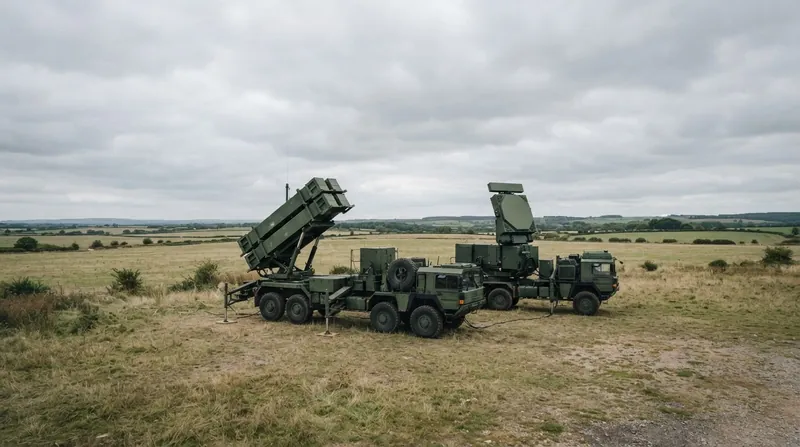
For lower-tier defense, the Patriot Advanced Capability-3 (PAC-3) system provides point defense for specific military installations and population centers. These systems are highly effective against tactical ballistic missiles but lack the range and altitude to engage intercontinental threats.[3]
Terminal defenses are inherently limited in their coverage area, acting as a final backstop rather than a comprehensive shield. Because interceptions occur relatively close to the ground, there is also a risk that debris or salvaged warheads could still cause damage to the defended area.[8]
Consequently, terminal systems are most effective when integrated into a broader, layered architecture. By the time a warhead reaches the terminal phase, midcourse interceptors should have already thinned out the incoming raid, leaving the terminal systems to handle any leakers that survived the earlier layers.[7]
Layered Defense Architecture
The modern ballistic missile defense architecture relies on the seamless integration of sensors, interceptors, and battle management systems across all domains. This network is designed to track a threat continuously from the moment of launch through its final descent.[1]
When a launch is detected by infrared satellites, the data is instantly transmitted to the Command, Control, Battle Management, and Communications (C2BMC) network. This central nervous system calculates the initial trajectory and cues forward-deployed radars, such as the Army's AN/TPY-2, to acquire the target.[7]
As the missile transitions from the boost phase to the midcourse phase, tracking responsibility is handed off to early warning radars and sea-based Aegis platforms. This continuous chain of custody ensures that the target is never lost, even as it deploys countermeasures in the vacuum of space.[7]
The architecture is heavily dependent on international cooperation and forward-based assets. The United States operates early warning radars in the United Kingdom, Greenland, and Japan, which are critical for monitoring specific threat corridors and providing the necessary geometry for midcourse interceptions.[3]
However, this reliance on fixed, land-based sensors creates vulnerabilities. If an adversary were to launch a missile from an unexpected location, such as a submarine off the coast, the existing sensor network might struggle to acquire the target in time to coordinate a midcourse intercept.[3]
To address these gaps, defense planners are increasingly looking to space-based sensor constellations. The Hypersonic and Ballistic Tracking Space Sensor program aims to deploy a proliferated network of satellites capable of providing persistent, global tracking of maneuvering targets throughout their entire flight.[1]
Future Interception Technologies
As adversaries develop more sophisticated countermeasures and hypersonic glide vehicles, missile defense technologies must evolve to maintain their effectiveness. The current paradigm of launching a single kill vehicle against a single target is becoming economically and operationally unsustainable against massed attacks.[1]
To address the growing complexity of midcourse countermeasures, the Department of Defense is developing the Next-Generation Interceptor (NGI). Designed to replace the aging fleet of Ground-Based Interceptors, the NGI will feature advanced discrimination sensors and multiple kill vehicles to handle complex target clouds more effectively.[11]
To address the growing complexity of midcourse countermeasures, the Department of Defense is developing the Next-Generation Interceptor (NGI).
Directed energy weapons also remain a long-term priority, particularly for boost-phase applications. While airborne lasers face significant operational hurdles, advances in solid-state laser technology could eventually provide a scalable, low-cost-per-shot capability to disable missiles before they leave the atmosphere.[5]
Space-based interceptors are periodically proposed as the ultimate solution for global missile defense, as they could theoretically strike missiles during the boost phase from low Earth orbit. However, the immense cost of deploying and maintaining such a constellation, along with the geopolitical implications of weaponizing space, have kept these concepts in the research phase.[13]
Ultimately, the physics of ballistic missile flight dictate that no single defensive layer can provide absolute security. The extreme speeds, vast distances, and compressed timelines require a defense-in-depth strategy that capitalizes on the unique vulnerabilities of each flight phase.[12]
As the threat environment grows more complex, the integration of artificial intelligence and machine learning into battle management systems will become increasingly critical. These tools will be necessary to process massive volumes of sensor data and allocate interceptors in fractions of a second.[9]
The ongoing modernization of the ballistic missile defense architecture reflects the enduring reality of the strategic landscape. So long as ballistic missiles remain a primary tool of strategic deterrence and coercion, the imperative to detect, track, and destroy them across all phases of flight will drive continuous technological innovation.[1]
Comparison
| Phase | Duration (ICBM) | Altitude | Vulnerability | Primary Interceptors |
|---|---|---|---|---|
| Boost | 3–5 minutes | 0–200 km | High (Intact, slow, hot) | Airborne Lasers (Conceptual) |
| Midcourse | ~20 minutes | Up to 1,200 km | Low (Decoys, MIRVs) | GMD, SM-3 |
| Terminal | < 1 minute | Below 100 km | Moderate (Atmospheric drag) | THAAD, PAC-3 |
How we did this
- Method
- Factlen normalized the engagement window durations across the three flight phases for an intercontinental ballistic missile (ICBM) to calculate the percentage of total flight time available for interception, comparing the 3-5 minute boost phase against the 20-minute midcourse phase.
- What we found
- The midcourse phase accounts for approximately 80% of an ICBM's total flight time, making it the dominant window for interception despite the challenges of exo-atmospheric countermeasures, whereas the highly vulnerable boost phase offers less than 20% of the flight time.
- What we worked from
- ICBM boost phase duration: 3-5 minutes — Legacy IAS
- ICBM midcourse phase duration: 20 minutes — Nuclear Threat Initiative
- Limits of this analysis
- This calculation assumes a standard 25-minute ICBM trajectory and does not account for depressed or lofted trajectories, nor does it apply to short- or medium-range ballistic missiles where the midcourse phase is significantly shorter.
Key terms
- Exo-atmospheric
- Occurring outside the Earth's atmosphere, typically in the vacuum of space where midcourse interceptions take place.
- Target Cloud
- The cluster of objects, including the lethal warhead, spent rocket stages, and deliberate decoys, traveling together during the midcourse phase.
- Kinetic Intercept
- Destroying a target by physically colliding with it at high speed, rather than using an explosive warhead.
- Penetration Aids
- Countermeasures such as radar-reflecting balloons or chaff designed to confuse defensive sensors and protect the actual warhead.
Frequently asked
Can a ballistic missile be intercepted from space?
While space-based interceptors were proposed during the 1980s Strategic Defense Initiative, the immense cost and geopolitical treaties have kept them in the research phase. Current systems rely entirely on ground- and sea-based interceptors.
What happens to the debris when a missile is destroyed?
If intercepted during the boost phase, debris falls near the launch site. Midcourse interceptions scatter debris in space, which eventually burns up upon re-entry, while terminal interceptions risk debris falling on the defended area.
How do decoys work in space?
In the vacuum of space, there is no air resistance, so a lightweight mylar balloon travels at the exact same speed and trajectory as a heavy nuclear warhead, making them indistinguishable to basic radar.
Do cruise missiles have the same flight phases?
No. Cruise missiles are powered by jet engines throughout their entire flight and stay within the atmosphere, whereas ballistic missiles coast unpowered through space after an initial rocket boost.
Viewpoints in depth
Defense Planners
Advocate for a layered architecture that maximizes engagement opportunities across all flight phases to ensure high probability of kill.
Military strategists and defense agencies argue that no single phase of flight offers a guaranteed interception window. Because the boost phase is geographically constrained and the midcourse phase is complicated by decoys, a layered defense is essential. By integrating sensors and interceptors across all three phases, planners aim to create a 'shoot-look-shoot' capability that thins out a missile raid before it reaches the terminal phase.
Boost-Phase Proponents
Argue that destroying missiles before they can deploy countermeasures is the only reliable way to defeat complex ICBM threats.
Advocates for boost-phase interception emphasize that the midcourse target cloud—filled with radar-reflecting balloons and infrared decoys—presents an almost insurmountable discrimination challenge. They argue that striking the missile while the booster is still burning and the payload is intact is the only way to guarantee the destruction of all warheads. This camp heavily supports research into airborne lasers and space-based interceptors to overcome the geographic limitations of terrestrial systems.
Technical Skeptics
Highlight the immense physical and geographic constraints of interception, arguing that offensive countermeasures will always outpace defensive capabilities.
Physicists and arms control experts frequently point out the fundamental asymmetry in missile defense: it is vastly cheaper to build a decoy than it is to build an interceptor. Skeptics note that boost-phase defense requires placing vulnerable assets in hostile airspace, while midcourse defense relies on hitting a bullet with a bullet in the vacuum of space. They argue that against a peer adversary with advanced countermeasures, active missile defense is easily saturated and defeated.
What changed
- · Revision 1Published.
- Defense Planners
- Advocate for a layered architecture that maximizes engagement opportunities across all flight phases.
- Boost-Phase Proponents
- Argue that destroying missiles before they can deploy countermeasures is the only reliable way to defeat complex ICBM threats.
- Technical Skeptics
- Highlight the immense physical and geographic constraints of interception, arguing that offensive countermeasures will always outpace defensive capabilities.
Perspectives this story doesn't cover
- Adversary Strategic Command
- Civilian Populations in Target Zones
Sources
Source coverage
14 outlets
3 viewpoints surfaced













- [1]Norsk Luftvern
The U.S. Ballistic Missile Defense System Architecture
Read on Norsk Luftvern → - [2]U.S. Department of DefenseDefense Planners
Ballistic Missile Defense System Architecture
Read on U.S. Department of Defense → - [3]National Institute for Public PolicyDefense Planners
The Road to the Ballistic Missile Defense System
Read on National Institute for Public Policy → - [4]Wikipedia
Ground-Based Midcourse Defense
Read on Wikipedia → - [5]Missile Defense Advocacy AllianceBoost-Phase Proponents
Boost Phase Missile Defense
Read on Missile Defense Advocacy Alliance → - [6]Nuclear Threat Initiative
Ballistic Missile Defense Challenge
Read on Nuclear Threat Initiative → - [7]Bliley Technologies
Combatting Ballistic Missile Threats
Read on Bliley Technologies → - [8]Wikipedia
Ballistic missile flight phases
Read on Wikipedia → - [9]Militantia
Ballistic Missile Flight Phases
Read on Militantia → - [10]Legacy IAS
Range Classification of Ballistic Missiles
Read on Legacy IAS → - [11]Taylor & Francis OnlineTechnical Skeptics
Ballistic missile flight phases
Read on Taylor & Francis Online → - [12]ResearchGateTechnical Skeptics
Boost-phase intercept (BPI)
Read on ResearchGate → - [13]Arms Control AssociationBoost-Phase Proponents
Boost-phase intercept (BPI)
Read on Arms Control Association → - [14]Factlen Editorial Team
Synthesis by Factlen editorial team
Read on Factlen Editorial Team →
More in Defense & Security
See all →Hypersonic Defense
MBDA Schedules Flight Demonstrator for Hydis Hypersonic Interceptor by Late 2029
5 sources
Autonomous Combat Aircraft
Shield AI Unveils Full-Scale X-BAT VTOL Autonomous Fighter Drone Prototype
6 sources
Directed Energy
Germany Commissions MBDA to Develop Airborne Laser Pod for Tactical Combat Aircraft
5 sources
Air Defense
US Approves $2.1 Billion Sale of 500 Patriot Interceptors to Ukraine for Long-Term Defense
7 sources
Comments
Every angle. Every day.
Get Defense & Security stories with full source coverage and perspective breakdowns, free every day.