
full timeline
US chip export restrictions on China
Indonesian authorities found empty server racks during an early 2026 raid on a Megaspeed subsidiary in Jakarta, yielding no physical evidence of diverted AI chips despite intense US scrutiny.
Follow US chip export restrictions on China in the Factlen app and get an alert when there is news. Get the app
Share this story
Latest report
Indonesian Police Find Empty Server Racks in US-Requested Raid on Megaspeed AI Unit
Indonesian authorities found empty server racks during an early 2026 raid on a Megaspeed subsidiary in Jakarta, yielding no physical evidence of diverted AI chips despite intense US scrutiny.
- Indonesian police raided a Megaspeed subsidiary in Jakarta in early 2026 at the request of the US, finding only empty server racks.
- The physical search yielded no evidence that advanced Nvidia processors were being diverted to restricted buyers.
- The US recently closed a loophole that allowed Chinese entities to remotely access Nvidia chips housed in foreign data centers.
- Singapore and the United States have agreed to continue bilateral discussions regarding the broader Megaspeed investigation.
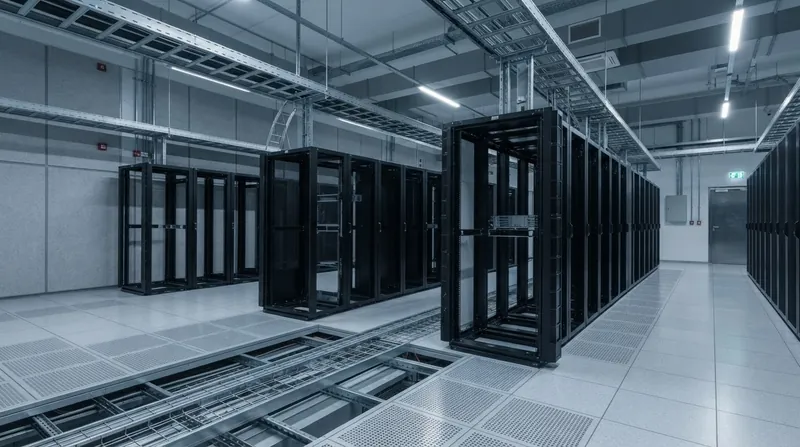
Indonesian authorities acting on a request from the United States found only empty server racks when they raided a Jakarta subsidiary of AI infrastructure provider Megaspeed in early 2026. The search yielded no evidence that advanced Nvidia processors were being diverted to restricted buyers.[1][2]
The operation represents a physical escalation in Washington's ongoing effort to police the global distribution of artificial intelligence hardware. Investigators entered the facility expecting to find high-performance computing clusters, but instead discovered a space devoid of the targeted silicon.[1][3]
"The National Police raided Megaspeed Jakarta office in early 2026," confirmed a report detailing the operation, noting that the physical search failed to substantiate suspicions of hardware smuggling. The empty racks highlight the difficulty of tracking highly mobile, high-value technology assets across borders.[3]
This development arrives as a new chapter in a sprawling enforcement campaign aimed at preventing Chinese entities from accessing cutting-edge AI infrastructure. The lack of physical evidence in Jakarta complicates the narrative that Southeast Asian subsidiaries are actively warehousing restricted chips.[1][4]
Closing the remote loophole
The Jakarta raid occurred against the backdrop of broader regulatory shifts in Washington. The United States recently moved to close a significant export loophole that had previously allowed Chinese researchers to remotely access Nvidia chips housed in foreign data centers.[4]
Regulators realized that controlling the physical export of hardware was insufficient if restricted end-users could simply lease computing power over the internet. The new rules attempt to govern cloud access with the same strictness applied to shipping pallets of physical servers.[4]
Megaspeed, a recognized partner in deploying Nvidia's enterprise hardware, found itself under intense scrutiny as these remote-access regulations tightened. The company's international footprint made it a natural focal point for investigators tracking the secondary market for advanced processors.[2][4]
However, the distinction between physical diversion and remote access remains a persistent challenge for enforcement agencies. While the Jakarta facility lacked physical chips, the broader investigation into how computing power is distributed globally continues to expand.[1][4]
A physical raid is a blunt instrument in a regulatory environment increasingly defined by virtual access rights and cloud leasing agreements. Finding empty racks proves that hardware is not present, but it does not resolve questions about where the computing workloads are actually being processed.[4]
Internal turmoil at Megaspeed
As external pressure mounts, Megaspeed is simultaneously navigating significant internal disruptions. The company confirmed that a key executive, Alice Huang, departed the organization in 2025, well before the physical raid in Jakarta took place.[5]
"Megaspeed says Alice Huang left in 2025 as company conducts internal probe over Nvidia fallout," according to statements released amid the ongoing regulatory scrutiny. The internal investigation aims to audit the firm's compliance with shifting US export controls.[5]
The timeline of executive departures suggests that internal concerns regarding compliance and international partnerships may have predated the direct intervention by Indonesian law enforcement. Megaspeed is now attempting to stabilize its operations while answering inquiries from multiple jurisdictions.[2][5]
Corporate audits in the AI infrastructure sector often struggle to keep pace with the rapid deployment of new hardware. Megaspeed's internal review must trace the lifecycle of highly sought-after Nvidia processors across a complex network of regional subsidiaries and leasing partners.[5]
The fallout from the Nvidia partnership has forced the company to reevaluate its entire Southeast Asian strategy. Operating as a hardware distributor requires navigating a minefield of competing national interests and rapidly evolving trade restrictions.[2][5]
Cross-border enforcement friction
The Megaspeed investigation has inevitably spilled over into regional diplomacy, drawing in neighboring governments. Singapore and the United States have formally agreed to continue discussing the Megaspeed case, indicating that the regulatory focus extends beyond Indonesia.[6]
Singapore serves as a critical node for data center operations and technology financing in Southeast Asia. The ongoing bilateral discussions suggest that US regulators view the entire regional supply chain as a potential vector for technology diversion.[6]
Coordinating a physical raid in Jakarta based on US intelligence requires significant diplomatic maneuvering and local cooperation. The fact that the operation yielded empty server racks may complicate future requests for aggressive physical interventions by regional law enforcement.[1][6]
Southeast Asian nations are increasingly caught between Washington's desire to restrict technology transfers and their own ambitions to build domestic AI infrastructure. Balancing these competing pressures requires delicate statecraft and a rigorous approach to corporate compliance.[3][6]
The discussions between Singapore and Washington are expected to establish new frameworks for auditing cloud service providers and hardware distributors. These diplomatic channels will likely shape how export controls are enforced across the region in the coming years.[6]
The limits of physical audits
The empty racks in Jakarta expose a fundamental limitation in the current approach to policing AI hardware. Physical inspections are inherently retrospective, often arriving long after high-value assets have been relocated or repurposed.[1][3]
Advanced AI servers are modular, highly transportable, and represent millions of dollars in concentrated capital. Moving a cluster of Nvidia processors across a border or to a different facility is a logistical challenge, but entirely feasible for motivated actors.[1][4]
Furthermore, the focus on physical hardware often obscures the reality of modern cloud computing architectures. A server rack can be emptied in hours, but the digital access logs and leasing agreements leave a much more durable forensic trail.[4]
Regulators are beginning to recognize that auditing network traffic and user authentication protocols may be more effective than raiding physical office spaces. The transition from hardware embargoes to cloud-access controls requires an entirely different set of investigative tools.[4]
The Megaspeed case serves as a high-profile test of these evolving enforcement strategies. As the US attempts to project its regulatory authority into foreign data centers, the friction between physical reality and digital access will only intensify.[2][4]
Unresolved supply chain questions
Despite the lack of physical evidence in Jakarta, the broader scrutiny of Megaspeed's operations shows no signs of abating. The internal probe and the ongoing diplomatic discussions indicate that the investigation has simply shifted its focus.[5][6]
The empty racks leave a critical question unanswered: whether the targeted hardware was never there to begin with, or if it was moved prior to the arrival of Indonesian authorities. Establishing that timeline is now a priority for investigators.[1][3]
Sources
- [1]The Straits Times — Indonesian police find empty server racks during raid on Megaspeed subsidiary Read on The Straits Times →
- [2]Reuters — Indonesian police raided Nvidia partner Megaspeed's local unit in early 2026 on US request, Straits Times reports Read on Reuters →
- [3]The Jakarta Post — The National Police raided Megaspeed Jakarta office in early 2026 Read on The Jakarta Post →
- [4]Forbes — US Closes Loophole That Allowed China To Remotely Access Nvidia Chips Read on Forbes →
- [5]PBS NewsHour — Megaspeed says Alice Huang left in 2025 as company conducts internal probe over Nvidia fallout Read on PBS NewsHour →
- [6]The Jakarta Post — Singapore, US agree to continue discussing Megaspeed case, Straits Times says Read on The Jakarta Post →
What to watch
- Data centers providing more than 12 million aggregate Total Processing Performance to restricted entities face a 90-day deadline to secure a license under the new Commerce Department interim rule.
- The US Commerce Department has a pending request from Senator Tom Cotton to place Chinese chipmaker ChangXin Memory Technologies on the Entity List.
- Malaysia's trade ministry is conducting an ongoing investigation into Speedmatrix over the potential re-export of restricted AI servers.
- Singaporean authorities are continuing an export fraud probe related to the acquisition of 917 servers, which coincides with multiple US federal probes into Nvidia and Supermicro.
- Megaspeed is undergoing an independent review of its compliance protocols by external legal counsel.
Charts, maps and images
Timeline
November 2026
US Imposes Interim Rule Restricting Remote Overseas Access to Advanced AI Infrastructure
AIAIMegaspeed Defends Lawful Operations and Confirms 2025 Departure of Executive Alice Huang
Singapore Charges Fifth Suspect in AI Server Export Probe, Cites Limited US Cooperation
AIAIAIUS Senator Urges Commerce Department to Add Chinese Chipmaker CXMT to Export Ban List
AIAIChinese AI Developers to Receive One Percent of $70 Billion Nvidia RTX Chip Orders
Nvidia Instructs Cloud Partners to Cap Chinese Client Access at 49 Percent




September 2026
China Signals Approval for ByteDance and Alibaba to Purchase Nvidia RTX Pro 5500 Chips

August 2026
U.S. Moves to Close the Cloud Loophole on Remote Access to AI Chips
US Commerce Department Investigates Chinese AI Firms Renting Restricted Nvidia Chips via Overseas Cloud
AI


How the story developed
The focus on remote access to artificial intelligence hardware began on August 8, when the US Bureau of Industry and Security launched a systematic review into Chinese AI developers renting advanced Nvidia processors through third-country data centers. The probe was triggered by the release of Moonshot AI's Kimi K3 model. By August 29, the US government began drafting regulations to treat remote access to advanced AI compute as a licensable export, supported by the House passing the Remote Access Security Act.
On September 28, China's Ministry of Industry and Information Technology asked domestic firms to report purchase plans for Nvidia's RTX Pro 5500 workstation graphics processors, which sit outside US data-center export restrictions. However, by November 4, Nvidia allocated only one percent of a $70 billion order backlog for RTX processors to its Chinese clients, citing severe global production bottlenecks in advanced packaging and memory integration.
Nvidia took direct action regarding cloud access on November 3, verbally ordering its global data center partners to sell at least 51 percent of their AI computing services to non-Chinese companies. The directive targeted "neocloud" providers in Southeast Asia. At the time, advanced Nvidia hardware like the B300 commanded a 470 percent premium on the Chinese black market due to export bans.
Efforts to restrict physical hardware faced challenges. On November 12, it emerged that Northwestern Polytechnical University, a Chinese institution on the US Entity List since 2001, acquired two restricted Nvidia H200 chips for approximately $123,000 through third-party Chinese vendors. The same day, US Senator Tom Cotton formally requested that Commerce Secretary Howard Lutnick add Chinese memory manufacturer ChangXin Memory Technologies to the Entity List, noting the company's share of global DRAM revenue grew from 4 to 10 percent between the second quarter of 2025 and 2026.
Investigations into hardware smuggling expanded in Southeast Asia on November 13. Singaporean authorities charged a fifth suspect with 41 counts related to the alleged smuggling of 917 servers, while permanently barring former Megaspeed executive Alice Huang from re-entering the country after police determined she provided inaccurate information. Singapore's Ministry of Home Affairs publicly criticized US authorities and hardware manufacturer Supermicro for providing limited investigative assistance. Concurrently, Malaysia's trade ministry launched a formal probe into Speedmatrix, a local affiliate of Megaspeed, over the potential re-export of restricted AI servers, explicitly denying it had granted regulatory clearance to the firm.