
Russian Sabotage Campaign Targets European Defense Industry, Testing NATO's Article 5 Threshold
A coordinated wave of arson, cyberattacks, and suspected assassination plots against European arms manufacturers has prompted NATO to evaluate whether the Kremlin's shadow war crosses the threshold for collective defense.

Share this story
Russia has launched a coordinated sabotage campaign against European defense contractors, utilizing arson, cyber intrusions, and proxy operatives to disrupt the flow of weapons to Ukraine. The escalating attacks have forced NATO to formally debate whether a series of covert, sub-threshold strikes constitutes an armed attack sufficient to trigger Article 5, the alliance's mutual defense clause.[1]
Over the past month, intelligence agencies across the United Kingdom, Germany, and Poland have linked Russian military intelligence to a string of incidents at major arms manufacturing sites. These include a severe fire at a drone components factory in Berlin, the derailment of a logistics train in eastern Poland, and the disruption of operational networks at a British munitions plant.
Rather than deploying uniformed personnel, Moscow has relied on a network of recruited proxies—often organized crime figures or radicalized locals contacted via encrypted messaging apps—to execute the attacks. This deliberate use of cut-outs is designed to maintain plausible deniability and keep the aggression just below the traditional threshold of conventional warfare.
The campaign presents a structural dilemma for NATO leadership in Brussels. Article 5 was designed for overt military invasions, not a distributed shadow war. Defining when a culmination of covert sabotage acts equals an armed attack remains legally and politically ambiguous, creating a gray zone that the Kremlin is actively exploiting to test the alliance's cohesion.[1]
Member states are sharply divided on the appropriate response. Eastern flank nations, led by Poland and the Baltic states, argue that the campaign already represents a direct attack on NATO soil and demands a forceful, collective retaliation. They warn that failing to establish a firm red line will only invite further Russian aggression deep into European territory.
Conversely, the United States and Germany have urged caution, prioritizing defensive resilience and counter-intelligence over a formal Article 5 declaration. Officials in Washington fear that invoking the mutual defense clause over proxy sabotage could trigger an uncontrollable escalatory spiral, potentially leading to a direct conventional conflict between nuclear-armed powers.[1]
The immediate burden has fallen on the European defense industry, which is already straining to meet production targets for both domestic stockpiles and Ukrainian military aid. Companies have been forced to divert significant capital toward physical security and counter-espionage measures, slowing down the expansion of manufacturing lines and delaying critical deliveries.[2]
NATO defense ministers are scheduled to convene in an emergency session later this week to establish a unified framework for attributing and responding to hybrid attacks. The outcome will likely determine whether the alliance expands its definition of collective defense to encompass the shadow war, or if member states will be left to counter the Kremlin's sabotage campaign on a strictly individual basis.[1]
Where opinion splits
Eastern Flank Allies
Nations bordering Russia view the sabotage as a direct attack requiring a unified NATO retaliation.
For Poland, the Baltic states, and other Eastern flank members, the distinction between a kinetic missile strike and a state-directed arson attack that destroys a defense plant is functionally meaningless. They argue that the Kremlin is deliberately testing NATO's red lines, and that failing to respond collectively under Article 5 signals weakness. These nations are pushing for severe, unified retaliatory measures, warning that treating the attacks as mere domestic law enforcement issues will only invite further Russian incursions into European territory.
Washington and Berlin
The US and Germany are resisting an Article 5 declaration to avoid a direct military confrontation with Moscow.
Policymakers in Washington and Berlin are acutely aware of the escalatory risks associated with invoking mutual defense over proxy sabotage. They argue that Article 5 was designed for overt military invasions, and that applying it to hybrid warfare could trap the alliance in an uncontrollable spiral with a nuclear-armed power. Instead of collective retaliation, these capitals are advocating for a massive surge in domestic counter-intelligence, tighter border controls, and increased funding for the physical security of critical infrastructure.
The Kremlin's Stance
Moscow officially denies any involvement in the attacks, attributing them to independent actors.
The Russian government has consistently denied directing the sabotage campaign, dismissing Western intelligence reports as anti-Russian hysteria. By relying on recruited proxies and organized crime figures rather than uniformed GRU officers, Moscow maintains a layer of plausible deniability. Russian state media frequently frames the incidents as the result of domestic European unrest or false-flag operations orchestrated by Western intelligence to justify further military spending and escalation against Russia.
Key points
- European intelligence agencies have linked a series of arson and cyberattacks on defense plants to Russian military intelligence.
- Moscow is utilizing recruited proxies and organized crime figures to maintain plausible deniability.
- Eastern European NATO members are pushing to treat the sabotage as an armed attack under Article 5.
- The US and Germany are resisting a formal mutual defense declaration, fearing rapid escalation.
How we got here
Early 2026
Intelligence agencies detect an uptick in Russian recruitment of proxy operatives via encrypted messaging apps.
July 2026
A severe fire destroys a drone components factory in Berlin, later linked to Russian military intelligence.
August 2026
NATO defense ministers call an emergency session to debate whether the ongoing sabotage campaign triggers Article 5.
- Threshold Skeptics
- Western allies prioritizing de-escalation and domestic counter-intelligence, warning that invoking mutual defense over proxy attacks risks a direct war with Russia.
- Article 5 Advocates
- Eastern flank nations arguing that state-sponsored sabotage on allied soil constitutes an armed attack requiring a collective military or severe economic response.
- Industry Focus
- Defense contractors and economic analysts focused on the immediate financial and logistical strain of securing supply chains against hybrid threats.
Perspectives this story doesn't cover
- Defense industry workers facing physical risks
- Local municipalities hosting targeted defense plants
Sources
Source coverage
2 outlets
3 viewpoints surfaced


- [1]ReutersThreshold Skeptics
NATO debates Article 5 threshold as Russian sabotage targets European defense firms
Read on Reuters → - [2]Financial TimesIndustry Focus
Defense contractors face rising security costs as sabotage campaign escalates
Read on Financial Times →
More in News & Politics
See all →NATO Expansion
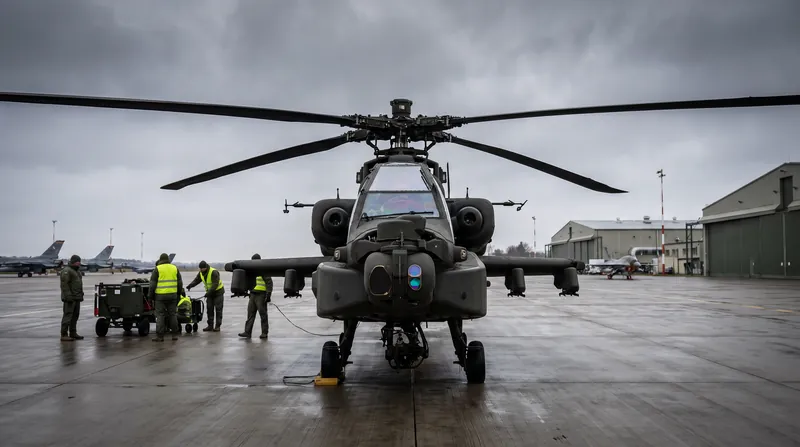
US Finalizes $4 Billion Military Financing Loan to Poland for Patriot and Apache Systems
6 sources
Radar Physics
Why Earth's Curvature Compresses Cruise Missile Defense to Under Two Minutes
2 sources

Nordic Defense
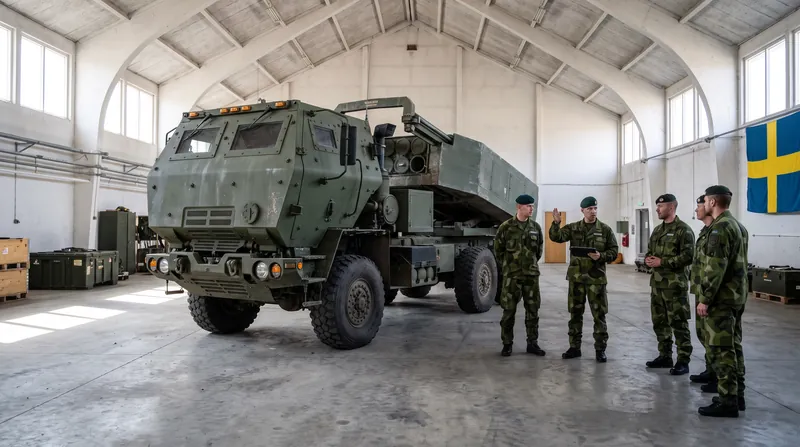
Sweden Finalizes $729 Million HIMARS Order, Plans Domestic Production of 500km-Range Missiles
7 sources
Radar Architecture
Altitude Compression: How Hypersonic Vehicles Defeat Ground-Based Early Warning Radar
3 sources

Comments
Every angle. Every day.
Get News & Politics stories with full source coverage and perspective breakdowns, free every day.