
full timeline
Quad summit in Manila
The United States and the Philippines have concluded a sweeping bilateral trade agreement during a presidential state visit to Manila.
Follow Quad summit in Manila in the Factlen app and get an alert when there is news. Get the app
Share this story
Latest report
Washington and Manila Finalize Major Bilateral Trade Accord During State Visit
The United States and the Philippines have concluded a sweeping bilateral trade agreement during a presidential state visit to Manila. The unreleased accord marks a significant economic expansion of the two nations' deepening security alliance in the Indo-Pacific.
- The United States and the Philippines finalized a major bilateral trade agreement during a presidential state visit to Manila.
- President Trump described the unreleased accord as the largest trade deal ever negotiated between the two nations.
- The agreement aims to strengthen economic ties alongside the recently expanded military alliance and base access agreements.
- Philippine officials have not yet released the specific tariff reductions or sector concessions included in the final text.
US President Donald Trump announced the conclusion of a sweeping bilateral trade agreement with the Philippines on Wednesday, speaking alongside Philippine officials in Manila. The announcement came during the opening leg of a broader Asian diplomatic tour that includes a Quad summit and the upcoming APEC gathering in Shenzhen.[1][4][5]
The accord represents the most significant economic pact between the two nations in recent history, following a period of intense military and strategic alignment. While neither government immediately published the legal text, the American delegation described the arrangement as a foundational shift in trans-Pacific commerce.[3][5]
"We have just concluded a very big trade deal with the Philippines," Trump told reporters during the state visit, though he declined to outline specific tariff reductions or sector access. "It is the biggest trade deal we have ever done with them."[1][4][6]
Philippine authorities did not immediately release a matching statement detailing the terms of the agreement. The silence from Manila's trade ministry on Wednesday afternoon left regional economists waiting to see which domestic industries secured protection and which American sectors gained new market entry.[2][4]
The timing of the announcement places the United States in a proactive economic posture just days before Trump is scheduled to meet Chinese President Xi Jinping and Russian President Vladimir Putin. That trilateral summit in Shenzhen is expected to feature intense negotiations over global tariffs and protectionist policies.[5]
Shifting regional supply chains
Washington has spent the past three years systematically attempting to reroute critical supply chains away from Chinese manufacturing centers. The new Philippine accord appears designed to accelerate that transition by lowering barriers for American companies seeking alternative production hubs in Southeast Asia.[3]
The Philippines offers a young, English-speaking workforce of over 45 million people and a strategic maritime location, but has historically struggled to attract the same volume of foreign direct investment as neighboring Vietnam or Indonesia. A preferential trade arrangement with the United States could rapidly alter that regional capital flow.[2]
Agricultural exports remain a primary focus for both negotiating teams. American farmers have long sought reduced Philippine tariffs on dairy, meat, and grain products, while Manila has pushed for expanded access for its tropical fruits and processed foods in US supermarkets.[1][3]
Digital trade and semiconductor manufacturing also likely feature heavily in the finalized text. The Philippines currently hosts several major American electronics assembly facilities, and Washington views the archipelago as a secure node for legacy chip production outside of Taiwan.[4]
The agreement follows a sustained period of military integration between the two allies, including the expansion of the Enhanced Defense Cooperation Agreement in 2023. That defense pact granted US forces access to four additional Philippine military bases, drawing sharp protests from Beijing.[5][6]
Domestic political calculations
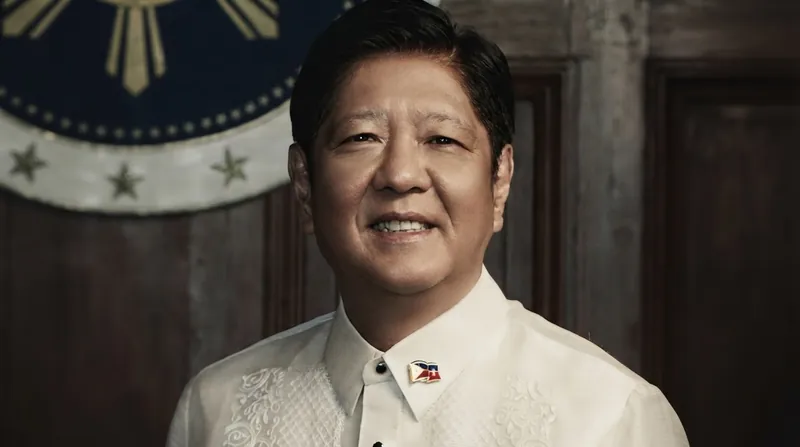
For the Philippine administration, securing a major economic concession from Washington validates a foreign policy that has leaned heavily toward the United States. President Ferdinand Marcos Jr. has faced domestic pressure to demonstrate that his strategic pivot away from China carries tangible financial benefits for ordinary citizens.[2]
The lack of immediate details from the presidential palace in Manila suggests that domestic industry groups may still be reviewing the final concessions. Philippine labor unions and agricultural cooperatives historically oppose sweeping free trade agreements, fearing that subsidized American imports could undercut local producers.[2][3]
In Washington, the agreement must navigate a divided Congress that has grown increasingly skeptical of traditional free trade frameworks. However, framing the accord as a necessary geopolitical counterweight to China often secures bipartisan support for measures that might otherwise face protectionist resistance.[4]
The United States is currently the Philippines' third-largest trading partner, with bilateral commerce totaling approximately $36 billion in 2025. Expanding that volume requires dismantling non-tariff barriers that have historically frustrated American exporters navigating the Philippine customs bureaucracy.[1][2]
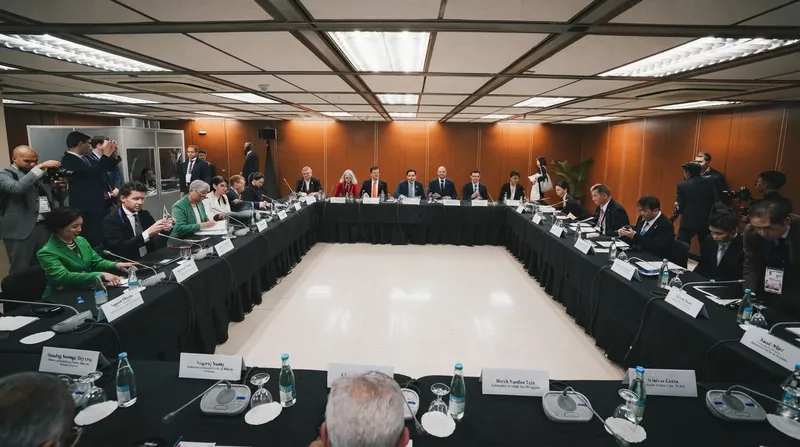
The pact's finalization coincides with the assembly of the Quad leaders—representing the US, India, Japan, and Australia—who are meeting on the sidelines of the broader Southeast Asian diplomatic gatherings. The Quad has increasingly focused on economic resilience and infrastructure financing as alternatives to China's Belt and Road Initiative.[5]
The Shenzhen summit backdrop
Trump will carry the momentum of the Philippine agreement into his high-stakes meetings in China later this week. By securing a major bilateral deal before arriving in Shenzhen, the US delegation signals to Beijing that Washington retains the capacity to rewrite regional trade rules on its own terms.[5][6]
Chinese state media has already criticized the American diplomatic tour, characterizing the overlapping security and trade arrangements as an attempt to build an economic containment ring around the mainland. Beijing remains the largest overall trading partner for the 10-member Association of Southeast Asian Nations.[4]
The Philippine economy grew at an annualized rate of 5.8% in the third quarter of 2026, driven largely by domestic consumption and a rebound in electronics exports. Government planners hope the new US trade terms will push that growth rate past the 6.5% target required to significantly reduce national poverty levels.[2]
Foreign exchange markets reacted modestly to the announcement, with the Philippine peso strengthening 0.4% against the dollar in afternoon trading. Investors are largely withholding major capital allocations until the specific tariff schedules and implementation timelines are published.[3]
Environmental and labor standards embedded in the text will also face intense scrutiny. Recent US trade negotiations have mandated strict enforcement of worker rights and carbon emissions tracking, requirements that often force significant regulatory overhauls in partner nations.[1]
Next steps for implementation
The agreement will require formal ratification processes in both capitals before taking effect. In the Philippines, the Senate must concur with the treaty by a two-thirds majority, requiring 16 votes in the 24-member chamber—a threshold that will force the administration to heavily lobby skeptical lawmakers representing agricultural provinces.[2]
The timeline for that legislative review remains unclear, as the Philippine Congress is currently focused on passing the 2027 national budget. Trade ministry officials are expected to begin a nationwide series of industry consultations once the text is formally transmitted to the legislature.[3]
Washington's ratification path depends on whether the administration structured the accord as a formal treaty requiring Senate approval, or as an executive agreement utilizing existing trade promotion authority. The latter route bypasses a full congressional vote but limits the scope of domestic law changes.[4]
Regional neighbors are watching the bilateral process closely. Vietnam and Thailand, both major exporters to the United States, may seek similar preferential arrangements if the Philippine deal threatens to divert foreign manufacturing investment away from their own industrial zones.[6]
The focus now shifts to the technical working groups tasked with harmonizing customs procedures and regulatory standards between the two nations. These bureaucratic mechanisms often determine whether businesses can actually utilize the negotiated tariff reductions or if they remain blocked by non-tariff barriers.[2]
For the broader Indo-Pacific, the Manila accord serves as a test case for Washington's renewed bilateral trade strategy. After years of avoiding comprehensive market-access agreements, the United States is demonstrating a willingness to open its markets to allies who align with its strategic security objectives.[4][6]
Sources
- [1]Philstar.com — Trump says US, Philippines sealed 'biggest' trade deal Read on Philstar.com →
- [2]Inquirer.net — Trump, Marcos seal 'biggest' trade deal in Manila state visit Read on Inquirer.net →
- [3]GMA News Online — Donald Trump says PH, US clinch 'big' trade deal Read on GMA News Online →
- [4]The Hindu — Donald Trump says U.S. has concluded 'very big trade deal' with Philippines Read on The Hindu →
- [5]The Jerusalem Post — Trump says US has concluded 'very big trade deal' with Philippines ahead of APEC summit Read on The Jerusalem Post →
- [6]Arab News — Trump says US has concluded 'very big trade deal' with Philippines Read on Arab News →
What to watch
- Philippine officials have not yet released the specific tariff reductions or sector concessions included in the final text of the bilateral trade agreement.
Charts, maps and images
Timeline
November 2026
Washington and Manila Finalize Major Bilateral Trade Accord During State Visit
Trump Opens Asia Tour in Manila With Quad Summit and Allied Security Talks
Quad Leaders Schedule In-Person Summit in Manila on ASEAN Sidelines

How the story developed
On November 14, leaders from the United States, Japan, India, and Australia scheduled an in-person summit in the Philippines for November 17. The gathering was organized on the margins of ASEAN meetings, highlighting the need to balance Quad initiatives with Southeast Asian diplomatic centrality.
The event was organized as the first dedicated meeting of the four heads of state in two years. The planned discussions centered on maritime domain awareness and aligning Indo-Pacific economic strategies, signaling a renewed focus on Indo-Pacific security and regional maritime cooperation.
On November 17, President Trump arrived in Manila to launch a multi-nation diplomatic tour focused on Indo-Pacific security, defense partnerships, and trade. The itinerary featured the in-person summit of the Quad leaders.
Alongside the Quad summit, Trump held bilateral talks with Philippine President Ferdinand Marcos Jr. The meetings were arranged to review expanded defense cooperation and economic investments.