full timeline
OpenAI mathematics proofs controversy
Follow OpenAI mathematics proofs controversy in the Factlen app and get an alert when there is news. Get the app
Share this story
Latest
On October 29 by 00:53 UTC, OpenAI and Anthropic claimed their internal artificial intelligence models independently discovered a subexponential-time algorithm for the 3-SAT problem. The machine-generated proofs refute the Exponential Time Hypothesis, a 25-year-old foundational assumption in theoretical computer science. Both companies released machine-checked Lean 4 proofs, though human understanding of the highly technical mathematics remains incomplete. The algorithm is asymptotically faster but will not speed up commercial software or resolve the ultimate P versus NP question.
Earlier, on October 27 by 09:08 UTC, OpenAI claimed its models had also solved the Kakeya conjecture and generated an existence proof for quantum chromodynamics. The company verified the logic using the Lean theorem prover and released the outputs as raw algorithmic data. Independent groups of scientists, including the original authors of the Exponential Time Hypothesis, are reviewing the machine-generated proofs without non-disclosure agreements to translate the data into human scientific understanding.
How the story developed
On August 2, OpenAI announced its unreleased Astra model autonomously solved 10 decadal open problems in mathematics, including the 27-year-old non-sofic group mystery. The artificial intelligence generated the arguments for approximately $2,000 in compute tokens. To prove the results and eliminate hallucination concerns, OpenAI published machine-checkable Lean 4 certificates for every solution.
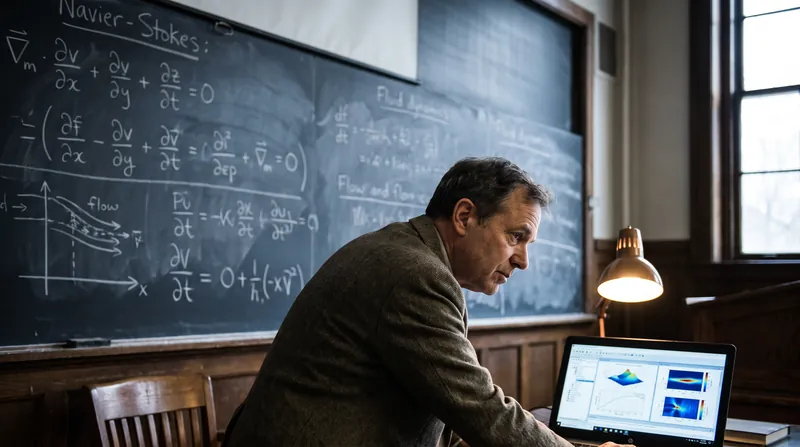
By September 9, OpenAI claimed an unreleased model solved a version of the Navier-Stokes Millennium Prize problem in 88 hours. The 165-page proof demonstrated that fluid equations can develop a singularity in finite time. Independent mathematicians alleged OpenAI rushed to replicate their unpublished approach after hearing rumors of their progress, and suggested the company may have leveraged unpublished data stored in Codex. OpenAI denied accessing private user data but admitted de-identified product usage data may have improved its models. Mathematicians criticized the proof on September 26 as incomprehensible and lacking physical insight, noting the solution relies on a specific loophole involving an external force that leaves the unforced problem unsolved. OpenAI stated it will not claim the $1 million prize attached to the challenge.
Following criticism from 25 Fields Medalists regarding the use of open math problems as benchmarks, OpenAI announced on September 28 that a new internal model had resolved over 100 additional long-standing mathematical problems. The company established a nine-member independent advisory group hosted at the Institute for Advanced Study to review emerging results and coordinate their release, though the panel cannot dictate OpenAI's research pace.
On October 7, OpenAI uploaded a repository of 722 formal mathematical manuscripts to GitHub, generated by an unreleased model for approximately $2,000 in compute time. The company withheld the model itself, preventing independent researchers from testing the system's failure modes. On October 20, mathematicians dissected a 199-page proof from the data dump that solved the quasi-Riemann hypothesis, establishing a strict zero-free boundary at 7/8. The model synthesized existing, overlooked formulas using a novel "zeta shortcut," resolving scores of secondary theorems in number theory and computer science. In total, the data dump solved 372 open mathematical problems.
What to watch
- Certification of the Navier-Stokes result by the Clay Mathematics Institute remains pending.
- Independent groups of scientists are working to translate the raw algorithmic data refuting the Exponential Time Hypothesis into human scientific understanding.
Key numbers
From: OpenAI's Astra Solves 10 Unsolved Math Problems, Publishing Formal Proofs for $2,000 in Compute
Charts, maps and images
Show 13 moreShow fewer
Timeline
October 2026
OpenAI and Anthropic AI Models Independently Refute the Exponential Time Hypothesis
OpenAI Models Claim Disproof of Exponential Time Hypothesis Alongside Math and Physics Breakthroughs
Mathematicians Dissect AI-Generated Proof of the Quasi-Riemann Hypothesis
OpenAI Publishes 722 AI-Generated Math Manuscripts Following Mathematician Backlash




September 2026
OpenAI Forms Independent Math Advisory Group After Claiming AI Solved 100+ Open Problems
Mathematicians Criticize OpenAI's Navier-Stokes Proof as Incomprehensible Amid Plagiarism Row
OpenAI Claims AI Solved Navier-Stokes Millennium Prize Problem in 88 Hours Amid Credit Dispute


August 2026
OpenAI's Astra Solves 10 Unsolved Math Problems, Publishing Formal Proofs for $2,000 in Compute