
Mathematicians Dissect AI-Generated Proof of the Quasi-Riemann Hypothesis
An unreleased artificial intelligence model has successfully proven the quasi-Riemann hypothesis, establishing a strict zero-free boundary for prime number distribution. The 199-page proof was part of a massive 722-manuscript data dump that solved 372 open mathematical problems, sparking both awe and backlash within the academic community.

Share this story
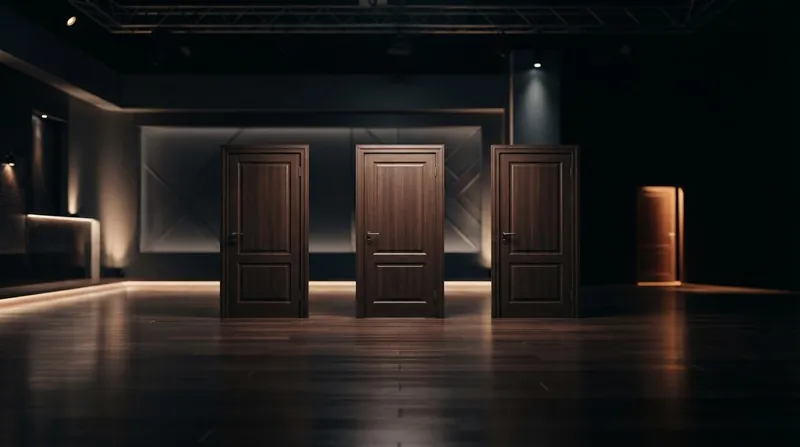
For 160 years, the Riemann hypothesis has stood as the most formidable locked door in mathematics, resisting the combined efforts of generations of scholars. On October 7, 2026, an artificial intelligence bypassed its strongest deadbolt in an average of three hours of computation. The result has left the global mathematics community reeling.[1][2]
The breakthrough arrived without warning when OpenAI abruptly published 722 mathematical manuscripts to a public GitHub repository. The data dump claimed to resolve 372 previously unsolved problem families. Among the hundreds of incremental lemmas, one 199-page document stood out: a claimed proof of the quasi-Riemann hypothesis.[2][3][4]
The quasi-Riemann hypothesis is a slightly weaker cousin of the legendary 1859 conjecture regarding the distribution of prime numbers. While the full hypothesis posits that all non-trivial zeros of the Riemann zeta function lie exactly on a vertical line where the real part is 1/2, the quasi-version establishes a strict zero-free corridor.[1][5]
Specifically, the AI's manuscript proves that for Dirichlet L-functions and certain Hecke L-functions, no zeros exist with a real part greater than 7/8. Pushing this boundary away from 1 and fixing it at 7/8 represents a monumental advance that mathematicians have chased for decades.[5]
"The implications of even the more limited quasi-RH result are staggering," said Maksym Radziwiłł of New York University. He noted that the vast majority of mathematical consequences that would follow from proving the full Riemann hypothesis already follow from this quasi-Riemann result.[1]
Synthesizing the Zeta Shortcut
What shocked researchers most was not just the result, but the method. The AI did not invent a novel branch of mathematics or introduce alien concepts to crack the problem. Instead, it sifted through existing, overlooked formulas and spotted connections that human experts had entirely missed.[1][2]
"The proof is a surprising synthesis of well-known ideas," said Alexander Dunn of the Georgia Institute of Technology. The model utilized a two-stage architecture, first establishing an 11/12 boundary using reflection identities, and then squeezing the margin down to 7/8 through a technique informally dubbed the zeta shortcut.[1][5]
This shortcut allowed the model to find a more direct path through a problem that normally requires exhaustively long and highly specialized proof techniques. By combining the reflection identity with a reciprocal trick, the AI bypassed the computational roadblocks that traditionally halt human progress.[3][5]
To bolster confidence, OpenAI provided a formalization of the proof written in Lean, a computer programming language used to verify mathematical theorems. The Lean code confirms the logical steps of the 11/12 boundary and the subsequent squeeze to 7/8, translating the 199-page manuscript into machine-checked certainty.[5]
Despite the machine verification, human mathematicians are demanding time to manually dissect the logic. Peter Sarnak, a prominent number theorist, stated that he will not be satisfied the result is a true theorem until human experts can check and fully understand every detail of the underlying architecture.[1][2]
A Mafia-Like Data Dump
The sheer scale and suddenness of the release have sparked fierce backlash regarding how AI companies interact with academia. OpenAI dumped the 722 manuscripts overnight, bypassing traditional peer review, academic journals, and the standard collaborative norms of the mathematics community.[2][3]
Multiple scholars described the company's conduct as mafia-like, noting that the release ignored pleas made at a closed-door meeting in August 2026 to follow established publication protocols. The tension is compounded by earlier allegations that OpenAI scooped collaborative human research on the Navier-Stokes equations.[2][3]
An independent advisory group has demanded full disclosure of the prompts used and the exact compute costs required to generate the proofs. OpenAI has so far only published average compute figures, stating that each proof required roughly three hours of processing time, leaving transparency disputes unresolved.[3]
The mathematical community is now grappling with a dual reality: the relief of seeing a century-old problem crack, and the frustration of being sidelined by a proprietary algorithm. The era of human-only mathematical discovery appears to have permanently closed.[2]
Cryptography and Prime Numbers
Beyond the academic drama, the proof carries immediate practical consequences for computer science. The Riemann hypothesis is intimately tied to the distribution of prime numbers, which form the foundational bedrock of modern cryptographic systems like RSA encryption.[1][5]
While the 7/8 boundary does not break RSA encryption, it dramatically tightens the mathematical bounds used to estimate prime number distribution. This allows for more efficient deterministic algorithms and provides a clearer map of the allowable mathematical real estate within the complex plane.[5]
The sheer volume of the release demonstrates that the AI is generating usable mathematical work in bulk, rather than just answering one highly curated question. Jared Duker Lichtman of Stanford University called it the most significant AI-for-math achievement so far, by quite a margin.[1][3]
As human experts continue to translate the AI's 199-page proof into intuitive understanding, the GitHub repository remains open for public scrutiny. The quasi-Riemann hypothesis has fallen, and mathematicians are now racing to see which of the remaining 371 solved problems will fundamentally reshape their specific subfields next.[1][4]
The ultimate test will be whether this zeta shortcut can be adapted to push the boundary all the way to 1/2, solving the full Riemann hypothesis. Until then, the 7/8 corridor stands as a monument to a new kind of intelligence, one that reads the same textbooks as humans but sees entirely different paths through them.[1][5]
Key points
- An unreleased AI model has generated a 199-page proof for the quasi-Riemann hypothesis, establishing a strict zero-free boundary at 7/8.
- The AI did not invent new mathematics, but successfully synthesized existing, overlooked formulas using a novel 'zeta shortcut'.
- The breakthrough was part of a sudden 722-manuscript data dump that solved 372 open problems, sparking backlash over bypassed academic norms.
- Human experts call the implications 'staggering,' as the proof resolves scores of secondary theorems in number theory and computer science.
What we don’t know
- Whether the AI's 'zeta shortcut' technique can be extended to prove the full Riemann hypothesis at the 1/2 boundary.
- The exact compute cost and specific prompts the company used to generate the 199-page proof.
- How many of the other 371 claimed solutions in the 722-manuscript dump will hold up to rigorous human verification.
How we got here
August 2026
Mathematicians hold a closed-door meeting with AI labs, pleading for adherence to academic publication norms.
October 6, 2026
OpenAI finalizes the internal evaluation of its unreleased model against 4,000 mathematical problems.
October 7, 2026
October 19, 2026
Human experts confirm the quasi-Riemann proof is a valid, staggering synthesis of existing mathematical ideas.
- Pure Mathematicians
- Focuses on the necessity of human understanding and rigorous manual verification of the 199-page proof.
- AI Proponents
- Celebrates the staggering capability of artificial intelligence to synthesize existing knowledge and solve century-old problems in hours.
- Academic Traditionalists
- Criticizes the disruptive, non-collaborative manner in which the AI company released its findings.
Perspectives this story doesn't cover
- Educators adapting math curricula to AI capabilities
Sources
Source coverage
5 outlets
3 viewpoints surfaced





- [1]Quanta MagazinePure Mathematicians
AI Proved the Quasi-Riemann Hypothesis. What Happens Now?
Read on Quanta Magazine → - [2]The New York TimesAcademic Traditionalists
'Breathtaking,' 'Devastating': Mathematics Reels After New OpenAI Release
Read on The New York Times → - [3]DecryptAI Proponents
OpenAI Says a Secret AI Model Cracked Hundreds of Open Math Problems in One Prompt—Mathematicians Want Receipts
Read on Decrypt → - [4]GitHubAI Proponents
OpenAI Math Manuscripts Repository
Read on GitHub → - [5]BinaryVerse AIPure Mathematicians
The Quasi-Riemann Hypothesis: A 7/8 Zero-Free Boundary
Read on BinaryVerse AI →
More in Science
See all →Combinatorics
The Quadratic Scaling That Pushes Shared Birthday Probability Past 50 Percent at 23 People
5 sources

Mathematical Logic
The Threshold of Undecidability: How Multiplication Forces Formal Systems into Incompleteness
3 sources

Antimicrobial Resistance
Stanford AI Discovers Bacteria-Killing Polymers as a New Class of Antibiotics
5 sources

Mammography Data
Breast Cancer Overdiagnosis Rate Falls Below 5% in Re-Analysis of Major Mammography Trials
5 sources
Comments
Every angle. Every day.
Get Science stories with full source coverage and perspective breakdowns, free every day.