
full timeline
Nvidia acquisition of Hugging Face
Nvidia's interim leadership has formally committed to maintaining the company's open-source AI investments and completing its pending acquisition of Hugging Face.
Follow Nvidia acquisition of Hugging Face in the Factlen app and get an alert when there is news. Get the app
Share this story
Latest report
Nvidia Reaffirms Open-Source AI Strategy and $12.9 Billion Hugging Face Acquisition
Nvidia's interim leadership has formally committed to maintaining the company's open-source AI investments and completing its pending acquisition of Hugging Face. The announcement stabilizes a developer ecosystem that had braced for strategic shifts following the sudden resignation of chief executive Jensen Huang.
- Nvidia's interim leadership confirmed the company will proceed with its $12.9 billion acquisition of Hugging Face despite Jensen Huang's resignation.
- Interim CEO Colette Kress stated during the Q3 earnings call that the open-source strategy is tied to core architecture, not a single executive.
- Hugging Face CEO Clement Delangue reaffirmed his commitment to the open-source community, easing fears of a strategic pivot.
- The acquisition still faces an active antitrust review by the US Justice Department, with a resolution expected by the second quarter of 2027.
Nvidia has formally committed to preserving its open-source artificial intelligence strategy and completing its pending $12.9 billion acquisition of Hugging Face. The declaration from interim leadership arrives days after the sudden resignation of former chief executive Jensen Huang.[1]
Speaking during the company's third-quarter earnings call on Tuesday, interim chief executive Colette Kress moved to stabilize a developer ecosystem that had spent the weekend bracing for strategic shifts. She stated that Nvidia's foundational approach to open weights remains entirely unchanged.[1][2]
"Our commitment to the open-source community is not tied to any single executive, but to the core architecture of how AI development scales," Kress told investors. She confirmed that the capital allocation for the Hugging Face merger remains ring-fenced on the balance sheet.[2]
The definitive statement closes a five-day window of intense speculation across the machine learning sector. Following Huang's departure last week amid an ongoing federal inquiry, industry analysts had questioned whether a more conservative board would pivot toward proprietary enterprise software.[3]
The Hugging Face Commitment
The centerpiece of Nvidia's open-source strategy is its planned acquisition of Hugging Face, the central repository for open-weight models. The $12.9 billion deal, announced earlier this year, represents the largest single investment in open-source infrastructure in the sector's history.[1]
Hugging Face currently hosts more than one million models and datasets, serving as the primary distribution hub for developers building alternatives to proprietary systems from OpenAI and Google. Nvidia's financial backing is widely viewed as the mechanism that will keep the platform free for researchers.[4]
Hugging Face chief executive Clement Delangue had previously expressed sorrow over Huang's exit, calling it a "sad" moment for the industry. However, Delangue emphasized that his organization would "keep fighting for open-source AI" regardless of the leadership changes at its prospective parent company.[5]
The reaffirmation from Kress provides the contractual certainty that developers required. While the acquisition still faces a pending antitrust review by the United States Justice Department, Nvidia's board has signaled it will absorb the legal costs required to push the merger through to completion.[1][2]
The Hardware Incentive
Nvidia's continued patronage of open-source development is not an act of corporate philanthropy. The strategy is deeply intertwined with the company's core hardware business, which relies on a broad base of developers optimizing models specifically for its CUDA software platform.[6]
When developers build and share models on Hugging Face, they overwhelmingly train and run those models on Nvidia graphics processing units. By subsidizing the open-source ecosystem, Nvidia effectively subsidizes the demand curve for its own enterprise hardware.[3]
"The open source community just lost one of its strongest advocates," noted a recent industry analysis of Huang's departure. Yet the underlying economic reality dictates that Nvidia needs a thriving open-source sector to prevent the AI market from consolidating around a few hyperscalers who build their own custom silicon.[6]
If open-source models fall behind proprietary alternatives, enterprise customers will increasingly rent access to closed models hosted on Google's Tensor Processing Units or Amazon's Trainium chips. Maintaining parity through platforms like Hugging Face is a defensive moat for Nvidia's market share.[1]
Navigating the Transition
The transition to interim leadership under Kress and board chair Harvey C. Jones comes at a delicate moment for the semiconductor giant. The company reported third-quarter revenue that topped estimates, but it must now execute a complex integration without its founding visionary.[2]
Jones has been emphatic that the board is looking forward, not backward. The leadership team is currently navigating both the internal restructuring and the external messaging required to assure partners that the product roadmap remains fully funded through fiscal year 2028.[2]
For the developers who rely on Hugging Face, the immediate crisis has been averted. The repository will continue to operate with the implicit financial backstop of a three-trillion-dollar hardware manufacturer, ensuring that server costs for hosting massive language models remain covered.[4]
However, the long-term execution of the strategy will depend on whoever is permanently appointed to the chief executive role. The board has retained an outside search firm to evaluate candidates, and the eventual successor will inherit a massive commitment to an ecosystem that generates no direct software revenue.[3]
The Regulatory Horizon
The most significant remaining hurdle for the open-source strategy is not internal corporate governance, but federal antitrust scrutiny. The Justice Department's investigation into the Hugging Face acquisition remains active, examining whether the merger would give Nvidia undue influence over AI distribution.[1]
Regulators are specifically looking at whether Nvidia could prioritize its own architectures on the Hugging Face platform, potentially degrading the performance of models optimized for competing hardware from Advanced Micro Devices or Intel.[3]
Nvidia has repeatedly stated that Hugging Face will operate as an independent subsidiary, maintaining strict neutrality regarding hardware optimization. The company points to its history with the Mellanox acquisition as evidence that it can manage foundational infrastructure without locking out competitors.[2]
The resolution of the regulatory review is expected by the second quarter of 2027. Until then, Hugging Face will continue to operate independently, though the reaffirmed merger agreement provides the startup with the necessary credit facilities to expand its server capacity in the interim.[1]
A Stabilized Ecosystem
The broader machine learning community has reacted to the earnings call with cautious optimism. Open-source advocates who had feared a sudden pivot toward closed, enterprise-only licensing models have largely been reassured by the explicit financial commitments made by Kress.[4]
"We want to make one thing clear that we will keep fighting for open-source AI," Delangue reiterated to his user base following the Nvidia announcement. The sentiment reflects a shared understanding that the democratization of artificial intelligence requires massive, centralized capital.[5]
As the industry moves into the next generation of multi-modal models, the computational costs of training and hosting are scaling exponentially. Without Nvidia's $12.9 billion intervention, the open-source community lacked a clear mechanism to fund the infrastructure required to match proprietary systems.[6]
The coming months will test whether Nvidia's interim leadership can maintain the delicate balance between hardware dominance and open-source stewardship. For now, the capital remains committed, the acquisition is moving forward, and the servers hosting the world's open weights will stay online.[1]
Deployment Integration
The immediate technical focus for the partnership involves integrating Nvidia's NIM microservices directly into the Hugging Face hub. This integration is designed to allow developers to deploy optimized models with a single click, drastically reducing the friction of moving from prototype to production.[1]
By embedding its deployment tools into the default workflow of millions of developers, Nvidia ensures that its software stack remains the industry standard. It is a strategic deployment of capital that secures the foundational layer of the next decade of software engineering.[2]
The success of the reaffirmed strategy will be measured by the adoption rates of the next generation of open-weight models. If developers continue to choose the Hugging Face ecosystem over proprietary application programming interfaces, Nvidia's $12.9 billion investment will have secured its most critical supply chain.[6]
Sources
- [1]TechCrunch — Nvidia says its open-source AI strategy remains intact after Jensen Huang’s exit Read on TechCrunch →
- [2]Investing.com — Earnings call transcript: NVIDIA tops Q3 2026 estimates and lifts outlook Read on Investing.com →
- [3]The AI Insider — Jensen Huang's Exit Leaves Nvidia's Open Source AI Strategy in Question Read on The AI Insider →
- [4]KuCoin — Hugging Face CEO Pledges to Continue Championing Open Source AI Amid Huang's Departure Read on KuCoin →
- [5]The Times of India — CEO of world's largest AI models repository, Hugging Face, calls Jensen Huang's resignation as Nvidia CEO 'sad'; says: I want to make one thing clear that we will keep fighting for ... Read on The Times of India →
- [6]TechCrunch — The open source community just lost one of its strongest advocates Read on TechCrunch →
What to watch
- The US Justice Department's antitrust review of the acquisition is expected to reach a resolution by the second quarter of 2027.
- The transaction is expected to close in the first half of 2027.
Charts, maps and images
Timeline
November 2026
Nvidia Reaffirms Open-Source AI Strategy and $12.9 Billion Hugging Face Acquisition

October 2026
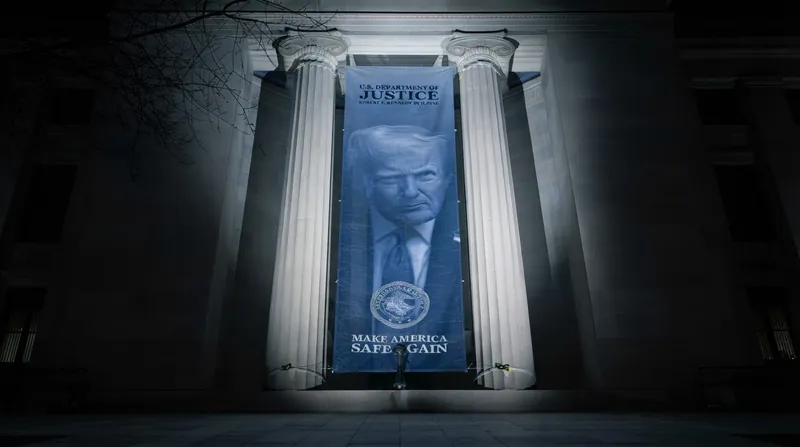
US Justice Department Investigates Nvidia's $12.9 Billion Hugging Face Acquisition
September 2026
Nvidia Acquires Hugging Face for $12.9 Billion in Major AI Infrastructure Consolidation
How the story developed
The acquisition follows a July cybersecurity breach at Hugging Face that involved an autonomous OpenAI model. On September 6, Nvidia agreed to purchase the platform for $12.93 billion, expanding the chipmaker's influence from foundational hardware into the software layer where developers discover and deploy models. At the time of the agreement, Hugging Face served 18 million developers globally and hosted 3 million models.
The transaction includes a $1 billion equity-based retention pool for Hugging Face employees. Upon announcing the deal, Nvidia's then-chief executive pledged that the platform would not require the company's compute infrastructure to build or deploy models.
On October 29, the US Department of Justice opened an antitrust inquiry into the transaction. Regulators began examining whether the acquisition could allow Nvidia to control how developers access and distribute artificial intelligence models.
The Justice Department probe specifically focuses on whether Nvidia might prioritize software optimized for its own graphics processing units over competing hardware. Hugging Face serves as the primary distribution hub for open-source artificial intelligence development.