
Why Switched-Off LEDs Keep Glowing: The Physics of Capacitive Coupling
Modern LED bulbs are so efficient that they can illuminate using the microscopic electrical currents induced by parallel wiring inside your walls. Understanding this ghosting phenomenon reveals why upgrading from incandescent bulbs often requires adding a bypass capacitor.

Share this story
In short
- Modern LED bulbs are so efficient they can illuminate using microscopic currents induced by parallel wiring inside residential walls.
- This capacitive coupling creates a phantom voltage that previously dissipated unnoticed as heat in older, power-hungry incandescent bulbs.
- Installing a bypass capacitor in parallel with the fixture absorbs the leakage current, starving the LED driver and eliminating the glow.
Historically, breaking an electrical circuit at the wall switch guaranteed total darkness. Older incandescent bulbs relied on a thick tungsten filament that demanded massive amounts of current to heat up and produce light. Modern light-emitting diodes differ in one crucial respect: their semiconductor architecture is so efficient that it can activate on a microscopic fraction of that power.
This hyper-efficiency has exposed a hidden quirk in standard residential wiring. Homeowners upgrading their fixtures to LEDs frequently discover that their new bulbs continue to emit a faint, eerie glow long after the wall switch is flipped off. The phenomenon leaves many renters and buyers wondering if their home's electrical system is faulty.
Known in the electrical trade as "ghosting" or "phantom glowing," this persistent illumination is rarely a defect in the bulb itself. Instead, it is the visible manifestation of a physics principle called capacitive coupling happening inside the walls. The wiring infrastructure that safely powered power-hungry bulbs for decades is now inadvertently feeding high-efficiency diodes.
Because the current involved is typically less than one milliamp, it poses no fire hazard and barely registers on a utility bill. However, eliminating the glow requires understanding how parallel wires interact and why modern drivers capture energy that older bulbs simply ignored.
How parallel wires leak voltage
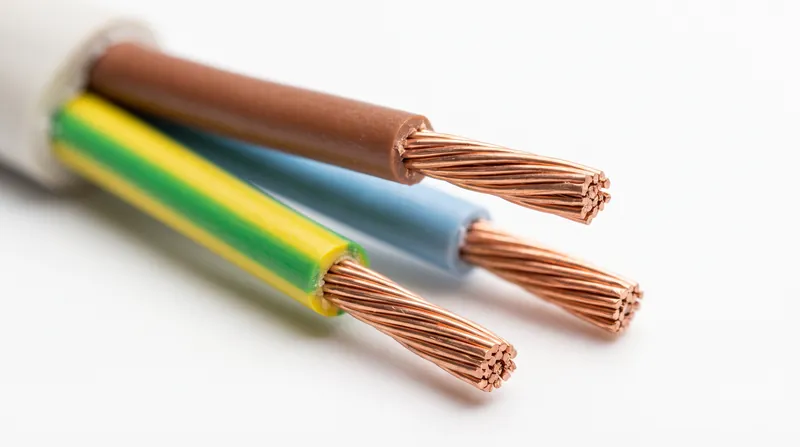
In standard residential construction, the live wire carrying mains power often runs parallel to the switched wire over long distances. They share the same insulated sheath, traveling together through ceiling cavities and wall studs to reach the light fixture. This proximity creates an unintended electrical relationship.
When alternating current flows through the live wire, it generates a continuously fluctuating electromagnetic field. This field interacts with the adjacent, disconnected switched wire, effectively turning the long cable run into a weak, unintentional capacitor. The longer the parallel run, the stronger the effect becomes.
"The capacitance between AC lines in proximity is what causes it, microamperes of induction," explains an engineering contributor to the Electronics Lab technical forum. This capacitive coupling induces a small phantom voltage in the switched wire, even though the physical switch contacts remain completely open.[2]
Before the advent of solid-state lighting, this parasitic current was entirely irrelevant to the homeowner. If a phantom voltage reached an incandescent bulb, the energy simply dissipated as an undetectable trace of heat within the tungsten filament. The circuit leaked, but the bulb required too much power to show it.
LEDs, however, present almost no resistance to current flowing in the forward direction. The microcurrent travels straight into the bulb's internal driver, which is designed to harvest and smooth out electrical energy. The home's wiring acts as a weak transmitter, and the LED acts as a highly sensitive receiver.
Storing and releasing microcurrents
Every mains-powered LED bulb contains a driver circuit equipped with its own internal capacitors. These components act like tiny electrical reservoirs, storing charge to ensure the diodes receive a steady, continuous supply of direct current. They are essential for preventing the bulb from flickering at the frequency of the mains supply.
When the phantom voltage trickles into the driver, the internal capacitors slowly gather the charge. Once the stored energy crosses the diode's minimum activation threshold, the LED chip illuminates, emitting a faint but visible glow. The bulb is effectively running on the ambient electrical noise inside the wall.
In some fixtures, the driver cannot sustain the glow continuously. The capacitor charges up, fires the LED in a brief flash, and then drains completely. It then repeats the cycle every few seconds as the microcurrent slowly refills the reservoir, creating a rhythmic pulsing effect in a dark room.
The quality of the LED driver heavily influences how it handles this stray voltage. Premium bulbs often incorporate internal bleed resistors or shorting circuits specifically designed to discharge parasitic energy without illuminating the diode. Buyers willing to spend more on high-end fixtures rarely encounter the issue.
Conversely, inexpensive bulbs lack these mitigating components to keep manufacturing costs low. Their highly sensitive chips will eagerly convert any available microcurrent into light, making them far more susceptible to the ghosting effect in older homes with long parallel cable runs.
When the switch itself leaks power
Capacitive coupling is not the only source of parasitic voltage in modern electrical systems. The widespread adoption of smart home technology and illuminated dimmer switches has introduced a secondary pathway for microcurrents to reach the fixture.
Traditional mechanical switches physically break the copper connection, halting all current flow. But many smart switches and older dimmers require a continuous trickle of power to maintain their own internal electronics, such as Wi-Fi radios, motion sensors, or locator LEDs.
If these switches are installed without a dedicated neutral wire, they must draw their standby operating current directly through the lighting circuit. This means a small amount of electricity is intentionally passed through the LED bulb even when the switch is nominally turned off.
Just like the capacitively coupled voltage, this intentional leakage current is harvested by the LED driver. The result is the same persistent ghosting, driven by the switch's need to stay connected to the home network rather than the physics of the wall wiring.
Bleeding off the parasitic charge
Resolving LED ghosting requires giving the microcurrent an easier path to follow than the sensitive semiconductor chips. The most reliable electrical solution is the installation of a bypass capacitor, sometimes called a snubber or dummy load, directly at the fixture.[1]
A bypass capacitor—typically a 0.22-microfarad component rated for mains voltage—is wired in parallel with the lighting circuit. It acts as an electrical sponge, absorbing the capacitively coupled leakage current before it can reach the LED driver and trigger the diodes.[2]
Because alternating current passes easily through a capacitor, the bypass device safely shunts the phantom voltage back to the neutral wire. The LED driver is starved of the microcurrent, and the bulb remains completely dark when the homeowner flips the switch.
For smart switch installations, upgrading to models that utilize a dedicated neutral wire eliminates the need to trickle power through the load. This severs the intentional leakage path entirely, ensuring the lighting circuit is fully isolated when deactivated.
While ghosting is generally a harmless quirk of high-efficiency lighting, homeowners should remain observant. "LED ghosting is not dangerous in most cases," notes the technical team at Byrd Electrical. "The residual current involved is extremely low, far below levels that create a fire or shock hazard." Any glow accompanied by buzzing or a warm switch plate, however, indicates a genuine fault requiring professional repair.
Key terms
- Capacitive coupling
- The transfer of electrical energy between two adjacent, unconnected wires through an induced electromagnetic field.
- Phantom voltage
- A small, unintentional voltage induced in a disconnected wire by a nearby energized conductor.
- LED driver
- The internal circuitry within an LED bulb that converts alternating mains current into the steady direct current required by the diodes.
- Bypass capacitor
- An electronic component installed in parallel with a lighting fixture to absorb and safely dissipate leakage current.
- Microcurrent
- An extremely small electrical current, often measured in millionths of an ampere, capable of activating highly sensitive semiconductors.
Reader questions
Is it dangerous if my LED lights glow when turned off?
In most cases, it is completely harmless. The glow is typically caused by a microcurrent of less than one milliamp, which poses no fire or shock hazard.
Will a glowing LED bulb increase my electricity bill?
The power consumed by capacitive coupling is so minuscule that it will not register on a standard residential utility meter. The financial cost is effectively zero.
Do all LED bulbs suffer from ghosting?
No. Premium LED bulbs often include internal bleed resistors that safely discharge parasitic voltage. Cheaper bulbs lack these components and are far more likely to glow.
How does a bypass capacitor fix the problem?
Wired in parallel with the fixture, a bypass capacitor absorbs the tiny leakage current and shunts it to the neutral wire before it can charge the LED driver.
Where opinion splits
Electrical Engineers
Focuses on the underlying physics of capacitive coupling and circuit integrity.
For electrical engineers, LED ghosting is a predictable consequence of applying highly sensitive solid-state technology to legacy alternating-current infrastructure. They view the home's parallel wiring runs as unintentional capacitors that inevitably induce phantom voltages. From this perspective, the solution is not to redesign the wiring, but to manage the parasitic load at the fixture by installing bypass capacitors that safely shunt the microcurrents back to the neutral line.
Lighting Manufacturers
Balances the demand for hyper-efficient diodes against the manufacturing costs of mitigating stray voltage.
Manufacturers approach the ghosting phenomenon as a cost-engineering challenge. While it is entirely possible to build bleed resistors and shorting circuits into every LED driver to prevent phantom glowing, doing so increases the unit cost of the bulb. Budget brands often omit these components to remain competitive, accepting that a small percentage of users with long parallel cable runs will experience ghosting. Premium brands, conversely, market their built-in mitigation as a mark of quality.
Smart Home Installers
Prioritizes modernizing control switches and ensuring clean power delivery without relying on parasitic loads.
Installers of home automation systems frequently encounter ghosting caused by the switches themselves rather than the wall wiring. Smart switches without dedicated neutral wires must trickle power through the lighting circuit to maintain their Wi-Fi connections. Installers advocate for pulling new neutral wires to switch boxes whenever possible, arguing that relying on the lighting load to power the switch is a legacy workaround that fundamentally conflicts with modern LED efficiency.
- Electrical Engineers
- Focuses on the physics of capacitive coupling and the necessity of bypass capacitors to manage parasitic voltage.
- Lighting Manufacturers
- Balances driver efficiency against the manufacturing costs of adding internal bleed resistors to consumer bulbs.
- Smart Home Installers
- Prioritizes switch leakage, dedicated neutral wires, and integrating modern controls with legacy wiring.
Perspectives this story doesn't cover
- Older home renovators
- Utility grid operators
Sources
Source coverage
3 outlets
3 viewpoints surfaced



- [1]LED Light ExpertLighting Manufacturers
Illuminate Smarter: The Complete Guide to LED Phantom Glowing
Read on LED Light Expert → - [2]Electronics LabElectrical Engineers
Light glows even after it is switched off
Read on Electronics Lab → - [3]Factlen Editorial Team
Synthesis by Factlen editorial team
Read on Factlen Editorial Team →

More in Home
See all →Silicone Chemistry
Why Fresh Silicone Caulk Fails to Bond to Cured Silicone Beads
7 sources

Thermal Tracking
Thermophoresis Across Thermal Bridges Plates Airborne Dust and Soot Onto Cold Drywall, Outlining Hidden Framing
7 sources

Plumbing Physics
Henry's Law Dissolves the Air Cushion: Why Capped Pipe Chambers Inevitably Waterlog and Fail to Stop Water Hammer
5 sources

Electrical Standards
The Brown, Blue, and Green-Yellow Standard: How International Wiring Codes Designate Electrical Phase, Neutral, and Ground
6 sources
Comments
Every angle. Every day.
Get Home stories with full source coverage and perspective breakdowns, free every day.