
Why Charcoal's Radiant Infrared Heat Sears Meat Faster Than a Gas Grill's Convection Currents
Glowing coals emit electromagnetic waves that bypass the insulating layer of air around food, delivering massive energy directly to the surface. Standard gas burners rely on circulating hot air, which struggles to break through that boundary layer to create a crust.
By Lan Xu

Share this story
In short
- Charcoal cooks primarily through infrared radiation, delivering massive energy directly to the meat's surface to create a rapid sear.
- Standard gas grills rely on convection, circulating hot air that struggles to penetrate the insulating boundary layer around the food.
- Because radiant heat scales to the fourth power of temperature, a glowing coal bed delivers exponentially more searing power than 500-degree air.
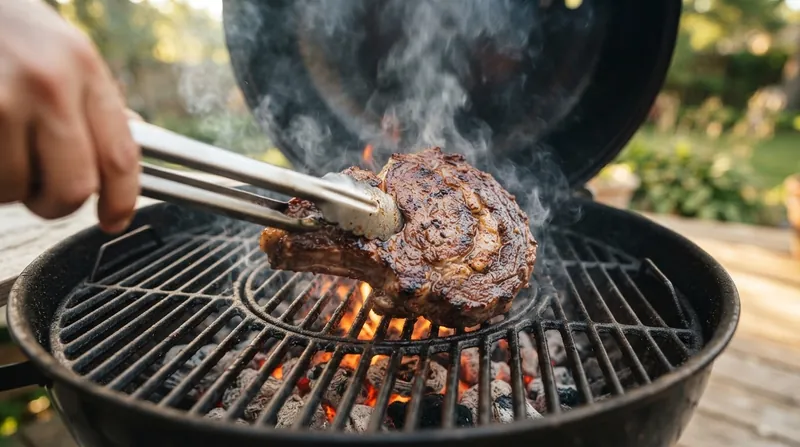
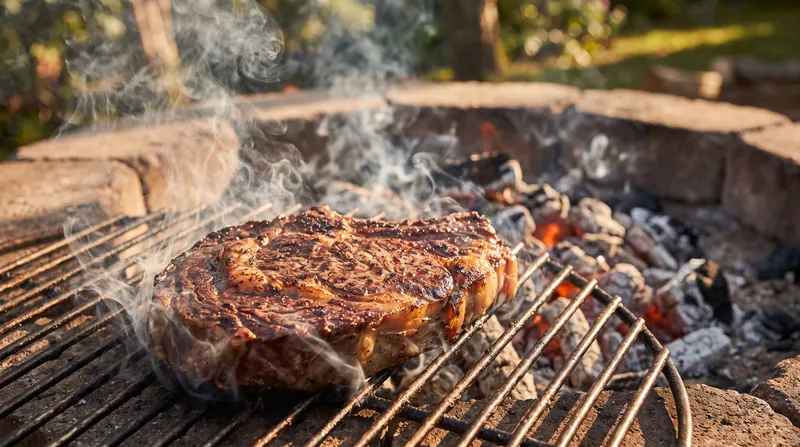
The backyard cook firing up the grill this weekend faces a fundamental choice of fuel, but they are actually choosing between two entirely different laws of physics. When they next drop a thick ribeye onto the grates, the speed at which it browns depends entirely on whether they are wielding light waves or hot air.[7]
The debate between charcoal and gas usually centers on flavor and convenience, ignoring the mechanical reality of how the energy travels. A standard gas grill cooks primarily through convection, circulating heated air around the food. A bed of glowing charcoal cooks primarily through infrared radiation, firing energy directly at the meat.[1][2]
Understanding this distinction changes how a cook manages the fire. Radiant heat travels in straight lines and delivers massive amounts of energy without relying on the surrounding air temperature. Convection relies entirely on that air, which is why opening the lid on a gas grill immediately halts the cooking process.[4]
The Power of Infrared Radiation
Charcoal emits infrared radiation, a form of electromagnetic energy located just past visible light on the spectrum. When the carbon-rich briquettes ignite and glow orange, they are broadcasting light waves directly upward. These waves travel through the air without heating it, depositing their energy only when they strike a solid object.[1][5]
This direct energy transfer is incredibly efficient for searing meat. The surface temperature of a glowing coal bed routinely exceeds 1,000 degrees Fahrenheit (538 degrees Celsius). Because radiant heat scales with the fourth power of temperature, a small increase in the coal's heat yields a massive jump in the energy delivered to the food.[1][7]
The sheer volume of this energy dwarfs what hot air can carry. As physicist Dr. Greg Blonder explains, “Temperature measures the average energy of each atom. Heat is the total for all atoms. It's like money. If the average income in the US is $40,000 per family, the total wages are in the trillions.”[5]
When those infrared waves hit a damp steak, they rapidly evaporate the surface moisture. Once the water is gone, the intense radiant energy drives the Maillard reaction—first described by French chemist Louis Camille Maillard in 1912—rapidly browning the amino acids and sugars. This creates a thick, flavorful crust long before the center of the meat overcooks.[3][6]
The Limits of Convective Air
Standard gas grills operate on a completely different thermal engine. The propane or natural gas burners sit beneath metal shields, heating the air inside the cook box. This hot air then circulates around the food, transferring energy through convection as the less dense hot air rises and cooler air sinks.[2][4]
Convection is excellent for gentle, even cooking, but it struggles to produce a rapid sear. The circulating air in a standard gas grill typically maxes out between 500 and 600 degrees Fahrenheit (260 to 315 degrees Celsius). More importantly, the air itself is a relatively poor conductor of thermal energy.[7]
The biggest hurdle for convective searing is the boundary layer. A microscopic layer of still, stagnant air clings to the surface of the meat, acting as a thermal insulator. The circulating hot air must fight through this invisible blanket to transfer its energy, slowing the browning process considerably.[4][7]
Because convection relies on the ambient environment, the grill's lid becomes a critical component. Opening the lid allows the 500-degree air to escape, replacing it with 70-degree backyard air. The heat transfer plummets instantly, which is why standard gas grills struggle to sear effectively with the lid open.[2]
Bridging the Gap With Metal
Both grill types also utilize conduction, which is heat transferred through direct physical contact. When the heavy metal grates absorb energy from the fire below, they conduct that heat directly into the meat. This is the mechanism responsible for classic, dark grill marks.[7]
Gas grill manufacturers rely heavily on conduction to compensate for the limits of convective air. By installing heavy cast-iron grates that store massive amounts of thermal energy, the grill can brand the meat with a sear where it touches the metal. However, the spaces between the grates remain pale because the hot air cannot match the metal's energy delivery.
To truly replicate the searing power of charcoal, modern gas grills increasingly feature dedicated infrared burners. These specialized ceramic or metal plates absorb the flame's heat and re-radiate it as infrared energy. This allows a gas grill to bypass the boundary layer and blast the meat with direct light waves.[5][7]
“IR energy is delivered faster than convection, but slower than conduction,” Blonder notes regarding these specialized burners. “So it can brown a little more effectively than a conventional grill but not as fast as a hot pan or grill grates.”[1][7]
Managing the Two Heat Sources
For the cook, mastering these two distinct heat profiles dictates the technique. Charcoal demands distance management. Because radiant energy dissipates rapidly as the food moves further from the coals, raising or lowering the grate by just two inches drastically alters the searing power.[7]
Gas grills demand patience and lid management. To maximize the convective heat, the cook must preheat the chamber thoroughly and keep the lid closed as much as possible. The goal is to saturate the heavy grates with conductive energy while keeping the circulating air at its absolute maximum temperature.[4]
The reverse sear method highlights the strengths of both thermal mechanisms. A thick cut of meat is first cooked gently over indirect, convective heat at around 225 degrees Fahrenheit (107 degrees Celsius). This brings the internal temperature up evenly without shocking the muscle fibers.[6]
Once the interior reaches the target temperature, the meat is moved directly over the intense infrared radiation of a charcoal bed or an IR burner. The surface moisture has already evaporated during the slow convective phase, allowing the radiant waves to instantly trigger the Maillard reaction and build a perfect crust.[3]
The choice of fuel also dictates the moisture management on the grill. Because convective air constantly flows over the food, it can accelerate evaporation and dry out the surface over long cooks. Charcoal's radiant heat, while intense, does not create the same continuous drafting effect, altering how the meat retains its internal juices.[2][7]
Ultimately, neither fuel is inherently superior; they simply operate on different physical wavelengths. The cook who understands that charcoal fires light waves and gas circulates hot air can manipulate either tool to achieve a perfect crust.[7]
Next time the grill is fired up, the cook is not just managing a flame; they are directing a physics experiment. By choosing between the brute force of infrared light and the enveloping warmth of convective air, they control exactly how the energy transforms their dinner.[7]
Key terms
- Radiant Heat
- Energy transferred through electromagnetic waves, such as infrared light, which travels in straight lines and heats objects directly without warming the air between them.
- Convection
- The transfer of heat through the movement of a fluid, such as the circulating hot air inside a closed grill.
- Conduction
- The transfer of thermal energy through direct physical contact, such as a hot metal grill grate touching a piece of meat.
- Maillard Reaction
- A chemical reaction between amino acids and reducing sugars that occurs under high heat, creating the complex flavors and brown crust on seared food.
- Boundary Layer
- A microscopic layer of still, stagnant air that clings to the surface of food and acts as a thermal insulator against convective heat.
Reader questions
Why does opening the lid ruin a gas grill's heat?
Because gas grills rely primarily on convection, their cooking power comes from the hot air trapped inside the cook box. Opening the lid lets that 500-degree air escape and replaces it with cool ambient air, instantly halting the heat transfer.
Can a standard gas grill sear a steak effectively?
Yes, but it relies on conduction rather than convection to do so. By preheating heavy cast-iron grates, the metal absorbs energy and transfers it directly into the meat where they touch, creating dark grill marks.
What is an infrared (IR) burner on a gas grill?
An IR burner uses a specialized ceramic or metal plate that absorbs the gas flame's heat and re-radiates it as infrared light waves. This mimics the radiant energy of charcoal, allowing the gas grill to sear the entire surface of the meat rapidly.
Where opinion splits
Charcoal Purists
Advocates who prioritize maximum searing power and flavor development over convenience.
This camp argues that the intense infrared radiation produced by glowing coals is irreplaceable for proper browning. They point out that because radiant heat bypasses the boundary layer of air, charcoal can create a thick, complex crust without overcooking the interior of the meat. For these cooks, the time spent managing the fire is a necessary trade-off for the superior thermodynamics of the fuel.
Gas Grill Advocates
Cooks who value precision, speed, and the even cooking provided by convective heat.
Gas grill users emphasize the control and consistency of convective air currents. By simply turning a dial, they can maintain a steady 350-degree environment that is ideal for roasting chicken or baking delicate fish. They argue that while standard gas burners may lack the raw radiant power of charcoal, the addition of heavy cast-iron grates for conduction and specialized IR sear burners bridges the browning gap effectively.
Culinary Physicists
Food scientists who view grilling as a manipulation of thermal energy rather than a fuel debate.
This perspective, championed by researchers and authors like Meathead Goldwyn and Dr. Greg Blonder, strips away the romance of the fire. They focus entirely on how energy moves—radiation, convection, and conduction. From their viewpoint, neither fuel is inherently better; the key to great barbecue is understanding which heat transfer mechanism is active and manipulating the distance, moisture, and airflow to achieve the desired chemical reactions.
- Charcoal Purists
- Advocates who prioritize maximum searing power and flavor development over convenience.
- Gas Grill Advocates
- Cooks who value precision, speed, and the even cooking provided by convective heat.
- Culinary Physicists
- Food scientists who view grilling as a manipulation of thermal energy rather than a fuel debate.
Perspectives this story doesn't cover
- Commercial kitchen operators who use specialized forced-air convection ovens
- Environmental advocates concerned with the carbon footprint of charcoal combustion
Sources
Source coverage
7 outlets
3 viewpoints surfaced





- [1]WikipediaCulinary Physicists
Thermal radiation
Read on Wikipedia → - [2]WikipediaCulinary Physicists
Convection
Read on Wikipedia → - [3]WikipediaCulinary Physicists
Maillard reaction
Read on Wikipedia → - [4]ThermtestGas Grill Advocates
Understanding Convection Heat Transfer
Read on Thermtest → - [5]EatonGas Grill Advocates
Thermal radiation: key for natural convection solutions
Read on Eaton → - [6]Modernist CuisineCulinary Physicists
The Maillard reaction
Read on Modernist Cuisine → - [7]Factlen Editorial TeamCulinary Physicists
Synthesis by Factlen editorial team
Read on Factlen Editorial Team →
More in Food & Drink
See all →Culinary Science
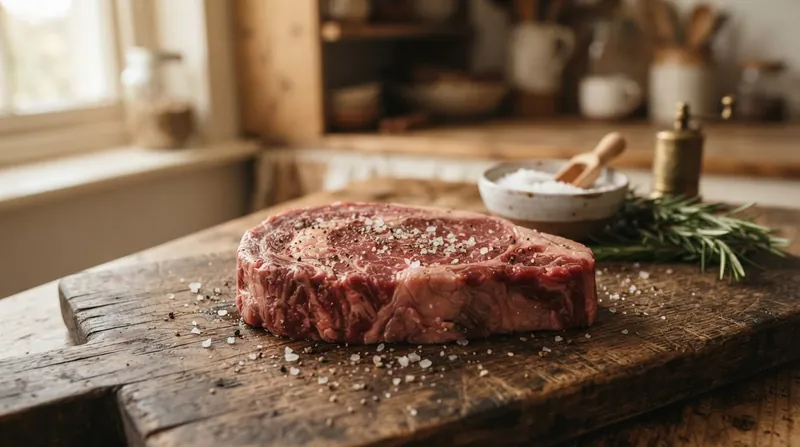
Why Salting Meat Requires Cooking Immediately or Waiting 40 Minutes for Myosin to Solubilize
4 sources
Culinary Science
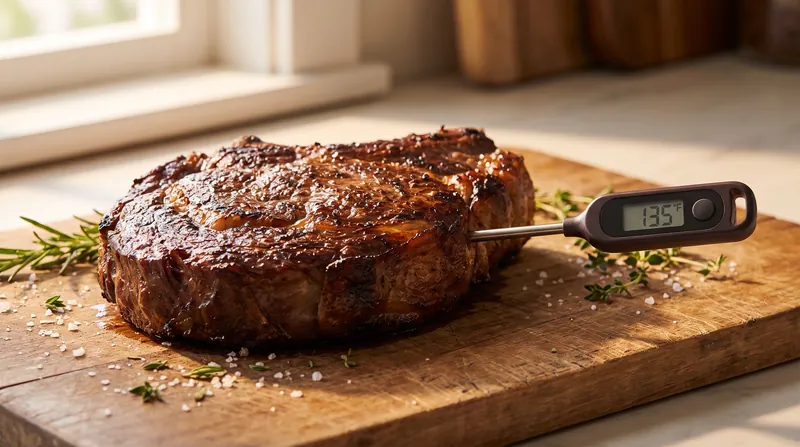
The 8°F Internal Temperature Drop: How Resting Meat Allows Muscle Fibers to Reabsorb Released Moisture
6 sources
Meat Processing
USDA Directs $50 Million to State Meat Inspection Programs to Ease Local Processing Bottlenecks
6 sources
Culinary Chemistry
The 300°C Fat Pyrolysis Threshold: How Dripping Fat Creates Polycyclic Aromatic Hydrocarbons on a Grill
6 sources
Comments
Every angle. Every day.
Get Food & Drink stories with full source coverage and perspective breakdowns, free every day.