
White House 'Signalgate' Scandal: Classified Yemen War Plans and CIA Officer's Identity Leaked in Group Chat
Top U.S. national security officials inadvertently added a journalist to a Signal group chat, exposing highly classified operational details of military strikes in Yemen and the identity of an undercover CIA officer. The unprecedented security breach has triggered investigations into the administration's handling of military secrets.

Share this story
In one of the most unprecedented operational security breaches in modern U.S. history, top national security officials inadvertently added a prominent magazine journalist to a private Signal group chat, exposing highly classified military plans just hours before airstrikes commenced in Yemen. The scandal, widely dubbed 'Signalgate' across Washington, has triggered intense scrutiny over the administration's reliance on commercial messaging applications to coordinate sensitive military and intelligence operations. The revelation has sent shockwaves through the defense establishment, raising profound questions about the protocols governing the nation's most closely guarded secrets.[1][6]
The encrypted chat, titled 'Houthi PC Small Group,' functioned as a digital war room for the highest echelons of the U.S. government. Its 18 members included Vice President JD Vance, Secretary of Defense Pete Hegseth, Secretary of State Marco Rubio, Director of National Intelligence Tulsi Gabbard, and CIA Director John Ratcliffe.
Rather than utilizing secure, government-issued communication channels—often referred to as 'high-side' networks—these Cabinet members and intelligence directors opted for a commercially available app to discuss the impending military action. The group was intended to serve as a rapid-response coordination mechanism for the Principals Committee as they finalized plans for a major offensive in the Middle East.[1][3]
The catastrophic breach occurred when National Security Advisor Mike Waltz attempted to add National Security Council spokesman Brian Hughes to the active thread. Due to a contact-saving error on his personal device, Waltz instead added Jeffrey Goldberg, the editor-in-chief of The Atlantic.
For several days, Goldberg had a front-row seat to the unvarnished, real-time coordination of 'Operation Rough Rider,' a military campaign targeting Houthi militants in the Red Sea. Unaware of the intrusion, the nation's top security officials continued to populate the chat with highly sensitive updates, effectively broadcasting their war planning to a member of the press.[1][2]
The communications shared in the commercial app went far beyond routine scheduling or high-level policy debates. According to transcripts later published by Goldberg, Defense Secretary Hegseth texted the group precise operational details exactly two hours before the first bombs dropped on Houthi targets.
The messages detailed specific weapons packages, target coordinates, the number of aircraft involved, and the exact sequencing of the attack. Military analysts note that providing this level of granular detail on an unclassified network creates an extraordinary vulnerability, as adversaries constantly monitor commercial networks for exactly this type of operational intelligence.[2][4]
The security lapses extended deeply into the intelligence community, compounding the severity of the leak. During the chat, CIA Director John Ratcliffe explicitly named an active, undercover CIA intelligence officer, potentially jeopardizing the individual's life and ongoing operations.
Further escalating the counterintelligence alarms, White House envoy Steve Witkoff was actively participating in the chat while physically located in Moscow for meetings with Russian President Vladimir Putin. Security experts warn that foreign intelligence services, particularly in Russia, possess sophisticated capabilities to intercept commercial app data, making the Moscow connection a worst-case scenario for operational security.[4][6]
The White House National Security Council swiftly confirmed the authenticity of the message chain, characterizing it as an 'inadvertent' addition of a wrong number rather than a systemic failure. However, the revelation sparked immediate bipartisan outrage on Capitol Hill.
Senate Minority Leader Chuck Schumer demanded a comprehensive investigation, calling the incident 'one of the most stunning breaches of military intelligence' in recent memory. Lawmakers from both parties have expressed utter disbelief that the administration's top intelligence officials failed to notice a journalist lingering in their highly sensitive war-planning chat for days.[1][3]
Administration officials have fiercely defended their actions, attempting to downplay the severity of the leak and the risks associated with using Signal. During a contentious Senate Intelligence Committee hearing, both DNI Gabbard and CIA Director Ratcliffe insisted that no technically classified material was shared in the Signal group.
Ratcliffe testified that the app had been loaded onto his agency computer and approved as a 'mechanism for coordinating with senior officials.' Defenders of the administration argue that the ultimate success of the Yemen strikes proves that operational security was not fatally compromised by the chat.[3][4]
Legal and military experts have forcefully pushed back on the administration's defense, arguing that the contents of the chat clearly violated federal law. Analysts point out that specific targets, weapons systems, and strike timings shared prior to a military operation inherently constitute 'national defense information' under the Espionage Act, regardless of whether the text messages themselves carried formal classification markings.
Legal scholars emphasize that the law criminalizes the mishandling of this information through gross negligence, a standard that many believe was met when officials bypassed secure networks in favor of a consumer app.[4][5]
A subsequent review by the Pentagon's Inspector General dismantled the administration's claim that the communications were unclassified. The IG concluded that the information sent from Hegseth's personal cell phone matched operational data formally classified by U.S. Central Command as 'SECRET/NOFORN'—meaning it was strictly prohibited from being viewed by foreign nationals or uncleared individuals. The damning report noted that the use of the app 'created a risk to operational security that could have resulted in failed U.S. mission objectives and potential harm to U.S. pilots' executing the strikes.[2][5]
The 'Signalgate' debacle has ignited a broader debate within the defense establishment about the urgent need for modernized, secure communication tools for senior leaders. Current and former defense officials warn that the widespread reliance on commercial apps like Signal—while encrypted—lacks the rigorous access controls, device management, and records-preservation safeguards required for coordinating global military operations. As congressional committees draft new legislation to explicitly criminalize the sharing of war plans on unsecured devices, the intelligence community is left grappling with the fallout of an entirely preventable, self-inflicted security crisis.[5][6]
Key points
- Top U.S. officials accidentally added a journalist to a Signal group chat used to coordinate military strikes in Yemen.
- Operational details, including targets and timing, were shared in the unclassified app two hours before the bombing began.
- An active undercover CIA officer was named in the chat while one of the participants was physically located in Moscow.
- The Pentagon Inspector General concluded the shared information matched classified operational data, risking U.S. forces.
Open questions
- Whether foreign intelligence services, particularly in Russia, successfully intercepted the communications while a chat participant was in Moscow.
- If the Department of Justice will pursue Espionage Act charges against any of the officials involved in the leak.
- The current safety status and location of the undercover CIA officer whose identity was exposed in the chat.
Timeline
March 11, 2025
National Security Advisor Mike Waltz inadvertently adds a journalist to the 'Houthi PC Small Group' Signal chat.
March 13, 2025
An active undercover CIA officer is named in the chat while a U.S. envoy is physically located in Moscow.
March 15, 2025 (11:44 AM)
Defense Secretary Pete Hegseth texts the group precise operational details of the impending Yemen airstrikes.
March 15, 2025 (1:44 PM)
U.S. military forces commence 'Operation Rough Rider,' bombing Houthi targets in Yemen.
March 24, 2025
The leaked chat transcripts are published, prompting the White House to confirm the unprecedented security breach.
- National Security & Intelligence Experts
- Consider the use of commercial apps for war planning a catastrophic operational and legal failure.
- Congressional Oversight Advocates
- Focus on the need for immediate investigations, accountability, and new laws governing digital communications.
- Administration Defenders
- View the chat as a modern, efficient coordination tool and downplay the severity of the leak.
Perspectives this story doesn't cover
- The undercover CIA officer whose identity was exposed
- U.S. military pilots who executed the strikes under compromised operational security
Sources
Source coverage
6 outlets
3 viewpoints surfaced






- [1]The GuardianCongressional Oversight Advocates
Outrage after White House accidentally texts journalist war plans: 'Huge screw-up'
Read on The Guardian → - [2]Middle East EyeAdministration Defenders
White House confirms Yemen strike plans were mistakenly texted to journalist
- [3]CBC NewsCongressional Oversight Advocates
Top Trump administration officials mistakenly disclosed war plans in messaging group
Read on CBC News → - [4]Just SecurityNational Security & Intelligence Experts
The Legal and Security Implications of the 'Signalgate' Leak
- [5]DefenseScoopNational Security & Intelligence Experts
Signal leak sparks new calls for modernized messaging options from defense officials
- [6]RevealNational Security & Intelligence Experts
Inside 'Signalgate': How the Trump administration leaked its own war plans

More in News & Politics
See all →Yemen Airstrikes
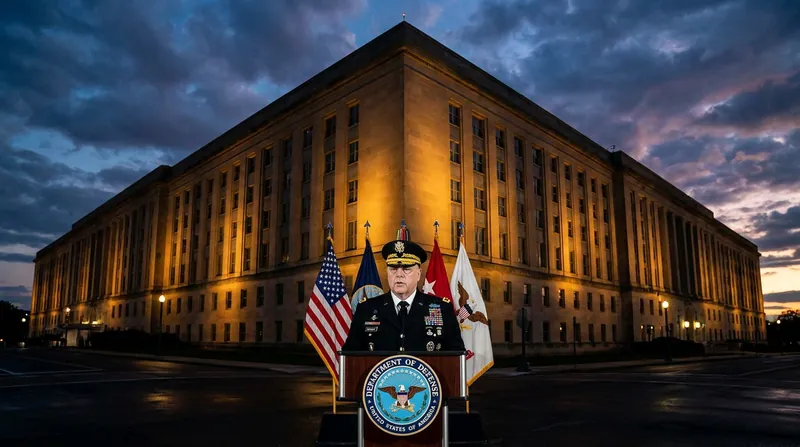
Pentagon Report Reveals Steep Civilian Toll in Trump's Yemen Campaign After Casualty Mitigation Office Dismantling
5 sources
Civil Service
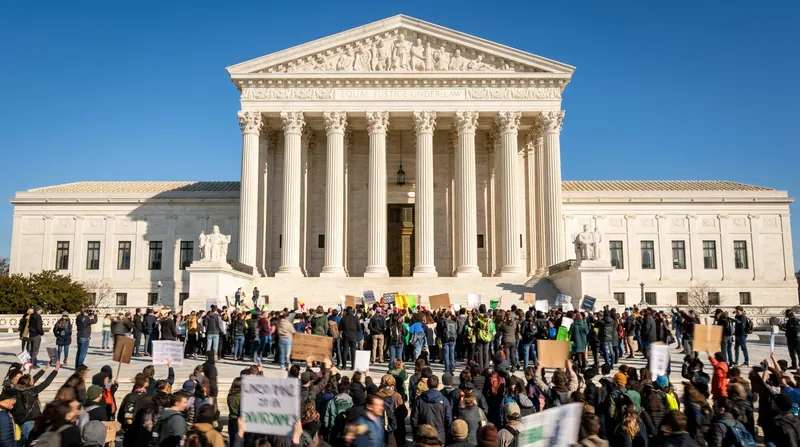
Trump Pressure Campaign Preceded Landmark Ruling Granting Power to Fire Civil Servants, Report Finds
6 sources
Data Privacy
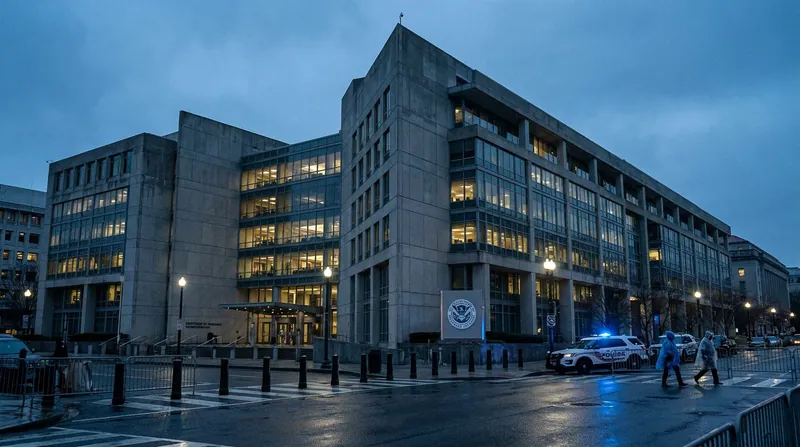
FOIA Documents Reveal DHS Portal Exposed Americans' Sensitive Data to Foreign Governments for Two Months
4 sources
Transnational Crime
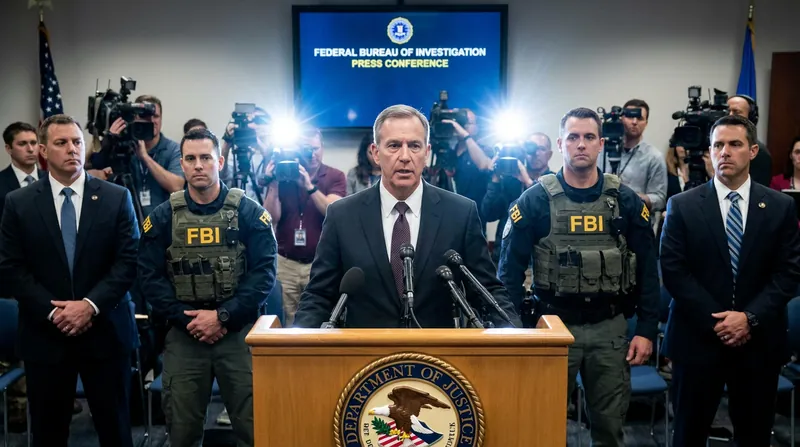
Global Crackdown on India-Based Crime Syndicates Nets 37 Charged in Assassination and Drug Trafficking Ring
3 sources
Comments
Every angle. Every day.
Get News & Politics stories with full source coverage and perspective breakdowns, free every day.