
US-to-China Tanker Charters Surge Past $60 Million as Mideast Conflict Disrupts Routes
Asian refiners have halved their November orders for United States crude oil as the cost to charter a trans-Pacific supertanker approaches $60 million. The historic surge in shipping rates, driven by vessel shortages linked to the Middle East conflict, has effectively priced American exports out of the Asian market.

Share this story
Asian refinery operators have slashed their United States crude oil orders for November delivery by roughly half, pivoting to closer suppliers as trans-Pacific shipping costs become prohibitive. The decision cuts expected purchases to between 24 million and 26 million barrels, a volume that marks a seven-year low for the trade route.[2]
The pullback follows a historic surge in the cost to charter a Very Large Crude Carrier for the voyage from the US Gulf Coast to China. The freight rate has more than tripled since late February, reaching nearly $60 million by late October after touching a record $79.6 million earlier in the month.[2]
Before the current conflict in the Middle East, the same journey typically cost less than $8 million. The extraordinary escalation means that shipping a standard two-million-barrel cargo now adds between $30 and $40 per barrel to the delivered cost, fundamentally altering the economics of global energy markets.[2][3]
The pricing has reached levels that industry analysts note are unprecedented in modern maritime trade. At its October peak, chartering a supertanker to move oil across the Pacific cost more than the $74 million published price to launch a standard SpaceX Falcon 9 rocket into orbit.[1][3]
The Hormuz bottleneck
The price spike is driven by a severe reduction in the effective supply of global shipping vessels rather than a shortage of crude itself. Ongoing military disruptions around the Strait of Hormuz have forced Middle Eastern producers to alter their traditional export logistics to protect their cargoes.[2][3]
To avoid the highest-risk areas, exporters are increasingly using smaller vessels to load crude inside the Persian Gulf. Once those ships exit the waterway, they transfer their payloads to larger supertankers waiting in the safer waters of the Gulf of Oman.[2][3]
"The inefficient process of this ship-to-ship transferring that they're doing of crude oil in the Gulf of Oman is really tying up global shipping," said Randy Hawkins, head of oil trading at Valero Energy. He noted that the workaround requires significantly more tankers to move the same volume of oil.[2]
Because the global fleet of Very Large Crude Carriers is finite, tying up vessels in the Middle East immediately reduces the number of ships available in the Atlantic Basin. That scarcity has driven up freight rates across every major export route, regardless of whether the journey passes near a conflict zone.[3]
The cost to charter smaller Aframax vessels from the US Gulf Coast to Europe has experienced a similar inflation. Rates for that transatlantic route recently doubled in a single week, reaching their highest levels since early April as the broader tanker market tightened.[3]
Closing the arbitrage window
The soaring freight bill has effectively closed the arbitrage window that usually makes American crude attractive to international buyers. While a wider spread between Brent and West Texas Intermediate benchmarks generally improves the economics of US exports, the current differential cannot cover the massive shipping premium.[3]
With US crude priced out of reach, Asian buyers are increasingly sourcing their marginal barrels from the Middle East and Latin America. The shift in demand has already begun to lift the premiums on shorter-haul grades, as refiners prioritize proximity over base commodity prices.[4][5]
Some buyers with rigid supply needs have been forced to pay the inflated rates. On October 8, Japanese oil major Cosmo Oil chartered a 2020-built supertanker for $81 million to transport two million barrels from the US Gulf Coast, a figure five times higher than the rate a year ago.[3]
For US producers, the drop in trans-Pacific demand threatens to leave heavy crude piling up at domestic terminals. While overall US exports remained substantial through September, the loss of the Asian market could pressure Gulf Coast differentials and reduce the netbacks that domestic drillers realize on their production.[1][2]
The situation mirrors the supply chain breakages seen during the 1980s Tanker War between Iran and Iraq. Industry analysts note that, even after adjusting for inflation, current freight rates have surpassed those historical peaks to reach the highest levels since supertankers first entered service in the 1960s.[1][3]
Signs of a plateau
There are early indications that the freight market may have found its ceiling, though rates remain exceptionally high. The daily charter cost for the benchmark US-to-China route, known as TD22, slipped to $634,974 on October 9, marking its first decline since early September.[5]
The slight retreat followed a peak of $637,675 the previous day, which was the highest daily rate ever recorded on the route since the Baltic Exchange began tracking it. Traders suggest the easing occurred because the record costs actively destroyed demand for long-haul cargoes.[5]
Despite the recent dip, the underlying logistical constraints remain unresolved. The global shipping industry cannot quickly build new supertankers to replace the capacity lost to inefficient routing, meaning the market will remain highly sensitive to any further geopolitical shocks.[3][4]
As long as the Middle East conflict necessitates complex ship-to-ship transfers and extended voyages, elevated shipping costs will continue to act as a structural barrier. For the foreseeable future, freight rates, rather than the price of crude itself, will remain the decisive factor in global energy flows.[3]
Key points
- Asian refiners have halved their November orders for US crude to a seven-year low of 24 million to 26 million barrels.
- Chartering a supertanker from the US Gulf Coast to China now costs nearly $60 million, adding up to $40 per barrel in freight.
- Middle East conflict disruptions have forced inefficient ship-to-ship transfers in the Gulf of Oman, tying up the global fleet and driving up rates worldwide.
- The benchmark daily charter rate recently peaked at an unprecedented $637,675 before showing early signs of stabilizing.
What we don’t know
- How long Middle Eastern producers will need to rely on the inefficient ship-to-ship transfers that are currently tying up the global tanker fleet.
- Whether the recent slight decline in daily charter rates represents a true market ceiling or just a temporary pause in a longer upward trend.
- How US Gulf Coast storage facilities will manage the excess heavy crude if the Asian export window remains closed through the winter.
How we got here
Late February 2026
Conflict escalates in the Middle East, prompting initial disruptions to tanker traffic through the Strait of Hormuz.
Early September 2026
Trans-Pacific freight rates begin a steep, uninterrupted climb as global vessel availability tightens.
October 8, 2026
The daily charter rate for the US-to-China route hits a record $637,675, and Cosmo Oil pays $81 million for a single voyage.
October 9, 2026
The benchmark daily rate slips to $634,974, marking the first decline in a month as demand for long-haul cargoes falters.
Late October 2026
Asian refiners cut their November orders for US crude by 50%, signaling a structural shift in trade flows.
- Asian Refiners
- Buyers seeking to minimize delivered costs by pivoting to closer suppliers.
- US Producers & Traders
- Exporters dealing with stranded barrels and falling domestic differentials.
- Maritime & Shipping Analysts
- Market observers tracking fleet efficiency, vessel scarcity, and record charter rates.
Perspectives this story doesn't cover
- Independent shipbrokers
- European refiners competing for diverted US crude
Sources
Source coverage
5 outlets
3 viewpoints surfaced





- [1]LivemintAsian Refiners
Oil Tankers Sailing the US-China Route Are Commanding $60 Million and It's Crushing Demand
Read on Livemint → - [2]Seeking AlphaUS Producers & Traders
U.S. oil exports to Asia plunge as war disrupts shipping, lifting tanker rates to record high
Read on Seeking Alpha → - [3]RBN EnergyMaritime & Shipping Analysts
Crazy – Attacks, Altered Crude Flows, Unbalanced Fleets Push Tanker Freight Rates to Record Levels
Read on RBN Energy → - [4]Baird MaritimeMaritime & Shipping Analysts
US-China crude shipping costs retreat after unprecedented surge
Read on Baird Maritime → - [5]The Economic TimesAsian Refiners
US-China supertanker freight cost eases from record, data shows
Read on The Economic Times →

More in Business
See all →Biofuel Policy
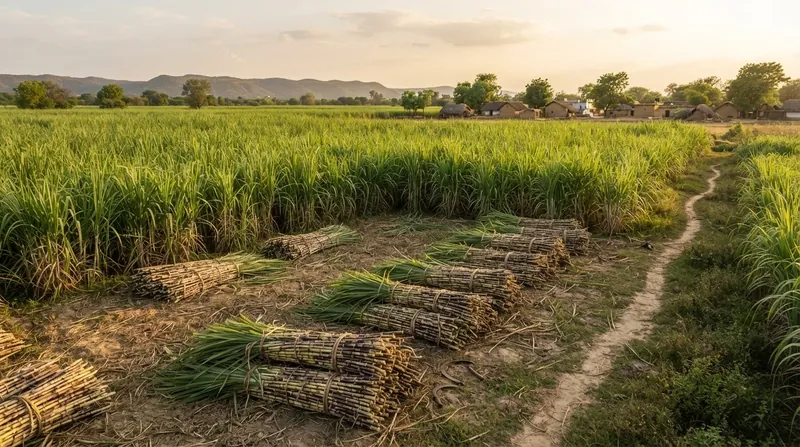
India Halts Sugar-Based Ethanol Procurement to Protect Domestic Supply Amid El Niño Drought
5 sources
Semiconductor Trade
Japan Backs $21 Billion GlobalFoundries Expansion in New York to Secure Semiconductor Supply Chains
5 sources
Trade Compliance
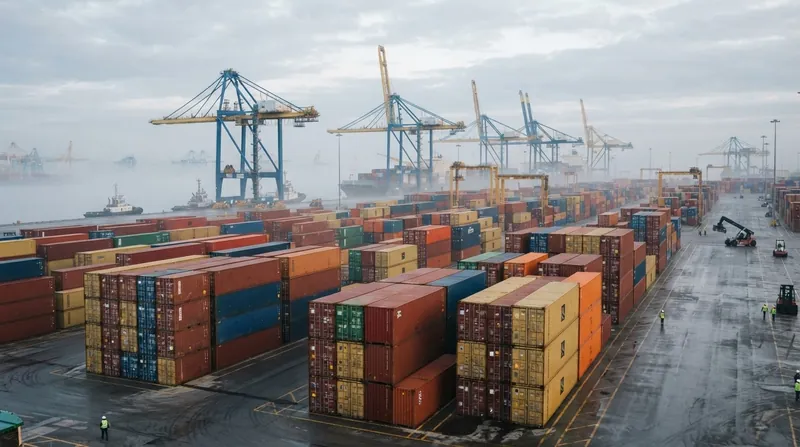
Containerized Cargo Handed Over at Inland Terminals Leaves Shippers Liable for Port Damage Under FOB Rules Instead of FCA
6 sources
Macroeconomics
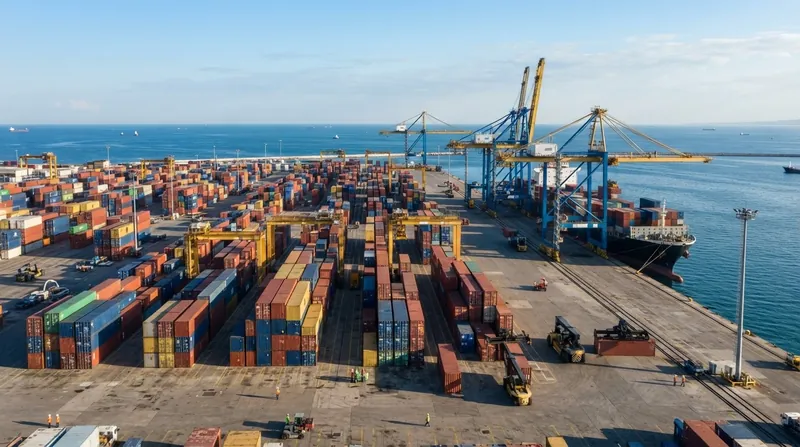
Global Trade Growth Relies on AI Infrastructure as Traditional Goods Contract
2 sources
Comments
Every angle. Every day.
Get Business stories with full source coverage and perspective breakdowns, free every day.