
U.S. Military Exhausts Stockpile of Long-Range Precision Missiles During Iran War
After five months of sustained combat operations, the United States has used virtually all of its highly accurate surface-to-surface missiles, exposing a critical bottleneck in the defense industrial base. The rapid drawdown of offensive and defensive munitions raises immediate concerns about America's ability to respond to future conflicts in the Indo-Pacific.
By Hao Li

Share this story
The prevailing assumption regarding the five-month U.S. war with Iran is that Washington's primary constraint is domestic political will. The evidence, however, points to a hard ceiling in industrial capacity. After roughly 150 days of sustained combat operations, the United States military has expended virtually its entire global stockpile of highly accurate long-range precision missiles.
This depletion fundamentally alters the strategic calculus not just for the ongoing Middle East conflict, but for America's broader global force posture. Rather than a limitless arsenal, the U.S. military is currently operating against strict supply limits that dictate how and where it can project power.[1][7]
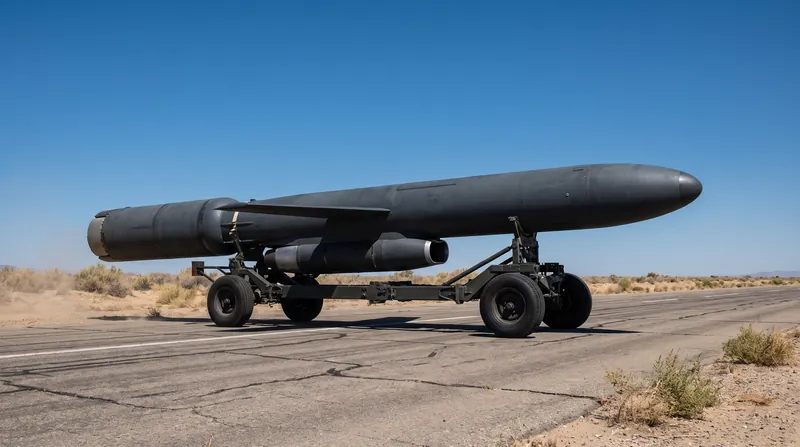
The most severe shortages involve the Army's premier surface-to-surface weapons. Multiple sources familiar with internal Pentagon data confirm that the military has used "virtually all" of its Army Tactical Missile Systems (ATACMS) and the newer Precision Strike Missiles (PrSM).
These munitions, which cost upwards of $1 million each, are critical nodes in the U.S. strike architecture, allowing forces to accurately destroy heavily defended targets from a safe distance without exposing piloted aircraft to enemy air defenses. The complete drawdown of these specific assets removes a primary tool from the Central Command operational playbook.[1][2][7]
The rapid consumption extends to naval strike capabilities and defensive interceptors. The U.S. has reportedly burned through nearly half of its global supply of Tomahawk cruise missiles, a staple of the Navy's deep-strike capability launched from destroyers and submarines. Simultaneously, the defensive shield has been severely degraded.
An analysis by the Center for Strategic and International Studies (CSIS) indicates that the U.S. has depleted roughly two-thirds of its pre-war Patriot missile interceptor inventory, dropping from an estimated 2,330 missiles to fewer than 830. Terminal High Altitude Area Defense (THAAD) interceptor stocks have similarly fallen by nearly half.[4][7]
The core issue is the inelasticity of the defense industrial base. These advanced munitions cannot be surged on short notice. They rely on highly specialized supply chains involving complex microelectronics, solid rocket motors, and precision machining. Current production rates for Patriot interceptors, for example, hover around 600 per year.
According to CSIS projections, even with defense contractors operating at maximum capacity, it will take until at least mid-2029 to return Patriot and THAAD inventories to their pre-war levels. The production pipeline for the newer PrSM system is similarly constrained, with large-scale deliveries not expected until 2027.[1][4]
Within the Iranian theater, this industrial bottleneck forces an immediate tactical shift. Without a deep reserve of long-range precision fires, any resumption of large-scale offensive operations would require the U.S. to rely more heavily on piloted bombing missions. This inherently increases the operational risk, forcing aircraft into the engagement envelopes of surviving Iranian surface-to-air missile systems. The shortage of defensive interceptors also limits the U.S. military's ability to shield regional allies and forward-deployed troops from retaliatory ballistic missile barrages, potentially forcing commanders to prioritize only the highest-value targets for defense.[3][7]
The downstream consequences extend far beyond the Middle East, directly impacting U.S. readiness in the Indo-Pacific. The ATACMS, PrSM, and Tomahawk missiles currently being expended against Iranian targets are the exact munitions the Pentagon has spent a decade stockpiling for a potential high-intensity conflict with China. Because these weapons are designed to penetrate advanced anti-access/area-denial (A2/AD) networks, their absence creates a multi-year window of strategic vulnerability. Defense analysts warn that this drawdown forces the U.S. to accept greater operational risk globally while the industrial base attempts to catch up.[4][7]
The administration has publicly pushed back against the narrative of a weakened military. Chief Pentagon spokesperson Sean Parnell stated that the U.S. military retains a "deep arsenal of capabilities" and possesses everything required to execute operations at the president's choosing. President Donald Trump has similarly dismissed reports of critical shortages, emphasizing that defense manufacturers are actively replenishing supplies. Nevertheless, the internal pressure is evident, as military leaders have reportedly warned the White House for weeks about the dwindling stockpiles of both offensive and defensive weapons.[1][7]
Ultimately, the rapid depletion of precision munitions during the Iran war serves as a stress test for the modern American way of war. The U.S. military doctrine relies heavily on overwhelming adversaries with highly accurate, long-range fires to minimize friendly casualties. However, that doctrine assumes an industrial base capable of sustaining such an expenditure rate. The current conflict demonstrates that while the U.S. can achieve devastating tactical success in the opening phases of a war, its sustained conventional deterrence is currently limited by the speed of its assembly lines.[4][6]
Viewpoints in depth
Defense Industrial Base Analysts
Focus on the structural inability of U.S. manufacturing to quickly replace expended precision munitions.
Analysts tracking the defense supply chain argue that the current crisis is the predictable result of decades of optimization for peacetime efficiency. The production of advanced systems like the Patriot PAC-3 MSE or the Precision Strike Missile requires highly specialized components—such as solid rocket motors and military-grade microelectronics—that cannot be surged overnight. From this perspective, the bottleneck is not a lack of funding, but a lack of physical assembly lines and trained aerospace technicians, meaning the U.S. will face a multi-year deficit regardless of immediate budget allocations.
Strategic Readiness Advocates
Warn that drawing down high-end munitions in the Middle East leaves the U.S. vulnerable in the Indo-Pacific.
For strategists focused on great power competition, the Iran conflict represents a dangerous diversion of critical resources. Weapons like the ATACMS and Tomahawk cruise missiles were explicitly stockpiled to counter advanced anti-access/area-denial (A2/AD) networks, such as those deployed by China. By burning through these reserves against Iranian targets, advocates argue the U.S. has severely compromised its near-term conventional deterrence in Asia, forcing military planners to accept unprecedented levels of operational risk in the Pacific theater until inventories recover late in the decade.
Administration Officials
Maintain that the U.S. retains overwhelming military superiority and that production is actively scaling up.
The White House and Pentagon leadership push back strongly against the narrative of a hollowed-out force. From their viewpoint, the U.S. military remains the most capable fighting force on the globe, possessing a deep and diverse arsenal that extends far beyond the specific missile systems highlighted in recent reports. Administration officials emphasize that defense contractors have already been placed on a wartime footing, with vast resupplies currently moving through the production pipeline to ensure the U.S. can meet any emergent global threat.
Key points
- The U.S. military has expended "virtually all" of its highly accurate long-range precision missiles, including ATACMS and PrSMs, during the five-month Iran war.
- Defensive stockpiles have also plummeted, with Patriot interceptor inventories dropping by an estimated two-thirds since February.
- Defense analysts project it will take until at least 2029 for the U.S. industrial base to return missile inventories to pre-war levels.
- The depletion forces a tactical shift in the Middle East, potentially requiring riskier piloted bombing missions if large-scale strikes resume.
How we got here
February 2026
The United States and Israel launch joint military operations against Iran, initiating a high-intensity conflict.
May 2026
Defense analysts warn that the U.S. has already expended a significant portion of its precision-guided munitions in the opening phases of the war.
July 2026
CSIS reports that U.S. Patriot and THAAD interceptor inventories have fallen by roughly two-thirds and one-half, respectively.
August 2026
Internal Pentagon data reveals the military has used virtually all of its ATACMS and Precision Strike Missiles.
- Defense Industrial Base Analysts
- Focus on the structural inability of U.S. manufacturing to quickly replace expended precision munitions.
- Strategic Readiness Advocates
- Warn that drawing down high-end munitions in the Middle East leaves the U.S. vulnerable in the Indo-Pacific.
- Administration Officials
- Maintain that the U.S. retains overwhelming military superiority and that production is actively scaling up.
- Anti-Interventionist Critics
- View the depletion as evidence that the war is sapping U.S. prestige and resources unnecessarily.
Perspectives this story doesn't cover
- Allied nations relying on U.S. missile exports for their own defense
- Aerospace supply chain manufacturers facing production bottlenecks
Sources
Source coverage
7 outlets
4 viewpoints surfaced







- [1]CBS NewsAdministration Officials
U.S. has used nearly all its stockpile of long-range missiles in Iran war, sources say
Read on CBS News → - [2]Times of IsraelAdministration Officials
US has used 'virtually all' of its long-range precision missiles during Iran war — sources
Read on Times of Israel → - [3]Middle East EyeAnti-Interventionist Critics
US depleted 'virtually all' long-range precision missiles during Iran war: Report
Read on Middle East Eye → - [4]Military TimesDefense Industrial Base Analysts
Iran war depleted US Patriot missile stockpiles, creating readiness challenges, experts say
Read on Military Times → - [5]The PrintStrategic Readiness Advocates
Exclusive-US has used 'virtually all' of its long-range precision missiles during Iran war, sources say
Read on The Print → - [6]Atlantic CouncilDefense Industrial Base Analysts
The Middle East: An immediate test of endurance
Read on Atlantic Council → - [7]ReutersStrategic Readiness Advocates
US has used 'virtually all' its long-range precision missiles in Iran war
Read on Reuters →
More in Defense & Security
See all →Subsea Infrastructure
NATO Allies Disrupt Russian Submarine Drill Targeting Arctic Undersea Cables
3 sources

Aviation Defense
U.S. Army Awards Northrop Grumman $4.8 Billion to Equip Helicopters With Laser Missile Defenses
9 sources

Strait of Hormuz
US and Iranian Naval Forces Exchange Fire in Strait of Hormuz as Brent Crude Surpasses $100
5 sources

Force Posture
Pentagon Launches Review of European Force Posture Amid Munitions Shortages
5 sources

Comments
Every angle. Every day.
Get Defense & Security stories with full source coverage and perspective breakdowns, free every day.