
Turkey Begins Withdrawal From Northern Iraq Military Base in Strategic Thaw With Baghdad
Turkish forces have initiated a phased handover of the contentious Bashiqa-Zilkan camp to Iraqi federal authorities, ending a decade-long deployment. The withdrawal follows a bilateral security agreement tied to the disarmament of local militias and the restoration of Iraqi state control in the Sinjar region.

Share this story
Turkish troops have initiated a phased withdrawal from the Bashiqa-Zilkan military base in northern Iraq this month, beginning the handover of a fortified installation that has strained relations between Ankara and Baghdad for nearly a decade. The transfer of the Nineveh province outpost to Iraqi federal forces is scheduled to conclude by the end of 2026 or early 2027, marking a rare voluntary contraction of Turkey's cross-border military footprint.[4]
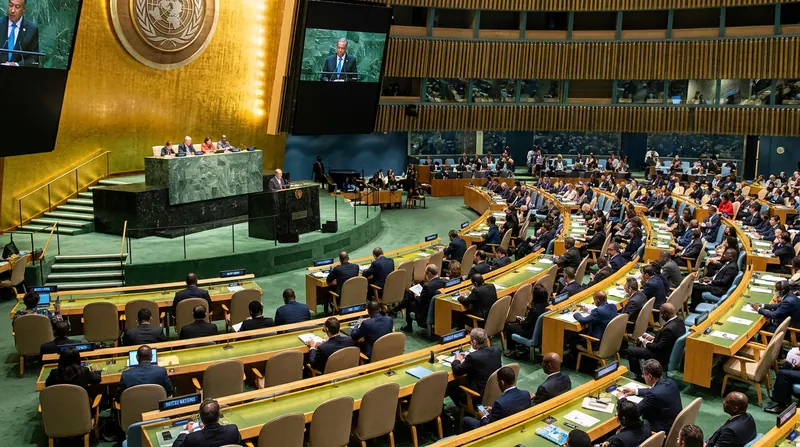
The drawdown executes a bilateral security framework finalized on September 23, 2026, when Turkish President Recep Tayyip Erdogan and Iraqi Prime Minister Ali al-Zaidi met on the sidelines of the United Nations General Assembly in New York. The two leaders agreed to a gradual transition conditioned on Iraq asserting full state authority over the neighboring Sinjar district and dismantling local militias operating outside federal control.[3][5]
A Joint Security Coordination Committee comprising defense and intelligence officials from both nations is now actively monitoring the withdrawal. Sabah al-Numan, spokesman for the Iraqi Armed Forces, confirmed on November 9 that the committee is overseeing the logistical transfer of the camp while verifying the implementation of parallel security measures along the volatile border zone.[3][4]
The phased nature of the withdrawal involves the systematic removal of Turkish heavy armor, artillery batteries, and advanced surveillance equipment that have fortified the camp for years. Iraqi military engineers are working alongside Turkish counterparts to inventory the facility's infrastructure, ensuring that barracks, defensive perimeters, and communication nodes are transferred intact to incoming federal units.[4]
A Decade of Friction
Turkey established the Bashiqa-Zilkan installation in 2015, deploying approximately 900 troops, heavy artillery, and armored vehicles to the site located 50 miles south of the Turkish border. The initial mandate, coordinated with the autonomous Kurdistan Regional Government, was to train Kurdish Peshmerga and Sunni tribal fighters during the grueling campaign to drive the Islamic State out of Mosul.[1][2][5]
The deployment immediately triggered a severe diplomatic crisis. In December 2015, when Turkey reinforced the base with additional troops and tanks, Baghdad accused Ankara of a hostile incursion. The Iraqi government filed formal complaints with the United Nations Security Council, while political leaders in both capitals exchanged bitter public ultimatums over the presence of foreign armor on Iraqi soil.[2][5]
While the Islamic State was territorially defeated in Iraq in 2017, Turkish forces remained entrenched at the camp. Ankara repurposed the facility as a forward operating base to monitor and disrupt the Kurdistan Workers' Party (PKK) and its local affiliates. Successive Iraqi administrations condemned the enduring deployment as an unauthorized violation of national sovereignty, frequently demanding an unconditional exit.[2][4][5]
"The agreement is politically significant, but its immediate military implications should not be overstated," said Francesco Schiavi, a Middle East analyst at the Middle East Institute Switzerland.[1]
"Its gradual handover represents a tangible step towards restoring Iraqi sovereignty and improving bilateral security relations."[1]
The Sinjar Disarmament
The diplomatic breakthrough hinged on Baghdad's commitment to neutralize the Sinjar Resistance Units (YBS), an all-Yazidi armed faction. The YBS emerged during the August 2014 Islamic State genocide, when PKK fighters helped establish an escape corridor for thousands of Yazidis trapped on Mount Sinjar. The resulting operational ties between the YBS and the PKK prompted Ankara to view the Yazidi militia as a direct national security threat.[2]
For the Yazidi community, the YBS represented a vital self-defense force following the collapse of federal and Peshmerga defenses in 2014. Persuading the militia to disarm required delicate negotiations, as community leaders remained deeply skeptical of relying solely on the central government for protection in a region still scarred by mass atrocities and displacement.[2][3]
In late October 2026, the Iraqi government brokered a landmark disarmament pact with the YBS leadership. Approximately 2,000 fighters surrendered their heavy weapons and integrated into the Iraqi army, federal police, and the state-funded Popular Mobilization Forces (PMF). Up to 4,000 additional personnel are slated to merge into state institutions in subsequent phases over the coming months.[2]
The integration of Yazidi fighters into the Popular Mobilization Forces introduces a complex new variable to the border region. The PMF is an umbrella organization that includes powerful Iran-aligned paramilitary groups, which Turkey has historically viewed with deep suspicion. By absorbing the YBS into the state payroll through the PMF, Baghdad is attempting to neutralize a Kurdish insurgency threat while managing the delicate balance of influence in Nineveh.[2]
Turkish officials view the integration process as a critical milestone in securing the Qandil-Makhmur-Sinjar transit corridor. The state-run Anadolu Agency characterized the joint monitoring mechanism as a targeted effort to completely eliminate the presence of the PKK in the borderlands, reflecting Ankara's insistence that the YBS sever all ideological and command links to the militant group.[2][5]
Economic and Strategic Stakes
The security pact is deeply intertwined with the economic ambitions of both nations, particularly the Development Road project. The estimated $17 billion infrastructure initiative aims to link Iraq's southern Al-Faw port to Turkish and European markets via a network of high-speed rail and highways. Securing Nineveh province is a prerequisite for the transit corridor, which passes directly through the historically contested region.[3]
The stabilization of Nineveh carries immediate economic implications for the local population. The enduring presence of rival armed groups had severely hampered reconstruction efforts in the province, deterring foreign investment and delaying the return of thousands of internally displaced persons. Iraqi officials hope that the unified federal command will unlock stalled infrastructure funds and restore basic municipal services to the war-torn district.[3]
For Prime Minister Zaidi, the Bashiqa handover validates his broader domestic agenda of monopolizing the use of force. Zaidi had announced the YBS disarmament agreement two weeks prior to his meeting with Erdogan, framing it as part of a comprehensive effort to bring all armed factions—including powerful pro-Iran paramilitary groups—under strict federal command.[2]
The withdrawal builds upon a military cooperation memorandum signed by Iraq and Turkey in August 2024. That agreement established the groundwork for closer intelligence sharing and the creation of joint security centers, transforming a hostile standoff into a structured bilateral partnership aimed at securing the rugged 200-mile shared border.[5]
Shifting Regional Architecture
The Bashiqa withdrawal aligns with a broader regional de-escalation following the PKK's May 2025 announcement that it would dissolve its armed wing and pursue a political settlement. Last month, the group vacated four long-held mountain camps in northern Iraq, reducing the immediate tactical necessity for forward Turkish outposts like Zilkan.[1]
Despite the Bashiqa handover, Turkey continues to operate dozens of smaller military positions and intelligence outposts within the autonomous Kurdistan Region. Ryan Bohl, a regional analyst at the RANE Network, noted that while the Zilkan transfer does not guarantee a total Turkish exit, the trajectory suggests that is becoming a more distinct possibility.[1][2]
The transition comes as the Middle East experiences a profound shift in its security landscape. With the formal conclusion of the United States military mission in Iraq marked in September 2026, regional powers are recalibrating their postures. Defense analyst Ali Bakir observed that the move comes amid broader efforts to stabilize the region and potentially establish a new regional security architecture based on greater regional ownership and responsibility.[1]
The diplomatic thaw has drawn international support, particularly as Washington manages its own transition. Tom Barrack, the U.S. Ambassador to Turkey, praised the bilateral mechanism.[4]
"Ankara returning Zilkan to Baghdad by agreed mechanism and timeline is one such thread: Iraqi sovereignty and Turkish security, both served," Barrack stated. "What looks like chaos from afar is a region weaving its own order."[4]
"Ankara returning Zilkan to Baghdad by agreed mechanism and timeline is one such thread: Iraqi sovereignty and Turkish security, both served," Barrack stated.
The transition places the burden of border security squarely on Baghdad. Iraqi federal forces must now demonstrate the capacity to hold the Sinjar territory, manage the newly integrated Yazidi fighters, and prevent armed factions from exploiting the vacuum left by departing Turkish armor. The success of the handover will likely dictate whether Ankara considers further withdrawals from Iraqi soil.[1]
Key points
- Turkey has begun withdrawing troops from the Bashiqa-Zilkan base in northern Iraq, with a full handover expected by early 2027.
- The transition follows a September agreement between Turkish President Recep Tayyip Erdogan and Iraqi Prime Minister Ali al-Zaidi.
- The withdrawal is contingent on Baghdad disarming the Sinjar Resistance Units (YBS) and integrating thousands of Yazidi fighters into state forces.
- The base, established in 2015 during the fight against the Islamic State, had long been a source of diplomatic friction over Iraqi sovereignty.
Open questions
- Whether Turkey will set a timeline for withdrawing from its dozens of other military outposts in the autonomous Kurdistan Region.
- How the newly integrated Yazidi fighters will operate within the broader command structure of the Popular Mobilization Forces.
- The exact operational details of the joint intelligence sharing centers established under the 2024 military cooperation memorandum.
Timeline
August 2014
The Islamic State attacks Sinjar, leading to the Yazidi genocide and the formation of the YBS militia.
December 2015
Turkey establishes the Bashiqa-Zilkan military base to train local forces, sparking a diplomatic crisis with Baghdad.
May 2025
The Kurdistan Workers' Party (PKK) announces the dissolution of its armed wing.
September 2026
Turkish and Iraqi leaders agree to a phased handover of the Bashiqa base during a meeting in New York.
October 2026
Baghdad brokers a disarmament pact with the YBS, integrating 2,000 fighters into state security forces.
November 2026
Turkish troops begin the logistical withdrawal from the Bashiqa-Zilkan installation.
- Iraqi Federal Government
- Prioritizes the restoration of national sovereignty and the monopolization of armed force.
- Turkish Security Establishment
- Focuses on neutralizing the PKK and securing the southern border against cross-border attacks.
- Yazidi Community
- Emphasizes self-defense and protection following the trauma of the 2014 Islamic State genocide.
Perspectives this story doesn't cover
- Kurdistan Workers' Party (PKK) leadership
- Local Sunni Arab tribal leaders in Nineveh
Sources
Source coverage
5 outlets
3 viewpoints surfaced





- [1]Breaking DefenseIraqi Federal Government
Turkey prepares to withdraw from base in Iraq in shift for Ankara-Baghdad relations: Analysts
Read on Breaking Defense → - [2]RudawYazidi Community
Turkey to start handing over Bashiqa-Zilkan camp to Iraq following YBS disarmament
Read on Rudaw → - [3]Kurdistan24Iraqi Federal Government
Iraq and Türkiye Agree on Gradual Handover of Bashiqa Military Camp to Baghdad
Read on Kurdistan24 → - [4]The Media LineIraqi Federal Government
Turkey Begins Withdrawal From Northern Iraq Military Base After Deal With Baghdad
Read on The Media Line → - [5]Hürriyet Daily NewsTurkish Security Establishment
Türkiye to begin handover of Bashiqa base to Iraq
Read on Hürriyet Daily News →
More in Defense & Security
See all →Base Security
US Air Force Diverts Tankers From UK Base Over Reported Iran Threat
7 sources
Arms Exports
Swiss Neutrality Proponents Force Referendum on Bill Easing Arms Export Rules
3 sources

Global Security
Global Geopolitics and International Security: The Definitive Guide
15 sources
Arms Proliferation
Saudi Arabia Expands Ballistic Missile Plant to Build Larger Solid-Fuel Weapons
5 sources
Comments
Every angle. Every day.
Get Defense & Security stories with full source coverage and perspective breakdowns, free every day.