
The Sleep State Advantage: Why Zigbee and Z-Wave Sensors Outlast Wi-Fi by Years
While Wi-Fi sensors drain batteries in months maintaining network connections, Zigbee and Z-Wave achieve multi-year lifespans by shutting down their radios entirely between transmissions.

Share this story
In short
- Wi-Fi devices must constantly communicate with routers to maintain their connection, draining batteries rapidly.
- Zigbee and Z-Wave devices spend 99.99 percent of their time in a micro-ampere sleep state, waking only to transmit state changes.
- The extreme power efficiency of Zigbee and Z-Wave requires a continuously powered hub to queue messages.
The lifespan of a battery-powered smart home sensor is determined the moment it finishes transmitting a payload and attempts to disconnect from the network. This specific transition—the descent into a sleep state—is the single variable that dictates whether a device will run for five years or die in three months, because idle time accounts for more than 99 percent of a sensor's operational life. While Wi-Fi devices must constantly negotiate their presence with a router to maintain an IP address, Zigbee and Z-Wave radios simply power down their transceivers entirely.
Wi-Fi was engineered for continuous, high-bandwidth data streams, such as streaming 4K video or downloading large files. To achieve this seamless connectivity, the 802.11 standard requires devices to periodically wake up and send "keep-alive" beacons to the router, ensuring the IP lease remains valid and the routing tables stay updated.
"Wi-Fi is inherently a chatty protocol," notes the 2026 analysis from DataWire Solutions. "Even when a Wi-Fi sensor has nothing to report, it must expend energy just to prove it still exists on the network."[2]
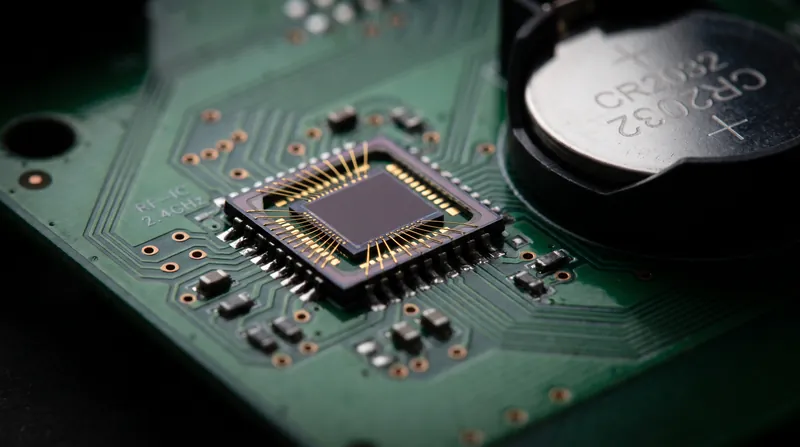
A typical Wi-Fi chip draws between 20 and 50 milliamperes (mA) just staying connected in an idle state. Over a month, that baseline drain consumes the entirety of a standard CR2032 coin cell battery, which holds roughly 220 milliampere-hours (mAh) of total capacity. The battery is not drained by reporting data; it is drained by the bureaucratic overhead of network maintenance.[1]
Zigbee, based on the IEEE 802.15.4 standard, and Z-Wave take the exact opposite architectural approach. They are designed explicitly for low-bandwidth, intermittent communication, sending a few bytes of data only when a physical state changes, such as a door opening or a temperature dropping below a threshold.
The core mechanism enabling their longevity is the deep sleep state. When a Zigbee or Z-Wave device is not actively transmitting, it physically shuts off its radio receiver. The current draw drops from roughly 30 mA during active transmission to less than 2 microamperes (µA) during sleep.[1][4]
This creates an extreme duty cycle. A Zigbee door sensor might spend 99.99 percent of its life asleep. It wakes up, takes 10 to 30 milliseconds to transmit a state change to the hub, and immediately returns to sleep before the hub even processes the automation.[5]
Writing for XDA Developers in September 2026, a reviewer documented this transition firsthand: "After swapping my Wi-Fi temperature sensors for Zigbee equivalents, their battery life went from needing a recharge every three months to projecting over three years of runtime on a single coin cell."[3]
Z-Wave operates on a similar duty cycle but utilizes sub-gigahertz frequencies—typically 908.42 MHz in North America—which penetrate walls and solid objects far better than the 2.4 GHz band shared by Wi-Fi and Zigbee. This lower frequency means Z-Wave devices can transmit at lower power levels while achieving the same physical range.[6]
According to Homey's 2026 documentation on Z-Wave energy consumption, a well-optimized Z-Wave Plus device can achieve a five-to-seven-year battery life on a single CR123A battery, provided the network routing is stable and the device is not forced to constantly re-transmit dropped packets.[4]
The strict trade-off for this extreme power efficiency is the absolute requirement for a dedicated hub. Because sleeping devices cannot receive commands instantly, a continuously powered hub must act as a mailbox, queuing messages and automations until the sensor wakes up and asks if anything is waiting for it.[2][5]
Smart home marketing routinely obscures this architectural difference, selling Wi-Fi devices as "hub-free" conveniences that lower the barrier to entry. While it is true that a Wi-Fi door sensor connects directly to an existing router out of the box, the marketing materials rarely quantify the hidden cost: the constant battery anxiety and the eventual e-waste of replacing lithium cells multiple times a year just to maintain a network lease.
The landscape is shifting slightly with the introduction of Thread, an IPv6-based protocol that brings IP addressability to the low-power 802.15.4 radio standard used by Zigbee. Thread aims to eliminate the proprietary hub requirement by allowing any constantly powered device—like an Apple TV or a Google Nest Hub—to act as a border router, bridging the low-power mesh network to the home's Wi-Fi.[2]
However, the physical constraints of radio transmission remain absolute. Until battery chemistry undergoes a fundamental revolution, the choice between Wi-Fi and specialized smart home protocols is a choice between bandwidth and longevity. The devices that last half a decade do so precisely because they spend almost all of that time doing absolutely nothing.
Key terms
- Duty Cycle
- The fraction of time a device is actively transmitting or receiving data compared to the time it spends asleep.
- Sleep State
- A low-power mode where a device shuts down its radio transceiver to conserve battery, drawing only microamperes of current.
- Keep-Alive Beacon
- A small packet of data sent periodically by a Wi-Fi device to inform the router it is still connected to the network.
- Sub-Gigahertz Frequency
- Radio waves below 1 GHz, which offer better wall penetration and range than 2.4 GHz signals.
Frequently asked
Can a software update make my Wi-Fi sensors last longer?
Marginally, but the underlying 802.11 protocol requires constant network check-ins that inherently drain batteries faster than Zigbee or Z-Wave.
Do I need a separate hub for every brand of Zigbee device?
No. Zigbee is a universal standard, meaning a single universal hub can connect devices from multiple manufacturers.
Why do smart plugs use Wi-Fi instead of Zigbee?
Smart plugs are plugged directly into the wall, meaning they have infinite power. The battery drain of Wi-Fi is irrelevant for them, making the hub-free convenience worth the trade-off.
Viewpoints in depth
Low-Power Protocol Advocates
Argue that dedicated hubs and specialized radios are mandatory for a stable, maintenance-free smart home.
This camp, largely composed of smart home enthusiasts and professional installers, views Wi-Fi as fundamentally unsuited for battery-powered sensors. They argue that the requirement for a dedicated hub is a feature, not a bug, because it offloads the heavy lifting of network management away from the fragile, low-power endpoints. By isolating smart home traffic onto a dedicated Zigbee or Z-Wave mesh, they ensure that a home's primary Wi-Fi router isn't bogged down by dozens of chatty sensors, while simultaneously guaranteeing that those sensors won't need new batteries for half a decade.
Wi-Fi Convenience Proponents
Argue that avoiding a dedicated hub lowers the barrier to entry for casual consumers, despite the battery cost.
Consumer electronics manufacturers and casual users often prioritize immediate convenience over long-term architectural purity. This perspective argues that forcing a user to buy a $100 hub just to make a $15 door sensor work is an unreasonable barrier to entry. They accept the trade-off of replacing batteries every few months because Wi-Fi devices connect directly to the infrastructure the user already owns, making the initial setup process frictionless and instantly gratifying.
Thread Transitionists
Believe the debate is obsolete, as Thread combines the low power of Zigbee with the IP-addressability of Wi-Fi.
A growing coalition of industry heavyweights, including Apple and Google, view the traditional Zigbee-versus-Wi-Fi debate as a relic of the past. They champion Thread, a newer protocol that uses the same low-power 802.15.4 radio hardware as Zigbee but assigns standard IPv6 addresses to every device. This camp argues that Thread offers the best of both worlds: the multi-year battery life of a sleep-state radio, combined with the ability to route traffic through existing smart speakers rather than requiring a proprietary, single-purpose hub.
- Low-Power Protocol Advocates
- Argue that dedicated hubs and specialized radios are mandatory for a stable, maintenance-free smart home.
- Thread Transitionists
- Believe the debate is obsolete, as Thread combines the low power of Zigbee with the IP-addressability of Wi-Fi.
- Wi-Fi Convenience Proponents
- Argue that avoiding a dedicated hub lowers the barrier to entry for casual consumers, despite the battery cost.
Perspectives this story doesn't cover
- Battery manufacturers
- E-waste recycling advocates
Sources
Source coverage
7 outlets
3 viewpoints surfaced







- [1]UNKNOWNLow-Power Protocol Advocates
How Much Energy Zigbee Uses vs WiFi (Surprising Results)
Read on UNKNOWN → - [2]UNKNOWNLow-Power Protocol Advocates
Zigbee vs Z-Wave vs Wi-Fi vs Thread: Which Smart Home Protocol Should You Use?
Read on UNKNOWN → - [3]XDAThread Transitionists
Zigbee replaced Wi-Fi for my sensors, and their battery life went from months to years
Read on XDA → - [4]HomeyLow-Power Protocol Advocates
Z-Wave Energy Consumption and Battery Life: What to Expect
Read on Homey → - [5]ZboticLow-Power Protocol Advocates
Zigbee vs Z-Wave vs WiFi for Home Automation: Which Protocol - Here's The Best One
Read on Zbotic → - [6]Cloud Studio IoTThread Transitionists
Zigbee vs. Z-Wave: 5 Key Differences for Smart Homes
Read on Cloud Studio IoT → - [7]Factlen Editorial Team
Synthesis by Factlen editorial team
Read on Factlen Editorial Team →
More in Technology
See all →IoT Security
TP-Link Patches Authentication Bypass Flaw in Tapo C200 Smart Cameras
5 sources
Smart Home Architecture
Why Local Smart Home Processing Eliminates Latency and Internet Dependency but Sacrifices Complex AI
9 sources
Sensor Accuracy
The Mechanism and Blind Spots of Smart Air Purifier Sensors
5 sources
HVAC Automation
Smart Thermostats Save Energy via Model Predictive Control, Not Schedule Tracking
4 sources
Comments
Every angle. Every day.
Get Technology stories with full source coverage and perspective breakdowns, free every day.