
The Science of Protein Sourcing: Why Highly Processed Plant Alternatives Are Losing Ground to Whole Foods and Provenance
As consumers increasingly scrutinize ultra-processed ingredients, the alternative protein market is fracturing. Health-conscious diners are pivoting away from engineered meat mimics, choosing instead to prioritize minimally processed whole-food plants and high-quality, transparently sourced animal protein.

In short
- Consumers are increasingly shifting away from highly engineered plant-based meats in favor of whole foods.
- Plant-based meat analogs are classified as ultra-processed foods (NOVA Group 4) due to their industrial formulation.
- Animal proteins naturally contain all nine essential amino acids, while most plant proteins must be blended or fortified.
For years, the ultimate culinary magic trick was the plant-based burger that sizzled, browned, and even "bled" on the grill exactly like beef. It offered the sensory satisfaction of a summer cookout without the environmental or ethical baggage of animal agriculture. But a profound shift is reshaping how we stock our kitchens. Consumers are increasingly turning away from these highly engineered meat mimics, choosing instead to prioritize either the transparent provenance of high-quality animal protein or the simple, earthy reality of whole-food plants.[1][5]
The core of this transition lies in our evolving definition of what makes a meal genuinely healthy. A decade ago, avoiding animal fat and cholesterol was the primary driver for health-conscious flexitarians. Today, the focus has pivoted sharply toward "clean labels"—a desire to recognize every ingredient in the pan. This new scrutiny has forced a re-evaluation of the complex industrial processes required to make a pea taste like a prime rib.[3][5]
To understand why this shift is happening, it helps to look at how modern plant-based meat is actually constructed. These patties and sausages are not simply mashed vegetables formed into convenient shapes. They are complex structural matrices engineered through high-moisture extrusion, a process that uses intense heat and mechanical shear to force plant proteins into meat-like fibers.[1]
When you drop a typical plant-based burger into a hot skillet, you are cooking a formulation that is roughly 50 to 80 percent water, bound tightly together with 10 to 25 percent textured vegetable proteins. These proteins are usually heavily processed isolates derived from soy, yellow peas, or wheat gluten, stripped of their original plant architecture.[1]
To replicate the rich, mouth-coating juiciness of animal fat, food scientists fold in refined plant oils—frequently coconut or sunflower oil. They then rely on binding agents like methylcellulose to keep the mixture from crumbling, and add flavor compounds, yeast extracts, or leghemoglobin to mimic the deep, savory umami of a traditional sear.[1]
This level of industrial formulation places these modern alternatives firmly in Group 4 of the NOVA classification system, categorizing them as ultra-processed foods.[2]
The NOVA system, developed to categorize foods by their degree of industrial processing rather than just their raw macronutrients, defines Group 4 as formulations containing five or more ingredients, often including substances you would never find in a home pantry.[2]
This classification has become a significant stumbling block for the alternative protein market. As nutritional science increasingly links diets high in ultra-processed foods to adverse metabolic outcomes, shoppers are growing wary. The idea of replacing a single-ingredient food—a simple cut of beef or chicken—with a multi-ingredient engineered patty feels increasingly counterintuitive to those seeking a natural diet.[2][5]
The nutritional parity of these products also reveals a deeper complexity. While a premium plant-based meat successfully matches the 15 to 25 grams of protein found in a standard beef patty, it achieves this density through isolated extraction rather than a whole-food matrix.[1][6]
Animal protein is inherently "complete." A pasture-raised steak or a farm-fresh egg naturally contains all nine essential amino acids in the precise ratios required for human biological functions, from muscle synthesis to tissue repair.[4][6]
While soy is also a naturally complete protein, other popular plant sources like peas or wheat must be carefully blended or heavily fortified to match the amino acid profile and bioavailability of meat.[1][6]
Furthermore, the intense extraction process required to isolate these plant proteins strips away the natural fiber, vitamins, and minerals found in the whole legume or grain. Manufacturers must then artificially add these micronutrients back into the mixture to mimic the nutritional density of the animal protein they are replacing.[1][2]
This realization is driving a distinct bifurcation in how we plan our weekly meals. Rather than abandoning plant-based eating, many home cooks are returning to the rustic, minimally processed whole foods that have sustained global diets for centuries. A hearty bowl of spiced lentils, roasted chickpeas, or traditional fermented soy products like tempeh and tofu are reclaiming the center of the plate.[1][3]
These foods offer the environmental and ethical benefits of a plant-based diet without the ultra-processed label. They provide natural dietary fiber, complex carbohydrates, and a satisfying, earthy texture that doesn't pretend to be something it isn't.[2][3]
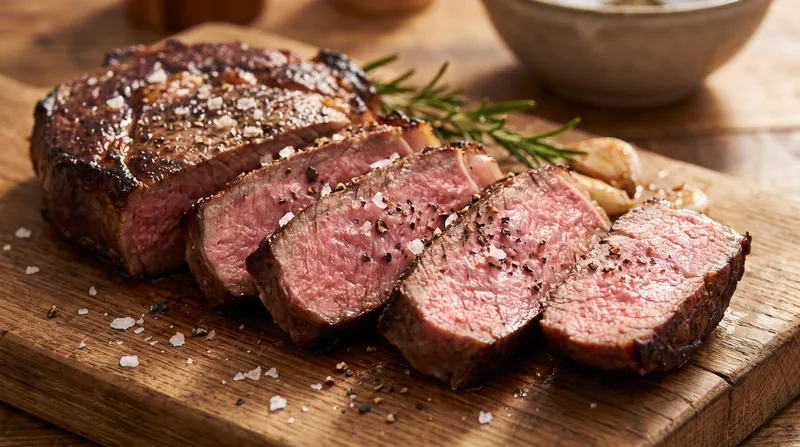
Simultaneously, there is a renewed appreciation for animal protein, but with a drastically heightened focus on provenance. Consumers who choose to eat meat are increasingly seeking out grass-fed beef, pasture-raised poultry, and regeneratively farmed options, prioritizing quality over sheer quantity.[4][5]
This "less but better" approach perfectly aligns with the original ethos of flexitarianism. It encourages reducing overall meat consumption while ensuring that the animal protein that does make it to the table is of the highest quality, sourced transparently, and raised in ways that restore rather than deplete the land.[3][4]
The culinary experience ultimately dictates our habits. While plant-based analogs have made massive strides in replicating the Maillard reaction—the chemical browning that gives seared meat its irresistible crust—they still struggle to mimic the complex, whole-muscle texture of a premium steak or a bone-in chicken breast.[1][4]
As the market matures, the initial novelty of a "bleeding" plant burger is naturally fading. In its place, we are seeing a more nuanced, educated understanding of food processing, nutrient bioavailability, and the profound value of eating close to the source.[1][5]
The future of our dinner plates is not a binary choice between factory-farmed meat and factory-engineered plants. Instead, it is a warm, flavorful return to foods that require less industrial intervention—whether that is a perfectly seared cut of pasture-raised beef or a vibrant, deeply spiced stew of whole heirloom beans.[2][5]
How we did this
- Method
- A comparative normalisation of macronutrient density and processing classifications across plant-based meat analogs, whole-food plant proteins, and conventional animal proteins.
- What we found
- The nutritional parity achieved by plant-based meat analogs relies heavily on industrial extraction and fortification (NOVA Group 4), creating a structural paradox where health-conscious consumers seeking 'clean labels' are driven back toward either minimally processed whole-food plant proteins or high-provenance animal proteins, effectively hollowing out the market for highly processed mimics.
- What we worked from
- Limits of this analysis
- This analysis relies on generalized macronutrient profiles and NOVA classifications, which may not account for emerging hybrid products or next-generation fermentation techniques that achieve complete protein profiles with fewer processing steps.
Key terms
- NOVA classification
- A system that groups foods according to the nature, extent, and purpose of the industrial processing they undergo.
- Textured vegetable protein (TVP)
- A highly processed, defatted soy flour product used as a meat extender or substitute due to its fibrous, spongy texture.
- Essential amino acids
- Nine amino acids that the human body cannot synthesize on its own and must obtain through diet.
- Flexitarianism
- A dietary pattern that is primarily plant-based but occasionally includes meat or fish.
- High-moisture extrusion
- An industrial manufacturing process that uses heat, pressure, and mechanical shear to align plant proteins into meat-like fibers.
Frequently asked
What makes plant-based meat ultra-processed?
They are formulated using industrial techniques like high-moisture extrusion and contain isolated proteins, refined oils, and binding agents like methylcellulose, placing them in NOVA Group 4.
Do plant-based meats have the same protein as real meat?
Yes, they are engineered to match the 15–25 grams of protein per serving found in animal meat, though they rely on protein isolates to achieve this density.
What is a complete protein?
A complete protein contains all nine essential amino acids required by the human body. Animal proteins are naturally complete, while most plant proteins must be blended to achieve the same profile.
What is the NOVA classification system?
It is a framework that categorizes foods based on their degree of processing, ranging from Group 1 (unprocessed whole foods) to Group 4 (ultra-processed formulations).
Viewpoints in depth
Whole-Food Advocates
Argue that health and environmental benefits are best achieved through minimally processed plant proteins.
This perspective emphasizes that the true benefits of a plant-based diet come from consuming foods in their natural state. Advocates point out that legumes, nuts, and traditional fermented soy products like tempeh provide essential dietary fiber and complex carbohydrates that are stripped away during the industrial extraction processes used to make meat analogs. They argue that replacing factory-farmed meat with factory-engineered plants misses the point of holistic nutrition.
Provenance-Focused Omnivores
Prioritize high-quality, regeneratively sourced animal protein over engineered alternatives.
For these consumers, the focus is on the transparency and quality of the supply chain rather than the complete elimination of animal products. They argue that a single-ingredient food like a grass-fed steak offers superior nutrient bioavailability and a complete amino acid profile without the need for synthetic fortification. This camp believes that supporting regenerative agriculture is a more effective way to improve the food system than relying on ultra-processed industrial formulations.
Food Technology Pragmatists
Maintain that engineered plant-based meats remain a crucial transitional tool for reducing global reliance on animal agriculture.
Pragmatists acknowledge that plant-based meats are highly processed, but they argue that this processing is a necessary compromise to shift mass consumer behavior. They point out that to significantly reduce the environmental impact of the global food system, alternatives must perfectly mimic the taste, texture, and convenience of the cheap, factory-farmed meat that dominates the market. From this viewpoint, the "ultra-processed" label is a distraction from the broader goal of planetary sustainability.
- Whole-Food Advocates
- Argue that health and environmental benefits are best achieved through minimally processed plant proteins like legumes and tempeh, rejecting both industrial meat and ultra-processed analogs.
- Provenance-Focused Omnivores
- Prioritize high-quality, regeneratively sourced animal protein, arguing that complete amino acid profiles and single-ingredient transparency outweigh the benefits of engineered plant alternatives.
- Food Technology Pragmatists
- Maintain that engineered plant-based meats, despite being processed, remain a crucial transitional tool for reducing global reliance on resource-intensive animal agriculture.
Perspectives this story doesn't cover
- Industrial agriculture producers
- Cellular agriculture (lab-grown meat) developers
Sources
Source coverage
6 outlets
3 viewpoints surfaced


- [1]WikipediaWhole-Food Advocates
Plant-based meat
Read on Wikipedia → - [2]WikipediaWhole-Food Advocates
Ultra-processed food
Read on Wikipedia → - [3]WikipediaWhole-Food Advocates
Flexitarianism
Read on Wikipedia → - [4]WikipediaWhole-Food Advocates
Meat
Read on Wikipedia → - [5]Factlen Editorial TeamProvenance-Focused Omnivores
Synthesis by Factlen editorial team
Read on Factlen Editorial Team → - [6]WikipediaWhole-Food Advocates
Protein quality
Read on Wikipedia →

More in Food & Drink
See all →Kitchen Tech
The 60°C Amylase Window: How Fuzzy Logic Microchips Rewrite the Rules of Cooking Rice
4 sources

Protein Chemistry
The 55°C Myosin Shift: How Temperature Controls the Denaturation of Muscle Proteins to Define Meat Doneness
7 sources
Thermal Processing
Thermal Death Time: How the D-Value and Z-Value Guarantee the Safety of Canned Food
5 sources

Food Chemistry
The pH 3.2 Threshold and 60% Sugar Concentration That Allow Pectin to Form a Gel
5 sources

Comments
Every angle. Every day.
Get Food & Drink stories with full source coverage and perspective breakdowns, free every day.