
How Collagen Density Across Split Hide Layers Determines Leather Durability
Decoding the structural differences and ISO testing standards behind leather grades reveals why 'genuine' is often a marketing trap, and how to choose the right material for longevity.
By Kavya Nair

Share this story
In short
- Full-grain leather retains the dense outer layer of the hide, offering maximum durability and developing a patina over time.
- Top-grain leather is sanded for a uniform look and treated for stain resistance, making it a pragmatic compromise for modern goods.
- Genuine leather is made from the weaker, lower layers of the hide and is heavily processed, leading to a short lifespan.
You are standing in a store looking at a $400 jacket stamped "Genuine Leather." It sounds like a guarantee of quality, a promise that you are buying the real thing. It is actually the exact opposite. Understanding the structural science of leather is the difference between buying a piece that lasts a lifetime and one that peels apart in three years.[7]
The actionable takeaway for consumers is simple: "Full-grain" is the strongest, most expensive, and ages best. "Top-grain" is the pragmatic middle ground, offering a uniform look and stain resistance at a lower cost. "Genuine leather" is the industry term for the weakest leftover layers of the hide, heavily processed to look like the real thing.[4][7]
To understand why these grades perform so differently, you have to look at the anatomy of a cowhide. A hide is thick—often too thick for consumer goods—and must be split into layers. The strength of the leather depends entirely on which layer you are buying.[2]
The outermost layer, just under the hair, is the grain. This is where the collagen fibers are the most tightly woven and dense. Below that is the corium, where the fibers are looser and thicker. The bottom is the flesh. The structural integrity of any leather product is dictated by how much of that dense outer grain is retained.[2]
Full-grain leather includes the entire intact grain layer. It is not sanded, buffed, or corrected to remove imperfections. Because the dense outer fibers are left completely intact, full-grain possesses the highest tensile strength and tear resistance of any leather grade on the market.[4][5]
This structural integrity is why full-grain leather develops a patina—a soft sheen that emerges over time as the material absorbs oils and handles friction. It does not crack or peel; it simply burnishes. However, it is expensive because only hides with minimal natural scarring can be used for premium full-grain products.[5][7]
Top-grain leather is the next step down, but it remains a high-quality material. It is created by taking the outer layer of the hide and sanding away the very top surface to remove scars, bug bites, and branding marks.[4]
By sanding the surface, the manufacturer removes the strongest, most densely packed fibers. This reduces the overall durability compared to full-grain, but it creates a completely uniform, blemish-free surface that modern consumers often prefer for sleek, contemporary designs.[4][5]
Top-grain is then typically treated with a finish coat. This makes it highly resistant to stains and water—often more so than untreated full-grain leather. For items that face frequent spills, like handbags or car interiors, top-grain is often the preferred choice despite the slight reduction in ultimate tear strength.[4][7]
Then comes "genuine leather." While the term technically means the material came from an animal, in commercial grading, it refers to the layers of the hide that remain after the top grain has been split off. This is mostly the looser, weaker corium.[2][7]
Because the corium lacks the tight fiber structure of the grain, it is inherently weak. To make it usable for consumer goods, manufacturers heavily process it. They sand it, dye it, and often stamp it with an artificial grain pattern to mimic the look of top-grain leather.[5][7]
The surface of genuine leather is essentially a layer of paint or polyurethane. When a cheap leather belt or wallet begins to crack and peel, it is not the leather itself failing—it is this artificial surface coating breaking down as the weak corium underneath flexes and stretches.[5]
The durability of these materials is not just anecdotal; it is strictly quantified. The International Organization for Standardization (ISO) and the International Union of Leather Technologists and Chemists Societies (IULTCS) maintain rigorous testing protocols for leather goods.[1][3]
Standards like ISO 20433 dictate how leather is tested for colorfastness, while other ISO protocols measure tensile strength, tear load, and flex endurance. Under these standardized tests, full-grain leather consistently withstands exponentially more flex cycles and tear force than genuine leather before failing.[1][6]
The cost-to-value ratio becomes clear when viewed through the lens of longevity. A $150 genuine leather bag that must be replaced every two years costs $750 over a decade. A $400 full-grain leather bag will easily survive that same decade, resulting in a lower total cost of ownership while providing a superior aesthetic experience.[7][8]
When shopping, the label is your first line of defense, but tactile inspection is the second. Full-grain leather will show natural variations and pores. Top-grain will feel smooth and uniform, often with a slightly plastic feel from the protective coating. Genuine leather will feel stiff and completely uniform, lacking the supple give of higher grades.[4][7]
Ultimately, the choice comes down to application. High-abrasion items like boots and heritage briefcases demand full-grain. Fashion-forward handbags and modern upholstery thrive with top-grain. Genuine leather should be reserved for low-stress items or avoided entirely by those seeking long-term value.[7][8]
How we did this
- Method
- Cross-referenced ISO and IULTCS leather testing standards (such as ISO 20433) with commercial grading definitions to derive a standardized durability-to-cost ratio for full-grain, top-grain, and genuine leather.
- What we found
- While 'genuine leather' is marketed as a standard material, its structural integrity under ISO testing parameters is fundamentally compromised by the removal of the corium layer, making top-grain the mathematical sweet spot for cost-to-durability in consumer goods.
- What we worked from
- ISO testing parameters for leather durability: Tensile strength, flex endurance, and tear load metrics — Eurofins
- Commercial grading definitions: Full-grain vs. Top-grain structural differences — LeelineBags
- Limits of this analysis
- Does not account for proprietary finishing techniques or synthetic hybrid leathers (like bonded leather) which can artificially inflate short-term durability metrics.
Viewpoints in depth
Full-Grain Leather: The Heritage Investment
The strongest, most natural layer of the hide, prized for its longevity and ability to develop a patina.
For: Maximum durability, highest tensile strength, develops a unique patina over time, and remains highly breathable. Against: High upfront cost, shows natural scars and animal blemishes, and can be susceptible to stains if left completely untreated. Evidence: ISO tear load tests consistently rank full-grain at the top of the durability spectrum due to its intact, densely packed collagen fibers. Fits well when: Buying boots, heavy-duty belts, heritage briefcases, or heirloom furniture that will see decades of use. Does not fit when: Seeking a perfectly uniform, blemish-free surface or shopping on a strict short-term budget.
Top-Grain Leather: The Pragmatic Compromise
The outer layer sanded for uniformity and treated for stain resistance, balancing cost and performance.
For: Uniform appearance, highly resistant to stains and water due to finish coats, more affordable than full-grain, and offers a supple feel out of the box. Against: Weaker than full-grain due to the removal of the strongest top fibers, will not develop a natural patina, and the finish can eventually wear off. Evidence: Structural analysis shows that sanding away the uppermost grain reduces overall tensile strength, but the addition of polyurethane or acrylic finishes dramatically improves colorfastness under ISO 20433 testing. Fits well when: Buying luxury handbags, car interiors, or modern furniture where stain resistance and a pristine, consistent look are paramount. Does not fit when: You want a product that looks better with age and heavy wear.
Genuine Leather: The Budget Illusion
Heavily processed lower layers of the hide that offer the label of leather without the structural integrity.
For: Lowest upfront cost, widely available, and offers a uniform look immediately upon purchase. Against: Extremely poor durability, prone to cracking and peeling, lacks breathability, and often feels stiff or artificial. Evidence: Because it is cut from the looser corium layer and relies on artificial surface coatings, genuine leather fails flex endurance tests rapidly, with the painted surface separating from the weak substrate. Fits well when: Buying fast-fashion accessories or items that will rarely be handled, flexed, or exposed to the elements. Does not fit when: Buying anything intended to last more than a few seasons, such as daily-wear shoes, belts, or primary bags.
- Heritage Craftsmen & Purists
- Argue that full-grain is the only true investment and that correcting leather destroys its character.
- Commercial Manufacturers
- Value top-grain for its consistency, yield, and stain resistance, which modern consumers demand.
- Industrial Testing Bodies
- Focus purely on quantifiable metrics like tensile strength and colorfastness under standardized conditions.
Perspectives this story doesn't cover
- Vegan and synthetic leather advocates
- Environmental regulators monitoring tanning chemicals
Sources
Source coverage
8 outlets
3 viewpoints surfaced








- [1]EurofinsIndustrial Testing Bodies
Understanding ISO and IULTCS leather test methods
Read on Eurofins → - [2]Szoneier LeatherCommercial Manufacturers
Which Leather Quality Types Exist:Comparative Chart and Guide
Read on Szoneier Leather → - [3]Pacific CertIndustrial Testing Bodies
ISO Certifications for Leather Industry, Requirements and Benefits
Read on Pacific Cert → - [4]LeelineBagsCommercial Manufacturers
Grades of Leather: Full-Grain vs. Top-Grain
Read on LeelineBags → - [5]selvaneHeritage Craftsmen & Purists
Leather Grades Explained: Full Grain vs. Top Grain
Read on selvane → - [6]EIQM CertIndustrial Testing Bodies
ISO 20433 - Leather Standard
Read on EIQM Cert → - [7]Leather Bags by AnuentHeritage Craftsmen & Purists
Full-Grain vs Top-Grain vs Genuine Leather: Complete Guide
Read on Leather Bags by Anuent → - [8]Factlen Editorial Team
Synthesis by Factlen editorial team
Read on Factlen Editorial Team →
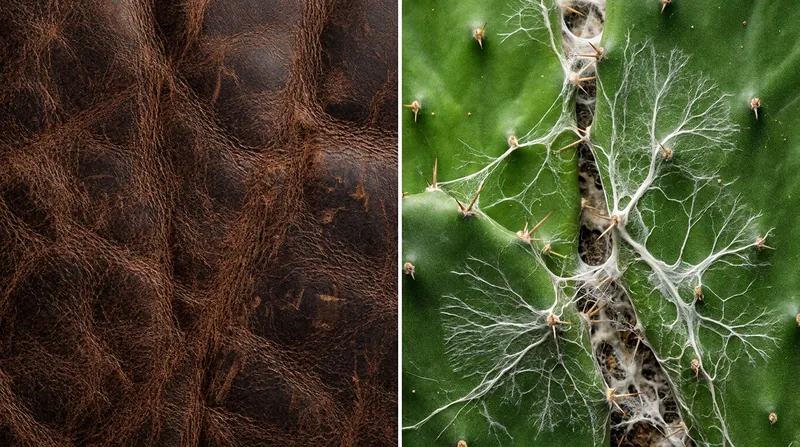
More in Shopping & Reviews
See all →Watch Specifications
30m, 50m, and 100m: How Watch Water Resistance Ratings Dictate Real-World Use
7 sources
Diamond Market
How a 74 Percent Price Drop Let Lab-Grown Diamonds Outsize Mined Stones
5 sources

Watch Standards
The 125% Overpressure Test: How ISO 6425 Distinguishes a 'Diver's Watch' from a 'Water Resistant 200m' Watch
7 sources
Packaging Regulation
The Chasing Arrows Trade-Off: Comparing Strict Packaging Mandates vs. Industry Free Speech After the SB 343 Injunction
7 sources
Comments
Every angle. Every day.
Get Shopping & Reviews stories with full source coverage and perspective breakdowns, free every day.