
Why Autolyse and No-Knead Doughs Develop Gluten Without Mechanical Kneading
While traditional kneading relies on mechanical force to align gluten proteins, alternative methods like autolyse and no-knead leverage time and enzymatic action to achieve the same structural network. Understanding the physics and chemistry behind these techniques allows bakers to choose the right approach for their desired crumb and crust.

Share this story
To make great bread, you have to build a microscopic net out of protein. You can build that net by violently smashing the dough with your hands for fifteen minutes, or you can mix it gently and let time and water do the exact same work over eighteen hours.[6]
That is the fundamental truth of gluten development. For generations, bakers were taught that aggressive mechanical kneading was the only way to transform shaggy flour and water into a smooth, elastic dough capable of trapping fermentation gases.[3]
But modern artisan baking has embraced a broader understanding of dough rheology—the science of how materials flow and deform. We now know that gluten development is essentially a math equation where time and physical force are perfectly inverse variables.[1][6]
To understand why, you have to look at what happens the moment water hits flour. Wheat flour contains two primary proteins: glutenin, which provides strength and elasticity, and gliadin, which provides extensibility, or stretch.[2]
In their dry state, these proteins are tightly coiled and disorganized. When hydrated, they begin to bond together, forming the complex, web-like matrix we call gluten. The goal of any dough development method is to organize this chaotic web into aligned, overlapping sheets that can capture the carbon dioxide expelled by yeast.[2]
The traditional method is mechanical kneading. By repeatedly stretching and folding the dough, the baker applies shear stress to the hydrated proteins. This physical force manually uncoils the protein strands and lines them up parallel to one another.[1]
Micro-scale rheology studies show that this process involves multiple stress-and-relaxation steps. As you push the dough away and fold it back, you are literally forcing the glutenin and gliadin molecules to link end-to-end, creating a strong, continuous network.[1]
Kneading is highly effective and relatively fast, typically taking 10 to 15 minutes to fully develop a standard dough. You can feel the transformation under your hands: what starts as a sticky, tearing paste gradually becomes a smooth, taut sphere that springs back when poked.[3]
However, mechanical mixing oxidizes the dough. As you fold air into the matrix, you bleach some of the natural pigments in the flour, which can slightly mute the complex flavors of the final loaf and result in a tighter, more uniform crumb structure.[3]
Enter the autolyse method, pioneered by French baking professor Raymond Calvel in the 1970s. An autolyse involves mixing only the flour and water together—leaving out the salt and yeast—and letting it rest for 20 to 60 minutes before further mixing.[4]
During this quiet period, two crucial things happen. First, the flour fully hydrates. Even the densest particles absorb water, which naturally begins the process of linking glutenin and gliadin without any mechanical force.[4]
Second, naturally occurring protease enzymes in the flour activate. These enzymes act like microscopic scissors, gently snipping some of the forming gluten bonds. This might sound counterproductive, but it actually increases the dough's extensibility, making it incredibly supple and easy to stretch.[4]
By the time you add the salt and yeast to finish mixing, the dough is already halfway developed. An autolyse drastically reduces the total kneading time required, preserving the flour's natural pigments and flavor while yielding a more open, airy crumb.[4]
The logical extreme of trading force for time is the no-knead method. Popularized in the mid-2000s, this approach eliminates mechanical kneading entirely, relying on a highly hydrated dough and a very long, slow fermentation.[5]
In a no-knead dough, you simply stir the ingredients together until no dry flour remains, then cover the bowl and walk away for 12 to 18 hours. The magic happens passively.[5]
As the dough sits, the water slowly coaxes the proteins into alignment. Simultaneously, the yeast produces carbon dioxide bubbles. As these bubbles expand, they act like millions of microscopic hands, gently stretching and organizing the gluten network from the inside out.[5]
The result is a dough that achieves full structural development with zero physical exertion from the baker. Because the dough is never oxidized by aggressive mixing, it retains maximum flavor, and the high hydration ensures a beautifully blistered crust and a wildly open, irregular crumb.[5]
Ultimately, there is no single correct way to develop gluten. The choice between kneading, autolyse, and no-knead depends entirely on the baker's schedule and the desired characteristics of the bread.[6]
If you want a tight, uniform sandwich loaf in a few hours, traditional kneading is your best tool. If you want a complex artisan sourdough with a creamy, open crumb, an autolyse followed by gentle folding is ideal. And if you want spectacular rustic bread with minimal active effort, the no-knead method is unparalleled.[3][4][5]
The science remains the same regardless of the path chosen. Whether through the brute force of your hands or the quiet patience of an overnight rest, the goal is simply to help flour and water find their perfect, elastic alignment.[6]
Viewpoints in depth
Traditional Artisan Bakers
Advocates for tactile, hands-on dough development to control the exact structure of the crumb.
For many classically trained bakers, mechanical kneading and active folding are non-negotiable steps in the bread-making process. They argue that physically handling the dough allows the baker to feel the exact moment the gluten network reaches optimal tension. By manually applying shear stress, they can dictate whether the final loaf will have a tight, uniform crumb suitable for sandwiches or a slightly more open structure, offering a level of precision that passive methods cannot match.
Low-Intervention Advocates
Proponents of high-hydration, long-fermentation methods that rely on time rather than force.
Bakers who favor autolyse and no-knead techniques view mechanical mixing as an inherently oxidative process that degrades the natural flavors of the grain. They argue that allowing water and enzymes to passively align the gluten proteins over 12 to 18 hours not only requires less physical labor but also preserves the flour's delicate carotenoid pigments. This camp prioritizes the complex, slightly acidic flavor profile and wildly irregular crumb structure that only prolonged, undisturbed fermentation can produce.
- Traditional Artisan Bakers
- Emphasize active mechanical mixing and folding for precise structural control.
- Low-Intervention Advocates
- Favor long, passive hydration and enzymatic action to maximize flavor and crumb openness.
- Food Scientists
- Focus on the molecular rheology and protein bonding mechanisms underlying all dough development.
Sources
Source coverage
6 outlets
3 viewpoints surfaced




- [1]PMCTraditional Artisan Bakers
Micro-Scale Shear Kneading—Gluten Network Development under Multiple Stress–Relaxation Steps and Evaluation via Multiwave Rheology
Read on PMC → - [2]Institute of Food Science and TechnologyFood Scientists
Protein: gluten formation
Read on Institute of Food Science and Technology → - [3]BreadtopiaTraditional Artisan Bakers
Gluten Development for Artisan Bread
Read on Breadtopia → - [4]Bakers AuthorityLow-Intervention Advocates
The Science of Autolyse: How Dough Develops Before Kneading
Read on Bakers Authority → - [5]Jay on BreadLow-Intervention Advocates
Lessons from No-Knead Bread: The Meaning of Development…And More…
Read on Jay on Bread → - [6]Factlen Editorial TeamFood Scientists
Synthesis by Factlen editorial team
Read on Factlen Editorial Team →
More in Food & Drink
See all →Sourdough Science
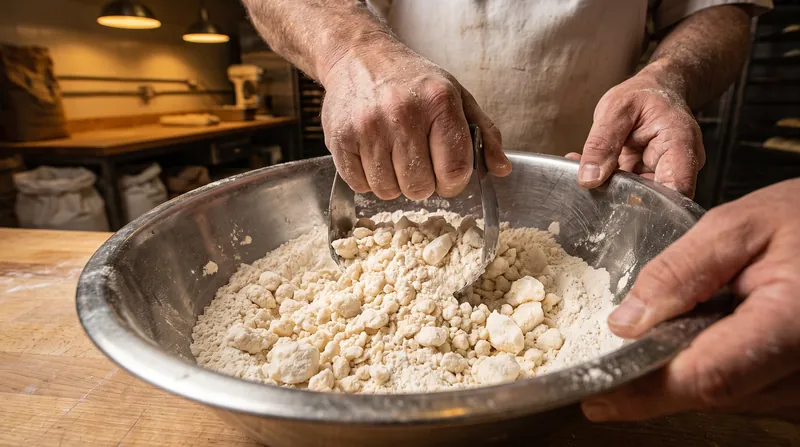
How Predictable Sourdough Microbes and Enzymes Resist Mold and Build Flavor
7 sources
Baking Science
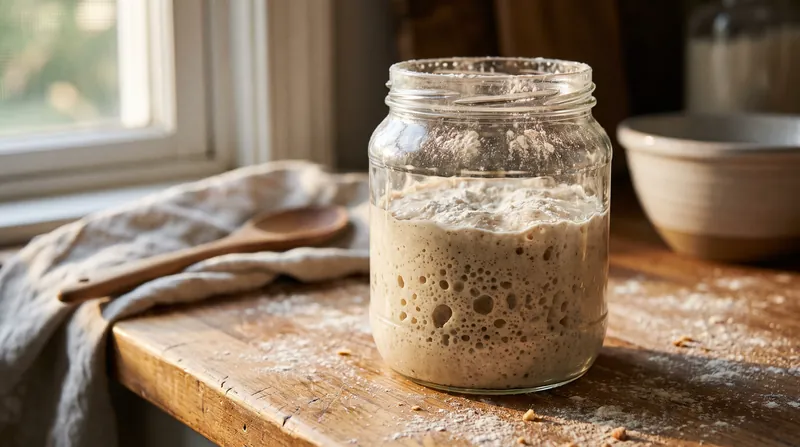
The 60°C to 85°C Window: How Starch Gelatinization Sets the Crumb Structure and Defines a Baked Good's Final Texture
5 sources
Sodium Bicarbonate
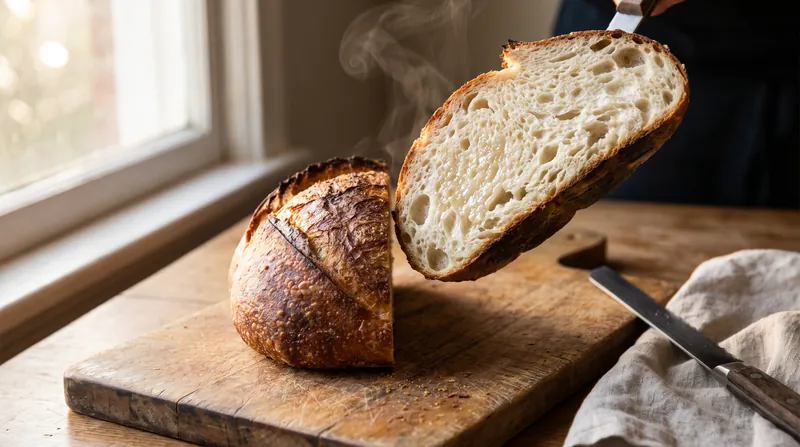
The Alkaline-Acid Collision: How Sodium Bicarbonate Demands a Low-pH Partner to Aerate Crumb Structure
6 sources
Baking Chemistry
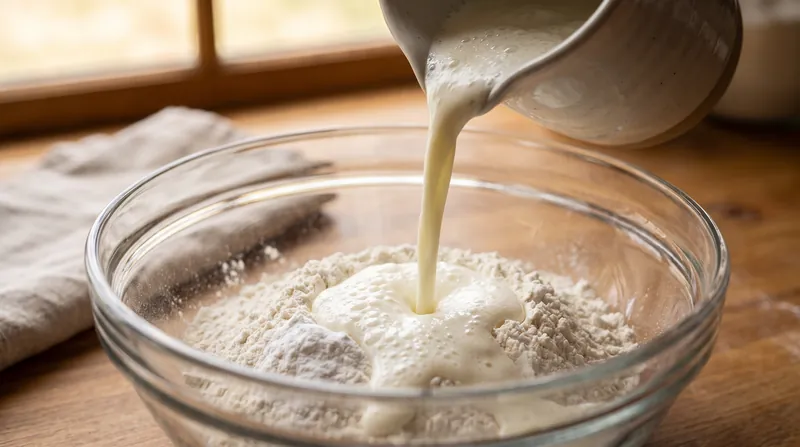
The Hygroscopic Tug-of-War: How Sucrose Steals Water from Gluten to Build a Tender Cake
9 sources
Comments
Every angle. Every day.
Get Food & Drink stories with full source coverage and perspective breakdowns, free every day.