
Bioconcrete Uses Dormant Bacteria to Autonomously Repair Foundation Cracks
Residential builders are adopting a breakthrough material that uses dormant extremophile bacteria to autonomously repair foundation cracks. By excreting limestone when exposed to water, bioconcrete prevents basement leaks and extends the lifespan of homes.
By Adrien Caron

Share this story
In short
- Bioconcrete uses dormant Bacillus bacteria and calcium lactate to autonomously repair foundation cracks.
- When water enters a fissure, the bacteria wake up and excrete limestone, sealing cracks up to 1mm wide in 21 days.
- The technology eliminates the need for vulnerable exterior waterproofing membranes in residential basements.
Concrete is the foundation of the modern built environment, but it harbors a fatal flaw: it inevitably cracks. Whether due to thermal expansion, vertical shrinkage, or settling soil, micro-fissures allow water to seep into the matrix. Over time, this moisture corrodes internal steel reinforcement, leading to structural degradation and leaky residential basements.[3]
For decades, the residential remodeling industry has relied on exterior waterproofing membranes and reactive epoxy injections to manage this problem. Now, a solution straight out of microbiology is moving from large-scale infrastructure into home foundations: bioconcrete.[1][4]
Bioconcrete is an advanced building material embedded with dormant, extremophile bacteria that autonomously repair structural damage. By turning the foundation itself into a living, self-healing entity, builders are fundamentally rewriting how homes handle water ingress and longevity.[2]
The mechanism relies on a carefully engineered biological payload. When the concrete is mixed, manufacturers introduce tiny clay pellets or hydrogel microcapsules into the aggregate. These capsules contain two crucial ingredients: spores of Bacillus bacteria—such as B. subtilis or B. pseudofirmus—and a nutrient source, typically calcium lactate.[1][2]
Bacillus strains are uniquely suited for this environment because they thrive in highly alkaline conditions and can form protective endospores. In this dormant state, the bacteria can survive inside the dry concrete matrix for up to 200 years without requiring food or oxygen.[1][4]
The biological healing process remains entirely paused until the concrete fails. When a micro-crack forms and external water seeps into the fissure, the moisture physically dissolves the protective capsules. This water acts as an activation switch, waking the dormant bacteria from their centuries-long slumber.[3]
Once active, the bacteria immediately begin to multiply and consume the calcium lactate. As a byproduct of their metabolic process, they consume oxygen and excrete calcium carbonate, which is the primary component of limestone.[1][2]
Over the course of approximately 21 days, this biological limestone precipitates along the edges of the fissure. The bacteria effectively build a rock bridge across the void, completely sealing cracks up to 1 millimeter wide from the inside out.[4]
For residential remodeling, this autonomous healing offers a profound advantage for basement and foundation resilience. Traditional exterior waterproofing membranes—such as spray-on bituthene—are easily damaged during the backfilling of dirt, leaving the foundation vulnerable to groundwater.[1]
By utilizing bioconcrete, the slab itself becomes the primary water barrier. If the foundation settles and cracks, the ensuing water ingress triggers its own repair, stopping moisture before it can flood a finished basement or allow radon gas to migrate indoors.[1][3]
Beyond moisture control, the bacterial metabolic process offers a secondary structural benefit. Because the bacteria consume oxygen as they feed on the calcium lactate, they actively remove the oxygen from the immediate area of the crack, which drastically reduces the corrosion rate of the internal steel rebar.[2][4]
The primary hurdle to widespread residential adoption is the initial capital expenditure. Bioconcrete currently carries an upfront cost premium of 10% to 15% compared to standard concrete mixes, placing it at the higher end of the specialty materials market.[3]
However, life-cycle assessments indicate that this initial premium is rapidly offset by long-term savings. By eliminating the need for future epoxy crack injections or costly exterior foundation excavations, bioconcrete can reduce whole-life maintenance costs by 15% to 30%.
The environmental implications are equally significant. Cement production is one of the world's largest sources of carbon emissions. By extending the service life of foundations and reducing the need for patch repairs or total replacements, widespread adoption of self-healing concrete could reduce global cement demand by up to 30% over the coming decades.
Despite its promise, the technology is not a universal remedy for all structural failures. The autogenous healing process is strictly limited to micro-cracks. Large structural fissures caused by severe soil subsidence or catastrophic settling still require mechanical intervention and traditional underpinning.[4]
Furthermore, the biological mechanism is entirely dependent on moisture. In arid environments where concrete cracks due to seismic stress or extreme heat rather than water ingress, the dormant bacteria may not receive the hydration required to activate the healing cycle.[2][4]
As the market matures, the technology is diversifying. While ready-mix bioconcrete is ideal for new foundation pours, manufacturers are also developing pre-treated smart mortar and self-healing masonry blocks, allowing remodelers to integrate the technology into smaller-scale block foundation repairs.[1]
Driven by climate resilience mandates and the rising costs of home maintenance, the global bioconcrete materials market is projected to expand rapidly, moving from a niche laboratory curiosity to a standard specification in high-performance residential construction.[3]
Ultimately, the integration of living organisms into inert building materials represents a paradigm shift in how we view our homes. Instead of accepting that foundations will inevitably degrade, homeowners can now rely on a microscopic workforce to actively defend their basements for generations.[3][4]
Key terms
- Bioconcrete
- Concrete embedded with dormant bacteria and nutrients that autonomously repair cracks by producing limestone.
- Bacillus
- A genus of extremophile bacteria capable of surviving in highly alkaline environments and remaining dormant for centuries.
- Calcium Lactate
- An organic nutrient source mixed into bioconcrete that bacteria consume to produce calcium carbonate.
- Autogenous Healing
- The innate ability of a material to repair its own internal damage without external human intervention.
Reader questions
How wide of a crack can bioconcrete heal?
Current bacterial systems can effectively seal micro-cracks up to 1 millimeter wide. Larger structural fissures still require traditional mechanical repair.
How long does the healing process take?
Once water enters the crack and wakes the bacteria, the limestone precipitation process typically takes about 21 days to fully seal the fissure.
Will the bacteria in the concrete make me sick?
No. The Bacillus strains used in bioconcrete are non-pathogenic, naturally occurring soil bacteria that pose no risk to human health.
How long do the bacteria live in the foundation?
The extremophile spores can remain in a dormant state within the dry concrete matrix for up to 200 years, waiting for water to activate them.
Where opinion splits
Biomaterials Researchers
Focuses on the microbial efficiency, carbon reduction potential, and the science of extending concrete service life.
For materials scientists, bioconcrete represents a critical tool for decarbonizing the built environment. Because cement production is responsible for a massive share of global carbon emissions, extending the lifespan of concrete structures directly reduces the need for replacement materials. Researchers emphasize that the Bacillus strains not only seal cracks but actively consume oxygen during their metabolic process, which provides a secondary defense against the corrosion of internal steel reinforcement.
Residential Builders
Values the simplification of the building envelope and the elimination of vulnerable exterior waterproofing membranes.
Contractors and builders view self-healing concrete as a way to reduce liability and call-backs for leaky basements. Traditional exterior waterproofing membranes are notoriously fragile; they can easily tear during the dirt backfilling process, leaving the foundation exposed to groundwater. By making the concrete slab itself the primary, autonomous water barrier, builders can simplify the construction process and offer homeowners a more resilient, fail-safe foundation.
Cost-Conscious Homeowners
Weighs the upfront material premium against the long-term savings of avoiding basement excavations.
From a consumer perspective, the primary friction point is the initial capital expenditure. Bioconcrete carries a 10% to 15% cost premium over standard mixes, which can add thousands of dollars to a new build or major remodel. However, homeowners are increasingly viewing this as an insurance policy. Avoiding a single instance of structural water damage—which often requires a $15,000 exterior excavation and epoxy injection—makes the upfront investment highly economical over the lifespan of the home.
- Biomaterials Researchers
- Focuses on the microbial efficiency, carbon reduction potential, and the science of extending concrete service life.
- Residential Builders
- Values the simplification of the building envelope and the elimination of vulnerable exterior waterproofing membranes.
- Cost-Conscious Homeowners
- Weighs the 10-15% upfront material premium against the long-term savings of avoiding basement excavations.
Perspectives this story doesn't cover
- Traditional concrete suppliers
- Municipal building inspectors
Sources
Source coverage
4 outlets
3 viewpoints surfaced




- [1]EcoHomeResidential Builders
Self-healing concrete: how bacteria in concrete works to heal itself
Read on EcoHome → - [2]MaterialsBiomaterials Researchers
Bio-based bacterial concrete offers an eco-friendly alternative to traditional concrete
Read on Materials → - [3]Northgate Ready MixResidential Builders
Revolutionizing Construction with Self-Healing Concrete Technology
Read on Northgate Ready Mix → - [4]Factlen Editorial TeamCost-Conscious Homeowners
Synthesis by Factlen editorial team
Read on Factlen Editorial Team →
More in Home
See all →Building Materials
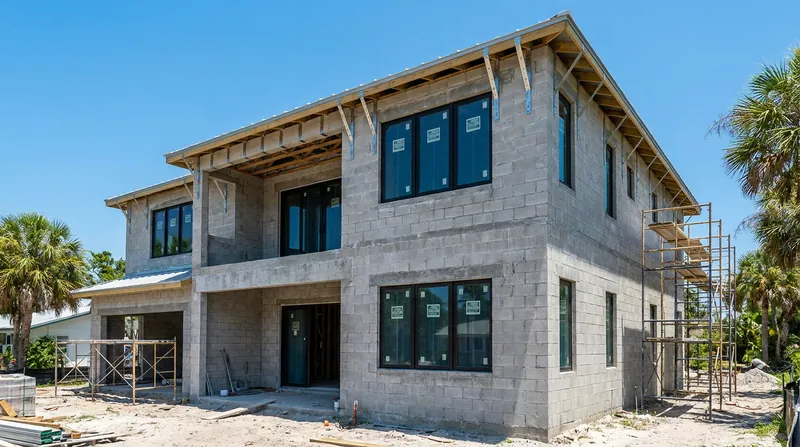
Copper Hits 20-Year High as Lumber and Insulation Costs Surge, Reshaping 2026 Remodeling Strategies
5 sources
Corporate Landlords
Federal Law Bans Institutional Investors from Buying Single-Family Homes if Portfolio Exceeds 350 Units
5 sources
VA Home Loans
The VA's New Rules: Federal Agency Ends Mandatory Radon Testing and Streamlines Repairs for Older Homes
2 sources

Home Insurance
The End of the RCV Mandate: How the FHFA's New Roof Insurance Rule Lowers Monthly Costs
2 sources
Comments
Every angle. Every day.
Get Home stories with full source coverage and perspective breakdowns, free every day.