
Brewing Coffee Without Beans Using Precision Fermentation and Upcycled Ingredients
As climate change threatens global coffee yields, food-tech startups are using precision fermentation, cellular agriculture, and upcycled ingredients to brew coffee without the bean.
By Irina Belova

Share this story
In short
- Climate change is threatening traditional coffee yields, driving up prices and endangering 60% of wild species.
- Startups are creating 'beanless' coffee using upcycled ingredients like date seeds and chickpeas.
- Advanced methods use precision fermentation and cellular agriculture to grow coffee compounds in bioreactors.
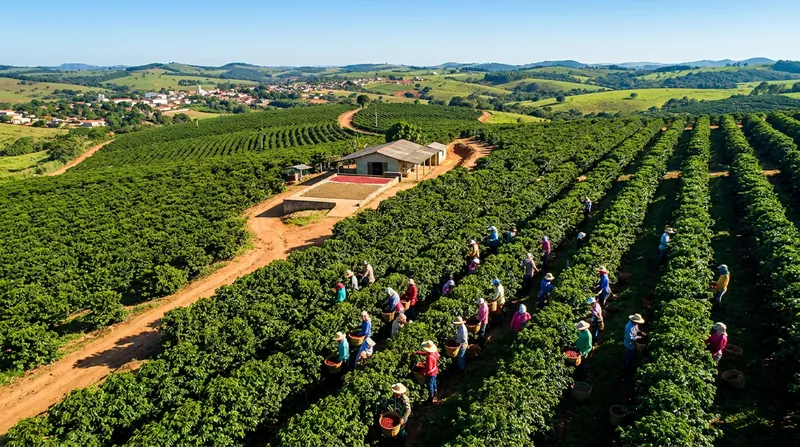
The global coffee habit is colliding with a harsh climate reality. As extreme weather, droughts, and rising temperatures batter the "bean belt," the cost of a morning cup is surging to historic highs. But behind the scenes, a quiet revolution is brewing to decouple the world's favorite stimulant from the vulnerable agricultural systems that produce it.[2]
The stakes for the coffee industry are existential. Research indicates that 60% of wild coffee species are currently endangered, and the tropical land suitable for cultivating traditional arabica and robusta beans is projected to shrink by half by 2050. Furthermore, conventional coffee carries a staggering environmental footprint, requiring roughly 140 liters of water to produce a single cup while driving significant tropical deforestation.
In response, a rapidly growing sector of food-technology startups and bio-engineers is pioneering "beanless coffee." By synthesizing or extracting the exact flavor and aroma compounds found in traditional coffee from alternative sources, these companies aim to future-proof the beverage against climate volatility and supply chain shocks.[2]
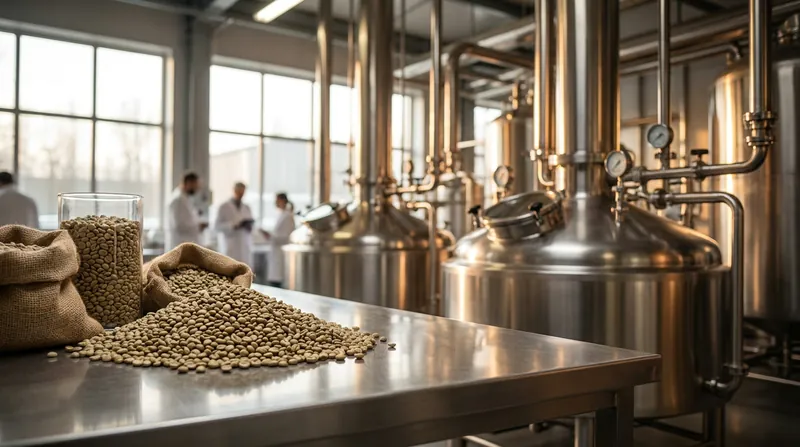
The race to replace the coffee bean is currently advancing along three distinct technological tracks: agricultural upcycling, precision fermentation, and cellular agriculture. Each approach attempts to solve the complex biochemical puzzle of replicating coffee's matrix of over 800 volatile flavor compounds without using the actual plant.[2]
The most commercially mature track relies on upcycling abundant, climate-resilient plant materials. Companies like Seattle's Atomo and Voyage Foods utilize ingredients such as roasted chickpeas, date pits, rice hulls, and sunflower seeds. By applying traditional roasting techniques to these alternatives, they trigger the same Maillard reactions that give coffee its signature dark, bitter, and acidic profile.
Recent academic research validates this upcycling approach. A June 2026 study published in the Journal of Food Measurement and Characterization demonstrated that an optimized, roasted blend of date and olive seeds could closely mimic the appearance, odor, and flavor of traditional Turkish coffee in blind sensory panels.[1]
For commercial food manufacturers, the appeal of upcycled coffee is largely economic. Voyage Foods, which recently launched its bean-free coffee for the business-to-business market, claims its product is over 40% cheaper than traditional coffee. By offering a stable, predictable price point, beanless alternatives shield consumer packaged goods companies from the wild commodity swings of the global coffee market.
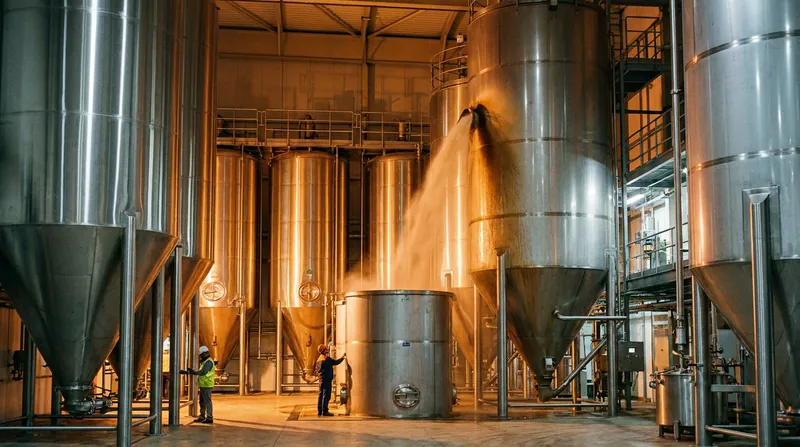
The second technological track—precision fermentation—moves the process from the roastery to the bioreactor. Startups like Minus and Singapore's Prefer use food-grade microbes and engineered yeast to metabolize sugars and agricultural byproducts into the precise chemical compounds that constitute coffee flavor.[2]
Fermentation allows for a highly controlled output, enabling scientists to dial specific flavor notes up or down. To match the stimulant profile of a conventional brew, these companies often add caffeine extracted naturally from sources like green tea, ensuring the final product delivers the expected morning jolt.[2]
The third and most futuristic track is cellular agriculture: growing actual Coffea arabica cells in a laboratory. Rather than mimicking coffee with other plants, this method cultivates the real plant's biomass in suspension, completely eliminating the need for soil, weather, or deforestation.
The foundational proof-of-concept for this method was established by the VTT Technical Research Centre of Finland, which successfully brewed coffee from lab-grown cells and subsequently open-sourced their methodology to accelerate commercialization. Because coffee cells are infinitely renewable, a new batch of lab-grown coffee can be harvested in a matter of weeks, compared to the annual or bi-annual harvests of traditional farming.
Scaling cellular coffee to industrial volumes remains a formidable challenge, but recent breakthroughs are closing the gap. In June 2026, Israeli cellular agriculture startup Coffeesai partnered with Brevel to utilize "illuminated fermentation"—a process that uses light to unlock nutrients and scale plant cell cultures to commercial viability.
Despite the technological triumphs, beanless coffee faces a significant consumer hurdle. In an era where shoppers are increasingly wary of "ultra-processed" foods, marketing a lab-grown or highly engineered beverage requires delicate messaging. Brands must balance the narrative of high-tech food science with the urgent reality of climate sustainability.[2]
To ease consumers into the transition and stretch the existing global supply, many companies are embracing hybrid models. Startups are increasingly partnering with cafes to serve 50:50 blends—mixing conventional coffee beans with beanless alternatives. This approach lowers the overall carbon footprint and price of the cup while maintaining the authentic terroir that coffee purists demand.
The rise of beanless coffee also raises complex socioeconomic questions. The global coffee trade supports the livelihoods of roughly 12.5 million smallholder farmers, primarily in the Global South. A wholesale shift toward bioreactors and upcycled seeds in the Global North could devastate these agricultural economies, even as climate change simultaneously threatens their crop yields.[2]
Ultimately, industry analysts do not expect beanless coffee to replace the premium, single-origin pour-over. Instead, the technology is targeting the massive volume of commodity coffee used in ready-to-drink cans, instant powders, and heavily flavored iced lattes. By replacing untraceable, mass-market beans with sustainable alternatives, the industry hopes to save the real coffee plant for the cups where it truly matters.[2]
Definitions
- Cellular Agriculture
- The production of agricultural products from cell cultures rather than whole plants or animals, such as growing coffee cells in a lab.
- Precision Fermentation
- A technology that uses engineered microorganisms, like yeast, to produce specific complex organic molecules, such as coffee flavor compounds.
- Upcycling
- The process of transforming agricultural byproducts or low-value ingredients (like date pits) into higher-value products.
- Maillard Reaction
- A chemical reaction between amino acids and reducing sugars that gives browned food, including roasted coffee, its distinctive flavor.
- Bioreactor
- A manufactured vessel or system that supports a biologically active environment, used to grow cells or microbes at scale.
Questions & answers
What is beanless coffee made of?
Depending on the brand, it is made from upcycled ingredients like roasted chickpeas and date seeds, or brewed using precision fermentation and microbes to replicate coffee's flavor compounds.
Does beanless coffee have caffeine?
Yes. Most beanless coffee brands add natural caffeine extracted from sources like green tea to match the exact stimulant profile of traditional coffee.
Is beanless coffee cheaper than regular coffee?
For commercial buyers, yes. Companies like Voyage Foods report that their beanless B2B coffee is over 40% cheaper than traditional commodity coffee.
Will lab-grown coffee replace traditional farmers?
Industry experts believe beanless coffee will primarily replace mass-market commodity coffee used in instant powders and ready-to-drink cans, rather than premium single-origin beans grown by specialty farmers.
Analysis by camp
Food-Tech Innovators
Argue that the current coffee supply chain is ecologically and economically broken.
Startups in the beanless space argue that traditional coffee cultivation is no longer sustainable in a warming world. By decoupling the beverage from the vulnerable Coffea plant, they believe they can provide price stability for manufacturers while satisfying global demand without requiring further deforestation.
Sustainability Advocates
Focus on the massive resource savings enabled by lab-grown and upcycled alternatives.
Environmental groups highlight the staggering 140 liters of water required to produce a single conventional cup of coffee. They argue that shifting mass-market commodity coffee to precision fermentation or upcycled seeds is one of the most effective ways to reduce the beverage industry's carbon and water footprints.
Traditional Coffee Industry
Express concern over the economic impact on the Global South.
Advocates for conventional coffee point out that the trade supports roughly 12.5 million smallholder farmers. They argue that rather than replacing the bean with synthetic alternatives engineered in the Global North, investments should be directed toward developing climate-resilient crop varieties and supporting farmers through the climate transition.
Scientific Researchers
Emphasize the biochemical complexity of replicating coffee's flavor profile.
Food scientists note that coffee is one of the most chemically complex beverages on earth, containing over 800 volatile compounds. While upcycling provides a close approximation, researchers believe that open-source collaboration in cellular agriculture is the only way to achieve a true, indistinguishable one-to-one replacement.
- Food-Tech Innovators
- Argue that lab-grown and upcycled alternatives are essential to future-proof the beverage against climate change and stabilize supply chains.
- Sustainability Advocates
- Highlight the massive reduction in water use, deforestation, and carbon emissions offered by decoupling coffee from traditional agriculture.
- Traditional Coffee Industry
- Emphasize the cultural heritage, terroir, and livelihoods of millions of smallholder farmers dependent on conventional coffee cultivation.
- Scientific Researchers
- Focus on the biochemical challenge of replicating coffee's complex matrix of volatile compounds through fermentation and cellular agriculture.
Perspectives this story doesn't cover
- Smallholder coffee farmers in the Global South whose livelihoods depend on conventional exports.
Sources
Source coverage
2 outlets
4 viewpoints surfaced


- [1]Daily Coffee NewsTraditional Coffee Industry
Brewed Blend of Date and Olive Seeds Comes Close to Turkish Coffee, Study Finds
Read on Daily Coffee News → - [2]Factlen Editorial TeamScientific Researchers
Synthesis by Factlen editorial team
Read on Factlen Editorial Team →
More in Food & Drink
See all →Coffee Trade
Kenya's New Coffee Act Bans Vertical Integration, Forcing Major Restructuring of Supply Chain
2 sources
EUDR Policy
EU Proposes Closing Deforestation Loophole by Extending Traceability Rules to Instant Coffee
4 sources
Agricultural Adaptation
Climate Analysis Quantifies 'Coffee-Harming Heat' Days, Accelerating the Shift to Drought-Resistant Species
3 sources
Food Science
Modern Decaffeination Methods Remove Caffeine While Preserving Coffee Flavor
2 sources
Comments
Every angle. Every day.
Get Food & Drink stories with full source coverage and perspective breakdowns, free every day.