
The French Riviera's Port Wall Replaces Cruise Bans With Daily Passenger Caps
The French Riviera has pioneered a new regulatory mechanism that replaces outright cruise bans with strict, mathematically enforced daily passenger caps. This 'port wall' forces the cruise industry to deploy smaller ships and rethink Mediterranean itineraries to preserve coastal communities.

Share this story
In short
- The French Riviera has implemented a 'port wall' capping disembarking cruise passengers at an annual average of 2,000 per day.
- Ships carrying more than 1,300 passengers are now limited to one visit per day per anchorage, with strict monthly caps during the summer.
- French administrative courts ruled that local mayors cannot ban ships, shifting regulatory power to regional maritime prefects.
The era of the unregulated mega-ship dropping thousands of passengers into a small Mediterranean harbor at once is coming to a close. For decades, the large-ship cruise model relied on maximizing scale, funneling massive vessels into historic coastal towns so you could wake up to a view of the Riviera. But as visitor volumes swelled, the friction between maritime commerce and local infrastructure reached a breaking point. The solution emerging across Europe is not a total blockade, but a highly calibrated mechanism known as a "port wall."[6]
A port wall is a mathematical and regulatory barrier designed to throttle the flow of disembarking passengers to a level the local destination can actually absorb. Rather than relying on the voluntary restraint of cruise operators, regional governments are codifying strict daily and monthly limits. If you are planning a Mediterranean sailing, the most comprehensive blueprint for this new model recently materialized along the Alpes-Maritimes coastline in France, encompassing the marquee destinations of Cannes, Nice, and Villefranche-sur-Mer.[2][3]
The mechanics of the French Riviera's port wall are built on a tiered quota system that directly impacts how and when you can step ashore. Under the interprefectoral decree, the total number of passengers authorized to disembark at each port is restricted to an annual average of 2,000 people per port-call day. This baseline ensures that over the course of a year, the daily influx remains manageable for the local cafes you want to visit and the historical transit lines you need to ride.[2][3]
However, the mechanism also accounts for the realities of maritime scheduling by including an absolute ceiling. On exceptionally busy days, the cap can rise to a maximum of 3,000 passengers disembarking simultaneously, regardless of how many ships are anchored in the bay. This hard limit prevents the severe overcrowding spikes that have historically turned a relaxing stroll through a coastal village into a shoulder-to-shoulder shuffle.[2][3]
Beyond passenger headcounts, the port wall directly regulates the physical presence of the ships themselves. For vessels carrying more than 1,300 passengers, the rules limit operations to exactly one ship per day per anchorage or stopover area. This prevents the visual and environmental impact of multiple mega-ships idling off the coast of a single town, preserving the pristine horizon that draws travelers to the region in the first place.[2][3]
The restrictions tighten even further during the high season. From July 1 through August 31, calls for these larger vessels are strictly capped at 15 per month across the designated anchorages. By throttling access during the most lucrative travel window, the regulation forces cruise lines to either deploy smaller, more intimate ships or disperse their itineraries into the quieter, often more pleasant shoulder seasons of spring and autumn.[2][3]
The implementation of this port wall was not without legal friction. The journey to a regulated coastline began with local municipalities attempting to take matters into their own hands. Earlier in the year, the mayor of Nice issued a municipal decree attempting to outright ban ships carrying more than 900 passengers from the local waters, citing climate urgency and the protection of marine biodiversity.[2][4]
That local ban was swiftly challenged and ultimately suspended by the French administrative courts. The judicial ruling clarified a crucial aspect of maritime law: municipal mayors do not possess the legal authority to police water spaces or restrict the freedom of maritime trade. That power rests exclusively with the regional state representatives—the maritime prefects.[2][4]
This jurisdictional reality forced a shift from localized, piecemeal bans to a comprehensive regional strategy. The resulting interprefectoral decree was jointly signed by the Prefect of the Alpes-Maritimes and the Mediterranean Maritime Prefect, creating a legally bulletproof framework that local mayors could not achieve alone. This shift from municipal outrage to regional regulation provides a template for other European coastlines facing similar pressures.[2][3]
While the port wall imposes strict limits, it also introduces a powerful incentive structure for environmental compliance. The decree explicitly prioritizes cruise lines that have signed the Sustainable Mediterranean Cruise Charter. This charter, initially introduced by the French government and major operators, functions as a fast-pass for compliant vessels seeking scheduling authorizations.[1][2]
The updated charter demands rigorous environmental commitments from its signatories. Cruise lines must adhere to stringent rules regarding biodiversity protection, the safeguarding of cetaceans, and the reduction of sea discharges. It also mandates measurable cuts to noise pollution, light pollution, and greenhouse gas emissions, pushing the industry toward a cleaner operational standard that benefits both the ocean and the coastal resident.[1][3]
For the cruise industry, adapting to the port wall requires a fundamental logistical pivot. Operators can no longer rely on the assumption that any port can handle any ship at any time. Itinerary planners must now navigate a complex matrix of daily passenger caps, monthly vessel limits, and environmental charter priorities years in advance of a sailing, which ultimately dictates the options available to you when booking a vacation.[1][6]
The ripple effects of these mechanics are already reshaping fleet deployment. Cruise lines are increasingly reserving their largest mega-ships for private islands or massive, purpose-built industrial ports that can handle the volume. Meanwhile, mid-sized and premium vessels—those falling under the 1,300-passenger threshold—are becoming the primary tools for Mediterranean coastal exploration, offering a more curated experience.[6]
Ultimately, the port wall represents a maturation of the global tourism economy. By replacing open-door policies with calculated, enforceable limits, destinations like the French Riviera are proving that economic vitality and environmental preservation do not have to be mutually exclusive. The mechanics of the port wall ensure that the cruise industry remains a viable part of the coastal economy, but on terms that protect the very magic you travel there to experience.[6]
Definitions
- Port Wall
- A regulatory mechanism that uses strict daily passenger caps and vessel limits to throttle the flow of cruise tourists into a destination.
- Interprefectoral Decree
- A legally binding order signed jointly by multiple regional state representatives in France, superseding local municipal rules.
- Tendering
- The process of using smaller boats to ferry passengers from a large cruise ship anchored offshore to the local dock.
- Sustainable Mediterranean Cruise Charter
- An environmental agreement prioritizing compliant cruise lines for port scheduling in exchange for strict emissions and biodiversity commitments.
Questions & answers
Will large cruise ships stop visiting the French Riviera entirely?
No. Large ships can still visit, but they are strictly limited to one per day per anchorage, and capped at 15 total visits per month during the peak summer season.
How does the 2,000 passenger limit work?
The decree mandates an annual average of 2,000 disembarking passengers per day. On exceptionally busy days, a hard maximum of 3,000 passengers is allowed, provided the yearly average is maintained.
Why couldn't the local mayors just ban the ships themselves?
French administrative courts ruled that municipal mayors do not have the legal jurisdiction to regulate maritime traffic or restrict trade; that power belongs exclusively to regional maritime prefects.
What happens to cruise lines that don't sign the environmental charter?
While not outright banned, non-signatory cruise lines lose priority scheduling, making it significantly harder for them to secure coveted stopover authorizations under the new caps.
Analysis by camp
Regional Maritime Authorities
State representatives focused on creating legally sound, balanced frameworks for coastal management.
Regional prefects argue that piecemeal municipal bans create legal chaos and fail to address the broader logistical realities of maritime trade. By implementing a unified 'port wall' across the entire Alpes-Maritimes coastline, they aim to establish a legally bulletproof system that protects the environment without entirely suffocating the economic engine of cruise tourism. Their approach relies on hard data—averages, absolute caps, and vessel counts—rather than political rhetoric.
Local Municipalities
City mayors and local councils prioritizing immediate relief from the pressures of overtourism.
For local leaders in towns like Nice and Cannes, the primary concern is the immediate, visceral impact of thousands of day-trippers flooding narrow streets and straining municipal infrastructure. While their attempts at outright bans were legally overturned, these municipalities continue to advocate for the strictest possible interpretations of the new passenger caps. They view the port wall as a necessary defense mechanism to preserve the cultural heritage and livability of their communities.
Cruise Industry Operators
Maritime companies navigating the logistical and economic impacts of the new regulations.
The cruise industry acknowledges the need for sustainable tourism but stresses that itinerary planning operates on a multi-year cycle. Operators argue that sudden regulatory shifts disrupt long-standing logistical chains and economic commitments to local vendors. However, by embracing the Sustainable Mediterranean Cruise Charter, major lines are signaling a willingness to adapt, trading environmental concessions for the priority scheduling necessary to keep their Mediterranean routes viable.
- Cruise Industry Operators
- Maritime companies navigating the logistical and economic impacts of the new regulations.
- Regional Maritime Authorities
- State representatives focused on creating legally sound, balanced frameworks for coastal management.
- Local Municipalities
- City mayors and local councils prioritizing immediate relief from the pressures of overtourism.
Perspectives this story doesn't cover
- Local Hospitality Businesses
- Environmental NGOs
Sources
Source coverage
6 outlets
3 viewpoints surfaced






- [1]Cruise Lines International AssociationCruise Industry Operators
CLIA in Europe: Sustainable Cruise Operations
Read on Cruise Lines International Association → - [2]Seatrade Cruise NewsRegional Maritime Authorities
French court suspends cruise ship ban in Nice and Villefranche-sur-Mer
Read on Seatrade Cruise News → - [3]TravelPulseCruise Industry Operators
French authorities have officially rolled out new rules that will reshape cruise operations
Read on TravelPulse → - [4]Cruise PassengerCruise Industry Operators
The saga of Nice and Villefranche in France attempting to ban cruise ships
Read on Cruise Passenger → - [5]CruiseMapperLocal Municipalities
Cannes Bans the Most Polluting Cruise Ships
Read on CruiseMapper → - [6]Factlen Editorial TeamLocal Municipalities
Synthesis by Factlen editorial team
Read on Factlen Editorial Team →

More in Travel
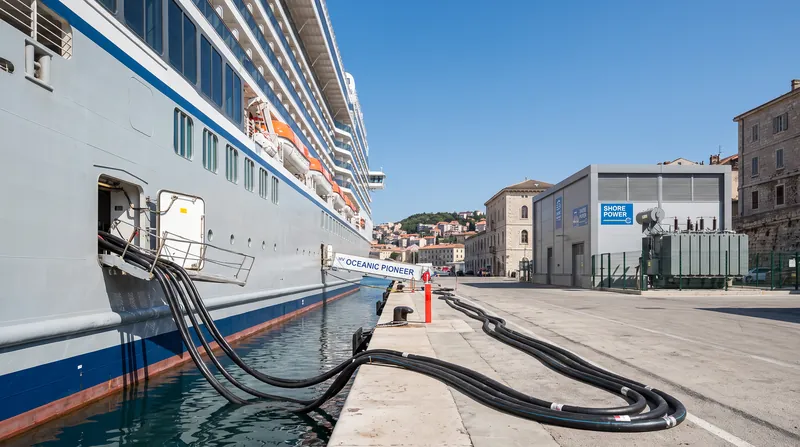
See all →Shore Power
The 2030 Shore Power Deadline: How European Ports Are Forcing Cruise Ships to Plug Into the Local Grid
4 sources
Maritime Medicine
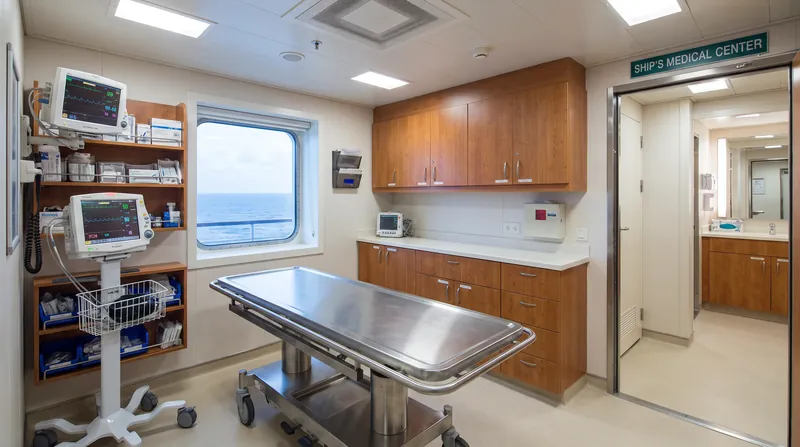
The ACEP Level III Standard: How Cruise Ship Medical Centers Are Actually Staffed and Equipped
5 sources
Maritime Measurement
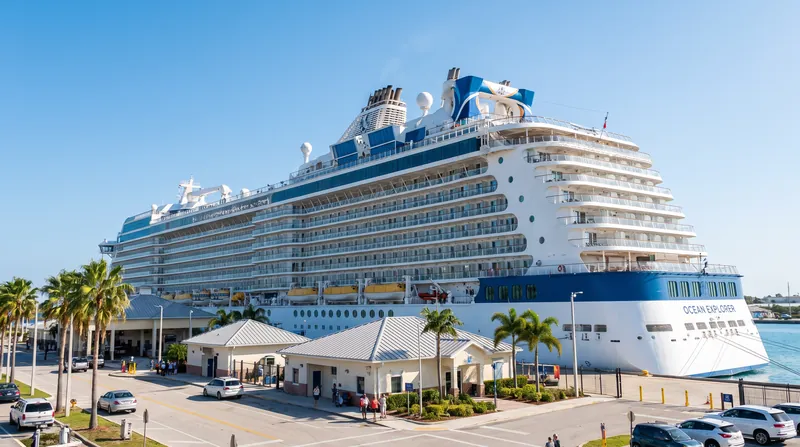
The Volume Illusion: How the 1969 IMO Convention Measures a Cruise Ship's Size Without Weighing It
5 sources
Maritime Law
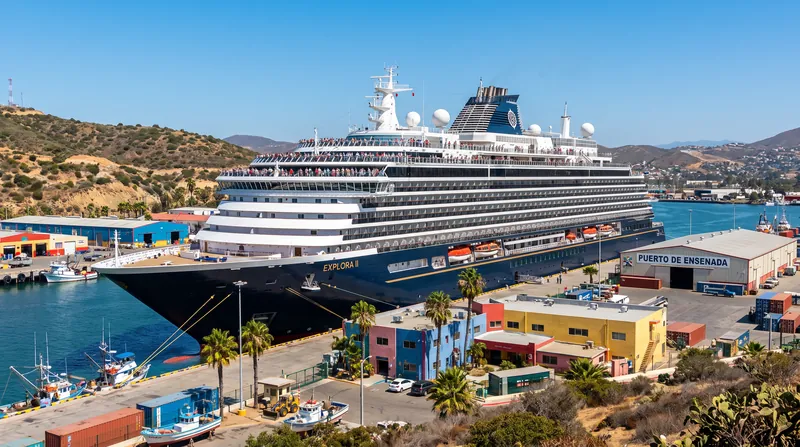
Why Foreign-Flagged Cruise Ships Cannot Sail Directly Between US Ports
8 sources
Comments
Every angle. Every day.
Get Travel stories with full source coverage and perspective breakdowns, free every day.