
Why Operating Environments Drive Divergent Army and Air Force Command Doctrines
Modern military operations rely on competing philosophies of command, pitting the U.S. Army's decentralized execution model against the Air Force's requirement for centralized synchronization. Understanding these doctrinal frameworks reveals how different branches manage the chaos of multi-domain warfare.
By Marina Lopez

Share this story
In short
- The U.S. Army relies on Mission Command, empowering subordinates to act independently on the commander's intent.
- The U.S. Air Force utilizes Centralized Control and Decentralized Execution to manage scarce, theater-wide assets.
- Friction occurs in joint operations when ground forces demand local control over strategic air assets.
At the heart of modern military operations lies a fundamental disagreement about trust, control, and the nature of friction. When communications fail and the battlefield descends into chaos, should a local commander have the authority to alter the plan, or must they wait to re-establish contact with headquarters? This tension pits two core philosophies against each other: the U.S. Army's reliance on "Mission Command" versus the U.S. Air Force's steadfast commitment to "Centralized Control and Decentralized Execution."[1][2][8]
Resolving this tension is not a matter of deciding which branch is doctrinally correct, but understanding why their respective operating environments demand entirely different approaches to managing violence. The Army fights in the mud and the cities, where local friction requires immediate, independent action. The Air Force fights across entire theaters, where a single misallocated asset can unravel a strategic campaign.[3][4][8]
The U.S. Army codifies its approach in Army Doctrine Publication (ADP) 6-0, defining Mission Command as the exercise of authority and direction by the commander using mission orders. It is built on a foundation of mutual trust, shared understanding, and a clear articulation of the commander's intent.[1]
Rooted in the 19th-century Prussian concept of Auftragstaktik, Mission Command dictates that subordinates are told what to achieve and why, but rarely how to achieve it. If the situation changes—as it inevitably does upon contact with the enemy—the subordinate is expected to exercise disciplined initiative to achieve the commander's intent without asking for permission or waiting for updated orders.[5]
This doctrine acknowledges the harsh reality of land warfare. Ground units operate in complex terrain where line-of-sight communications are frequently severed by mountains, urban infrastructure, or enemy electronic warfare. Waiting for orders in a disconnected environment often means ceding the initiative to the adversary or facing outright destruction.[4]
Conversely, the U.S. Air Force operates under the master tenet of "Centralized Control and Decentralized Execution," detailed extensively in AFDP 1-1. Because airpower is a scarce, high-demand resource that can traverse entire theaters in a matter of hours, its effects must be synchronized at the highest possible level.[2][7]
Centralized control ensures that a Joint Force Air Component Commander (JFACC) maintains a theater-wide perspective. If a satellite is blinded or a carrier group is suddenly threatened, the JFACC can instantly pivot bomber squadrons, aerial refueling tankers, or reconnaissance drones from one end of the battlespace to the other to address the strategic threat.[3][6]
The "decentralized execution" half of the Air Force equation mirrors the Army's trust in subordinates, but with a significantly narrower scope. The pilot in the cockpit or the drone operator at the console has the tactical authority to decide exactly how to defeat a specific surface-to-air missile site, but they do not have the authority to decide which site to attack if it deviates from the centralized Air Tasking Order.[2][7]
The friction between these doctrines emerges sharply during Joint All-Domain Operations. When an Army corps commander wants to call in an airstrike to support a rapidly developing ground offensive, they naturally expect the air asset to act as a localized tool under their decentralized mission command.[4][6]
However, the Air Force commander managing that same aircraft views it as a strategic asset that might be needed more urgently to strike a distant command node. To the Army, centralized control feels like micromanagement and bureaucratic delay. To the Air Force, hyper-decentralized command looks like a recipe for squandering finite resources on localized skirmishes.[5][7][8]
Military theorists point out that the Army's doctrine is currently at a crossroads. As ground forces integrate longer-range precision fires—such as new 300km-range ballistic missiles—their localized decisions begin to have theater-wide strategic impacts, blurring the historical line between tactical initiative and strategic risk.[4]
Simultaneously, critics of hyper-decentralized command argue that the romanticized vision of Auftragstaktik ignores the realities of modern sensor-rich environments. When headquarters can see the entire battlefield through drone feeds and satellite imagery, the justification for leaving decisions entirely to the blind, localized subordinate weakens considerably.[5][8]
The Department of Defense's push for Joint All-Domain Command and Control (JADC2) attempts to bridge this doctrinal divide through technology. By linking sensors from all branches into a single unified network, JADC2 aims to provide the theater-wide awareness required by the Air Force alongside the rapid, localized decision-making demanded by the Army.[3][8]
Yet, technology cannot fully resolve what is fundamentally a philosophical dispute. If a peer adversary successfully severs the JADC2 network using cyberattacks or anti-satellite weapons, the joint force will be forced to default to its foundational, and conflicting, doctrines.[6][8]
In a disconnected environment, the Army will naturally fragment into independent, self-directed units fighting fiercely for the commander's intent. The Air Force, stripped of its centralized nervous system, will face the unprecedented challenge of executing a theater campaign without the centralized control it relies upon to synchronize airpower.[2][7]
How we did this
- Method
- A comparative doctrinal synthesis mapping the U.S. Army's ADP 6-0 framework against the U.S. Air Force's AFDP 1-1 principles to identify structural friction points in joint all-domain command and control (JADC2).
- What we found
- The foundational tension in joint operations is not technological but philosophical: the Army's doctrine assumes local commanders must act independently when communications fail, whereas Air Force doctrine assumes independent local action without centralized synchronization risks strategic failure across the theater.
- What we worked from
- Army Mission Command Principles: 7 principles emphasizing local initiative — The Lightning Press SMARTbooks
- Air Force Command Tenets: Centralized control, decentralized execution — Air Force Doctrine
- Limits of this analysis
- This analysis relies on unclassified doctrinal publications and may not reflect classified command and control procedures currently tested in joint exercises.
Key terms
- Mission Command
- The Army's philosophy of exercising authority through mission orders, enabling disciplined initiative within the commander's intent.
- Centralized Control
- The Air Force tenet that a single commander should plan, direct, and pace the theater-wide effort of air assets.
- Decentralized Execution
- The delegation of execution authority to subordinate commanders to make tactical decisions within a centralized plan.
- Commander's Intent
- A clear and concise expression of the purpose of the operation and the desired military end state.
- Auftragstaktik
- A German military concept emphasizing mission-type tactics, where subordinates are given a goal and the freedom to achieve it.
- JADC2
- Joint All-Domain Command and Control, the Pentagon's concept to connect sensors from all military services into a single network.
Reader questions
Why do the Army and Air Force have different command doctrines?
They operate in fundamentally different environments. The Army faces localized friction and communications breakdowns on the ground, requiring independent action. The Air Force manages scarce assets that can cross entire theaters, requiring centralized synchronization.
What happens when communications fail?
Under Mission Command, Army units continue fighting based on their commander's last known intent. The Air Force faces greater challenges, as decentralized execution relies on a centralized plan that may become outdated without updates.
How does this affect joint military operations?
It creates friction. Ground commanders often want direct control over air support for local battles, while air commanders want to retain those assets for theater-wide strategic strikes.
Where opinion splits
Ground Force Advocates
Argue that battlefield friction makes centralized control impossible during high-intensity conflict.
Proponents of the Army's Mission Command philosophy argue that no communications network is resilient enough to survive contact with a peer adversary. They maintain that when electronic warfare severs links to headquarters, units must be pre-authorized to act on the commander's intent. From this perspective, centralized control is a luxury of uncontested airspace, and attempting to micromanage a chaotic ground war from a distant operations center will result in paralysis and defeat.
Airpower Strategists
Maintain that finite, high-value assets must be managed centrally to achieve theater-wide effects.
Air Force theorists contend that airpower is inherently strategic and cannot be parceled out to local ground commanders without diluting its impact. They argue that a Joint Force Air Component Commander must retain the authority to mass airpower at decisive points across an entire theater. To these strategists, allowing local commanders to dictate the use of aircraft risks wasting multi-million-dollar assets on tactically insignificant targets while ignoring the broader campaign objectives.
Network-Centric Theorists
Believe advanced data links will eventually merge both doctrines into a single unified command structure.
Advocates for Joint All-Domain Command and Control (JADC2) argue that the historical divide between these doctrines is a product of legacy technology. They propose that artificial intelligence and ubiquitous sensor networks will soon provide local commanders with theater-wide awareness, and headquarters with localized fidelity. In this view, the future of command is neither purely centralized nor entirely decentralized, but dynamically distributed based on real-time network connectivity.
- Army Doctrinal Adherents
- Prioritize local initiative and resilience against communications degradation.
- Airpower Centralists
- Emphasize the need to synchronize scarce strategic assets across an entire theater.
- Command Skeptics
- Argue that both doctrines are flawed and require modernization for the digital age.
Perspectives this story doesn't cover
- Naval Command Theorists
- Allied/NATO Doctrinal Planners
- Cyber and Space Domain Commanders
Sources
Source coverage
8 outlets
3 viewpoints surfaced







- [1]The Lightning Press SMARTbooksArmy Doctrinal Adherents
ADP 6-0 Mission Command (July 2019)
Read on The Lightning Press SMARTbooks → - [2]Air Force DoctrineAirpower Centralists
MISSION COMMAND
Read on Air Force Doctrine → - [3]Air UniversityAirpower Centralists
Evolving the Command and Control of Airpower
Read on Air University → - [4]The Strategy BridgeArmy Doctrinal Adherents
U.S. Army Mission Command at a Crossroads
Read on The Strategy Bridge → - [5]NDU PressCommand Skeptics
Beyond Auftragstaktik: The Case Against Hyper-Decentralized Command
Read on NDU Press → - [6]Department of WarAirpower Centralists
Centralized Control and Decentralized execution - A Catchphrase in Crisis?
Read on Department of War → - [7]Air UniversityAirpower Centralists
Centralized Control and Decentralized Execution
Read on Air University → - [8]Factlen Editorial TeamCommand Skeptics
Synthesis by Factlen editorial team
Read on Factlen Editorial Team →
More in Defense & Security
See all →Indo-Pacific Posture
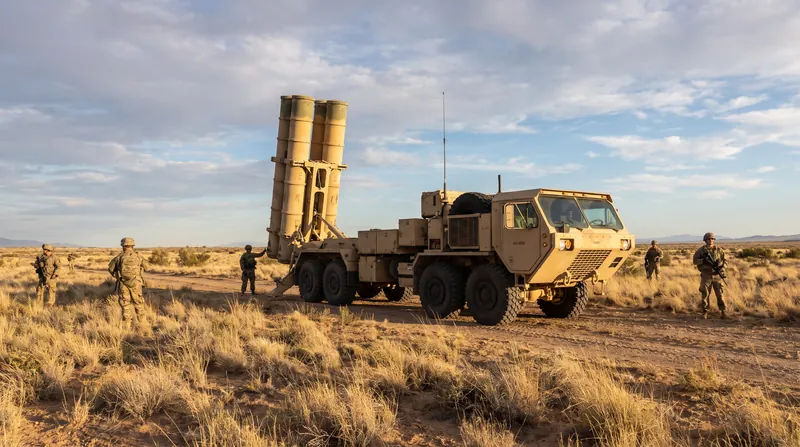
US Deploys Typhon Missile System to Okinawa as China and Russia Condemn Move
6 sources
Defense Procurement
EU Council Approves First Five Joint Defense Projects Targeting €190 Billion in Collective Military Capabilities
6 sources

Grid Defense
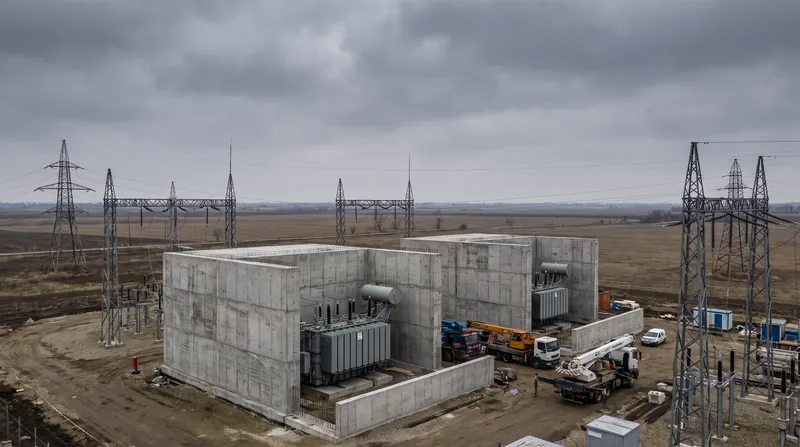
Lithuania Fortifies Key Power Substation Near Kaliningrad With Concrete 'Sarcophagi' Against Drone Attacks
7 sources
Nuclear Deterrence
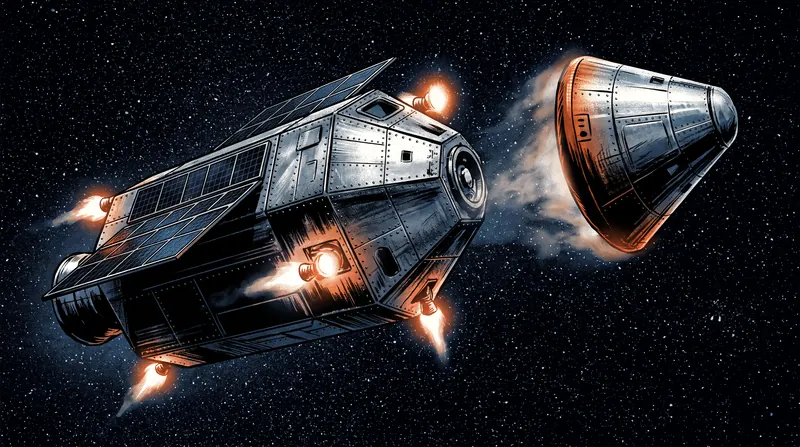
The Bus, the Post-Boost Vehicle, and the Reentry Vehicles: How a MIRV System Delivers Multiple Warheads to Separate Targets
6 sources
Comments
Every angle. Every day.
Get Defense & Security stories with full source coverage and perspective breakdowns, free every day.