
Engineering Trade-Offs Between CCS, NACS, and CHAdeMO EV Charging Architectures
As the electric vehicle industry consolidates its charging infrastructure, understanding the engineering trade-offs between CCS, NACS, and CHAdeMO reveals why certain architectures are dominating global markets.
By Layla Zaher

Share this story
In short
- NACS utilizes a 5-pin shared architecture for both AC and DC power, minimizing plug size and weight.
- CCS maintains separate physical pins for DC fast charging, resulting in a larger connector but simpler vehicle-side routing.
- CHAdeMO relies on CAN bus communication and requires a secondary port for AC charging.
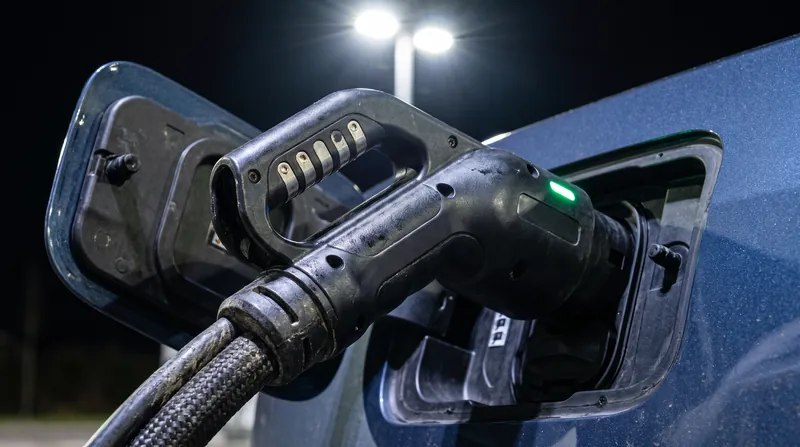
For a prospective electric vehicle buyer, the most consequential engineering decision made by an automaker is not the battery chemistry or the motor configuration, but the shape of the charging port.
This single interface dictates the vehicle's compatibility with national infrastructure networks, the physical weight of the cable the driver must wrestle with in freezing temperatures, and the maximum speed at which the battery can accept electrons. As the global automotive industry transitions away from fossil fuels, the standardization of this physical connection has become a critical node in the broader transportation ecosystem.[8]
The current landscape of EV charging is dominated by three distinct architectural philosophies: the Combined Charging System (CCS), the North American Charging Standard (NACS, formalized as SAE J3400), and CHAdeMO. Each standard emerged from different regional engineering priorities and regulatory environments. Understanding how they compare requires looking past the plastic housing to the underlying pin configurations, thermal management strategies, and digital communication protocols that govern the handshake between the vehicle and the grid.[4][8]
The North American Charging Standard, originally developed as a proprietary interface by Tesla and later opened to the industry, prioritizes physical compactness and user ergonomics. By utilizing a shared pair of large conductive pins for both alternating current (AC) Level 2 charging and direct current (DC) fast charging, the NACS connector minimizes the overall footprint of the plug. This allows the hardware to be significantly lighter and easier to maneuver than competing designs.[1][5]
This shared-pin architecture requires the vehicle's onboard systems to physically switch the routing of incoming power depending on whether the station is supplying AC or DC. The result is a highly streamlined connector that relies on Power Line Communication (PLC) over the control pilot pin to negotiate charging states, a protocol shared with the ISO 15118 standard. The SAE J3400 standardization process has further cemented this architecture's role in North America, ensuring interoperability across different vehicle brands.[7]
In contrast, the Combined Charging System (CCS) was designed by a consortium of legacy automakers to build upon existing AC charging infrastructure without requiring complex internal switching. CCS Type 1 (used primarily in North America before the NACS pivot) and Type 2 (the mandated standard in Europe) utilize a modular approach: they retain the standard AC pins at the top of the connector and append two massive dedicated DC pins at the bottom.[2][4]
This physical separation of AC and DC pathways simplifies the vehicle's internal high-voltage routing, as the car does not need a switching mechanism to direct the current. However, it results in a significantly bulkier connector and a heavier, stiffer cable. Like NACS, CCS utilizes PLC for digital communication, enabling advanced features like Plug and Charge and bidirectional power flow under the ISO 15118 framework, which has made it the backbone of European charging networks.[2][8]
CHAdeMO, pioneered by Japanese automakers and utilities, represents the earliest dedicated DC fast-charging standard. Unlike CCS and NACS, CHAdeMO is strictly a DC interface, requiring vehicles to feature a second, separate port (typically SAE J1772) for AC charging. This dual-port requirement consumes more physical space on the vehicle's exterior but allows for highly specialized DC hardware.[3][6]
The defining characteristic of CHAdeMO is its reliance on the Controller Area Network (CAN) bus protocol for vehicle-to-charger communication, rather than PLC. While CAN is highly robust and natively understood by vehicle internal networks, the standard's physical design requires dedicated pins for various safety and communication checks, resulting in a large, multi-pin connector. Notably, CHAdeMO was the first standard to fully commercialize bidirectional charging (Vehicle-to-Grid), a feature that CCS and NACS are only now integrating at scale.[3][6]
The global market is currently undergoing a massive consolidation. In North America, the industry is rapidly coalescing around NACS (SAE J3400), driven by the reliability and ubiquity of the Supercharger network. Europe has firmly mandated CCS Type 2, leveraging its support for three-phase AC power, while Japan maintains its commitment to CHAdeMO. This regional standardization reduces friction for consumers and allows infrastructure developers to deploy capital with greater certainty, ultimately accelerating the broader transition to electrified transport.[5][8]
How we did this
- Method
- Compared the physical pin layouts, communication protocols, and high-voltage routing requirements across the three standards to evaluate the engineering trade-offs between connector ergonomics and vehicle-side manufacturing complexity.
- What we found
- The divergence in charging standards is fundamentally a trade-off between cable ergonomics and vehicle-side complexity: NACS shifts the complexity into the vehicle via contactors to achieve a lighter cable, while CCS keeps the vehicle routing simple at the cost of a heavier, bulkier user interface.
- What we worked from
- NACS shared AC/DC pin architecture: 5 pins — Wikipedia
- CCS separated AC/DC pin architecture: 7 to 9 pins — CharIN e.V.
- CHAdeMO communication protocol: CAN bus — CHAdeMO
- Limits of this analysis
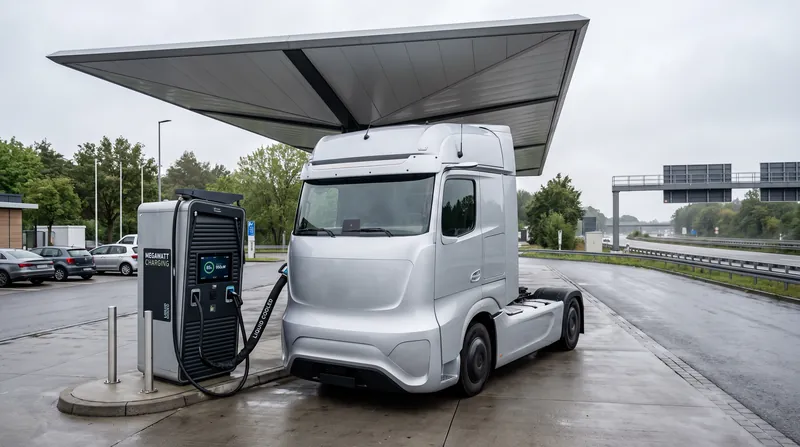
- This analysis focuses on passenger vehicle standards and does not account for the emerging Megawatt Charging System (MCS) designed for heavy-duty commercial trucking.
Viewpoints in depth
NACS (SAE J3400) Architecture
A compact, shared-pin design prioritizing ergonomics and streamlined hardware.
For: Exceptional user ergonomics due to a lightweight, 5-pin design. Shared pins for AC and DC charging reduce the physical footprint on the vehicle. Natively supports high-amperage liquid-cooled cables, enabling theoretical outputs up to 1,000V and 1,000A. Against: Requires complex onboard contactors within the vehicle to switch between AC and DC routing, increasing vehicle-side manufacturing complexity. Evidence: SAE J3400 standardization documentation confirms the shared-pin architecture and integration of ISO 15118 Power Line Communication. Guidance: Fits well when prioritizing user experience, compact vehicle design, and leveraging existing high-reliability networks in North America. Does not fit well in European markets where three-phase AC charging is the standard.
Combined Charging System (CCS)
A modular, physically separated pin architecture designed for backward compatibility.
For: Simplifies vehicle-side high-voltage engineering by maintaining physically separate pathways for AC and DC current. Broad global regulatory backing, particularly in Europe (Type 2) where it supports three-phase AC charging. Robust support for ISO 15118 Plug and Charge. Against: The physical connector is bulky and heavy, often requiring two hands to operate in cold weather. The modular design is less elegant and requires a larger charge port door on the vehicle. Evidence: CharIN implementation guidelines detail the physical separation of the DC pins and the reliance on PLC for communication. Guidance: Fits well when global standardization and three-phase AC grid compatibility are paramount. Does not fit well when vehicle design constraints demand the smallest possible charge port footprint.
CHAdeMO Protocol
A dedicated DC fast-charging standard utilizing CAN bus communication.
For: Unmatched historical reliability and early pioneering of bidirectional charging (Vehicle-to-Grid). Utilizes CAN bus communication, which integrates seamlessly with the vehicle's internal digital architecture without requiring a PLC translator. Against: Requires a completely separate port for AC charging, forcing automakers to design vehicles with two distinct charging receptacles. The connector is large, and global market share is rapidly declining outside of Japan. Evidence: CHAdeMO protocol development documents highlight the use of CAN communication and its foundational role in early V2G deployments. Guidance: Fits well in the Japanese domestic market and for specialized bidirectional fleet applications. Does not fit well for new passenger vehicles in North America or Europe, where the standard is being actively phased out of public infrastructure.
- NACS Advocates
- Engineers and automakers prioritizing user ergonomics, lightweight cables, and streamlined vehicle-side hardware.
- CCS Proponents
- European regulators and legacy automakers favoring modular designs that separate AC and DC pathways.
- CHAdeMO Loyalists
- Japanese manufacturers and grid operators emphasizing early bidirectional charging capabilities and CAN bus reliability.
Perspectives this story doesn't cover
- Commercial Fleet Operators
- Grid Infrastructure Planners
Sources
Source coverage
8 outlets
3 viewpoints surfaced






- [1]EV Charging Stations With Tom MoloughneyNACS Advocates
SAE J3400 (North American Charging Connector)
Read on EV Charging Stations With Tom Moloughney → - [2]CharIN e.V.CCS Proponents
How to implement CCS?
Read on CharIN e.V. → - [3]CHAdeMOCHAdeMO Loyalists
Protocol Development
Read on CHAdeMO → - [4]Kite ComplianceCCS Proponents
The Evolution of EV Charging Standards: From SAE J1772 to ISO 15118
Read on Kite Compliance → - [5]WikipediaNACS Advocates
North American Charging Standard
Read on Wikipedia → - [6]ZENCARCHAdeMO Loyalists
CCS Vs CHAdeMO: Which EV Charging Standard Is Better?
Read on ZENCAR → - [7]EV Charging Stations With Tom MoloughneyNACS Advocates
SAE Expands the J3400 Family of Standards With SAE J3400/2
Read on EV Charging Stations With Tom Moloughney → - [8]Factlen Editorial Team
Synthesis by Factlen editorial team
Read on Factlen Editorial Team →
More in Transportation
See all →Battery Safety Tech
How Thermal Barriers and Venting Systems Prevent EV Battery Pack Failure
5 sources
Battery Physics
The C-Rate, Temperature, and State of Charge Limits That Define an EV's DC Fast Charging Curve
5 sources
Battery Supply Chain
Pyrometallurgy vs. Hydrometallurgy: The Trade-Offs Defining EV Battery Recycling Economics
7 sources

EV Charging Tech
The Onboard Charger's Bypass: Why AC Charging is Limited by the Car and DC Charging is Not
5 sources
Comments
Every angle. Every day.
Get Transportation stories with full source coverage and perspective breakdowns, free every day.