
The Aerodynamic Principles of Ground Effect in Formula 1: How Venturi Tunnels Create Downforce
Formula 1's modern era is defined by ground effect aerodynamics, a fluid dynamics principle that sucks cars to the track using underbody Venturi tunnels. Understanding this invisible mechanism is essential to grasping how teams extract performance and why the regulations continuously evolve.
By Meera Iyer

Share this story
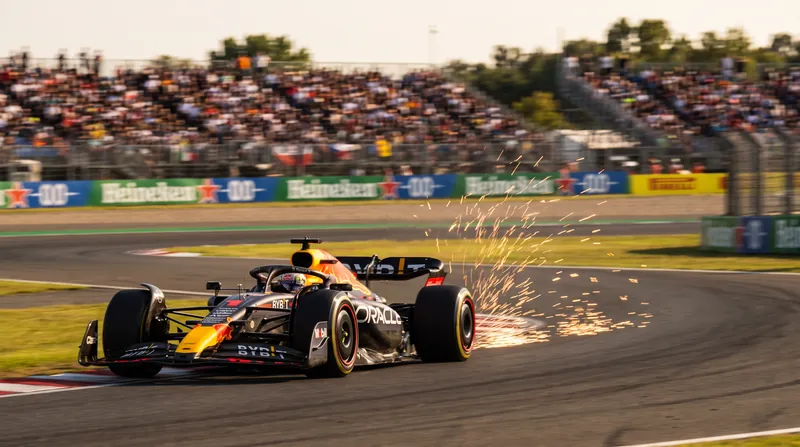
When a Formula 1 driver throws a 798-kilogram machine into a high-speed corner at 180 mph, their life and their championship hopes rest entirely on invisible air. The modern F1 car is not just a vehicle; it is a fighter jet inverted, designed to weaponize the atmosphere to crush the tires into the asphalt. For the fan watching at home, the battle looks like it is happening on the track surface, but the true war is being waged in the millimeter-tight gap between the floorboards and the ground.[8]
This invisible war is governed by ground effect, an aerodynamic philosophy that returned to the sport in 2022 after a four-decade ban. Prior to this, teams relied heavily on complex over-body wings and bargeboards to push the car down, which created massive wakes of turbulent air that made it nearly impossible for cars to follow each other closely. The regulatory overhaul shifted the primary source of downforce to the underbody, fundamentally rewriting the physics of how an F1 car generates grip.[3][4]
To understand ground effect, you have to stop looking at the top of the car and look underneath. The floor of a modern Formula 1 challenger is not a flat sheet of carbon fiber. It is a deeply sculpted, three-dimensional wing featuring massive channels known as Venturi tunnels. These tunnels run the length of the car's underbelly, acting as a massive vacuum system that physically sucks the chassis to the tarmac.[1][2]
The science driving this is rooted in Bernoulli's principle, a core tenet of fluid dynamics. When a fluid—in this case, the air passing under the car at 200 mph—is forced through a constricted space, its velocity increases and its pressure drops. As the F1 car moves forward, it swallows massive volumes of air into the front of the Venturi tunnels.[1][6]
As that air travels backward, the tunnel narrows, squeezing the airflow at a specific point called the throat. This constriction forces the air to accelerate violently, creating a zone of extreme low pressure beneath the car. Because the ambient air pressure pushing down on the top of the car is now vastly higher than the pressure underneath it, the entire vehicle is forced downward with thousands of pounds of force.[2][7]
Generating that low pressure is only half the equation; the air must eventually exit the car without violently disrupting the flow. This is the job of the diffuser, the massive, upward-sloping ramp at the rear of the floor. The diffuser gradually expands the volume of the tunnel, smoothly decelerating the air and returning it to ambient pressure before it exits behind the car. If the air expands too quickly, it detaches from the surface, causing an aerodynamic stall and an instant, catastrophic loss of grip.[7]
The ultimate challenge for aerodynamicists is keeping this low-pressure system sealed. In the late 1970s, teams used physical sliding skirts that scraped the ground to trap the air. Today, physical skirts are banned, so engineers use the air itself. By carefully shaping the edges of the floor, they generate powerful, spinning vortices of air that act as invisible walls, sealing the Venturi tunnels from the higher-pressure air outside and maximizing the suction effect.[3][5]
This pursuit of the perfect seal birthed the defining engineering headache of the current era: porpoising. Because ground effect becomes exponentially more powerful the closer the floor gets to the track, teams run their cars as low as physically possible. However, if the car gets too low, the airflow chokes at the throat of the tunnel. The low pressure vanishes, the downforce disappears, and the car's suspension violently springs upward.[5]
Once the car pops up, the airflow reattaches, the downforce returns, and the car is sucked back down to the track, only to choke the airflow again. This creates a violent, high-frequency bouncing cycle that can physically batter the drivers and shatter the floor. Mastering ground effect is not just about generating peak downforce; it is about creating a stable aerodynamic platform that does not stall when the car pitches under heavy braking or rolls through a high-speed chicane.[5][6]
The stakes of this fluid dynamics puzzle are about to shift once again. The FIA has finalized the 2026 technical regulations, which will introduce a completely new aerodynamic paradigm. To compensate for a shift in engine regulations, the governing body is mandating smaller, lighter cars with a significant reduction in overall downforce and drag.[4]
The 2026 rules will retain the ground effect floor, but the Venturi tunnels will be less powerful, and the diffuser will be less expansive. Crucially, this will be paired with active aerodynamics—movable front and rear wings that drivers can adjust on the fly to shed drag on the straights and maximize grip in the corners. The interaction between these active wings and the underbody Venturi tunnels will be the next great frontier for F1's engineering elite.[4]
Ultimately, the Venturi tunnel is a masterpiece of applied physics. It takes the chaotic, invisible medium of the atmosphere and bends it to the will of the driver, transforming a lightweight chassis into a cornering missile. As teams pour millions of dollars into computational fluid dynamics and wind tunnel testing, the fundamental truth of Formula 1 remains unchanged: the team that best understands the air will always control the track.[1][5][8]
Where opinion splits
The Engineers' View
Aerodynamicists view the floor as the ultimate performance differentiator.
For the engineering teams, the Venturi tunnels represent the highest-yield area for development. Because the floor generates downforce with significantly less drag than a traditional rear wing, engineers pour the majority of their computational fluid dynamics (CFD) and wind tunnel budgets into optimizing the underbody. Their primary obsession is 'sealing' the floor—using complex aerodynamic structures like vortices to prevent high-pressure ambient air from leaking into the low-pressure tunnels, which would instantly kill the suction effect.
The Regulators' View
The FIA uses ground effect as a tool to improve the quality of racing.
From the perspective of the sport's governing body, ground effect is a necessary mechanism to solve the 'dirty air' problem. Traditional over-body wings punch massive holes in the air, leaving a chaotic wake that strips downforce from any car trying to follow closely. By forcing teams to generate grip from the floor, the FIA ensures the wake is thrown higher and cleaner, allowing drivers to battle wheel-to-wheel. The upcoming 2026 regulations are a continuation of this philosophy, tweaking the floor's power to balance the introduction of active aerodynamics.
The Drivers' View
Drivers demand a predictable platform that inspires confidence at the limit.
While engineers chase peak downforce numbers on a computer screen, drivers have to live with the physical reality of the car. A ground effect car that generates massive downforce but suffers from violent porpoising or sudden aerodynamic stalls is undrivable. Drivers consistently advocate for a broader 'operating window'—a car that remains aerodynamically stable whether it is pitching forward under heavy braking, rolling over a curb, or dealing with crosswinds at 180 mph.
- Aerodynamic Engineers
- Focus on maximizing peak downforce and perfectly sealing the floor edges using complex air vortices.
- Regulatory Bodies
- Prioritize reducing turbulent wake to improve overtaking and ensuring the cars remain safe and stable at high speeds.
- The Drivers
- Value a predictable, stable aerodynamic platform that does not violently bounce or lose grip mid-corner.
Sources
Source coverage
8 outlets
3 viewpoints surfaced





- [1]Academic Journal of Science and TechnologyAerodynamic Engineers
Fluid Mechanics Principles of Venturi Tunnels and Ground Effect Aerodynamics in Formula One Racing Cars
Read on Academic Journal of Science and Technology → - [2]Highlights in Science, Engineering and Technology
Analysis of The Venturi Tunnel and Ground Effect
Read on Highlights in Science, Engineering and Technology → - [3]Racecar EngineeringRegulatory Bodies
Tech Explained: 2022 F1 Technical Regulations
Read on Racecar Engineering → - [4]Formula 1Regulatory Bodies
2026 REGULATIONS EXPLAINED: All you need to know about F1's new aerodynamics
Read on Formula 1 → - [5]The RaceThe Drivers
How F1 teams broke the ground effect era
Read on The Race → - [6]Applied Mechanics ReviewsAerodynamic Engineers
Ground Effect Aerodynamics of Race Cars
Read on Applied Mechanics Reviews → - [7]Journal of Fluids EngineeringAerodynamic Engineers
A Review of Ground-Effect Diffuser Aerodynamics
Read on Journal of Fluids Engineering → - [8]Factlen Editorial TeamThe Drivers
Synthesis by Factlen editorial team
Read on Factlen Editorial Team →
More in Sports
See all →Ground Effect
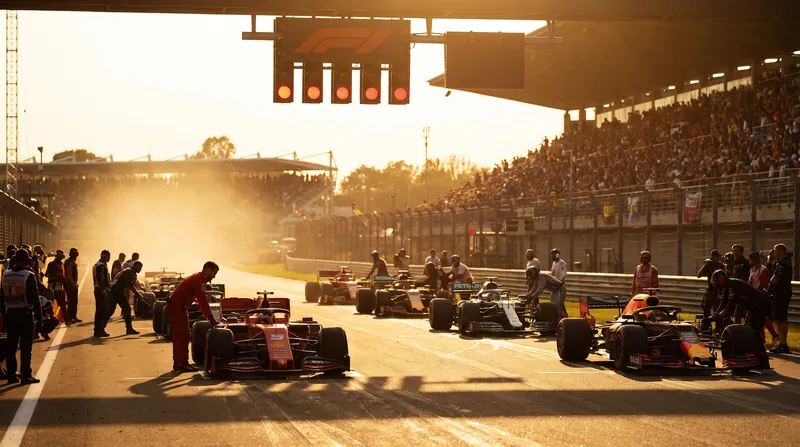
The Venturi Tunnels: How the Underfloor Shape Creates Downforce in Modern Formula 1 Cars
7 sources
2026 Regulations
The 2.9x Penalty: How Formula 1's 2026 Active Aero and Manual Override Actually Work
1 sources
F1 Power Units
The MGU-H and MGU-K: How Formula 1's Energy Recovery System Recovers and Deploys 4 Megajoules Per Lap
6 sources
F1 Regulations
FIA Confirms Red Bull Started 2026 Engine Era With Best Power Unit, Denies Upgrade Tokens After Second Review
5 sources
Comments
Every angle. Every day.
Get Sports stories with full source coverage and perspective breakdowns, free every day.