
The 2.9x Penalty: How Formula 1's 2026 Active Aero and Manual Override Actually Work
Formula 1's 2026 regulations replace traditional DRS with a shapeshifting chassis and a massive 350kW electrical boost. Here is how X-Mode, Z-Mode, and the new Manual Override fundamentally change the math of overtaking.
By Ryder James

Share this story
In short
- Formula 1's 2026 regulations replace DRS with active aerodynamics and a Manual Override electrical boost.
- Cars toggle between high-downforce Z-Mode in corners and low-drag X-Mode on straights.
- The MGU-K electrical motor now produces 350 kilowatts (469.3 horsepower), nearly half the car's total output.
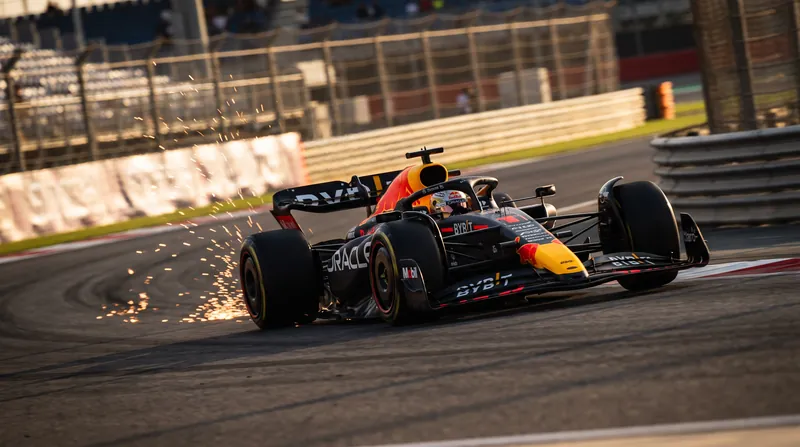
The Drag Reduction System (DRS) is dead, and the 1,000-horsepower shapeshifting era has arrived. Formula 1's 2026 regulations have fundamentally rewritten the physics of a Grand Prix, replacing the traditional rear-wing overtaking aid with a fully active aerodynamic chassis and a massive 350-kilowatt electrical motor. The result is a car that demands a completely different driving style, where energy management and aerodynamic modes dictate the outcome of every battle. To understand how racing works in 2026, you have to look past the steering wheel and into the battery.
The most visible change is the introduction of active aerodynamics, which allows the car to physically change shape over the course of a lap. Instead of a static setup that compromises between cornering grip and straight-line speed, the 2026 cars toggle between two distinct configurations: Z-Mode and X-Mode.
Z-Mode is the default, high-downforce setting used for braking and cornering, where both the front and rear wings are angled to push the car into the asphalt. When a driver exits a corner and accelerates onto a straight, they deploy X-Mode, which opens the wing elements to shed drag and maximize top speed.
Crucially, X-Mode is not an overtaking aid—it is a baseline efficiency tool used by every car on every straight. As Sky Sports analyst Ted Kravitz explained, the system "will be used by default on every straight by every car to just drop your drag level on the straight," which allows drivers to "recover more when you are braking on another straight."
Because the 2026 power units rely heavily on electrical energy, reducing aerodynamic drag is essential to prevent the battery from draining too quickly. If a driver is forced out of X-Mode early, the car automatically reverts to Z-Mode, instantly increasing air resistance and acting like a parachute.
The real weapon for overtaking in 2026 is the Manual Override system, which replaces DRS. When a chasing driver is within one second of the car ahead, they are granted access to a sudden boost of electrical power.
This system taps into the upgraded Motor Generator Unit-Kinetic (MGU-K), which now deploys 350 kilowatts (469.3 horsepower) to the rear wheels—a staggering increase from the 120 kilowatts (160.9 horsepower) used in the previous era. Because the internal combustion engine's output has been reduced, this electrical surge accounts for nearly 46.7% of the car's total power.
This 50/50 power split creates a brutal penalty for drivers who miscalculate their energy usage. In the pre-2026 era, running out of battery at the end of a straight—a phenomenon known as "clipping"—cost a driver roughly 160 horsepower. Today, that same mistake strips away nearly 470 horsepower. The penalty for battery depletion is almost three times more severe, meaning a driver who drains their reserves too early will be left defenseless as rivals surge past with full electrical deployment.[1]
The challenge of managing this power is immense. The 1.6-liter V6 internal combustion engine runs on 100% sustainable fuel, capped at a strict flow rate of 100 kilograms per hour. Teams must carefully map their engine modes to balance fuel consumption with electrical harvesting.
During a race, the MGU-K must recover kinetic energy under braking to recharge the battery for the next straight. If a driver uses the Manual Override too aggressively, they risk entering the next lap with a depleted battery, leaving them vulnerable to attack and unable to utilize X-Mode effectively.
Driveability has also become a critical factor. With so much power coming from the electric motor, drivers depend on smooth, sustained delivery to maintain traction. Sudden drops in torque can unsettle the rear of the car, triggering wheelspin out of slow corners or instability in heavy braking zones. As the 2026 season unfolds, the teams that master the intricate dance between X-Mode efficiency, Manual Override deployment, and battery harvesting will dictate the championship.
The 2026 regulations shift the burden of overtaking from the aerodynamicists directly to the drivers. Without the artificial crutch of a traditional DRS flap, passing now requires a calculated, multi-lap strategy to drain an opponent's battery while preserving your own. The cars themselves are smaller and more nimble, but the intellectual load required to keep them at the front of the grid has never been higher.
Key terms
- MGU-K
- Motor Generator Unit-Kinetic; the electric motor that recovers energy under braking and deploys it to the rear wheels for acceleration.
- Clipping
- The moment a car runs out of electrical energy deployment before the end of a straight, resulting in a sudden loss of acceleration.
- Active Aerodynamics
- Movable front and rear wings that change shape while the car is driving to optimize either downforce or top speed.
Frequently asked
What is the difference between X-Mode and Z-Mode?
Z-Mode is the high-downforce setup used for cornering, while X-Mode opens the wings to reduce drag on straights. Unlike DRS, X-Mode is used by every car on every straight, not just for overtaking.
How does the new Manual Override work?
When a driver is within one second of the car ahead, they can activate a Manual Override button to receive a massive surge of electrical power from the MGU-K to help them overtake.
Why is battery management so important in 2026?
The electric motor now provides nearly half of the car's total horsepower. If a driver drains their battery early, they lose almost 470 horsepower and become highly vulnerable to being passed.
Viewpoints in depth
The Aerodynamicists' Challenge
Balancing the drag reduction of X-Mode with the downforce requirements of Z-Mode.
For aerodynamicists, the 2026 regulations represent a paradigm shift. The introduction of active aerodynamics means teams no longer have to compromise between cornering grip and straight-line speed. However, the system's reliance on electrical energy creates a new challenge: if a car's battery depletes, the wings automatically snap back into the high-drag Z-Mode. This forces designers to create incredibly efficient X-Mode profiles to ensure the car can maintain top speed while using as little electrical energy as possible.
The Powertrain Engineers' Focus
Integrating a massive electrical motor with a sustainable-fuel combustion engine.
Powertrain engineers are grappling with the 50/50 power split between the internal combustion engine and the MGU-K. With the electric motor now delivering 350 kilowatts, the physical stress on the battery and energy recovery systems is immense. Engineers must map the engine modes to ensure the combustion engine, which is capped at a 100 kg/h fuel flow limit, works in perfect harmony with the electrical deployment. Any hesitation or sudden drop in torque can ruin a driver's lap and destroy the rear tires.
The Drivers' Perspective
Managing the immense intellectual load of energy deployment and active aero.
From the cockpit, the 2026 cars require a fundamentally different approach to racing. Drivers can no longer rely on a simple DRS button to breeze past opponents on a straight. Instead, they must play a high-speed game of chess, saving their battery for the Manual Override while forcing the car ahead to deplete its own energy reserves. The penalty for a mistake is severe: running out of battery strips away nearly 470 horsepower, leaving the driver defenseless and instantly vulnerable to an overtake.
- Aerodynamicists
- Focus on minimizing drag through X-Mode to improve straight-line efficiency and battery conservation.
- Powertrain Engineers
- Prioritize the seamless integration of the 350kW MGU-K and the sustainable-fuel combustion engine.
- Drivers & Tacticians
- View the regulations as a complex energy management puzzle where deploying the Manual Override at the right moment is critical.
Perspectives this story doesn't cover
- Tire Manufacturers
- Race Strategists
Sources
Source coverage
1 outlets
3 viewpoints surfaced

- [1]Factlen Editorial Team
Synthesis by Factlen editorial team
Read on Factlen Editorial Team →
More in Sports
See all →Race Format Overhaul
F1 Commission Approves Shorter Races and Removes Three-Hour Limit for 2027 Season
6 sources
Ground Effect
The Venturi Tunnels: How the Underfloor Shape Creates Downforce in Modern Formula 1 Cars
7 sources
F1 Power Units
The MGU-H and MGU-K: How Formula 1's Energy Recovery System Recovers and Deploys 4 Megajoules Per Lap
6 sources
F1 Aerodynamics
The Aerodynamic Principles of Ground Effect in Formula 1: How Venturi Tunnels Create Downforce
8 sources
Comments
Every angle. Every day.
Get Sports stories with full source coverage and perspective breakdowns, free every day.