
The 3-to-1 Force Ratio: How the Ground Reaction Force in a Single-Leg Stance Dictates the Optimal Load for Grappling Strength Training
Biomechanical data shows that standing on one leg multiplies the force across the hip joint by up to three times your body weight. For grapplers, this means single-leg exercises can deliver maximal strength adaptations with significantly less external load on the spine.

Share this story
To build the lower-body strength required for wrestling and judo, athletes do not need to load their spines with twice their body weight; they only need to stand on one leg. Biomechanical analysis reveals a 3-to-1 force ratio: because the hip abductors must fire aggressively to keep the pelvis level, the total compressive force across the hip joint during a single-leg stance reaches up to three times a person's body weight.
This internal multiplier fundamentally changes the math for combat sports strength training. By shifting from bilateral exercises like the traditional barbell back squat to single-leg movements, grapplers can generate equivalent mechanical tension in the lower body while cutting the external load on the central nervous system by nearly 50 percent.[5][8]
The mechanism driving this adaptation comes down to ground reaction force and muscular leverage. According to a 2016 gait analysis published in Musculoskeletal Key, the abductor muscles must produce a downward force equal to roughly twice the body's weight just to prevent the pelvis from dropping toward the unsupported side during a normal walking stride.
When that muscular effort is added to the body weight itself, the hip joint experiences a 3-to-1 load ratio before a single iron plate is lifted. For a 180-pound Brazilian Jiu-Jitsu practitioner, simply balancing on one foot forces the lead hip to manage over 500 pounds of internal compressive force.[5]
Researchers writing in the journal MDPI observed similar mechanics during dynamic, high-impact movements. When young female athletes performed single-leg drop landings, the peak vertical ground reaction forces spiked to between 2.5 and 3.0 times their body mass during the critical weight-acceptance phase. Replicating that exact stimulus bilaterally requires loading a barbell with hundreds of pounds, which heavily taxes the lumbar spine and extends the required recovery time between intense mat sessions. The single-leg approach delivers the necessary tissue stimulus without the systemic fatigue penalty.[2]
Clinical Biomechanics data highlights that hip external rotation strength directly influences knee mechanics during these single-leg impacts. If a grappler lacks the abductor and rotator strength to stabilize that massive 3-to-1 force, the knee inevitably collapses inward into valgus—a primary mechanism for anterior cruciate ligament tears on the mat. Training the legs unilaterally forces the athlete to build the specific rotational stability required to defend a takedown or execute a throw, adaptations that a standard two-legged squat cannot fully replicate.[3]
Training programs for combat sports are increasingly splitting the difference to manage athlete fatigue. Coaches at GCP Training note that structuring strength sessions around single-leg explosiveness allows fighters to maintain high-low training rhythms. This approach preserves central nervous system readiness for live sparring while still driving necessary lower-body strength adaptations. Because the stabilizing muscles are working at maximum capacity, the prime movers—the quadriceps and glutes—reach mechanical failure with significantly lighter dumbbells or kettlebells.[8]
A distinction exists between supported and unsupported unilateral exercises. SimpliFaster's coaching breakdown of "True" Single-Leg Training emphasizes movements where the athlete must manage their center of mass over a minimal base of support, such as pistol squats or step-ups, rather than split squats where the rear foot assists. This distinction dictates exactly how much the 3-to-1 ratio engages; if the rear foot absorbs 20 percent of the load, the demand on the lead hip abductors drops proportionally.[4]
Tampa Strength's 2017 programming guidelines reinforce that unilateral work is not merely a balance exercise; it is a primary strength driver. A separate MDPI study utilizing wearable inertial measurement units found a direct relationship between vertical ground reaction force and acceleration during single-leg drop landings, confirming that the speed of the movement amplifies the load exponentially. When an athlete accelerates out of a single-leg stance, the internal forces dwarf what they could safely lift on a barbell.[7][9]
Physical Therapy Research findings on pose estimation artificial intelligence further validate that single-leg landing mechanics can be accurately tracked to estimate these massive vertical ground reaction forces without requiring laboratory force plates. The practical application for a martial artist is straightforward: swap heavy bilateral squats for heavy single-leg variations during the competitive season. The internal force multiplier ensures the legs receive a maximal growth stimulus, while the spine and nervous system are spared the fatigue that ruins the next day's grappling session.[1][10]
Analysis by camp
True Single-Leg Movements
Exercises where the non-working leg provides zero assistance, maximizing the 3-to-1 internal force multiplier.
For: Maximizes hip abductor engagement and perfectly replicates the balance demands of a judo throw or wrestling shot. Evidence: SimpliFaster highlights that true single-leg training forces the athlete to manage their center of mass entirely over one foot, driving the highest possible ground reaction force per pound of external weight. Against: The balance requirement is so high that athletes often fail neurologically before the leg muscles reach mechanical failure, limiting absolute strength gains. Fits well when: The athlete is in-season and needs to protect their lower back while maintaining joint stability. Does not fit when: The primary goal is maximum muscle hypertrophy, where balance acts as a limiting factor.
Supported Asymmetrical Movements
Exercises like the Bulgarian split squat where the rear foot provides balance but minimal force.
For: Allows the athlete to load the lead leg heavily without balance becoming the limiting factor, driving greater muscle growth. Evidence: Tampa Strength notes that while balance is a component, the primary benefit of single-leg training is strength; supported variations allow for heavier dumbbells, pushing the quads and glutes closer to true failure. Against: The rear leg still absorbs up to 20 percent of the load, slightly diluting the 3-to-1 internal force ratio and reducing the demand on the hip abductors. Fits well when: The athlete is in an off-season hypertrophy block and needs to build raw tissue in the legs. Does not fit when: The athlete is rehabilitating a hip injury and needs to isolate the abductors completely without compensation.
Traditional Bilateral Lifts
Standard two-legged exercises like the barbell back squat and deadlift.
For: Drives the highest absolute systemic load and central nervous system adaptation, building foundational total-body strength. Evidence: Combat sports strength programming still relies on bilateral lifts for absolute force production, as they allow the athlete to move the most weight possible. Against: Requires massive external loads to challenge the legs, which places heavy compressive stress on the spine and requires 48 to 72 hours of central nervous system recovery. Fits well when: A grappler is undersized for their weight class and needs to build absolute maximal strength months away from a competition. Does not fit when: The athlete is cutting weight, sparring heavily, or dealing with chronic lower back pain.
- Functional Biomechanics Advocates
- Researchers and coaches who prioritize joint mechanics and movement specificity over absolute load.
- Combat Sports S&C Coaches
- Practitioners focused on balancing strength adaptations with the fatigue management required for live sparring.
- Sports Science Researchers
- Academics measuring the exact ground reaction forces and muscular activation patterns during dynamic impacts.
Sources
Source coverage
10 outlets
3 viewpoints surfaced







- [1]Physical Therapy ResearchFunctional Biomechanics Advocates
Estimation of Vertical Ground Reaction Force during Single-leg Landing Using Two-dimensional Video Images and Pose Estimation Artificial Intelligence
Read on Physical Therapy Research → - [2]MDPISports Science Researchers
Muscle Activation and Ground Reaction Force between Single-Leg Drop Landing and Jump Landing among Young Females during Weight-Acceptance Phase
Read on MDPI → - [3]Clinical BiomechanicsFunctional Biomechanics Advocates
Influences of hip external rotation strength on knee mechanics during single-leg drop landings in females.
Read on Clinical Biomechanics → - [4]SimpliFasterFunctional Biomechanics Advocates
“True” Single-Leg Training: 3 Exercises for Speed, Strength, and Performance
Read on SimpliFaster → - [5]Musculoskeletal KeyFunctional Biomechanics Advocates
Gait Analysis
Read on Musculoskeletal Key → - [6]International Journal of Exercise ScienceSports Science Researchers
INFLUENCE OF HIP EXERCISE ON GROUND REACTION FORCES DURING SINGLE LEG DROP TEST
Read on International Journal of Exercise Science → - [7]Tampa StrengthCombat Sports S&C Coaches
Not Just About Balance: The importance of single leg training
Read on Tampa Strength → - [8]GCP TrainingCombat Sports S&C Coaches
Training Session Structure, Single Leg Explosiveness and High/Low Training - Combat Sports S&C Q&A #1
Read on GCP Training → - [9]MDPISports Science Researchers
Relationship Between Vertical Ground Reaction Force and Acceleration from Wearable Inertial Measurement Units During Single-Leg Drop Landing After Anterior Cruciate Ligament Reconstruction
Read on MDPI → - [10]Factlen Editorial Team
Synthesis by Factlen editorial team
Read on Factlen Editorial Team →
More in Fitness
See all →Biomechanics
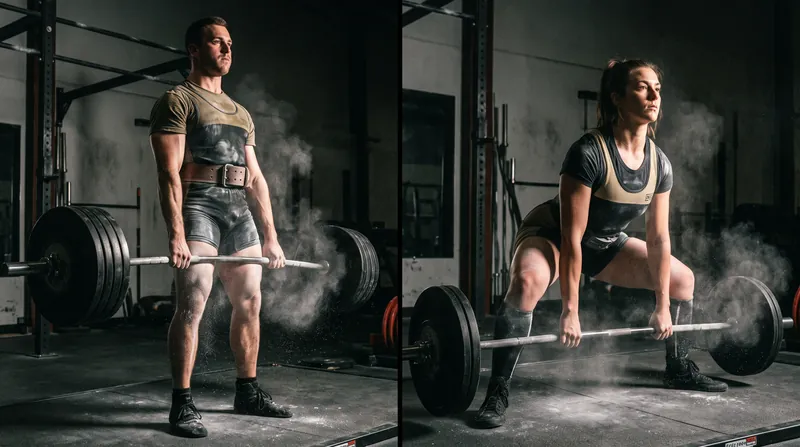
Conventional Deadlifts Generate Higher Hip Extension Moments While Sumo Shifts Load to the Frontal Plane
4 sources
Concussion Biomechanics
The Rotational Acceleration Threshold: How Angular Force Causes Shear Deformation and Concussion
8 sources

Muscle Physiology
The Cellular Vault: How Muscle Fibers Retain Their Nuclei Through Months of Detraining
10 sources
Metabolic Conditioning
The Metabolic Trade-Off: Comparing the Cardiovascular and Musculoskeletal Demands of Striking vs. Grappling
7 sources
Comments
Every angle. Every day.
Get Fitness stories with full source coverage and perspective breakdowns, free every day.