
The 10-Hour Turnaround and the Meal Penalty: How IATSE Basic Agreements Govern Below-the-Line Working Conditions
A look at the mechanics of Hollywood's labor contracts, detailing how financial penalties for delayed meals and invaded rest periods regulate the grueling hours of film and television production.

- Below-the-Line Crew
- Advocates for strict enforcement of rest periods and meal breaks to prevent burnout and ensure workplace safety.
- Studio Producers
- Views penalties as a necessary, calculable expense to maintain production flexibility and meet tight shooting schedules.
Perspectives this story doesn't cover
- Non-union crew members
- Independent financiers
- 10 hours
- Minimum daily rest turnaround
- $25.00
- 5th meal penalty rate (per 30 mins)
- 20
- Weekly penalty threshold for prevailing rate
In late 2021, the Alliance of Motion Picture and Television Producers (AMPTP) and the International Alliance of Theatrical Stage Employees (IATSE) ratified a new Basic Agreement that fundamentally altered the arithmetic of a Hollywood shoot day. The contract introduced a hard 10-hour minimum rest period between shifts and a new weekly threshold for meal penalties. Before that signature, a production could theoretically run a crew into the ground, paying a flat, predictable penalty for skipping lunch. Now, the math bites back.[4]
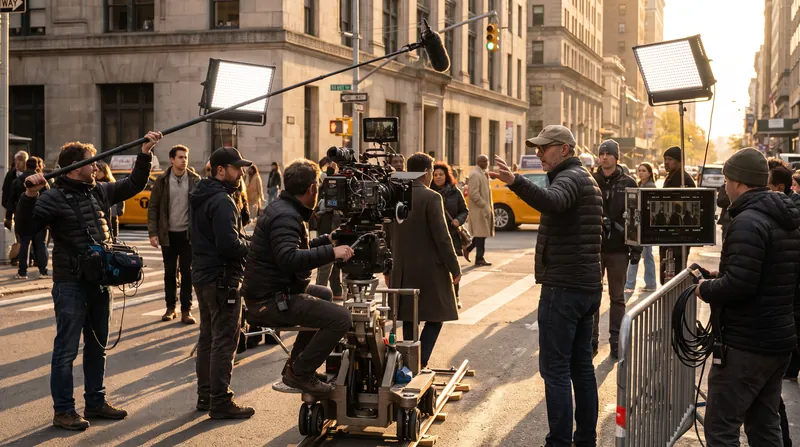
The entertainment industry operates on a schedule that would break most traditional labor models. A standard day on a film set is 12 hours, but 14- to 16-hour days are routine when chasing daylight or a star's availability. To keep crews from collapsing, IATSE contracts rely on two primary financial levers: the meal penalty and the turnaround. These are not negotiated rates entered by a human; they are implied by the shoot-day timeline, and they accrue automatically whenever a producer decides that getting the shot is more important than stopping for a sandwich.[2][3]
The meal penalty is the most immediate deterrent. Under the IATSE Basic Agreement and its Area Standards counterparts, production must provide a bona fide, sit-down, off-the-clock meal within six hours of the crew call. If the director calls "action" instead of "lunch" at the six-hour mark, the meter starts running.[1][2]
The penalties escalate rapidly. For a crew member working outside of a studio under Local 80 guidelines, the first 30-minute delay costs the production $7.50. The second half-hour jumps to $10.00, the third and fourth to $12.50, and the fifth and every subsequent half-hour costs $25.00. If a shoot goes three and a half hours past lunch, a single crew member accrues over $100 in penalties for that day alone. Multiply that by a crew of 150, and a delayed lunch becomes a five-figure line item.[1]
"So usually six hours after they start, they're supposed to give you a lunch break," explained Don M., a special effects worker and rank-and-file IATSE member, in a 2021 interview with Labor Notes. "But when you're shooting on set, they have to pay you a meal penalty for every 15 minutes they keep you working past your break. So there's a little bit of benefit to them not feeding you. But if we didn't have our union, they wouldn't do that, you know? You wouldn't get that extra pay."
"But when you're shooting on set, they have to pay you a meal penalty for every 15 minutes they keep you working past your break.
Producers do have a tiny sliver of leeway. A production can call "Grace," which grants a 12-minute window to finish a take in progress without triggering a penalty. But Grace cannot be scheduled or used automatically every day. If the camera rolls into the 13th minute, the penalty is applied retroactively from the six-hour mark.[1]
The 2021 agreement introduced a massive new deterrent: the weekly threshold. If a crew member accrues 20 or more meal penalties in a single workweek, every subsequent half-hour delay is paid out at one hour of the individual's prevailing rate. For a specialized technician earning $45 an hour, a late lunch on a Friday suddenly costs the production $90 per 30 minutes. This effectively killed the viability of "French hours"—a scheduling tactic where a production shoots for 10 or 12 hours straight without a meal break, previously a common strategy on lower-budget shoots trying to shave days off the schedule.[4][5]
The second lever is the turnaround, which governs the time between wrapping one day and starting the next. Historically, turnarounds could be as short as eight or nine hours. When factoring in a commute, a shower, and a meal, a crew member might get four hours of sleep before driving back to set. The 2021 Basic Agreement mandated a 10-hour rest period following all studio zone and local location work assignments.[1][4]
If a production invades that 10-hour window—say, wrapping at midnight and calling the crew back at 8:00 a.m.—it triggers a "forced call." The penalty for a forced call is steep: the invaded hours are paid at the applicable base or overtime rate plus an additional hour of straight time.[1]
"The union will charge them for infringing on our turnaround time," Don M. noted. "If I get off at midnight I shouldn't be called back to work until 10 a.m. But if they say, 'No, you have to be there at nine,' then that's called a forced call... The problem is that the companies have so much money. Netflix, they're fine with it. They'll pay whatever the fee is and they don't care."
That tension is the central dynamic of below-the-line Hollywood labor. The penalties were designed to be prohibitively expensive, forcing producers to schedule humane hours. But in an era of streaming giants with multi-billion-dollar content budgets, financial penalties sometimes morph into the accepted cost of doing business. A studio might calculate that paying $50,000 in meal penalties and forced calls is cheaper than adding an extra $200,000 shoot day to the schedule.[5]
Yet, the compounding nature of the 2021 rules has shifted the calculus. By tying the 20th weekly meal penalty to the prevailing hourly rate, IATSE ensured that the cost of continuous abuse scales exponentially rather than linearly. As the industry navigates the 2024 contract cycle and beyond, these mechanical levers—the $12.50 half-hour, the 10-hour window, the 12-minute Grace—remain the primary bulwark between a functional film set and an exhausted crew.[4][5]
What we don’t know
- How frequently major streaming studios opt to pay the 20-penalty premium rate rather than altering their shooting schedules.
- Whether the upcoming 2027 contract cycle will push for even stricter turnaround minimums beyond the current 10-hour baseline.
Key points
- IATSE contracts mandate a sit-down meal break within six hours of a crew's call time.
- Meal penalties escalate every 30 minutes, starting at $7.50 and reaching $25.00 by the fifth delay.
- Accruing 20 meal penalties in a week triggers payouts at the crew member's prevailing hourly rate.
- The 2021 Basic Agreement established a strict 10-hour minimum rest period between shifts.
- Invading the 10-hour turnaround results in a 'forced call,' requiring premium penalty pay.
Viewpoints in depth
The Studio Perspective: Budget Predictability vs. Overtime
Producers weigh the fixed cost of penalties against the variable cost of extending a shoot schedule.
For: Paying penalties allows a production to finish a location shoot in three days instead of four. Against: The 2021 contract's 20-penalty weekly threshold makes sustained violations exponentially expensive. Evidence: A crew of 100 accruing a 5th meal penalty costs $2,500 per half-hour; hitting the 20th penalty can cost $4,500+ per half-hour. Fits well when: A production is on a strict location permit that expires at midnight and cannot be renewed. Does not fit when: A production is shooting on a controlled soundstage where adding a day is cheaper than paying compounding penalties.
The Crew Perspective: Health and Safety vs. Premium Pay
Below-the-line workers balance the physical toll of invaded rest against the financial windfall of penalty pay.
For: Meal penalties and forced calls provide a significant boost to weekly take-home pay, often turning a standard rate into a lucrative paycheck. Against: Chronic sleep deprivation (turnarounds under 10 hours) dramatically increases the risk of on-set accidents and driving fatalities post-wrap. Evidence: IATSE members routinely report 60+ hour baseline weeks, with forced calls effectively reducing actual sleep time to 4-5 hours. Fits well when: A crew member is working a short, finite shoot (like a 3-day commercial) where the physical toll is temporary. Does not fit when: Working a 9-month episodic television season where sustained exhaustion leads to burnout.
Sources
Source coverage
5 outlets
2 viewpoints surfaced





- [1]IATSE Local 80Below-the-Line Crew
FAQ (Frequently Asked Questions)
Read on IATSE Local 80 → - [2]FTV Production ConsultingStudio Producers
IATSE Area Standards Agreement Payroll - FTV Production Consulting
Read on FTV Production Consulting → - [3]WrapbookStudio Producers
IATSE Agreements & Basic Crafts Explained - Wrapbook
Read on Wrapbook → - [4]Media ServicesStudio Producers
Production Meal Penalties & IATSE's Updated Rules - Media Services
Read on Media Services → - [5]Factlen Editorial TeamBelow-the-Line Crew
Synthesis by Factlen editorial team
Read on Factlen Editorial Team →
Comments

More in Entertainment
See all →Film Tax Credit
MPA Study Projects Federal Film Tax Credit Would Create 143,000 Jobs and $125 Billion in Spending
5 sources
Hollywood Economics
The 10% Commission and the Packaging Fee: How Talent Agencies Actually Make Money
7 sources

78th Emmys
'Widow's Bay' Sweeps 78th Emmy Awards With Record 14 Wins as Matthew Rhys Makes History
5 sources

Sports Broadcasting
Netflix Strikes Multi-Year Deal with EverPass for Commercial Distribution of NFL Games
4 sources

Every angle. Every day.
Get Entertainment stories with full source coverage and perspective breakdowns delivered to your inbox.