
Swimming Injury Report: Johnston Details Accident Recovery, Chalmers Out of Swim GP
U.S. Olympian David Johnston revealed a grueling recovery timeline following a severe car crash, while Australian sprint star Kyle Chalmers withdrew from the inaugural Swim GP to manage a chronic back injury.
By Meera Iyer
Share this story
The grueling reality of elite swimming is that the water always demands a physical toll, and the path to the podium is rarely linear. This week, two of the sport's biggest international names offered stark reminders of the cost of chasing Olympic glory.[1]
American distance star David Johnston detailed a harrowing recovery timeline following a severe car crash, while Australian sprint king Kyle Chalmers pulled out of a landmark domestic meet. Both athletes are currently navigating the frustrating gap between their competitive ambitions and their bodies' hard limits.[1]
Johnston's harrowing road back
The most alarming update comes from Gainesville, where 25-year-old Johnston is fighting to reclaim his career. The American Olympian has not competed since October 10, 2025, when he won the 1,000-yard and 500-yard freestyle events for the University of Texas against Alabama.
Seeking a fresh start for his fifth and final season of NCAA eligibility, Johnston transferred to the University of Florida in April 2026. The move was supposed to mark a triumphant return to the blocks, but he instead spent the spring trapped in a grueling rehabilitation cycle.[1]
"Over the past year I've battled injuries in my shoulders and knees, underwent multiple injections, and spent most of my time rehabbing rather than training normally," Johnston revealed in a November 6 social media post. Just as he was making progress, disaster struck off the deck.[1]
Three months ago, Johnston was involved in a serious head-on car collision. The crash left the distance specialist with a severe concussion and persistent neurological symptoms that immediately halted his athletic timeline, shifting his focus from swimming fast to simply functioning normally.[1][2]
A new standard of care
The recovery process for a traumatic brain injury is notoriously unpredictable, and Johnston has not set a firm date for his return to competition. However, he credited the University of Florida's medical staff for fundamentally changing his perspective on athletic rehabilitation and long-term health management.[2]
"I'm incredibly grateful to the coaches and trainers at the University of Florida for providing a level of care and support I haven't experienced before," Johnston wrote. "They've changed my expectations of how coaches and trainers can support their athletes."[2]
Despite the massive 13-month layoff, the Paris 2024 Olympian remains fiercely committed to finishing his career on his own terms. "I'm determined to get healthy and return to doing what I love," Johnston stated. "When my brain heals I'll be back."[2]
Chalmers scratches from Swim GP
Halfway across the world, the Australian swimming community is dealing with its own high-profile absence. The inaugural Swim GP is set to kick off on November 13 at the Melbourne Sports and Aquatic Centre, but the short-course showcase will be missing its biggest domestic draw.
Olympic champion Kyle Chalmers, originally slated as the platinum athlete for Team Kraken, announced his withdrawal on November 10. The 28-year-old speedster confirmed that a chronic back issue had flared up during his recent training blocks, forcing him to step away from the team-based competition.
"I got a bit of a sore back which I've been managing for the last eight years, but it's just flared up at the moment, which means no racing for me this weekend," Chalmers said. The decision prioritizes his long-term viability over a short-term domestic payday.
While he will not be diving in, Chalmers intends to remain heavily involved with Team Kraken from the pool deck. The veteran sprinter plans to take on a leadership role, guiding a roster that includes rising stars through the fast-paced, points-based meet format.
Pivoting toward Los Angeles 2028
Chalmers' withdrawal is part of a broader strategic shift as he maps out the twilight of his elite career. The South Australian noted that as he gets older, managing the physical load of pure freestyle sprinting requires more calculated risks and extended recovery windows.
To diversify his lineup and reduce the repetitive strain on his back, Chalmers is increasingly focusing on the butterfly events. This pivot aligns perfectly with the Olympic program's evolution, as stroke 50-meter races have officially been added to the schedule for the Los Angeles 2028 Games.
The contrast between Johnston's acute trauma and Chalmers' chronic management highlights a major shift in how the sport handles physical breakdowns. Elite swimming is moving away from the archaic mentality of pushing through pain at all costs, embracing a science-driven approach to athlete longevity.[4]
The ultimate comeback trail
The sheer resilience required to return to the water was recently showcased by 15-year-old Peruvian swimmer Cielo Moya. Competing at the Dakar 2026 Youth Olympic Games this month, Moya's presence on the blocks is a medical marvel following a devastating series of setbacks.[3]
After surviving a near-drowning incident as a toddler, Moya underwent major hip surgery in 2021 and emergency breast tumor surgery in 2022. "It was really hard, because it meant starting from scratch again," Moya said. "But getting back in the water was my rehabilitation."[3]
Moya's triumphant return at the Youth Olympics underscores the psychological anchor that swimming provides during traumatic recoveries. That same mental fortitude is what Johnston is currently relying on in Florida, and what sports medicine professionals are increasingly trying to protect.[3][4]
The science of reintegration
This cultural shift toward holistic recovery was a central theme at the recent World Aquatics Medical Seminar in Singapore. Sports medicine experts highlighted that a swimmer's cardiovascular fitness often outpaces their connective tissue tolerance during a comeback, making patience mandatory.[4]
Re-injury rates spike when athletes return to full training volume without a structured, multi-week protocol. The modern reintegration framework requires athletes to clear strict pain-free benchmarks before advancing, with coaches acting as the primary brakes against a swimmer's competitive instincts.[4]
For someone like Johnston, whose neurological symptoms require complete rest, the eventual physical ramp-up will demand extreme patience to avoid overloading his dormant shoulders. For Chalmers, scratching from the Swim GP avoids turning a manageable flare-up into a catastrophic structural failure.[1][4]
Key points
- U.S. Olympian David Johnston revealed he is recovering from a severe car accident that caused a concussion and neurological symptoms.
- Johnston has not competed since October 2025, having battled shoulder and knee injuries before the collision.
- Australian sprinter Kyle Chalmers withdrew from the inaugural Swim GP in Melbourne to manage an eight-year chronic back issue.
- Chalmers will remain on the pool deck in a leadership role for Team Kraken while focusing on butterfly for LA 2028.
- Peruvian swimmer Cielo Moya's return at the Dakar Youth Olympics highlights the psychological importance of the sport during traumatic recoveries.
How we got here
Oct 2025
David Johnston competes in his last dual meet for Texas before injuries sideline him.
Aug 2026
Johnston is involved in a severe head-on car collision, suffering a concussion.
Nov 2026
Kyle Chalmers withdraws from the inaugural Swim GP to manage a chronic back flare-up.
- Athlete Recovery Advocates
- Emphasize extreme patience and holistic healing over rushing back to competition.
- Sports Medicine Professionals
- Focus on structured, phased reintegration protocols to prevent catastrophic re-injury.
- Strategic Competitors
- Prioritize long-term Olympic viability by managing chronic issues and skipping domestic meets.
Perspectives this story doesn't cover
- Swim GP organizers managing the commercial impact of star withdrawals
- NCAA compliance officers handling extended medical redshirts
Sources
Source coverage
4 outlets
3 viewpoints surfaced




- [1]SwimSwamStrategic Competitors
U.S. Olympian David Johnston Details Concussion, Neurological Symptoms After Head-On Car Accident
Read on SwimSwam → - [2]Swimming World MagazineAthlete Recovery Advocates
Olympian David Johnston Reveals Car Accident Injuries Keeping Him Out of the Water
Read on Swimming World Magazine → - [3]Olympics.comStrategic Competitors
From being told she may never walk again and cancer to Dakar 2026: Peruvian swimmer Cielo Moya's inspirational journey
Read on Olympics.com → - [4]PadlieSports Medicine Professionals
Return to swimming after injury: a reintegration protocol for coaches
Read on Padlie →
More in Sports
See all →Recap
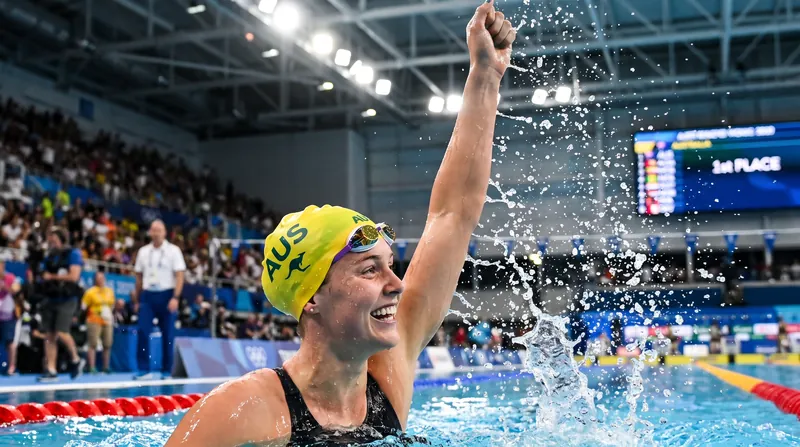
Ludovica Terlizzi and Mate Karpati Capture 10km Titles at Junior Open Water World Championships
7 sources
Power ranking
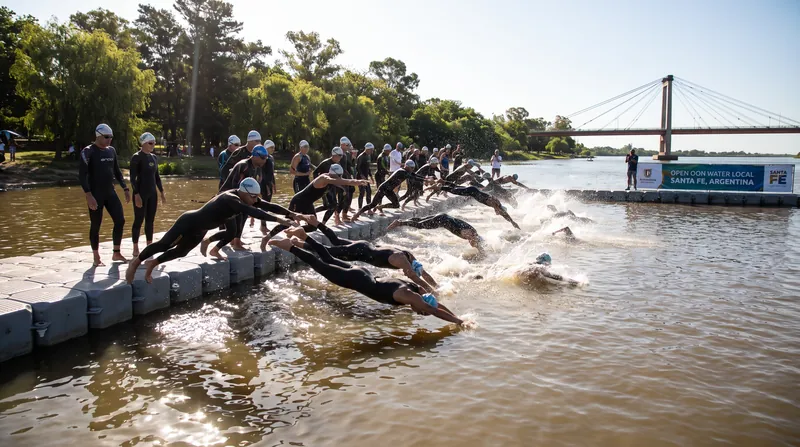
Global Women's Backstroke Power Rankings: Berkoff and Smith Set the Standard as Short Course Season Looms
5 sources
Power ranking
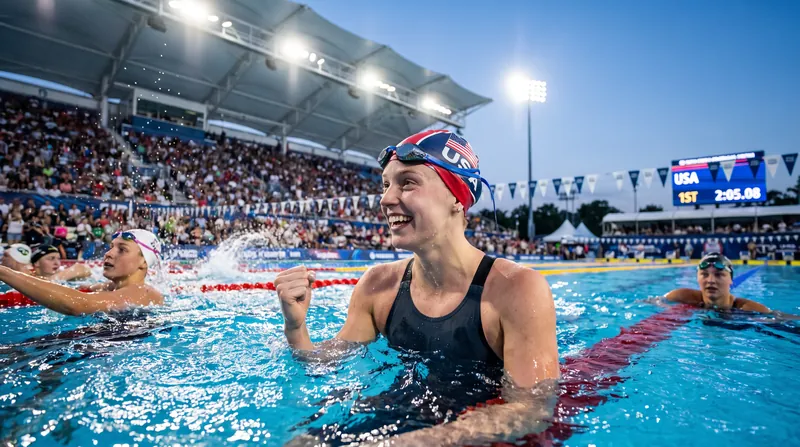
Global Men's Sprint Freestyle Power Rankings: Alexy and Jack Ignite a New US-Australia Rivalry
3 sources
Standings
Global Distance Freestyle Standings Upended: Liebmann Demolishes 1500m World Record as Short Dominates Pan Pacs
5 sources
Comments
Every angle. Every day.
Get Sports stories with full source coverage and perspective breakdowns, free every day.