
Scott Williams Overcomes Dartitis Scare to Reclaim Form on Darts' Biggest Stage
After a highly public bout with dartitis froze his throw in October, PDC star Scott Williams has successfully battled back, delivering a stellar performance at the World Darts Championship.
By Ryder James
Share this story
There is one word in professional darts that nobody wants to say out loud: dartitis. It is a condition that has ended careers and turned world champions into shadows of themselves. For rising PDC star Scott Williams, that nightmare became a highly public reality in late 2025, threatening to derail a promising career just as he was establishing himself among the sport's elite.
The terrifying moment occurred on October 29, 2025, at Players Championship 33. Standing at the oche against Ryan Joyce, Williams suddenly found himself unable to let the dart go. In front of a room full of fellow professionals, his arm froze. His brain was sending the signal to release, but his hand simply would not respond.[1]
Williams stepped back from the board, collected himself, and eventually managed to throw his three darts, but the damage was done. He lost the match 6-1, posting a dismal average of 78.39. For a player who had reached the World Championship semi-finals just a year prior, the sudden loss of basic motor function was a glaring alarm bell.
Dartitis is widely understood as a form of focal dystonia, a neurological movement disorder that causes muscles to contract involuntarily. Similar to "the yips" in golf or archery, it forces players to hyper-fixate on mechanics that were once completely natural. The brain begins to micro-manage the grip, the pull-back, and the release point, resulting in a physical stutter or a complete inability to let go of the dart.
The history of the sport is littered with the casualties of this condition. Five-time world champion Eric Bristow famously saw his absolute dominance evaporate in the late 1980s when dartitis stripped him of his smooth release. More recently, players like Berry van Peer and Jules van Dongen have suffered highly public battles with the affliction, with Van Dongen ultimately losing his PDC Tour Card as a result of his struggles.
Following the incident against Joyce, Williams retreated from the spotlight to confront the issue privately. The darts community held its collective breath, well aware that dartitis often gets worse before it gets better. Bristow himself had described the condition as a slow, creeping paralysis of his throw. The question was whether Williams could rebuild his mechanics in time for the biggest event on the calendar.[2]
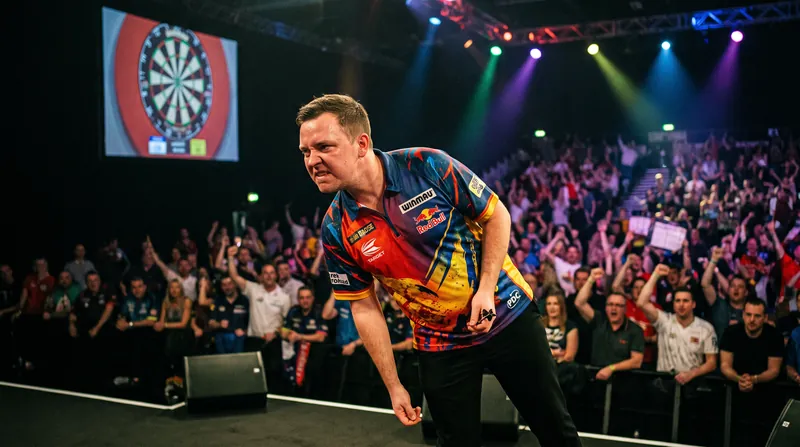
The answer arrived in emphatic fashion at the 2026 PDC World Darts Championship in December. Walking onto the iconic Alexandra Palace stage for his first-round match against Paolo Nebrida, Williams faced the ultimate test of his rebuilt throw under the intense glare of the television cameras.[1]
Rather than showing signs of hesitation, Williams delivered a masterclass in defiance. He produced a signature "no-look" 180 in the opening legs, radiating the exact brand of showmanship that has made him a fan favorite. He dispatched Nebrida with a sensational three-dart average of 99.25, completely banishing the ghosts of October.
In his post-match interview, Williams addressed the elephant in the room with characteristic bluntness. "I will take that after having dartitis apparently two months ago," he told the cameras, delivering the line with a defiant smirk. The performance proved that the mental block had been dismantled as quickly as it had appeared.
While Williams ultimately bowed out in a deciding set during his second-round match, the result was secondary to the achievement. He had demonstrated that dartitis does not have to be a death sentence for a player's career. His ability to maintain composure, score heavily, and perform at Alexandra Palace just weeks after freezing at the oche stands as one of the most remarkable psychological recoveries in recent darts history.[1][2]
The rapid turnaround has provided a beacon of hope for other professionals battling similar demons. As players like Nathan Aspinall continue to manage their own bouts with the condition through hypnotherapy and sports psychology, Williams' success underscores the importance of mental resilience in a sport where the margins for error are microscopic.
Moving forward into the 2026 season, Williams is back on the ProTour, throwing with the absolute confidence that defined his early career. The invisible enemy may always lurk in the shadows of professional darts, but "Shaggy" has proven that it can be faced down and defeated on the biggest stage of all.[1]
The essentials
- Scott Williams suffered a public bout of dartitis in October 2025, freezing at the oche and posting a 78.39 average.
- Dartitis is a neurological condition, similar to the yips, that prevents players from releasing the dart.
- Williams returned to the World Darts Championship stage in December, defeating Paolo Nebrida with a 99.25 average.
- He hit a signature no-look 180 and defiantly addressed the condition in his post-match interview.
- The rapid recovery provides hope for other players battling the career-threatening affliction.
Timeline
October 29, 2025
Williams freezes at the oche against Ryan Joyce at Players Championship 33, unable to release the dart.
November 2025
Williams retreats from the public eye to privately rebuild his throwing mechanics and confidence.
December 2025
Williams returns at the World Darts Championship, defeating Paolo Nebrida with a stellar 99.25 average.
Early 2026
Williams resumes his regular schedule on the PDC ProTour, showing no lingering signs of the condition.
- PDC Professionals & Analysts
- Emphasize the occupational terror of the condition and the immense mental strength required to return to the stage.
- Sports Psychologists & Medical Experts
- Focus on the neurological roots of dartitis and the clinical methods required to rebuild motor function.
- Darts Fanbase
- Celebrate the return of an entertaining player and the defiance shown in overcoming a career-threatening hurdle.
Perspectives this story doesn't cover
- Neurological researchers studying focal dystonia in elite athletes
- Sports hypnotherapists specializing in the yips
Sources
Source coverage
2 outlets
3 viewpoints surfaced


- [1]PDC TVPDC Professionals & Analysts
Williams Defies Dartitis Scare With Emphatic Ally Pally Return
Read on PDC TV → - [2]BBC SportDarts Fanbase
Kerr's world record attempt confirmed for London
Read on BBC Sport →
More in Sports
See all →Power ranking
PDC Power Rankings: Gurney's Amsterdam Upset and the Autumn Form Guide
5 sources
Injury
Darts Injury Report: Ilagan Sidelined by Medical Issue as Taylor Recovers from Hip Surgery
3 sources
Trade
Jelle Klaasen and Jermaine Wattimena Secure New Deals as Darts' Autumn 'Transfer Window' Heats Up
8 sources
Trade
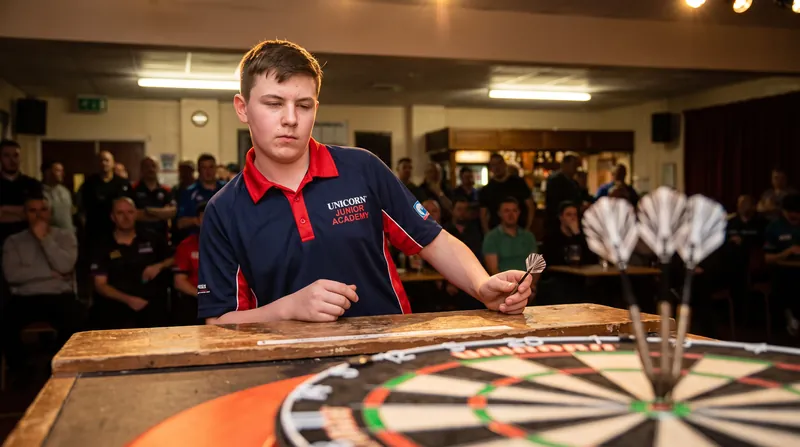
Target Darts Accelerates Grassroots Expansion with New Academy Partnerships and Pathway Signings
1 sources
Comments
Every angle. Every day.
Get Sports stories with full source coverage and perspective breakdowns, free every day.