
Qualifying for Cannes or Venice Competition Precludes Film Entry Elsewhere Under FIAPF Priority Protections
The International Federation of Film Producers Associations (FIAPF) enforces strict premiere exclusivity rules for its top-tier accredited festivals. To maintain their "Competitive Feature Film Festival" status, events like Cannes and Venice are legally bound to reject any film that has already competed internationally, creating a zero-sum battle for world premieres.
By Austin Blake

Share this story
In short
- FIAPF regulations legally prohibit the 17 'A-list' film festivals from screening films that have already competed internationally.
- The strict world premiere requirement forces producers to hold finished films for months to gamble on a single top-tier festival slot.
- North American festivals like Toronto operate under different FIAPF accreditations, allowing them to screen films that previously debuted in Europe.
For a feature film to compete for the Palme d'Or or the Golden Lion, a strict condition must hold: the movie cannot have been screened publicly anywhere else on Earth. If a director has already shown their work to a paying audience at another international festival, the door to the world's most prestigious competitions is permanently locked.
This constraint currently dictates the entire global cinema calendar, forcing producers into a high-stakes waiting game. The rule is often mistaken for simple elitism or a fierce rivalry between festival directors, but it is actually a binding legal framework enforced by the International Federation of Film Producers Associations.
Founded in 1933, FIAPF acts as the global regulatory body for the film industry. Its accreditation system separates the top tier of festivals from the thousands of regional events worldwide, ensuring that the most prestigious platforms maintain a distinct identity.
Currently, FIAPF recognizes exactly 17 events as "Competitive Feature Film Festivals." This elite group—historically referred to as the "A-list"—includes Cannes, Venice, Berlin, Karlovy Vary, and Tokyo. To maintain this specific accreditation, these festivals must adhere to strict exclusivity regulations regarding their main competition slates.
The Mechanics of the Lockout
The core of FIAPF's mandate is the "world premiere" or "international premiere" requirement. The regulations dictate that a film competing in a top-tier festival's main slate must not have participated in any other international competition prior to those dates.
If a film competes at Cannes in May, it is instantly disqualified from competing at Venice in September or Berlin the following February. Venice's official submission rules explicitly mirror this FIAPF directive, stating that under no circumstances may films with prior public screenings be presented.[1][2]
The Biennale further clarifies that works previously shown in competing or non-competing sections at other international festivals are strictly excluded. The festival even requires films to have been completed no earlier than September of the previous year to ensure absolute freshness.[1]
The Karlovy Vary International Film Festival, another FIAPF-accredited event held in the Czech Republic, outlines the exact same boundary in its charter. Its Crystal Globe Competition accepts only world and international premieres, explicitly noting in its rulebook that the guidelines are subject to FIAPF's overarching regulations.
The exclusivity radius extends beyond just other festivals. FIAPF and its accredited members have updated their charters to address the digital age, explicitly stating that films already available on the web, broadcast on television, or released via video-on-demand are disqualified from competition.[1]
Navigating the Exceptions
While the main competition is heavily guarded, festivals do have release valves built into their FIAPF agreements. Out-of-competition slots and specialized sidebars operate under slightly looser frameworks, allowing festivals to program highly anticipated films without violating the core exclusivity mandate.
A film might premiere at Cannes in a non-competitive midnight screening and still find its way into a specialized sidebar at another European festival, provided it does not enter a juried competition. National premieres also offer a narrow, heavily scrutinized loophole.[2][3]
A French film can premiere domestically in Paris theaters or at a local French festival and still technically qualify for an "international premiere" at Berlin or Venice. However, the film must not have crossed its own national borders, and festival directors at the top level still fiercely prefer absolute world premieres.[1][3]
This preference is driven by the mechanics of the global film market. Exclusivity drives international press coverage, which in turn drives distribution sales. Sales agents rely on the "never-before-seen" status of a film to generate bidding wars among distributors.[4]
If a film has already been reviewed by critics at a previous festival, the urgency to acquire it plummets. This rigid structure explains why the film industry experiences massive bottlenecks in post-production, with producers routinely finishing a film in November but holding it in a vault until May.[4]
The North American Outliers
The FIAPF framework is distinctly Eurocentric, which creates a fascinating dynamic with major North American festivals. Events like the Sundance Film Festival and the Telluride Film Festival are not FIAPF-accredited in the "Competitive Feature Film" category.
Because they operate outside this specific regulatory umbrella, they can set their own premiere rules without risking international sanctions. Sundance still demands world premieres for its U.S. dramatic competition to maintain its own prestige, but it does so by choice rather than FIAPF mandate.[4]
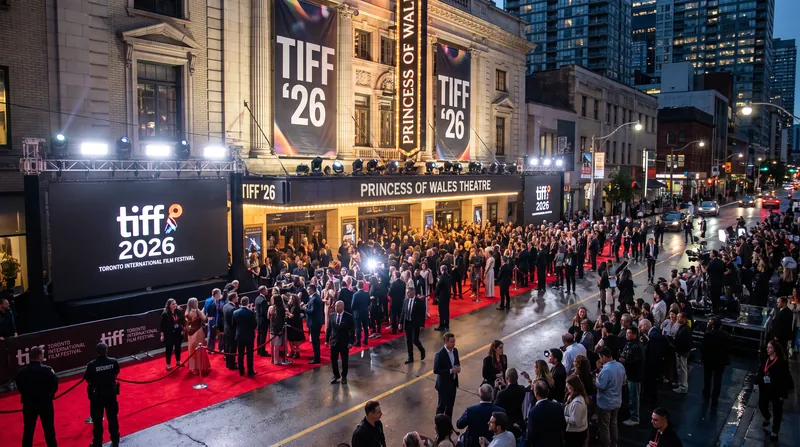
Meanwhile, the Toronto International Film Festival holds a different FIAPF accreditation entirely, classified as a "Non-Competitive" festival. This specific designation allows Toronto to program films that have already competed at Cannes or Venice without violating any international treaties.
This distinction allows a symbiotic relationship between the continents. A film can secure its FIAPF-mandated world premiere in competition at Venice, satisfying the European exclusivity rules, and then immediately fly to Toronto for its North American premiere.[1][4]
The Cost of Compliance
For independent filmmakers, navigating FIAPF's exclusivity radius is a complex logistical puzzle that requires immense financial patience. Submitting to these festivals is not cheap—Venice's entry fees range from 80 to 250 Euros depending on the deadline—and the rejection rates are staggering.[1]
The timing of these rejections can be fatal to a film's momentum. If a production holds out for Cannes and is rejected in April, it may suddenly find itself "too old" for the next tier of festivals, as many mid-tier events also demand regional premieres.[2][4]
The timing of these rejections can be fatal to a film's momentum.
The federation defends these strict rules as a necessary measure to protect the ecosystem. By forcing filmmakers to choose one specific launchpad, the regulations ensure that Cannes, Venice, Berlin, and Karlovy Vary each offer a genuinely unique slate of cinema.
Ultimately, the FIAPF framework transforms the act of premiering a film into a high-stakes geopolitical maneuver. The system ensures that the prestige of the Palme d'Or and the Golden Lion remains untarnished, even as it forces filmmakers to place all their chips on a single roulette spin.[4]
Definitions
- FIAPF
- The International Federation of Film Producers Associations, the global regulatory body that accredits international film festivals.
- Competitive Feature Film Festival
- The highest tier of FIAPF accreditation, historically known as the 'A-list,' which includes festivals like Cannes, Venice, and Berlin.
- World Premiere
- The first time a film is screened publicly anywhere in the world, a strict requirement for entry into top-tier festival competitions.
- International Premiere
- The first time a film is screened outside of its country of origin, which sometimes satisfies FIAPF rules if a world premiere is impossible.
Questions & answers
Can a film play at Sundance and then compete at Cannes?
No. Because Sundance is an international festival, a public screening there disqualifies the film from the main competition at any FIAPF-accredited 'Competitive Feature Film Festival' like Cannes or Venice.
What happens if a film is released on streaming first?
FIAPF regulations explicitly state that films already available on the web or via video-on-demand are disqualified from main competitions. The theatrical, exclusive debut remains the absolute baseline for entry.
Are there any exceptions to the world premiere rule?
The primary exception is a national premiere. A film can be screened domestically in its country of origin and still technically qualify for an 'international premiere' at a top-tier festival, though festival directors still heavily prefer absolute world premieres.
Analysis by camp
The Regulatory View
FIAPF maintains that exclusivity is necessary to preserve the distinct identity of each festival.
From the perspective of the International Federation of Film Producers Associations, the global film market requires structured scarcity. If every major festival could program the exact same highly anticipated films, the circuit would collapse into a homogenous traveling circus. By enforcing the world premiere rule for competitive slates, FIAPF ensures that Cannes, Venice, and Berlin each offer a genuinely unique snapshot of global cinema. This protects the festivals' individual brands and ensures that audiences in different regions are witnessing the actual birth of a new piece of art.
The Producer's Gamble
Filmmakers must navigate a rigid calendar that often forces them to hold finished films in a vault for months.
For independent producers and sales agents, the FIAPF framework transforms a film's release into a high-stakes geopolitical maneuver. A film completed in November is often held off the market entirely until May, gambling on a Cannes selection. If the film is rejected, the production loses half a year of momentum and must pivot to Venice or Toronto. Because exclusivity drives international press coverage—which in turn drives distribution bidding wars—producers are forced to place all their chips on a single roulette spin, knowing that a miscalculated submission strategy can leave a film entirely locked out of the A-list circuit.
- FIAPF Regulators
- Argue that strict exclusivity rules prevent the festival circuit from becoming a homogenous traveling circus.
- Festival Directors
- Fiercely protect their world premiere requirements to maintain prestige and drive international press coverage.
- Independent Producers
- View the exclusivity radius as a high-stakes logistical puzzle that forces them to gamble months of potential revenue on a single submission.
Perspectives this story doesn't cover
- Regional festival programmers who lose out on major films due to A-list exclusivity holdouts
- Film distributors who must navigate the compressed bidding windows created by the premiere calendar
Sources
Source coverage
4 outlets
3 viewpoints surfaced




- [1]Venice Film FestivalFestival Directors
Regulations - 83rd Venice International Film Festival
Read on Venice Film Festival → - [2]Festival de CannesFestival Directors
Submit a film - Festival de Cannes
Read on Festival de Cannes → - [3]Berlin International Film FestivalFestival Directors
Submission Guidelines - Berlinale
Read on Berlin International Film Festival → - [4]Factlen Editorial TeamIndependent Producers
Synthesis by Factlen editorial team
Read on Factlen Editorial Team →
More in Entertainment
See all →Voting Theory
Eurovision's Twelve-Point Ballot Skips Nine and Eleven to Create a Victor's Premium After 1969's Four-Way Tie
5 sources

Pop Music Releases
Taylor Swift Releases Expanded Album 'The Life of a Showgirl: The Encore' With Four New Tracks
6 sources

Streaming Economics
The 28-Day Completion Rate and the Cost-Per-Hour Metric: How Streaming Services Decide a Series Renewal
4 sources

Pulitzer Mechanics
The Board's Veto Power and the Three-Step Process: How Pulitzer Prize Winners Are Selected
5 sources

Comments
Every angle. Every day.
Get Entertainment stories with full source coverage and perspective breakdowns, free every day.