
NMC vs. LFP: The Trade-Offs Shaping the Next Generation of EV Batteries
As the electric vehicle market matures, the industry is fracturing into a two-tier ecosystem driven by competing battery chemistries. Understanding the physical and economic trade-offs between Nickel Manganese Cobalt (NMC) and Lithium Iron Phosphate (LFP) is crucial for consumers and fleet operators alike.
By Hunter Cole

Share this story
In short
- NMC batteries offer higher energy density and better cold-weather performance, making them ideal for long-range and premium vehicles.
- LFP batteries are significantly cheaper, virtually eliminate thermal runaway risks, and can endure up to 5,000 charge cycles.
- Unlike NMC, LFP batteries can be charged to 100 percent daily without causing accelerated chemical degradation.
Most consumers assume electric vehicle range is simply a function of how many battery cells an automaker can physically cram into a vehicle's chassis. The reality is far more complex and deeply rooted in material science.
Range, cost, and lifespan are dictated by the chemical architecture of the cathode, a microscopic battleground where automakers must constantly choose between maximizing energy density and ensuring structural stability. As the global transition to electric mobility accelerates, understanding these chemical differences is no longer just an engineering concern; it is a fundamental purchasing decision that dictates how a vehicle will perform over the next decade.[5]
For the past decade, the Western automotive industry has largely relied on a single, highly effective chemical formula to power the electric transition: Nickel Manganese Cobalt, commonly known as NMC. This specific chemistry allowed early electric vehicles to overcome the psychological barrier of range anxiety, offering the high energy density required to push heavy passenger cars past the critical 300-mile mark.
By utilizing nickel to store vast amounts of energy and cobalt to stabilize the cell, automakers were able to deliver the long-distance performance that consumers accustomed to gasoline vehicles demanded, establishing NMC as the undisputed gold standard for premium electric mobility.[2]
However, a profound and rapid structural shift is currently underway across the global automotive landscape. Lithium Iron Phosphate (LFP), a chemistry that was once widely dismissed by Western executives as being too heavy and too weak for modern passenger cars, has rapidly overtaken NMC on the global stage.
The International Energy Agency reported that LFP batteries powered the majority of electric cars sold worldwide in recent years, a milestone driven almost entirely by massive, subsidized adoption in the Chinese domestic market. This shift represents a fundamental rethinking of what an electric vehicle battery needs to accomplish.[3]
To truly understand the trade-off between these two dominant technologies, one must look at the atomic level. NMC batteries utilize a complex layered oxide structure. The high proportion of nickel provides exceptional specific energy, allowing the cell to store between 150 and 300 watt-hours per kilogram (Wh/kg).
Meanwhile, the cobalt provides critical structural stability during the violent chemical process of charging and discharging. This high-density architecture is what allows a sleek, aerodynamic sedan to travel hundreds of miles on a single charge without requiring a battery pack so large that it compromises the vehicle's handling or interior cabin space.[2][4]
LFP batteries, conversely, utilize a combination of iron and phosphate for their cathode material. These specific elements form a highly rigid, incredibly stable crystalline structure that is highly resistant to chemical breakdown. The unavoidable trade-off for this stability is a lower nominal operating voltage—typically 3.2 volts compared to NMC's 3.6 volts—and a significantly lower energy density, generally ranging from 90 to 205 Wh/kg.
Because it stores less energy per unit of mass, an LFP cell is inherently heavier and physically bulkier than an NMC cell of the exact same kilowatt-hour capacity, presenting a packaging challenge for automotive engineers.[1][4]
Yet, the stark gap in energy density between the two chemistries narrows significantly when individual cells are assembled into a complete, road-ready vehicle battery pack. Because NMC cells are highly thermally volatile—with a dangerous thermal runaway onset temperature hovering around 150 to 210 degrees Celsius—they require heavy, complex liquid cooling systems, thick fire-retardant shielding, and extensive physical buffer zones to operate safely.
All of this necessary safety infrastructure adds significant "dead weight" to an NMC battery pack, diluting the impressive energy density advantages that the raw cells demonstrate in an isolated laboratory setting.[2][5]
LFP cells, by virtue of their iron-phosphate bonds, are vastly more stable under extreme stress. Their thermal runaway threshold sits much higher, at approximately 270 degrees Celsius, and they release significantly less flammable gas if physically punctured or compromised in a collision.
This inherent, chemical-level safety allows automotive engineers to utilize innovative "cell-to-pack" architectures. By stripping out the heavy protective modules and cooling infrastructure required by NMC, manufacturers can pack a higher volume of active LFP cells into the exact same physical footprint, effectively closing the real-world range gap between the two competing technologies.[1][5]
The economic divergence between the two chemistries is perhaps even more stark than their physical differences. NMC relies heavily on nickel and cobalt—expensive, price-volatile commodities that are frequently tied to complex, ethically fraught supply chains in regions like the Democratic Republic of Congo.
LFP, on the other hand, relies on iron and phosphate, which are among the most abundant, cheap, and easily sourced industrial materials on the planet. This fundamental difference in raw material inputs translates to a massive cost advantage, allowing manufacturers to produce LFP battery packs for up to 40 percent less per kilowatt-hour than their NMC counterparts.[1][2]
Beyond the initial showroom purchase price, the two chemistries diverge dramatically in their long-term operational longevity. The rigid crystalline structure of LFP allows it to endure an astonishing 3,000 to 5,000 full charge cycles with minimal capacity degradation.
In practical terms, this means an LFP battery will almost certainly outlast the physical chassis, suspension, and interior of the vehicle it powers. NMC batteries, while powerful, typically degrade much faster due to the stress on their layered oxide structure, generally offering 1,000 to 2,000 charge cycles before the driver experiences a noticeable and permanent loss of driving range.[1][4]
This underlying structural difference also dictates the daily charging behavior required of the vehicle's owner. Automakers explicitly advise NMC owners to keep their daily charge levels strictly between 20 and 80 percent, as pushing the battery to a full 100 percent state of charge accelerates the degradation of the cathode.
LFP owners, by stark contrast, are actively encouraged by manufacturers to charge their vehicles to 100 percent on a regular basis. This allows LFP drivers to access the battery's entire stated capacity every single day without incurring any long-term penalty to the vehicle's health or resale value.[5]
However, the most significant operational vulnerability of LFP chemistry emerges when the temperature drops. At temperatures below freezing, the electrochemical reactions within an iron-phosphate cell slow down dramatically, increasing internal resistance. Without active, energy-intensive pre-conditioning of the battery pack, an LFP-equipped vehicle can lose up to 30 percent of its usable driving range in severe sub-zero conditions.
While NMC batteries also suffer in the cold, their higher baseline voltage and different chemical makeup result in a much more manageable 15 to 25 percent reduction, making them the definitively superior choice for drivers living in extreme northern climates.[1][5]
The global deployment of these competing chemistries is heavily fractured by international geopolitics and trade policy. Chinese battery manufacturers recognized the potential of LFP early on and currently hold a near-monopoly on its production, refining, and intellectual property. This massive scale allows Chinese automakers to produce highly affordable, durable electric vehicles for both their domestic market and aggressive export campaigns. This overwhelming dominance in LFP technology has fundamentally reshaped the global automotive landscape, forcing legacy Western automakers to scramble for alternative supply chains or risk being permanently undercut on price.[1][3]
In the United States, the mass adoption of LFP technology remains artificially suppressed by federal policy. Steep tariffs on Chinese-manufactured battery cells, combined with strict domestic sourcing requirements tied to the lucrative federal electric vehicle tax credits, have made it economically unviable to import cheap LFP packs.
Consequently, American automakers have been forced to continue relying heavily on domestically produced or allied-sourced NMC batteries. This geopolitical reality keeps the average purchase price of an electric vehicle in the United States significantly higher than the global average, slowing the overall pace of the domestic transition.[3][5]
Consequently, American automakers have been forced to continue relying heavily on domestically produced or allied-sourced NMC batteries.
Ultimately, the global electric vehicle market is rapidly bifurcating into a two-tier chemical ecosystem, with each technology serving a distinct purpose. NMC will undoubtedly remain the chemistry of choice for premium luxury sedans, ultra-long-range cruisers, and heavy-duty electric trucks where absolute maximum energy density is a non-negotiable requirement. Meanwhile, LFP is rapidly cementing its position as the undisputed standard for affordable commuter vehicles, high-mileage commercial delivery fleets, and massive stationary grid storage projects, proving that in the battery world, sheer power is not the only metric that matters.[4][5]
Different angles
The Case for Nickel Manganese Cobalt (NMC)
The high-density standard for premium and long-range applications.
**For:** Maximum energy density, superior cold-weather resilience, and high power output. **Against:** Higher upfront cost, shorter cycle life, thermal volatility, and reliance on ethically fraught cobalt supply chains. **Evidence:** NMC cells achieve 150 to 300 Wh/kg, allowing for 300+ mile ranges, and suffer only a 15 to 25 percent range loss in extreme cold. **Fits well when:** Engineering premium long-distance vehicles, towing heavy loads, or operating in sub-zero climates. **Does not fit when:** Building budget-friendly commuter cars or maximizing the operational lifespan of a commercial fleet.
The Case for Lithium Iron Phosphate (LFP)
The highly stable, cost-effective chemistry dominating the mass market.
**For:** Lower production costs, extreme cycle longevity, superior thermal safety, and the ability to charge to 100 percent daily. **Against:** Lower energy density resulting in heavier packs, and significant range degradation in freezing temperatures. **Evidence:** LFP cells cost up to 40 percent less per kWh, endure 3,000 to 5,000 charge cycles, and have a thermal runaway threshold of 270°C. **Fits well when:** Designing affordable mass-market EVs, operating high-mileage commercial fleets, or driving in temperate climates. **Does not fit when:** Absolute maximum range is required or when vehicles are routinely parked outside in extreme winter environments without pre-conditioning.
- Engineering & Performance Focus
- Evaluates batteries based on energy density, thermal limits, and physical architecture.
- Market & Supply Chain Focus
- Analyzes global adoption trends, material costs, and geopolitical production dominance.
- Consumer Trade-Off Analysis
- Synthesizes how chemical differences translate into real-world range, cost, and charging habits.
Perspectives this story doesn't cover
- Automotive dealership sales staff
- Independent EV repair technicians
Sources
Source coverage
5 outlets
3 viewpoints surfaced




- [1]WikipediaEngineering & Performance Focus
Lithium iron phosphate battery
Read on Wikipedia → - [2]WikipediaEngineering & Performance Focus
Lithium nickel manganese cobalt oxides
Read on Wikipedia → - [3]International Energy AgencyMarket & Supply Chain Focus
Global EV Outlook 2024
Read on International Energy Agency → - [4]Pacific Northwest National LaboratoryEngineering & Performance Focus
Lithium-ion Battery (LFP and NMC)
Read on Pacific Northwest National Laboratory → - [5]Factlen Editorial TeamConsumer Trade-Off Analysis
Synthesis by Factlen editorial team
Read on Factlen Editorial Team →
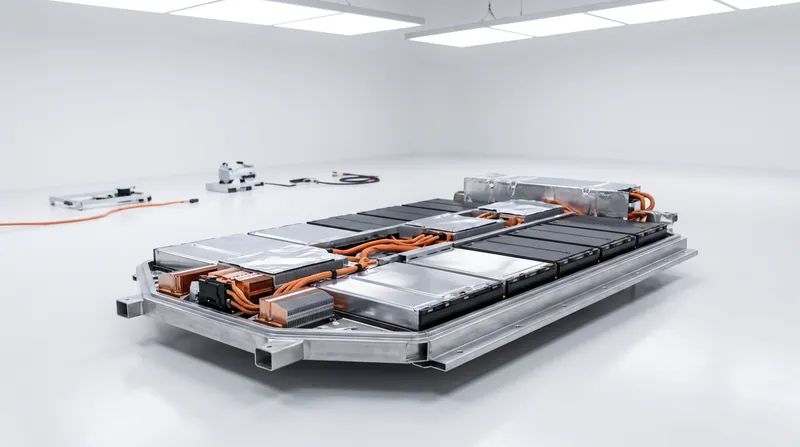
More in Transportation
See all →Battery Tech
Lithium vs. Sodium: The Trade-Offs Shaping the Next Generation of EV Batteries
3 sources
Battery Tech
Dongfeng Begins Mass Production of 1000km Solid-State EV Batteries in 2026
6 sources
Battery Tech
Stellantis Begins North American On-Road Testing of Solid-State EV Batteries in Dodge Charger
4 sources
Battery Tech
AI-Based Charging Method Extends EV Battery Life by 23% in New Research
3 sources
Comments
Every angle. Every day.
Get Transportation stories with full source coverage and perspective breakdowns, free every day.