
Dongfeng Begins Mass Production of 1000km Solid-State EV Batteries in 2026
Chinese automaker Dongfeng Motor has scheduled the mass production of its 350 Wh/kg oxide-polymer solid-state batteries for the second half of 2026. The new cells promise to deliver driving ranges exceeding 1,000 kilometers while significantly reducing fire risks and winter capacity loss.

Share this story
The conventional wisdom across the automotive sector is that solid-state electric vehicle batteries are a perpetual "five years away" technology, forever trapped in laboratory pilot phases and theoretical white papers. The assumption has been that scaling these advanced chemistries to mass production would require at least a decade of supply chain reinvention and capital expenditure.
The evidence from China's industrial base now corrects that timeline. Rather than a distant horizon, the transition to solid-state energy storage is actively being integrated into near-term manufacturing schedules, fundamentally altering the infrastructure planning for the next generation of global transportation.[1][2]
Dongfeng Motor has officially scheduled the mass production and vehicle integration of its next-generation solid-state battery for the second half of 2026. This is not a limited laboratory demonstration or a theoretical projection; the automaker has already established and operationalized a 0.2 gigawatt-hour pilot production line to validate the manufacturing process at scale. By moving the technology from the research phase directly to the assembly line, Dongfeng is forcing a timeline acceleration across the global automotive sector, shifting the competitive baseline from software features back to fundamental materials science.[3][4]
The technical leap centers on an oxide-polymer composite architecture that replaces the highly flammable liquid electrolytes found in conventional lithium-ion cells. This structural change fundamentally alters the thermal and volumetric constraints of electric vehicle design. Liquid electrolytes require heavy, complex thermal management systems and armored casings to prevent overheating and thermal runaway during rapid charging or physical trauma. By utilizing a stable solid medium, engineers can pack significantly more active material into the exact same physical footprint while simultaneously stripping away the heavy protective shielding that traditional batteries demand.[2][5]
The quantitative results of this architectural shift are substantial for both manufacturers and drivers. Dongfeng's new cells achieve an energy density of 350 watt-hours per kilogram (Wh/kg), a metric that pushes well beyond the theoretical boundaries of current commercial chemistries.
This density enables a driving range exceeding 1,000 kilometers (620 miles) on a single charge, effectively neutralizing the range anxiety that has historically bottlenecked mainstream electric vehicle adoption. Furthermore, the solid-state pack is approximately 30 percent lighter than a conventional liquid-electrolyte equivalent, reducing the overall vehicle mass and thereby improving braking dynamics, tire wear, and overall chassis efficiency.[1][2]
Beyond raw range, the solid-state architecture addresses the severe operational limitations that electric vehicles face in extreme climates. Winter range degradation has long been a systemic vulnerability for fleet operators and consumers in northern latitudes, where freezing temperatures increase internal battery resistance and slash usable capacity by up to half.
During rigorous winter testing in Mohe, China's northernmost city, Dongfeng's solid-state prototypes demonstrated remarkable thermal resilience. Even when ambient temperatures plummeted to -30 degrees Celsius (-22 degrees Fahrenheit), the battery retained more than 74 percent of its electrical charge, maintaining a functional range that liquid-based systems simply cannot match under similar thermal stress.[2][5][6]
The safety metrics associated with the oxide-polymer design represent a critical upgrade for transportation infrastructure and emergency response protocols. Because the solid electrolyte is inherently non-flammable, the risk of sudden combustion following a high-speed collision is structurally mitigated at the chemical level.
During extreme physical compression tests, the battery cells remained fully operational even after heavy machinery deformed their shape by 50 percent. In separate thermal endurance trials, the components survived direct heat exposure at 170 degrees Celsius (338 degrees Fahrenheit) without exhibiting any signs of smoke or fire, significantly exceeding current national testing standards for automotive safety.[1][5]
Crucially, Dongfeng selected the oxide-polymer route specifically for its compatibility with existing industrial infrastructure, avoiding the pitfalls of more exotic chemistries. While other solid-state variants, such as sulfide-based systems, offer high performance, they often require entirely new, highly specialized manufacturing environments that are extremely sensitive to moisture and difficult to scale.
The oxide-polymer composite relies on a mature raw material supply chain and can be largely integrated into existing battery production equipment. This pragmatic approach to materials science allows the automaker to achieve complete self-reliance in core technologies, from electrode fabrication to full battery pack integration, without waiting for a parallel supply chain to mature.[1][5]
The downstream consequences of this deployment will ripple through the global energy and transportation sectors over the coming decade. As vehicles capable of 1,000-kilometer ranges enter the consumer market, the utilization patterns of public charging infrastructure will fundamentally shift.
Drivers will require far fewer charging stops on long journeys, potentially alleviating the severe congestion at highway fast-charging stations during peak travel periods, while simultaneously increasing the demand for high-capacity destination charging. By proving that solid-state technology can be manufactured at scale, Dongfeng is setting a new baseline that will force legacy automakers to either accelerate their own solid-state timelines or risk structural obsolescence.[3][4]
Key points
- Dongfeng Motor will begin mass production of oxide-polymer solid-state EV batteries in the second half of 2026.
- The new cells achieve an energy density of 350 Wh/kg, enabling driving ranges exceeding 1,000 kilometers.
- By replacing flammable liquid electrolytes with a solid medium, the risk of thermal runaway is structurally mitigated.
- The solid-state architecture retains over 74 percent of its capacity in -30°C conditions, solving a major winter EV limitation.
Unanswered questions
- The exact premium cost per kilowatt-hour for the solid-state packs compared to mature lithium-ion chemistries.
- The long-term degradation curve and cycle life of the oxide-polymer cells over a 10-year vehicle lifespan.
- How quickly Dongfeng can scale beyond its initial 0.2 GWh pilot line to full gigawatt-hour mass production.
- Solid-State Pioneers
- Automakers and materials scientists prioritizing energy density and thermal safety to unlock long-range capabilities.
- Manufacturing Pragmatists
- Industry analysts focused on the scalability, supply chain readiness, and capital expenditure required for new chemistries.
- Infrastructure Planners
- Grid operators and charging network developers tracking how 1,000km-range vehicles will alter highway charging demand.
Perspectives this story doesn't cover
- Legacy Western Automakers
- Lithium-Ion Supply Chain Vendors
- Raw Material Mining Operators
Sources
Source coverage
6 outlets
3 viewpoints surfaced






- [1]CarNewsChinaSolid-State Pioneers
Dongfeng to mass-produce solid-state batteries in H2 2026, enabling 1,000 km+ range
Read on CarNewsChina → - [2]ArenaEVManufacturing Pragmatists
Dongfeng targets late 2026 for mass production of long-range solid-state batteries
Read on ArenaEV → - [3]Battery-NewsInfrastructure Planners
Dongfeng Plans 50,000 Solid-State Battery Electric Car Deliveries by 2027
Read on Battery-News → - [4]CnEVPostInfrastructure Planners
Dongfeng expects to begin mass production of solid-state batteries with an energy density of 350 Wh/kg in September 2026
Read on CnEVPost → - [5]Battery-TechSolid-State Pioneers
Dongfeng Motor to mass produce its oxide-polymer solid-state batteries offering 350 Wh/kg energy density
Read on Battery-Tech → - [6]GasgooManufacturing Pragmatists
Dongfeng Motor to mass-produce next-generation solid-state batteries in H2
Read on Gasgoo →
More in Transportation
See all →Battery Tech
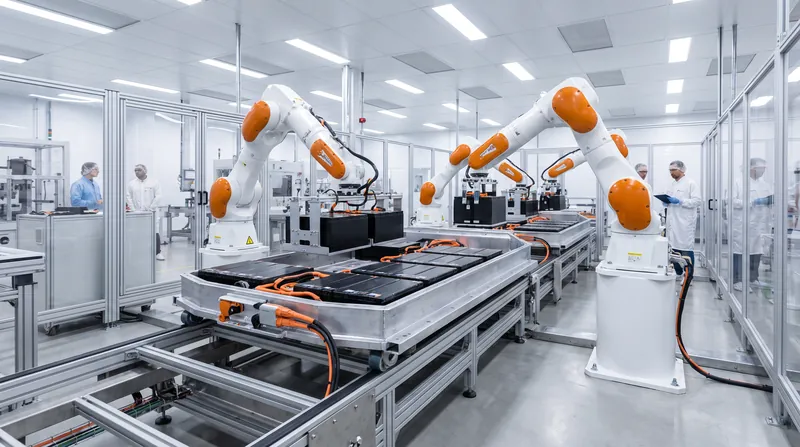
Hyundai Unveils Thermal Runaway Protection and Cloud BMS to Boost EV Battery Safety and Life by 20%
7 sources
Battery Tech
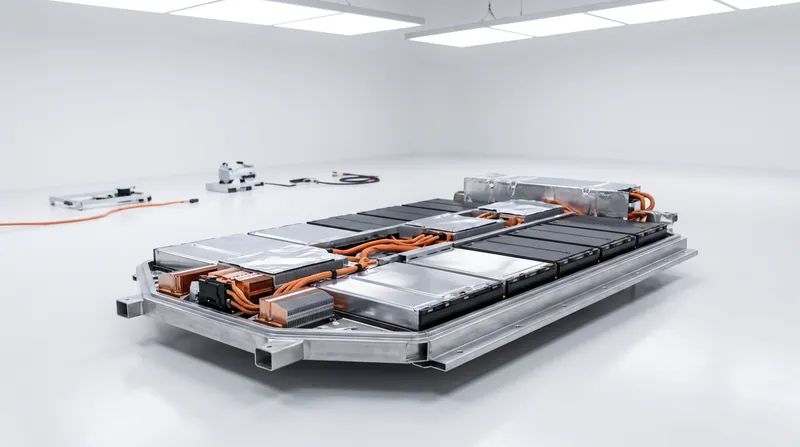
Lithium vs. Sodium: The Trade-Offs Shaping the Next Generation of EV Batteries
3 sources
Battery Tech
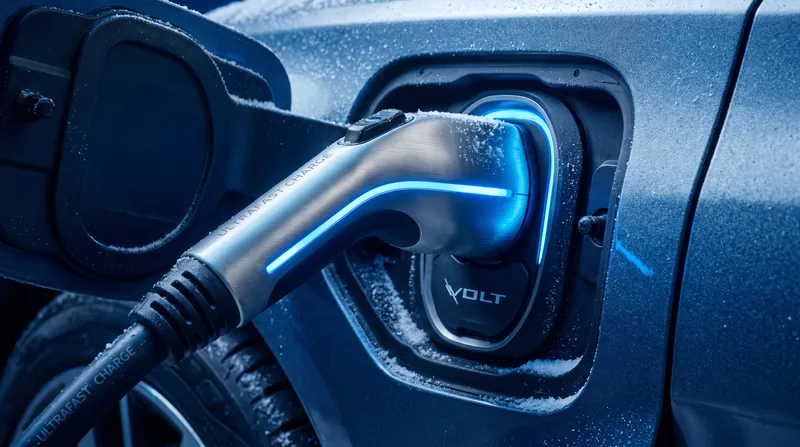
Stellantis Begins North American On-Road Testing of Solid-State EV Batteries in Dodge Charger
4 sources
Battery Tech
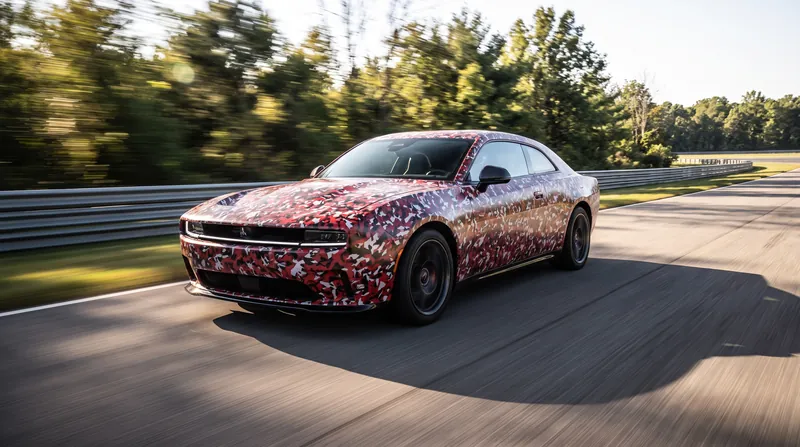
AI-Based Charging Method Extends EV Battery Life by 23% in New Research
3 sources
Comments
Every angle. Every day.
Get Transportation stories with full source coverage and perspective breakdowns, free every day.