
Macron Rebukes Foreign Leaders Over 'Stupid' Comments on French Unrest
French President Emmanuel Macron condemned external commentary linking the country's ongoing domestic unrest to immigration policies. The diplomatic rebuke comes as the government deploys heavy police units to enforce curfews across major cities.
By Adel Khoury

Share this story
French President Emmanuel Macron delivered a sharp diplomatic rebuke on Wednesday, condemning foreign leaders for exploiting France's ongoing domestic unrest. The president specifically targeted commentary that attempted to reframe the nation's cost-of-living protests as a crisis of immigration policy.[1][2]
The public confrontation follows days of intense demonstrations across major French cities, which have prompted the government to authorize wider curfews running from 8:00 PM to 6:00 AM in affected districts. Rather than addressing the economic grievances driving the crowds, several international figures used the images of burning barricades to validate their own domestic agendas.[3][4]
"I will not let unacceptable and stupid comments from foreign leaders dictate the narrative of our republic," Macron stated during a press briefing in Paris. He accused external actors of deliberately misrepresenting the situation to sow division within European democracies.[2][5]
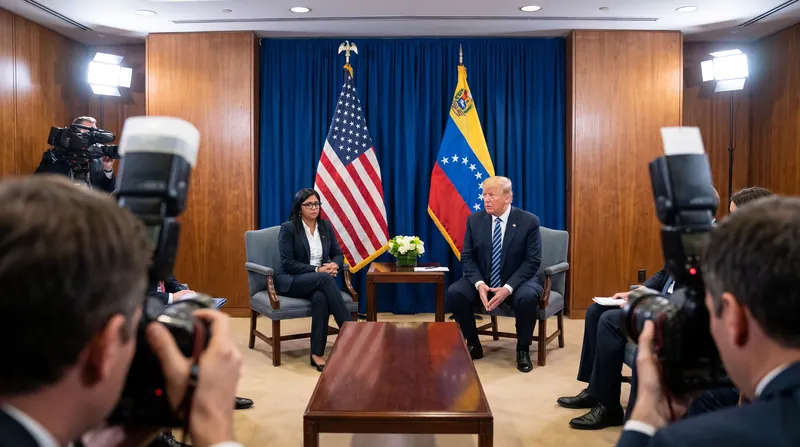
The diplomatic friction escalated rapidly after US President Donald Trump explicitly linked the October 17 riots to French immigration policies. Trump's remarks, broadcast to his domestic political base, drew immediate condemnation from the Élysée Palace.[1][2]
Immigration claims spark diplomatic rift
The American president's intervention arrived at a highly sensitive moment for the French administration. Trump characterized the unrest as the inevitable result of open borders, a framing that directly contradicted the French interior ministry's assessment of the protests' origins.[1][4]
Macron’s response was unusually blunt for a head of state addressing a key NATO ally. By labeling the commentary "stupid," the French president signaled a refusal to engage in the standard diplomatic pleasantries that typically mask bilateral disagreements.[1][5]
"This is a coordinated attempt at foreign manipulation," Macron warned, cautioning the French public against consuming external narratives. He argued that international commentators were projecting their own political anxieties onto a distinctly French economic dispute.[4]
The Turkish state broadcaster TRT World noted that Macron's frustration extended beyond Washington. At least three distinct nationalist leaders across Europe had similarly seized upon the October 17 clashes to argue against European Union migration pacts, utilizing the Parisian unrest as a rhetorical weapon.[3]
Heavy police deployments enforce curfews
While the diplomatic battle plays out on the international stage, the situation on the ground in France remains highly volatile. The government has mobilized heavy police deployments across dozens of urban centers to enforce newly authorized local curfews.[2][3]
Security forces have conducted thousands of interventions over a 48-hour period, with prior reports indicating over 2,400 arrests nationwide. The sheer scale of the police response underscores the severity of the cost-of-living crisis that initially brought citizens into the streets.[3][4]
Foreign commentary has complicated these security operations by injecting highly charged identity politics into an already tense environment. French intelligence officials have expressed concern that external rhetoric could radicalize fringe elements within the broader protest movement.[4][5]
The Washington Examiner highlighted Macron's specific warning regarding digital manipulation. The French president suggested that foreign state and non-state actors were amplifying the "stupid comments" across social media platforms to artificially inflate the appearance of a fractured society.[4]
Navigating external pressure and internal crisis
The dual challenge of managing a domestic emergency and a foreign policy dispute has stretched the French executive branch. Macron must project absolute authority at home while simultaneously defending the nation's sovereignty from rhetorical incursions abroad.[1][5]
This dynamic places the French diplomatic corps in a difficult position. Ambassadors in allied capitals are now tasked with formally protesting the statements of host governments, a process that threatens to derail ongoing bilateral negotiations on trade and security.[1][3]
The Times of Israel reported that the diplomatic fallout has dominated the European news cycle, overshadowing the actual grievances of the French protesters. The focus has shifted from inflation and social spending to a referendum on Macron's international standing.[5]
"When allies use our domestic challenges as political fodder, they undermine the cohesion of the entire Western alliance," a senior French diplomatic source noted following the president's address. The sentiment reflects a deep frustration within the foreign ministry.[1][2]
Government braces for continued demonstrations
As the weekend approaches, French authorities are preparing for another wave of potential clashes. The interior ministry has canceled leave for riot police units, ensuring maximum operational capacity in the capital and surrounding suburbs.[2][4]
The curfews, while effective in reducing nighttime vandalism, have done little to quell the underlying anger regarding the cost of living. Economic indicators suggest that the inflation pressures driving the unrest will persist well into the fourth quarter of 2026.[3][4]
Macron's aggressive posture toward foreign critics may serve a secondary domestic purpose. By rallying the nation against external interference, the president could be attempting to unify a fractured electorate around the defense of the French republic.[1][5]
However, opposition figures within France have criticized this approach as a distraction tactic. They argue that rebuking Donald Trump does not lower the price of essential goods or address the systemic inequalities that triggered the October 17 riots.[2][4]
The coming days will test whether the heavy police presence can restore order without escalating the violence. Security analysts warn that any high-profile clashes will immediately be broadcast globally, providing fresh material for the foreign commentators Macron just condemned.[3][5]
Key points
- President Emmanuel Macron condemned foreign leaders for making "stupid comments" regarding France's ongoing domestic unrest.
- The diplomatic rift escalated after US President Donald Trump explicitly linked the October 17 riots to French immigration policies.
- Macron warned the French public that external actors are attempting a coordinated campaign of foreign manipulation.
- The government continues to deploy heavy police units across major cities to enforce curfews and quell the cost-of-living protests.
What we don’t know
- Whether the diplomatic rift will affect ongoing US-French cooperation on broader geopolitical security issues.
- How long the heavy police deployments and local curfews will remain in effect across major French cities.
- If foreign leaders will escalate the rhetorical conflict in response to Macron's blunt public condemnation.
How we got here
Mid-October 2026
Cost-of-living protests escalate into nationwide unrest, leading to over 2,400 arrests.
October 17, 2026
Major clashes prompt the French government to authorize local curfews and deploy heavy police units.
October 20, 2026
US President Donald Trump and other foreign leaders publicly link the French riots to immigration policies.
October 21, 2026
President Emmanuel Macron issues a formal rebuke, condemning the commentary as "stupid" and warning of foreign manipulation.
- French Administration
- Argues that foreign leaders are deliberately misrepresenting a domestic economic crisis to serve their own political agendas.
- Foreign Critics
- View the ongoing unrest in France as a direct consequence of the nation's immigration and border policies.
- Domestic Security Forces
- Focus on the immediate operational challenge of enforcing curfews and preventing further violence on the streets.
Perspectives this story doesn't cover
- Local municipal leaders enforcing curfews
- Protesters demonstrating against the cost of living
Sources
Source coverage
5 outlets
3 viewpoints surfaced





- [1]The GuardianFrench Administration
Macron accuses Trump and other foreign leaders of making ‘stupid comments’ about France unrest
Read on The Guardian → - [2]Anadolu AgencyFrench Administration
Macron denounces 'unacceptable and stupid' comments after Trump links Oct. 17 unrest to immigration
Read on Anadolu Agency → - [3]TRT WorldDomestic Security Forces
Macron slams foreign leaders' comments on immigration and France protests
Read on TRT World → - [4]Washington ExaminerForeign Critics
Macron slams Trump for 'stupid' comments about French riots and warns public of 'foreign manipulation'
Read on Washington Examiner → - [5]The Times of IsraelForeign Critics
Macron blasts 'stupid comments from foreign leaders' on riots
Read on The Times of Israel →
More in News & Politics
See all →Arctic Security
European Union Unveils Arctic Strategy to Counter Expanding US and Russian Influence
6 sources
Protest Rights
Indian Police Release Cockroach Movement Leader Dipke and File FIRs Over Protests
5 sources
Electoral Systems
Compulsory Voting Eliminates the Socioeconomic Participation Gap Without Altering Government Spending Patterns
8 sources
International Law
South African Jurist Navi Pillay Wins 2026 Nobel Peace Prize for Advancing International Law
6 sources
Comments
Every angle. Every day.
Get News & Politics stories with full source coverage and perspective breakdowns, free every day.