
July 2026 FIDE World Rankings: Sindarov and Keymer Crack Top Five as Carlsen's Lead Shrinks
The July 2026 FIDE rating list reveals a massive youth surge in the global chess standings, with Javokhir Sindarov reaching world number four and Magnus Carlsen dropping 18 points following a turbulent month of classical play.

Share this story
The release of the July 2026 FIDE rating list has formalized a generational shift in the global chess standings. While the sport's established veterans maintain a tight grip on the absolute pinnacle, a wave of players under the age of 25 has completely rewritten the top ten. The new rankings, shaped by high-stakes events like Norway Chess, the UzChess Cup, and the World Team Rapid and Blitz Championships in Hong Kong, reflect a landscape where no rating point is safe.
At the very top, Magnus Carlsen is celebrating 15 unbroken years as the world's number-one player, but his statistical dominance has taken a rare hit. Following a turbulent performance at the Norway Chess tournament in Oslo, Carlsen dropped 18 classical rating points. He lands at a 2823 rating for July—making him still the only player in the exclusive 2800 club, but shrinking his lead over the rest of the field to just 31 points.[1][2]
Directly beneath Carlsen, the American duo of Fabiano Caruana and Hikaru Nakamura continue to anchor the old guard. Both players sit at a formidable 2792 rating, with Caruana officially holding the world number-two spot on tiebreaks. Their stability stands in stark contrast to the volatility happening just below them on the leaderboard.[1]
The most significant disruption comes from Uzbekistan's Javokhir Sindarov, who has surged to a spectacular career-high of world number four. Boasting a 2777 rating, the 20-year-old has capitalized on a string of elite performances to leapfrog several established grandmasters. Sindarov's ascent marks a definitive arrival for a player who has been steadily climbing the ranks over the past two years.
Sindarov is not alone in the youth takeover. Germany's 21-year-old prodigy Vincent Keymer holds strong at world number five with a 2767 rating, while Sindarov's compatriot, Nodirbek Abdusattorov, sits at number six with 2766. This means that three of the top six classical chess players on the planet are part of the new generation, fundamentally altering the competitive dynamics of elite invitational tournaments.[2]
Further down the top ten, American grandmaster Wesley So moved up two positions to world number seven (2765) following a resilient runner-up finish at Norway Chess. Conversely, the reigning classical World Champion, Gukesh Dommaraju, suffered a difficult month. The Indian star dropped nearly 15 rating points after a tough outing in Oslo, falling to 26th in the global classical standings.[2]
The women's global standings also witnessed major milestones. While the Chinese trio of Hou Yifan, Lei Tingjie, and Ju Wenjun safely occupy the top three spots, Kazakhstan's Bibisara Assaubayeva made a significant breakthrough. After a commanding victory at the Norway Chess Women's tournament, Assaubayeva gained 11 rating points to reach a career-high fifth position in the world.[1]
However, the most mathematically staggering jump on the entire July list belongs to 16-year-old Ukrainian Anastasiia Hnatyshyn. Entering the European Women's Championship in Batumi as the 76th seed, Hnatyshyn shocked the field to claim the outright title. The performance earned her an unprecedented 214 rating points in a single month, catapulting her from outside the top 100 straight to world number 18.[1]
Beyond classical chess, the rapid and blitz standings were heavily scrambled by the FIDE World Team Championships in Hong Kong. Abdusattorov hauled in 35 points in the blitz event, soaring to the number-two position in the world blitz rankings, trailing only Carlsen. Meanwhile, France's Alireza Firouzja rose to second in the global rapid standings following a 16-point gain.[5]
The lower half of the top 100 was equally turbulent, driven by results from the UzChess Cup in Tashkent. Nineteen-year-old Mukhiddin Madaminov stunned a field of elite grandmasters to win the Masters section via a blitz tiebreak, securing a massive rating boost. In the Challengers section, 22-year-old Mahammad Muradli dominated the field to make his debut in the world top 100 at number 79.[3][4]
As the summer chess circuit accelerates toward the Grand Chess Tour finals and the upcoming Chess Olympiad, the July standings set a dramatic stage. The mathematical gap between the world champion contenders and the rising prodigies has been erased, ensuring that the second half of the 2026 season will be a brutal fight for position.
The essentials
- Magnus Carlsen dropped 18 rating points but remains world number one with a 2823 rating.
- Javokhir Sindarov surged to a career-high world number four, joined in the top six by fellow youth stars Vincent Keymer and Nodirbek Abdusattorov.
- 16-year-old Anastasiia Hnatyshyn gained an unprecedented 214 rating points to reach world number 18 in the women's standings.
- The rapid and blitz rankings saw major shifts following the World Team Championships in Hong Kong.
Timeline
Late May - Early June 2026
Norway Chess takes place in Oslo, resulting in Magnus Carlsen losing 18 rating points and Wesley So moving up the ranks.
June 7-15, 2026
The UzChess Cup is held in Tashkent, where 19-year-old Mukhiddin Madaminov secures a surprise victory in the Masters section.
June 16-22, 2026
The World Team Rapid and Blitz Championships in Hong Kong scramble the fast time-control rankings, with Nodirbek Abdusattorov surging to world number two in blitz.
July 1, 2026
FIDE officially publishes the July rating list, confirming Javokhir Sindarov's rise to world number four and Anastasiia Hnatyshyn's massive 214-point jump.
- Data Analysts
- Focuses on the raw mathematical shifts and the historical context of rating gaps.
- Youth Movement Advocates
- Highlights the unprecedented rise of players under 25 taking over the elite ranks.
- Establishment Defenders
- Maintains that the veteran core still controls the absolute highest tier of the sport.
Perspectives this story doesn't cover
- Players who lost significant rating points in the July update
- Tournament organizers adjusting invitations based on the new rankings
Sources
Source coverage
5 outlets
3 viewpoints surfaced



- [1]Chess.comEstablishment Defenders
Carlsen Drops 18 Points, Remains Only 2800+ Player In World
Read on Chess.com → - [2]ChessBaseYouth Movement Advocates
Magnus Carlsen may have lost a significant number of rating points at Norway Chess, but he remains the undisputed world number one
Read on ChessBase → - [3]The Week in ChessYouth Movement Advocates
Surprise victory for Mukhiddin Madaminov in the 3rd UzChess Cup
Read on The Week in Chess → - [4]Kingdom of ChessEstablishment Defenders
UzChess Cup 2026 Live Standings and Results
Read on Kingdom of Chess → - [5]Chess-ResultsData Analysts
FIDE World Team Rapid Chess Championship 2026 Final Ranking
Read on Chess-Results →

More in Sports
See all →Injury
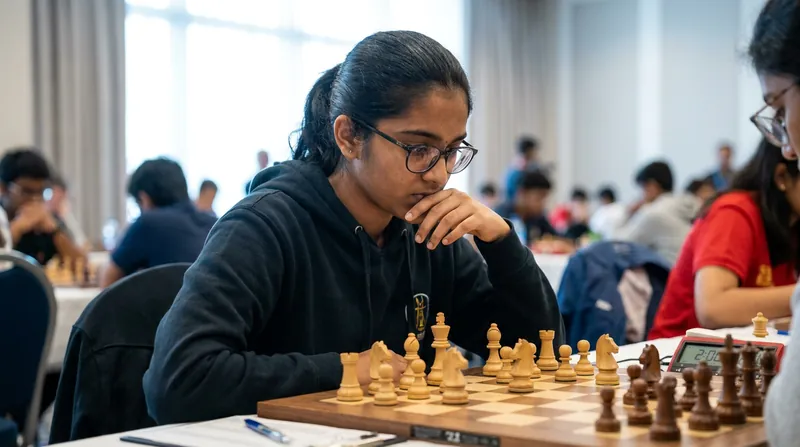
From Medical Blunder to World No. 4: How India's Shubhi Gupta Overcame a Vision Scare to Conquer the Chess Board
3 sources
Standings
Grand Chess Tour 2026 Standings: Caruana Holds Lead as Keymer and Firouzja Surge Ahead of Saint Louis Finale
3 sources

Injury
Medical Report: FM Yosha Iglesias Returns to the Board Following Surgery and Community-Backed Recovery
3 sources
Standings
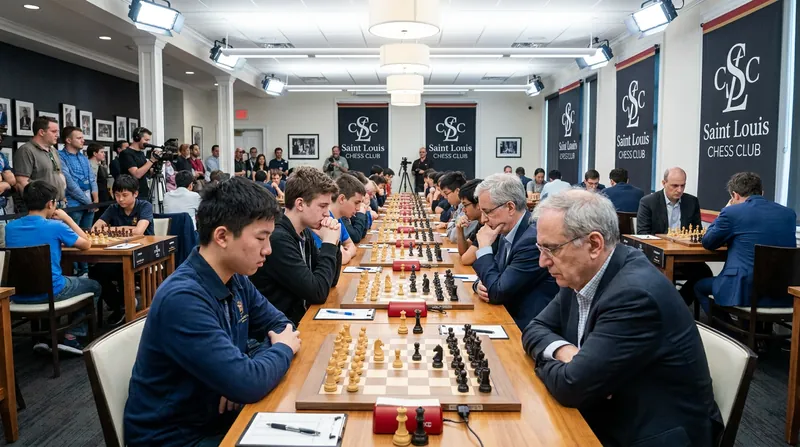
2026 U.S. Junior and Senior Chess Championships Standings: Early Leaders Emerge as Generations Clash in St. Louis
7 sources
Comments
Every angle. Every day.
Get Sports stories with full source coverage and perspective breakdowns, free every day.