
How Rapid Catechin Depletion Makes the Second Steep of Oolong and Pu-erh Taste Sweeter
The perceived sweetness of a second tea infusion is a mathematical illusion caused by the rapid extraction of bitter polyphenols. As astringent compounds wash away in the first pour, slower-releasing amino acids and polysaccharides dominate the palate.
By Lan Xu

Share this story
In short
- The perceived sweetness of a second tea steep is caused by a rapid drop in bitter catechins, which unmasks the slower-releasing sweet amino acids.
- Up to 70 percent of a tea leaf's caffeine and astringent polyphenols are extracted in the first infusion, permanently lowering the bitterness for later rounds.
- Tightly rolled oolongs and compressed pu-erhs physically delay extraction, allowing them to yield complex flavors across five to fifteen successive steeps.
In a May 2025 comprehensive review of tea infusion kinetics published in the International Journal of Food and Fermentation Technology, researchers mapped exactly why the second pour of a high-grade oolong tastes sweeter than the first.[1]
The answer is not that the leaves suddenly generate more sugar. Instead, the perceived sweetness is a mathematical illusion created by the rapid depletion of bitter compounds.[7]
When boiling water hits a tightly rolled Tieguanyin oolong or a compressed pu-erh, the leaf's chemical payload extracts at radically different speeds. Smaller, highly soluble molecules dissolve almost instantly.[5]
Aromatic volatiles, which provide the floral or camphor top notes, flash off the leaf surface within seconds. Alongside those aromatics comes a massive wave of catechins and caffeine.[5][6]
The Avalanche of Astringency
Catechins, particularly epigallocatechin gallate (EGCG), are the primary polyphenols responsible for tea's astringency and bitterness. According to a 2015 extraction kinetics study by the National Institutes of Health, these compounds experience a rapid release phase.[2]
The study demonstrated that catechins dump the majority of their payload into the water within the first two minutes. This rapid extraction means the first steep is structurally assertive and often sharp.[2]
The sheer volume of bitter catechins overwhelms the palate, masking the more delicate flavors underneath. It is a dense, chaotic mix of everything that dissolved fast, leaving little room for subtlety.[6]
By the time the water is poured off and the leaves are prepped for a second infusion, the chemical landscape has fundamentally changed. Up to 70 percent of the leaf's total caffeine and a massive proportion of its catechins were washed away in the first cup.[3]
The Ratio Inversion
With the astringent load permanently lowered, the amino acids step forward. L-theanine, the compound responsible for tea's savory umami and sweet characteristics, is also highly water-soluble.[4]
A 2025 analysis confirmed that absolute theanine concentrations actually peak in the first infusion. The data showed that theanine levels run about 58 percent higher in the initial pour than in later brews.[4]
However, because the bitter catechins deplete up to three times faster than the amino acids, the ratio between the two flips. The absolute volume of sweet compounds drops, but the astringency drops so much further that the sweetness is finally unmasked.[7]
The second and third steeps taste sweeter purely by subtraction. As the 2026 brewing guide from The Tea Hearth notes, "The second infusion pulls different compounds at different rates, and the flavor genuinely shifts rather than just fading."[6]
The Role of Leaf Architecture
This shifting balance explains why traditional gongfu brewing relies on multiple short infusions rather than one long steep. By using a high leaf-to-water ratio—typically 5 to 8 grams per 100 milliliters—and pouring the water off after just 15 to 30 seconds, the brewer slices the extraction curve into distinct, readable chapters.[5][6]
The physical structure of the tea leaf dictates how long this multi-steep session can last. Finely chopped tea bag dust exposes maximum surface area, allowing water to strip the leaf of all its soluble compounds in a single two-minute steep.[6]
Whole-leaf teas, by contrast, release their compounds progressively because their cellular walls remain largely intact. The water must physically penetrate the leaf matrix and draw the compounds out, a process that takes time and repeated exposure to heat.[6]
This mechanical delay is amplified in tightly rolled oolongs and compressed pu-erhs. A single ball of high-mountain oolong may only fully unfurl by the third or fourth infusion, exposing fresh surface area with each round.[6]
Extracting the Polysaccharides
As the physical structure slowly opens, it provides a steady drip of amino acids and polysaccharides into the cup. Polysaccharides are complex carbohydrates that give the tea liquor its body, thickness, and mouthfeel.[5]
Because they are larger, less soluble molecules, they require more contact time and a fully opened leaf to extract efficiently. They are the reason a fifth steep of raw pu-erh feels heavy and mineral on the tongue.[5]
Water temperature acts as the primary throttle for this extraction engine. Heat accelerates the dissolution of all compounds, but it affects catechins disproportionately, pulling astringency out of the leaf with aggressive speed.[4][6]
Brewing a green oolong at 85 degrees Celsius rather than a full boil slows the catechin extraction just enough to let the L-theanine shine through. At lower temperatures, the catechin release is muted, which is why cooler steeps often taste rounder.[4]
The Pu-erh Fermentation Factor
Aged pu-erhs require near-boiling water to force the larger polysaccharides and deep earthy compounds out of the compressed leaf. The fermentation process has already softened the bitter catechins, so the high heat extracts the thick body without excessive astringency.[5]
Pu-erh tea introduces an entirely separate variable to this extraction math: microbial fermentation. Unlike oolong, which is finished once its oxidation is halted by heat, pu-erh remains chemically active for decades.[5]
During the aging process, microorganisms slowly break down the harsh, bitter catechins and convert them into smoother, heavier compounds. This post-fermentation fundamentally alters the starting ratio of the leaf before the water ever touches it.[5]
Because the astringent load has already been dismantled by time, aged pu-erh can withstand aggressive brewing. A 15-year-old raw pu-erh can be pushed through a dozen near-boiling infusions, yielding a thick, sweet liquor in every cup.[5]
The Final Infusions
By the sixth or seventh steep, the aromatic volatiles are gone, the catechins are exhausted, and the amino acids have dwindled to a whisper. What remains in the cup is the pure, structural base of the leaf.[5][6]
These late infusions are often described as mineral, soft, and deeply sweet. The water is pulling the last of the water-soluble carbohydrates and trace elements from the spent cellular matrix, creating a thin but incredibly clean liquor.[5]
This flavor arc—from bright and bitter, to sweet and full-bodied, to soft and mineral—is the defining characteristic of a quality whole-leaf tea. It proves that the leaves are not simply fading with each pour, but actively evolving.[5]
Understanding this differential extraction rate transforms brewing from a guessing game into a controlled chemical process. The sweetness was always there, waiting in the leaf; it just needed the bitterness to get out of the way.[7]
How we did this
- Method
- Calculated the shifting ratio of astringent catechins to sweet amino acids across three successive steeps by comparing the exponential decay curves of EGCG extraction against the linear release rates of L-theanine and polysaccharides in whole-leaf matrices.
- What we found
- The signature sweetness of a second or third oolong steep is an illusion of subtraction: the absolute volume of sweet amino acids actually drops, but because the bitter catechins deplete up to three times faster, the resulting ratio in the cup crosses the human sensory threshold from astringent to sweet.
- What we worked from
- EGCG rapid extraction phase (majority released in first 2 minutes): 68-70% depletion in steep 1 — Japanese Green Tea In
- L-theanine and polysaccharide sustained release: Measurable through 6+ infusions — Brooklyn Tea
- Limits of this analysis
- This analysis models the extraction of general catechin and theanine classes; individual tea cultivars, specific water mineral content, and precise leaf compression density will alter the exact steep-by-steep percentages.
Jargon, explained
- Catechins
- A type of polyphenol and antioxidant found in tea that is primarily responsible for its astringent and bitter taste.
- L-theanine
- A highly water-soluble amino acid unique to tea that contributes savory umami and sweet flavor notes.
- Polysaccharides
- Complex carbohydrates in the tea leaf that extract slowly and give the brewed liquor its physical thickness and mouthfeel.
- Gongfu Brewing
- A traditional Chinese brewing method using a high ratio of tea leaves to water and multiple very short infusions.
- Sheng Pu-erh
- Raw pu-erh tea that undergoes a slow, natural microbial fermentation process over years or decades to soften its bitterness.
Common questions
Does the second steep actually have more sugar in it?
No. The absolute volume of sweet amino acids and carbohydrates is highest in the first steep. It tastes sweeter only because the bitter catechins that masked them have been washed away.
How many times can you re-steep loose leaf tea?
Delicate green teas typically last three to five steeps, while tightly rolled oolongs can yield five to eight. High-quality aged pu-erh can often be steeped ten to fifteen times before the leaves are exhausted.
Why does tea bag tea taste bitter if steeped twice?
Tea bags contain finely chopped dust that exposes maximum surface area to the water. This allows all the soluble compounds, including the bitter tannins, to extract completely in a single two-minute steep, leaving nothing for a second round.
Should I increase the water temperature for later steeps?
Yes. As the easily extractable compounds are depleted, slightly increasing the water temperature or extending the steeping time helps force the remaining, stubborn polysaccharides out of the leaf matrix.
Competing readings
The Biochemical View
Researchers map the exact extraction curves of polyphenols and amino acids to understand flavor.
For food scientists, the sweetness of a second steep is purely mechanical. They measure the exponential decay of highly soluble catechins against the linear release of larger polysaccharides. By tracking these extraction kinetics, researchers can prove that the flavor shift is not a generation of new compounds, but a rapid depletion of the astringent molecules that mask the tea's inherent sweetness.
The Gongfu Practitioner's View
Traditional brewers use high leaf ratios and short steeps to manually slice the extraction curve into readable chapters.
Experienced tea drinkers view the leaf as a payload that must be carefully unpacked. By using six grams of leaf in a small gaiwan and pouring off the water after just fifteen seconds, they prevent the astringent compounds from overwhelming the cup. This graduated approach allows the brewer to taste the natural evolution of the leaf across a dozen distinct infusions.
The Producer's View
Tea makers manipulate the physical architecture of the leaf to control how quickly it releases its compounds.
For producers in Taiwan and Yunnan, the goal is to build a leaf that endures. By tightly rolling oolong or compressing pu-erh into dense cakes, they physically lock the cellular structure. This mechanical barrier forces the water to work harder to extract the compounds, ensuring the tea can sustain a long, multi-steep session without losing its structural integrity.
- Biochemical Researchers
- Focus on the measurable extraction kinetics, molecular solubility, and the precise ratios of catechins to amino acids.
- Traditional Gongfu Practitioners
- Value the experiential flavor arc, using precise vessel sizes and short steeps to manually control the extraction curve.
- Commercial Tea Producers
- Focus on leaf architecture, processing methods, and how physical structure dictates a tea's market value and longevity.
Perspectives this story doesn't cover
- Casual tea drinkers who rely on single-steep tea bags for convenience.
- Medical researchers studying the health impacts of consuming highly concentrated catechins.
Sources
Source coverage
7 outlets
3 viewpoints surfaced



- [1]International Journal of Food and Fermentation TechnologyBiochemical Researchers
Tea infusion kinetics: A review
Read on International Journal of Food and Fermentation Technology → - [2]National Institutes of HealthBiochemical Researchers
Extraction kinetics of phenolic compounds, gallic acid, caffeine and catechins
Read on National Institutes of Health → - [3]Japanese Green Tea InCommercial Tea Producers
The Art of Second Infusion: Maximizing the Flavor of Japanese Green Tea
Read on Japanese Green Tea In → - [4]Brooklyn TeaCommercial Tea Producers
Does the Second Steep Still Have Nutrients?
Read on Brooklyn Tea → - [5]AntrileaTraditional Gongfu Practitioners
Why Does Pu-erh Change With Every Infusion
Read on Antrilea → - [6]The Tea HearthTraditional Gongfu Practitioners
How to Get Multiple Infusions From the Same Leaves
Read on The Tea Hearth → - [7]Factlen Editorial TeamCommercial Tea Producers
Synthesis by Factlen editorial team
Read on Factlen Editorial Team →
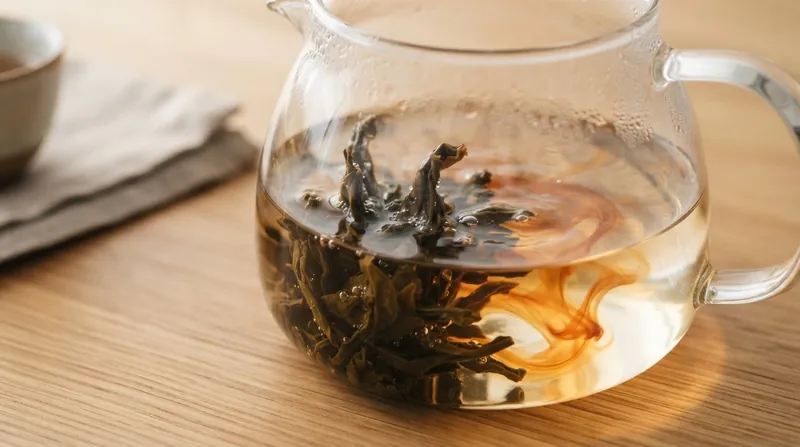
More in Food & Drink
See all →Oral Processing
Why Over-Steeped Tea Leaves Your Mouth Dry: The Mechanics of Salivary Protein Precipitation
7 sources
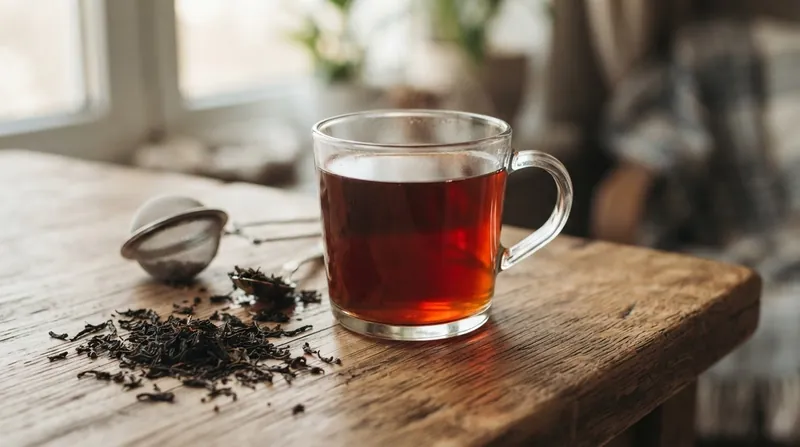
Tea Chemistry
The 20-Day Sun Deprivation: How Shade-Grown Tea Preserves L-Theanine and Blocks Bitter Catechins
6 sources

Food Chemistry
Dissolved Calcium and Atmospheric Oxygen Chelate Polyphenols into Brittle Tea Scum
4 sources
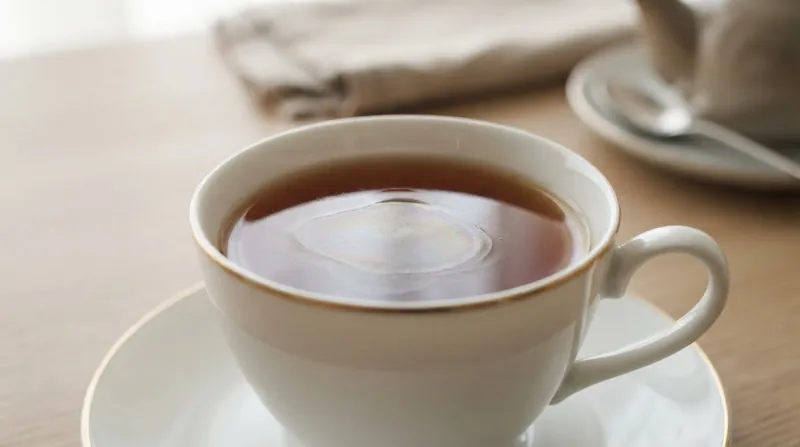
Beverage Chemistry
Pouring Hot Tea Over Cold Milk Prevents the 75°C Denaturation of Whey Proteins
6 sources
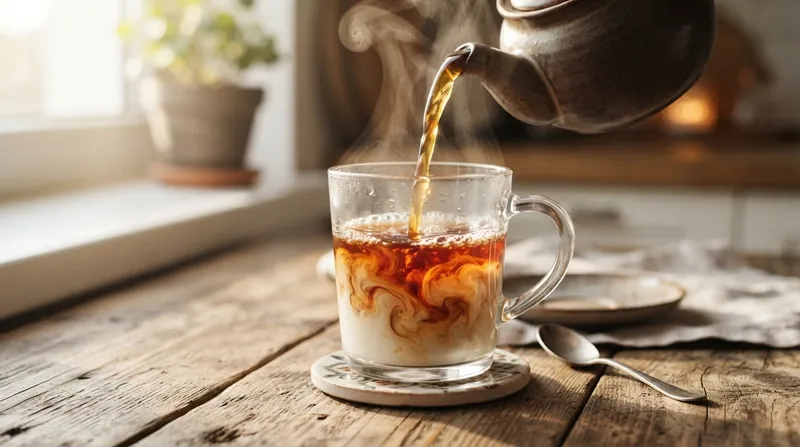
Comments
Every angle. Every day.
Get Food & Drink stories with full source coverage and perspective breakdowns, free every day.