
House Rejects War Powers Resolution, Voting to Maintain Trump's Authority in Lebanon Conflict
The U.S. House of Representatives voted down a bipartisan measure aimed at forcing the withdrawal of American forces from hostilities in Lebanon, effectively endorsing the administration's current military posture.
By Adel Khoury

Share this story
The U.S. House of Representatives narrowly rejected a bipartisan War Powers Resolution on Wednesday, effectively preserving President Donald Trump's authority to maintain and direct American military forces involved in the escalating conflict in Lebanon. The 218-208 vote marks a significant legislative victory for the White House, which had aggressively lobbied against the measure, arguing that tying the commander-in-chief's hands would project weakness to adversaries in the Middle East.[1][3]
Introduced under the framework of the 1973 War Powers Act, the privileged resolution sought to force the withdrawal of U.S. armed forces from hostilities in and around Lebanon within 30 days unless Congress formally declared war or passed a specific Authorization for Use of Military Force (AUMF). The measure's defeat ensures that the current deployment—which includes naval interceptors, intelligence-gathering assets, and logistical support personnel—will continue unabated as regional tensions simmer.
The vote exposed deep, unconventional fault lines within both major political parties. A coalition of progressive Democrats and liberty-leaning, anti-interventionist Republicans championed the resolution, arguing that the United States is slowly sliding into an unconstitutional, undeclared war. They pointed to recent incidents where U.S. naval assets in the Eastern Mediterranean were forced to intercept drone swarms, arguing that American troops are already engaged in imminent hostilities that require congressional consent.
Conversely, Republican leadership and a bloc of centrist Democrats coalesced to defeat the measure. Administration officials, including the Secretaries of State and Defense, held classified briefings in the days leading up to the vote, warning lawmakers that a mandated withdrawal would embolden Hezbollah and its primary backer, Iran. They argued that the U.S. presence is fundamentally defensive and essential for protecting American citizens, embassy personnel, and regional allies.[2][3]
During the contentious floor debate, opponents of the resolution maintained that the War Powers Act was never intended to micromanage the defensive positioning of naval and air assets in international waters or allied airspace. Supporters of the administration's policy insisted that the President is appropriately utilizing his Article II powers to protect American interests and prevent a broader regional conflagration that could draw the U.S. into a much larger ground war.[2]
The debate over the resolution highlights the growing unease on Capitol Hill regarding "mission creep" in the Levant. As the conflict between Israel and Hezbollah has intensified, U.S. forces have increasingly served as a critical node in the regional air defense architecture. While the administration insists U.S. troops are not engaged in direct offensive ground combat, the continuous need to intercept inbound projectiles blurs the line between defensive posturing and active participation in hostilities.[1][4]
International observers and regional governments closely monitored the legislative maneuvering in Washington. For Middle Eastern allies, the House vote provides a degree of reassurance that domestic political polarization will not immediately fracture the U.S. security umbrella. Analysts suggest the outcome sends a clear signal to Tehran and Beirut that the U.S. legislative branch is not prepared to force a sudden American retreat from the Eastern Mediterranean.[1][4]
Despite the resolution's failure, the underlying debate over executive war powers remains unresolved. Sponsors of the defeated measure have already vowed to attach similar, binding restrictions to the upcoming National Defense Authorization Act (NDAA). As the situation in Lebanon remains highly volatile, the administration will likely face continued congressional scrutiny and renewed legislative attempts to assert Article I authority over military deployments before the end of the year.[3]
Where opinion splits
The Administration's View
Focuses on deterrence, executive flexibility, and the defensive nature of the deployment.
The White House and its congressional allies maintain that the U.S. military posture in the Eastern Mediterranean is fundamentally defensive and falls squarely within the President's Article II constitutional powers. They argue that publicly tying the commander-in-chief's hands with an artificial withdrawal timeline would severely undermine regional deterrence, signaling to Iran and Hezbollah that the U.S. lacks the political will to protect its assets and allies. From this perspective, the War Powers Act is an inappropriate tool for managing naval deployments in international waters.
The Anti-Interventionist View
Focuses on Article I constitutional war powers, the risk of entanglement, and mission creep.
Proponents of the resolution argue that the continuous interception of drones and missiles constitutes active engagement in hostilities, triggering the requirements of the 1973 War Powers Act. This bipartisan coalition warns of dangerous 'mission creep,' where defensive posturing slowly morphs into an undeclared war without the consent of the American people. They contend that if the administration believes U.S. military involvement in Lebanon is necessary for national security, it must formally request an Authorization for Use of Military Force (AUMF) from Congress.
Regional Observers' View
Focuses on the geopolitical signal sent to Tehran, Beirut, and U.S. allies regarding American staying power.
International analysts view the House vote primarily through the lens of regional deterrence. For Middle Eastern allies relying on the U.S. security umbrella, the rejection of the resolution provides reassurance that domestic American political divisions will not force an immediate military retreat. Conversely, observers note that the vote signals to adversaries that despite vocal opposition in Washington, the U.S. legislative branch is not currently prepared to force a withdrawal that could alter the balance of power in the Levant.
Key points
- The House voted 218-208 to reject a War Powers Resolution aimed at the Lebanon conflict.
- The measure would have required the withdrawal of U.S. forces from hostilities within 30 days.
- A coalition of progressive Democrats and anti-interventionist Republicans supported the resolution.
- The White House argued the measure would project weakness and embolden regional adversaries.
Unanswered questions
- Whether sponsors of the resolution will successfully attach binding war powers language to the upcoming National Defense Authorization Act.
- How the administration will respond if U.S. forces suffer casualties or are drawn into direct, sustained offensive combat.
- The exact threshold of involvement that would prompt centrist lawmakers to reconsider their opposition to invoking the War Powers Act.
How we got here
Oct 2023
Regional conflict escalates, prompting initial U.S. naval deployments to the Eastern Mediterranean.
Early 2026
U.S. increases naval and interceptor presence as fighting between Israel and Hezbollah intensifies.
June 2026
A bipartisan group of lawmakers introduces a War Powers Resolution citing imminent hostilities.
July 5, 2026
The House of Representatives votes 218-208 to reject the resolution.
- Executive Authority Advocates
- Argue the President needs maximum flexibility to deter regional adversaries and protect U.S. assets without congressional micromanagement.
- Anti-Interventionist Coalition
- Warn against unconstitutional mission creep and demand strict adherence to the 1973 War Powers Act to prevent an undeclared war.
- Regional Security Analysts
- Focus on how the vote impacts deterrence against Iran and Hezbollah, viewing the legislative outcome as a signal of U.S. staying power.
Perspectives this story doesn't cover
- Lebanese Civilians
- U.S. Military Families
Sources
Source coverage
4 outlets
3 viewpoints surfaced




- [1]ReutersRegional Security Analysts
House defeats War Powers measure aimed at limiting US role in Lebanon
Read on Reuters → - [2]Fox NewsExecutive Authority Advocates
Trump's bold prediction for historic UFC White House fight revealed in new Fox Nation documentary
Read on Fox News → - [3]The HillExecutive Authority Advocates
House rejects War Powers Resolution on Lebanon in victory for White House
Read on The Hill → - [4]Al JazeeraRegional Security Analysts
US Congress advances American-Israeli military integration plan
Read on Al Jazeera →

More in News & Politics
See all →Congressional Investigations
Rep. Ilhan Omar Relocates From Washington Residence Following Federal Search
5 sources

Data Privacy
New Mexico Judge Orders Meta to Pay $25 Billion Over Cambridge Analytica Privacy Violations
6 sources

Prison Healthcare
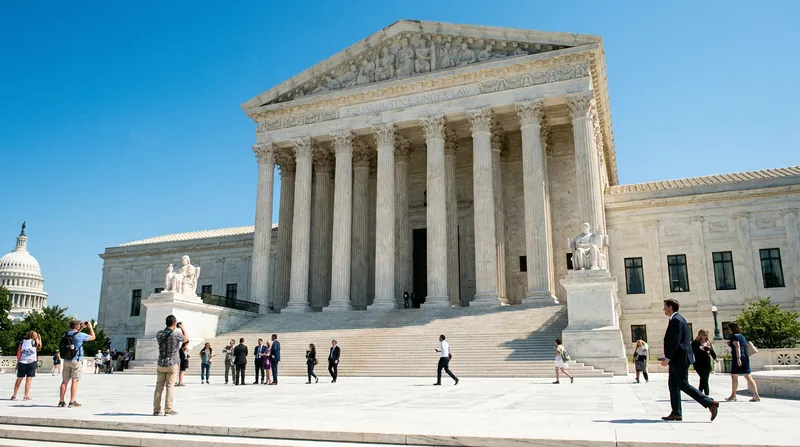
Supreme Court Rejects Trump Administration Bid to Restrict Transgender Inmate Medical Care
5 sources
Immigration Crackdown
State Department Cancels Over 300,000 Visas in Broad Trump Administration Immigration Crackdown
5 sources

Comments
Every angle. Every day.
Get News & Politics stories with full source coverage and perspective breakdowns, free every day.