
Global Weightlifting Injury Report: Yousefi Sets World Record in Return as Hutton and Murray Prepare for Glasgow
Iranian super-heavyweight Alireza Yousefi shattered a world record just a year after major knee surgery, headlining a wave of resilient weightlifting returns that includes UK lifters Josh Hutton and Chris Murray.

Share this story
The international weightlifting calendar is witnessing a remarkable wave of high-profile returns this summer, as several elite athletes mount successful comebacks from career-threatening injuries. In a sport defined by immense cumulative stress and the constant risk of traumatic joint failure, returning to the platform is often a multi-year psychological and physical battle. Yet, the mid-2026 season has been defined by lifters not just returning to competition, but actively breaking records and defending international titles.[4]
The most spectacular return belongs to Iranian super-heavyweight Alireza Yousefi. In early 2025, fresh off a bronze medal at the World Championships in Bahrain, the 22-year-old prodigy suffered a devastating right knee injury, tearing both a ligament and his meniscus. The injury required immediate surgery in Tehran and sidelined him for over a year, raising questions about his future in the +110kg division.[1]
However, Yousefi silenced any doubts at the 2026 Asian Weightlifting Championships in Gandhinagar, India. Competing under the guidance of coach Behdad Salimi, Yousefi managed a modest snatch performance before unleashing a historic clean and jerk. On his third attempt, he successfully hoisted 261 kilograms, surpassing the International Weightlifting Federation's standard world record of 260 kg for the newly reorganized super-heavyweight class. The lift secured him the gold in the clean and jerk and an overall silver medal, instantly re-establishing him as a global powerhouse.
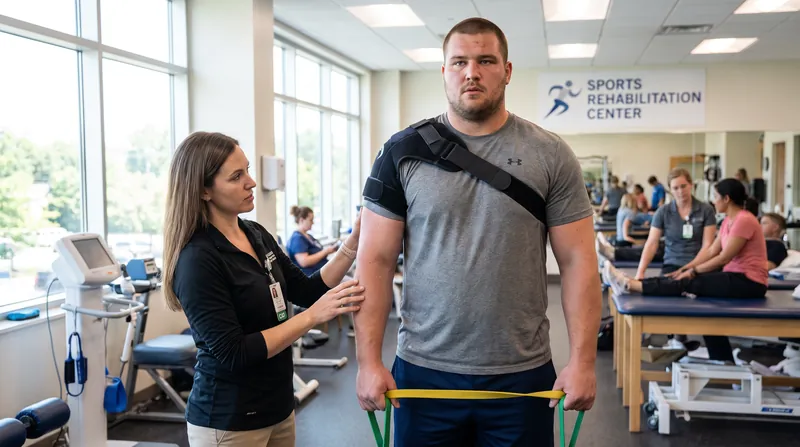
Sports medicine specialists note that weightlifting injuries typically fall into two categories: cumulative wear-and-tear and sudden traumatic events. While cumulative injuries like patellofemoral pain syndrome are common, traumatic ruptures—such as Yousefi's knee tear—often require specialized, highly structured return protocols. The psychological hurdle of stepping back under the barbell that caused the injury is frequently as challenging as the physical rehabilitation.[4]
That psychological battle is intimately familiar to British weightlifter Josh Hutton. Two years ago, while attempting to break his own record at the British University Championships, the North Shields native heard his anterior cruciate ligament (ACL) snap mid-lift. Facing an average 15-month wait for surgery through the NHS, which would have effectively erased two years of his competitive prime, Hutton resorted to crowdfunding to pay for private surgery and keep his athletic dreams alive.[2]
The gamble paid off. After a grueling rehabilitation process, Hutton returned to full strength last year and successfully navigated the qualifying series. Now 21, he is set to make his major international debut in the men's 94kg category at the 2026 Commonwealth Games in Glasgow. Hutton recently reflected on the persistent mental challenge of trusting his repaired knee under maximal loads, noting that athletes simply have to "shut out the voices" and trust the rehabilitation work they have put in.[2]
Hutton will be joined in Glasgow by compatriot Chris Murray, who is fighting his own battle against physical attrition. Murray, who set a Commonwealth record of 325 kg to win gold in the 81kg category in 2022, has endured an "injury-wrecked" quadrennial. Over the last four years, the 27-year-old has undergone two major surgeries to address severe shoulder and elbow issues, leaving him questioning whether he could ever return to the highest level.[3]
Despite the setbacks, Murray's love for the sport kept him anchored to his training regimen. He has timed his return to fitness meticulously for the Glasgow Games, where he aims to defend his title. His journey underscores the punishing reality of elite weightlifting, where a gold medal is rarely a springboard to easy dominance, but rather a peak that must be constantly defended against the body's own limitations.[3]
As the 2026 season progresses toward the World Championships in Ningbo, China, the landscape is being reshaped by these resilient veterans. Even Georgian legend Lasha Talakhadze, who soft-retired after the Paris Olympics, is reportedly preparing for a comeback at the upcoming European Championships. For fans and fellow competitors alike, these returns serve as a powerful reminder that in weightlifting, the greatest triumphs often occur long after the initial injury.[3]
The essentials
- Iranian super-heavyweight Alireza Yousefi returned from a year-long knee injury to set a 261 kg clean and jerk world record.
- UK weightlifter Josh Hutton will make his Commonwealth Games debut after crowdfunding private surgery for a torn ACL.
- Chris Murray is defending his 81kg Commonwealth title in Glasgow following two major shoulder and elbow surgeries.
- Sports medicine experts note that the psychological hurdle of returning to heavy lifts is often as difficult as the physical rehab.
Timeline
May 2024
Josh Hutton tears his ACL at the British University Championships and begins crowdfunding for private surgery.
December 2024
Alireza Yousefi wins a bronze medal at the World Weightlifting Championships in Bahrain.
January 2025
Yousefi undergoes surgery in Tehran for a torn ligament and meniscus in his right knee.
May 2026
Yousefi returns to the platform at the Asian Championships, setting a new clean and jerk world record.
July 2026
Hutton and Chris Murray prepare to compete at the Commonwealth Games in Glasgow after extensive injury rehabs.
- Rehabilitating Athletes
- Focuses on the grueling physical and psychological toll of returning to the platform after traumatic joint injuries.
- National Federations
- Emphasizes the strategic management of elite talent and the competitive impact of star athletes returning to secure international medals.
- Sports Medicine Specialists
- Analyzes the biomechanics of weightlifting injuries, distinguishing between cumulative wear-and-tear and sudden traumatic ruptures.
Perspectives this story doesn't cover
- Independent orthopedic surgeons unaffiliated with national teams
- Coaches managing the daily programming of athletes returning from major surgery
Sources
Source coverage
4 outlets
3 viewpoints surfaced




- [1]Tehran TimesNational Federations
Weightlifter Yousefi sidelined for six months
Read on Tehran Times → - [2]Herts AdvertiserRehabilitating Athletes
Josh Hutton returns from ACL injury for Commonwealth Games
Read on Herts Advertiser → - [3]Team EnglandRehabilitating Athletes
Chris Murray back to defend his title despite injury setbacks
Read on Team England → - [4]OriGymSports Medicine Specialists
Common Weightlifting Injuries (& How to Prevent Them!)
Read on OriGym →
More in Sports
See all →Injury
Global Weightlifting Injury Report: Kean Sidelined by Ankle Injury as Osei Battles Through Hamstring Tear
4 sources
Standings
Women's 81kg Global Standings: Koanda, Ahmed, and Dajomes Set for Historic Clash at the 2026 Ningbo World Championships
6 sources
IWF Youth Worlds
13-Year-Old Rory van Ulft Shatters World Records as Georgia Tops Medal Table at Youth Worlds
6 sources
Injury
Global Weightlifting Injury Report: Rogers Adapts Training as Connelly Vows Comeback Following Glasgow Withdrawal
5 sources
Comments
Every angle. Every day.
Get Sports stories with full source coverage and perspective breakdowns, free every day.