
Global Volleyball Injury Report: Ana Cristina Souza's Resilience and Casiey Dongallo's Road to Recovery
As global volleyball stars like Brazil's Ana Cristina Souza and the Philippines' Casiey Dongallo navigate grueling rehabilitations, advancements in sports medicine are turning season-ending injuries into stories of remarkable resilience. With return-to-play rates soaring, elite athletes are proving that major joint surgeries are no longer career death sentences.
By Omar Haddad
Share this story
The physical toll of elite volleyball is undeniable, with athletes subjecting their joints to immense biomechanical loads through constant jumping, diving, and lateral shifts. Yet, the narrative surrounding severe injuries in the sport is undergoing a profound transformation. Rather than signaling the end of a career, major joint surgeries are increasingly viewed as grueling but conquerable hurdles.
This shift is driven by rapid advancements in sports medicine and a growing cultural emphasis on the psychological resilience required to navigate months of rehabilitation. Across the globe, top-tier volleyball players are proving that with the right medical intervention and mental fortitude, returning to peak performance is not just possible, but expected.[2]
Brazilian national team outside hitter Ana Cristina Souza is currently living this reality. After suffering a second major injury setback that required a complicated surgery, the young star is steadily working her way back to the court. Her journey highlights the intense personal dedication required to overcome back-to-back physical traumas.
In a recent interview, Souza opened up about the grueling nature of her current rehab. "The most difficult part of my recovery process, I believe, was dealing with the pain," she explained, noting that her previous successful recovery gave her the blueprint to push forward. "I knew that I had come back very well from a previous injury, so the second time I believed I would return even stronger."
The prevalence of these injuries is deeply tied to the sport's mechanics. A comprehensive epidemiological study conducted by the Center for Sports and Physical Activity Studies (CEEAF) at the University of Vic analyzed over 1,800 volleyball injuries, finding that the ankle and knee are by far the most vulnerable joints.
According to the CEEAF researchers, 26.7% of injuries affect the ankle, while 12.4% impact the knee. The study noted that anterior cruciate ligament (ACL) tears were the most common injuries requiring surgical intervention, a direct result of the extreme torsional stress placed on the knee during landing and pivoting at the net.
Despite the severity of ACL tears, the prognosis for modern athletes is overwhelmingly positive. A recent study published in Taylor & Francis tracking NCAA Division I women's volleyball players found that an impressive 81.2% of athletes successfully returned to play after sustaining an ACL injury, effectively dispelling the myth that knee reconstruction permanently derails an athlete's trajectory.
That high success rate is a beacon of hope for players like Casiey Dongallo. The University of the Philippines Fighting Maroons standout suffered ACL and meniscus tears in her left knee during a UAAP Season 88 match in March, abruptly halting a stellar debut campaign.[1]
While the injury was devastating, Dongallo's response has been a masterclass in positivity. UP head coach Fabio Menta noted that despite the diagnosis, Dongallo has remained a vibrant, uplifting presence around the team, refusing to let the setback dampen her spirit.[1]
"She's in a great mood. I'm surprised she never felt the desperation," Menta said. "She came to the game, she comes to our training, still smiling." The team is highly optimistic that with dedicated rehabilitation, Dongallo could return to training by late December or January.[1]
The importance of organizational support during these long absences cannot be overstated. When Indy Ignite middle blocker Blake Mohler suffered a season-ending leg injury during the Major League Volleyball (MLV) season, the franchise immediately rallied around her to ensure she remained an integral part of the locker room.
Mohler was having a career-best season, ranking third in the league in kill percentage, before an awkward landing forced her onto the injured reserve list. Ignite head coach Lauren Bertolacci emphasized that the entire organization would support Mohler's recovery "every step of the way," highlighting her vital leadership role even while sidelined.
Across the globe, other top-tier athletes are hitting their own rehab milestones. Serbian national team and VakifBank outside hitter Katarina Dangubic recently underwent a successful knee surgery, beginning her own carefully managed recovery process with the full backing of her club and country.
Specialized return-to-play programs, such as the Sanford Health Athletic Readiness Program (SHARP), are helping athletes bridge the gap between medical clearance and full competitive confidence. These programs focus not just on physical healing, but on overcoming the lingering mental hesitation that often follows a traumatic joint injury, ensuring athletes trust their bodies again.[2]
Ultimately, the grueling isolation of the medical ward often forges stronger competitors. As Souza reflected on her journey, she emphasized that the ordeal shapes athletes far beyond the court. "Be determined to achieve your goals and never give up," she said. "I think that is what matters most. It shapes our lives, not only as athletes, but also as people."
The essentials
- Brazilian star Ana Cristina Souza is making steady progress in her second major rehab, emphasizing the importance of mental resilience.
- A University of Vic study confirms that ankle and knee injuries are the most common in volleyball due to the sport's heavy biomechanical load.
- Despite the severity of ACL tears, over 81% of female collegiate volleyball players successfully return to competition.
- UP Fighting Maroons standout Casiey Dongallo is maintaining a highly positive outlook following her season-ending knee injury.
- Clubs and franchises are increasingly prioritizing the emotional and psychological support of injured athletes during their long absences.
Timeline
March 2026
Indy Ignite star Blake Mohler and UP Fighting Maroons standout Casiey Dongallo both suffer severe, season-ending leg injuries.
May 2026
Serbian national team player Katarina Dangubic undergoes successful knee surgery to repair a torn ACL.
July 2026
Brazilian outside hitter Ana Cristina Souza shares an optimistic update on her grueling rehab journey, emphasizing mental resilience.
- Rehabilitating Athletes
- Highlights the psychological toll of long-term recovery and the importance of mental resilience.
- Medical Researchers
- Focuses on the biomechanical realities of volleyball and the high success rates of modern surgical interventions.
- Coaches and Club Management
- Focuses on supporting the injured player emotionally while adjusting team tactics to compensate for their absence.
Perspectives this story doesn't cover
- Physical Therapists
- Sports Psychologists
Sources
Source coverage
2 outlets
3 viewpoints surfaced


- [1]INQUIRER.netCoaches and Club Management
UAAP: UP's Casiey Dongallo out for season due to ACL, mensicus tears
Read on INQUIRER.net → - [2]Sanford HealthMedical Researchers
Volleyball player comes back stronger from knee surgery
Read on Sanford Health →
More in Sports
See all →Storyline
League One Volleyball Touches Down in SoCal: Los Angeles Orbit Officially Launches at Intuit Dome
6 sources
Preview
No. 7 Texas and No. 13 Tennessee Clash in High-Stakes SEC Volleyball Opener
6 sources
African Championship
Cameroon and Tunisia Set Up African Championship Final With LA 2028 Olympic Berth on the Line
5 sources
Net Mechanics
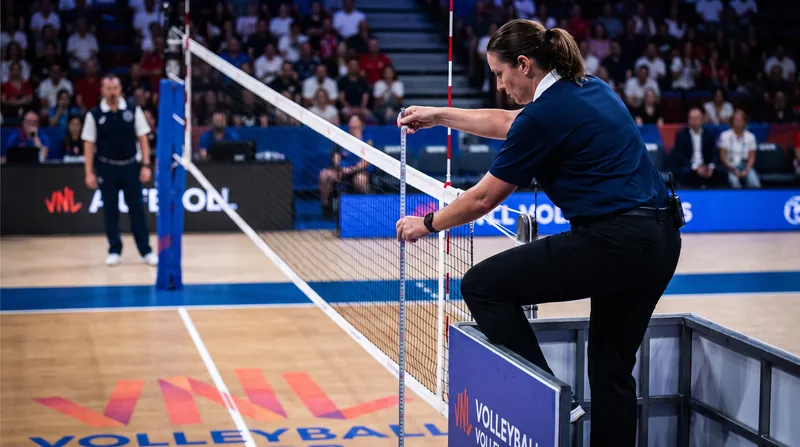
The 2.43-Meter and 2.24-Meter Heights That Dictate the Vertical Geometry of Global Volleyball
7 sources
Comments
Every angle. Every day.
Get Sports stories with full source coverage and perspective breakdowns, free every day.