
Global Fencing Injury Report: Lowthian's Post-Surgery Return, BenAvram's Wrist Battle, and the Toll of Overuse
As the 2026 fencing season intensifies, athletes like Trinity Lowthian and Lev BenAvram are navigating the delicate balance between injury recovery and elite competition. Meanwhile, new sports medicine data highlights the growing impact of overuse injuries on the piste.
By Ryder James
Share this story
The 2026 fencing season is testing the physical limits of the world’s top competitors. From the international World Cup circuit to the grueling NCAA championships, athletes are battling not just their opponents, but the cumulative toll of their own sport. Yet, the overriding theme of the season is resilience.
Across the globe, several high-profile fencers are making successful, gritty returns from the operating table and the rehabilitation room, proving that modern sports medicine and mental fortitude can overcome severe physical setbacks. These individual comebacks are occurring against a backdrop of new clinical research that is fundamentally reshaping how coaches and medical staffs approach training loads, injury prevention, and long-term athlete health.[2]
Canadian Para fencer Trinity Lowthian is one of the most prominent athletes navigating this delicate balance. Following a historic breakthrough at the 2024 Paris Paralympics—where she stunned the field to secure Canada’s best-ever finish in the sport—Lowthian’s momentum was interrupted by abdominal surgery in mid-2025. The procedure forced a sudden halt to her training, threatening to derail her highly anticipated follow-up season. However, rather than rushing a full-scale return, Lowthian and her medical team adopted a highly measured rehabilitation protocol, prioritizing long-term health over immediate competitive volume.[1]
Just one month post-surgery, Lowthian made a triumphant return to the piste at the Para Fencing World Championships in Iksan, South Korea. Operating on a significantly reduced training load, she still managed to secure a highly respectable ninth-place finish in the women’s epee B category.
To protect her body for the remainder of the 2026 season, Lowthian made the strategic decision to drop sabre from her repertoire and focus exclusively on epee. By sticking with the weapon she enjoys most, she noted that the streamlined focus allows her to manage her physical exertion while maintaining her elite global ranking.[1]
On the American collegiate circuit, Brandeis University senior Lev BenAvram delivered one of the most courageous performances of the year. During the NCAA Northeast Regional meet in early March, the standout sabre specialist suffered a severe wrist injury to his dominant arm.
The timing could not have been worse, striking just weeks before the national championships. Forced to completely abandon his weapon for a week of emergency rest and rehabilitation, BenAvram arrived at the NCAA National Collegiate Men's Fencing Championships at Notre Dame unable to properly warm up and fencing through visible, agonizing pain.
Despite the severe physical limitation, BenAvram relied on sheer tactical brilliance and distance control to compensate for his compromised blade work. He battled through the pain to post a remarkable 16-7 overall record, dropping several bouts by only a single touch to the tournament's eventual finalists. His gritty performance earned him a fifth-place overall finish and second-team All-America honors. Brandeis coaching staff credited his success entirely to his elite competitive mindset and a highly specialized, last-minute tactical plan devised to protect his injured wrist while still scoring touches.
Meanwhile, Columbia University senior Colby Harley finally saw the culmination of a grueling, multi-year rehabilitation process. After missing two consecutive postseasons due to a severe, long-term injury, the sabre fencer made an emotional return to the piste for the 2026 NCAA Northeast Regionals. Harley not only competed but excelled, securing a 10th-place finish that helped the Lions qualify their maximum roster for the national stage. His successful return serves as a testament to the patience required in fencing rehabilitation, where rushing back to the strip often results in catastrophic re-injury.
These individual battles underscore a broader medical reality within the sport. A pair of comprehensive 2026 studies published in PLOS ONE and The Physician and Sportsmedicine reveal that overuse injuries—rather than acute, sudden trauma—are the primary threat to elite fencers. The data shows that injury burden is most strongly associated with cumulative training exposure and years of experience. Fencers are essentially racing against the wear and tear of their own practice hours, making load management the single most critical factor in extending a competitive career.[2]
According to the clinical data, the sport’s asymmetric mechanical demands place immense, uneven stress on specific joints. The lower extremities bear the brunt of the damage, with the knee and ankle accounting for nearly 60 percent of all reported injuries. The dominant upper extremity is also highly susceptible, frequently suffering from tendonitis and tenosynovitis due to repetitive blade work. Sabre fencers, who rely on explosive, repetitive cutting motions and sudden changes of direction, exhibit the highest injury incidence rate across the three weapons, followed closely by epee and foil.[2]
Sports medicine professionals are rapidly adapting to these findings. At international events like the Senior World Cup, medical providers are increasingly focusing on real-time biomechanical adjustments. Chiropractors, physical therapists, and athletic trainers working with national teams are prioritizing immediate interventions—correcting minor muscular imbalances and taping vulnerable joints—to prevent small tweaks from escalating into structural failures. The consensus among medical staffs is that cross-training to correct the body's asymmetry is no longer optional, but a mandatory component of elite fencing.[4]
The Fédération Internationale d'Escrime (FIE) is also taking institutional steps to address the physical toll of the sport. The governing body has announced a dedicated Sports Medicine Conference to be held in conjunction with the 2026 World Senior Fencing Championships in Hong Kong. The summit will bring together international medical experts to discuss the latest innovations in injury prevention, rehabilitation, and athlete monitoring, signaling a global shift toward prioritizing fencer health and safety over sheer competitive output.[3]
The Fédération Internationale d'Escrime (FIE) is also taking institutional steps to address the physical toll of the sport.
Interestingly, while competitive fencing carries inherent injury risks, the sport's unique biomechanics are also being utilized for medical rehabilitation. The Italian Fencing Federation’s Pink Ribbon initiative has successfully integrated fencing exercises into the recovery process for women who have undergone breast cancer surgery. The program, which expanded to 40 clubs for the 2026 season, uses the sport's focus on posture, balance, and controlled movement to help survivors regain physical confidence and mobility, proving that the piste can be a place of profound healing.
For athletes like Lowthian, BenAvram, and Harley, the road back to the strip requires as much mental fortitude as physical healing. Their successful returns highlight a growing sophistication in fencing sports medicine, ensuring that major injuries are increasingly viewed as manageable setbacks rather than career-ending catastrophes. As the sport continues to evolve, the integration of advanced rehabilitation protocols and smarter training loads will be the key to keeping the world's best fencers healthy, competitive, and thriving on the global stage.[1][2]
The essentials
- Canadian Para fencer Trinity Lowthian successfully returned to the World Championships just one month after abdominal surgery.
- Brandeis senior Lev BenAvram secured All-America honors at the NCAA Championships despite fencing with a severe wrist injury.
- New 2026 sports medicine data reveals that overuse injuries to the lower extremities are the primary medical burden in elite fencing.
- Sabre fencers exhibit the highest injury incidence rate due to the weapon's explosive, repetitive cutting motions.
- The FIE is hosting a dedicated Sports Medicine Conference in Hong Kong to address athlete safety and injury prevention.
Timeline
Mid-2025
Trinity Lowthian undergoes abdominal surgery, disrupting her post-Paralympic training.
September 2025
Lowthian returns to the piste just one month post-surgery to compete at the World Championships in South Korea.
March 2026
Lev BenAvram suffers a severe wrist injury but battles through to a 5th-place finish at the NCAA Championships.
April 2026
New sports medicine data is published, highlighting the prevalence of overuse injuries in competitive fencing.
May 2026
The FIE announces its upcoming Sports Medicine Conference in Hong Kong to address athlete health.
- Sports Medicine Researchers
- Highlights the cumulative toll of asymmetric training and the need for biomechanical interventions.
- Rehabilitating Athletes
- Focuses on the mental resilience and strategic patience required to return to elite competition.
- Fencing Governing Bodies
- Prioritizes institutional safety protocols and the therapeutic applications of the sport.
Perspectives this story doesn't cover
- Local club coaches managing youth injury prevention
- Fencing equipment manufacturers designing safer gear
Sources
Source coverage
4 outlets
3 viewpoints surfaced




- [1]Paralympic.caRehabilitating Athletes
Trinity Lowthian balances sport and life after Paris 2024
Read on Paralympic.ca → - [2]The Physician and SportsmedicineSports Medicine Researchers
Training-related injury patterns and return-to-sports in elite fencing athletes
Read on The Physician and Sportsmedicine → - [3]Fédération Internationale d'Escrime (FIE)Fencing Governing Bodies
FIE Sports Medicine Conference 2026
Read on Fédération Internationale d'Escrime (FIE) → - [4]Defense Health AgencySports Medicine Researchers
Twentynine Palms chiropractor supports Team USA at fencing world cup in Egypt
Read on Defense Health Agency →
More in Sports
See all →Injury
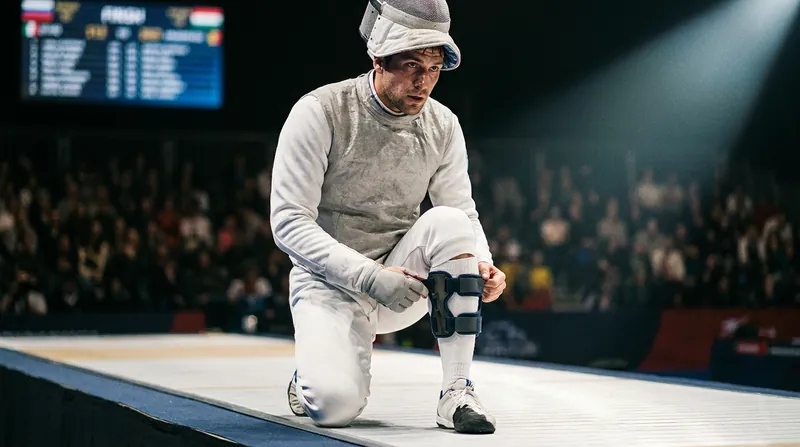
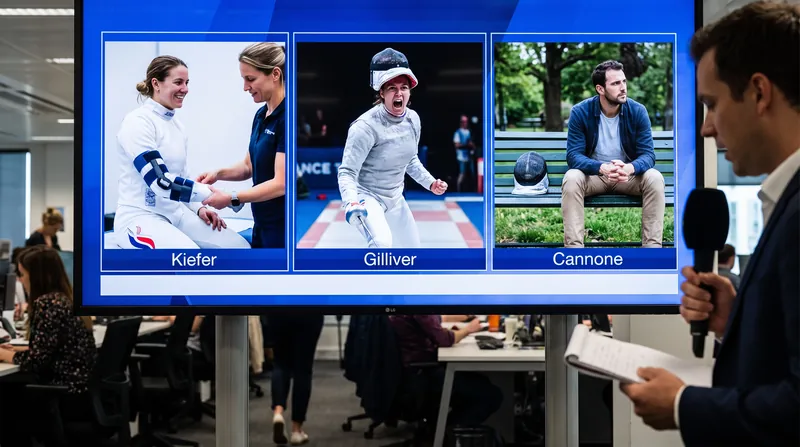
Global Fencing Injury Report: Kiefer's Recovery, Gilliver's Return, and Cannone's Mental Health Break
4 sources
Standings
Historic Gridlock in FIE Epee Standings Sets Up Winner-Takes-All World Championship Showdown
4 sources
Injury
French Fencing Star Ysaora Thibus Returns to the Piste After Knee Surgery and Legal Exoneration
4 sources
Injury
Fencing Injury Report: World Cup Absences Mount as FIE Launches New Safety Protocols
6 sources

Comments
Every angle. Every day.
Get Sports stories with full source coverage and perspective breakdowns, free every day.