
From Spinal Surgery to Lifetime Bests: How Swimmer Leo Kurucz Engineered an Impossible Comeback
After fracturing his vertebrae and undergoing major spinal surgery, former Mizzou swimmer Leo Kurucz spent nearly two years out of the pool before returning to clock three lifetime bests. His journey highlights the grueling, often hidden rehabilitation process elite aquatic athletes endure to reclaim their careers.
By Xia Wu

Share this story
For an elite swimmer, the water is a sanctuary. But for nearly a year, former University of Missouri swimmer Leo Kurucz was entirely exiled from it. During his freshman year, what started as a sharp pain during a weight room power clean cascaded into a catastrophic diagnosis: a slipped L4 disc and fractured L2 and L3 vertebrae.
Kurucz had attempted to push through the discomfort for seven months, a decision that ultimately compromised the structural stability of his spine. By August 2024, he was forced into a back brace, unable to even touch his toes, and his collegiate swimming career appeared to be over.[1]
The road back required a drastic intervention. In January 2025, Kurucz underwent major spinal surgery, during which doctors inserted two rods to stabilize his fractured vertebrae. For the next six months, he endured what he described as the hardest period of his life—a stretch of forced rest where his identity as a high-performance athlete was entirely suspended. The rods remained in his spine until July 2025, when his rapid biological healing allowed surgeons to remove them.[1]
By September 2025, Kurucz was finally cleared to return to the pool. What followed was a masterclass in disciplined rehabilitation. Rather than rushing to reclaim his former speed, he submitted to a slow, methodical reintegration. That patience yielded an extraordinary payoff: at the Speedo Sectionals in March 2026, after nearly two years away from full competition, Kurucz did not just finish his races. He clocked three lifetime bests, proving that his reconstructed spine could handle forces greater than it ever had before.[1]
Kurucz’s triumph is an extreme but illustrative example of a broader shift in aquatic sports medicine. Across the globe, elite swimmers and triathletes are returning from severe structural and surgical setbacks with unprecedented success. The secret lies in a fundamental change in how coaches and medical teams manage the delicate intersection of tissue tolerance and an athlete's competitive drive.[3]
Sports physiotherapists emphasize that perceived readiness is often a dangerous trap. An athlete might feel completely pain-free, but their newly healed tissues may only be capable of handling half of their pre-injury workload. When swimmers return to full training without a structured protocol, re-injury rates skyrocket. The most common pattern involves an athlete training well for a week or two, only to re-injure the exact same structure under a sudden spike in load, setting their timeline back even further.[2]
To combat this, modern rehabilitation relies on strict, phased reintegration. Phase one typically restricts athletes to technique-only work at 40 to 50 percent of their normal volume. Coaches forbid race-pace efforts or threshold sets, focusing entirely on body position and stroke efficiency. The rule is binary and unforgiving: if there is any pain during the session or in the 24 hours following it, the load is too high and must be reduced immediately.[2]
This rigorous approach recently powered another high-profile aquatic comeback. Reigning Ironman World Champion and elite swimmer Lucy Charles-Barclay underwent surgery in early 2026 to remove an enlarged plantaris tendon that was chronically irritating her Achilles. The standard recovery protocol called for six weeks in a medical moon boot. Instead, Charles-Barclay utilized her swimming background to fast-track her healing, using the pool to maintain her cardiovascular engine while protecting her surgical site.
Just four weeks after the operation, Charles-Barclay entered the Women’s 18 Years & Over Essex County Championships. Competing in the grueling 1500m freestyle, she dominated the field, taking first place with a time of 17:29.40. By May, she had returned to triathlon, winning Ironman Lanzarote by a staggering 26-minute margin. She credited her rapid return directly to the water, noting that pushing her swim training accelerated her overall tissue recovery.
The paradox of the pool is that while repetitive aquatic motion is responsible for widespread overuse injuries—such as the ubiquitous "swimmer's shoulder"—the water itself is the ultimate rehabilitation environment. Orthopedic specialists frequently prescribe aquatic therapy for athletes recovering from severe joint or spinal surgeries. The water's buoyancy significantly reduces joint loading, allowing athletes to move through a full range of motion without the destructive impact of gravity.[4]
Furthermore, hydrostatic pressure—the force exerted by the water on the submerged body—acts as a natural compressive wrap. This pressure helps reduce post-surgical swelling and improves blood circulation, which is vital for delivering oxygen and nutrients to healing tissues. The gentle, omnidirectional resistance of the water allows athletes to rebuild atrophied muscles safely, ensuring that the stabilizing structures around a repaired joint or spine are fortified before they ever bear full weight on land.[4]
Yet, the physical repair is only half the battle. The psychological hurdle of returning to the movement that caused the injury can be paralyzing. Kurucz admitted that he learned a valuable lesson about listening to his body's pain signals, a mindset shift that required him to abandon the "push through it" mentality that initially caused his fractures. Coaches and medical staff must actively manage this anxiety, communicating clearly at each phase of recovery to rebuild the athlete's trust in their own body.[1][2]
As Kurucz enters the NCAA transfer portal to find a new collegiate home for the fall of 2026, his resume now carries something far more valuable than just his lifetime bests. It carries the undeniable proof of his resilience. His journey from a fractured spine to peak performance serves as a powerful blueprint for athletes everywhere: with surgical precision, disciplined patience, and the healing power of the water, the human body can be rebuilt stronger than it was before.[1][3]
- Rehabilitating Athletes
- Focuses on the mental and physical toll of forced rest, the patience required for phased returns, and the triumph of exceeding pre-injury performance.
- Sports Physiotherapists
- Emphasizes strict reintegration protocols, tissue tolerance over perceived readiness, and the danger of re-injury without phased loading.
- Orthopedic Specialists
- Focuses on the surgical interventions, biological healing timelines, and the use of aquatic therapy for low-impact joint recovery.
Sources
Source coverage
4 outlets
3 viewpoints surfaced




- [1]SwimSwamRehabilitating Athletes
From Back Surgery to Lifetime Bests: Leo Kurucz's Comeback and Search For New College Home
Read on SwimSwam → - [2]PadlieSports Physiotherapists
The 4-phase reintegration protocol for swimmers
Read on Padlie → - [3]Aspetar Sports Medicine JournalOrthopedic Specialists
Managing the Senior Elite Swimmer
Read on Aspetar Sports Medicine Journal → - [4]Mid Atlantic Orthopedic AssociatesOrthopedic Specialists
Getting Back to Your Sport After Surgery
Read on Mid Atlantic Orthopedic Associates →
More in Sports
See all →Recap
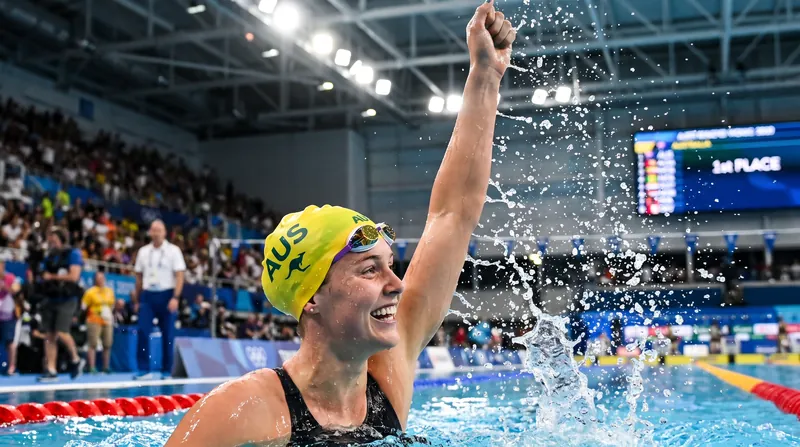
Indiana Dominates Inaugural College Swimming League Match 1 Behind Alex Shackell's MVP Performance
3 sources
Power ranking
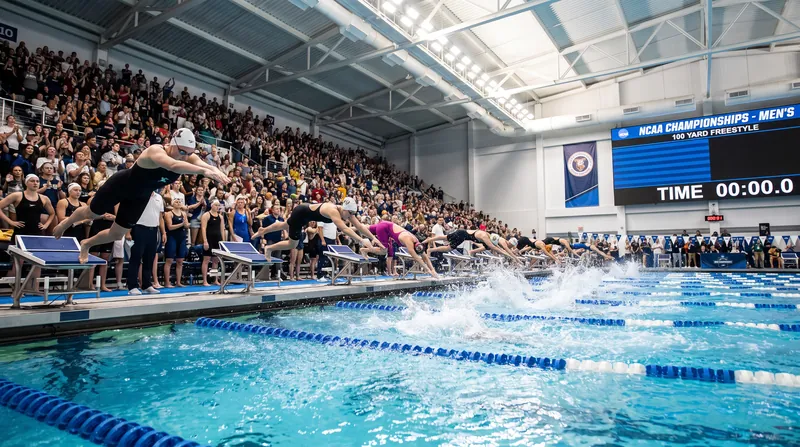
Global Men's 200 Freestyle Power Rankings: Zhang Zhanshuo Resets the Board With Historic 1:43.49
2 sources
Storyline
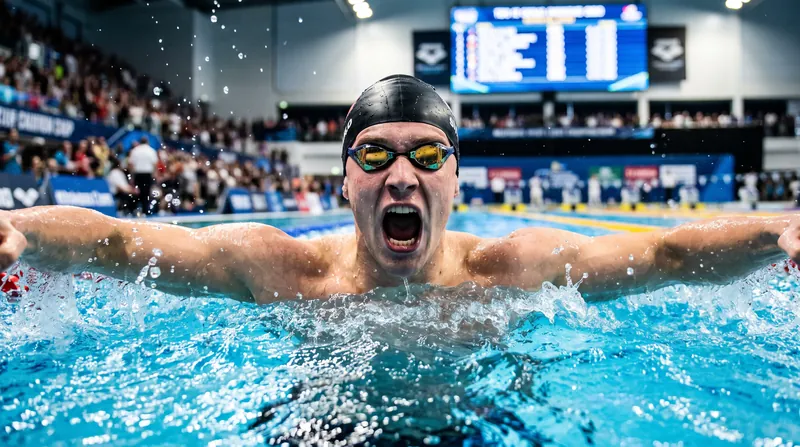
British Relay Team Smashes English Channel Record, Falls Three Minutes Short of 1990 World Mark
2 sources
Fluid Dynamics
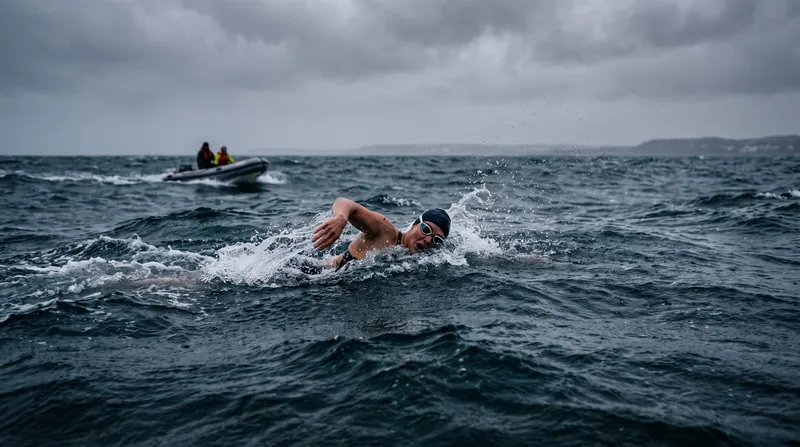
The 3-8mm Spacing: How Invisible Water Vortices Maximize Hand Propulsion in Swimming
7 sources
Comments
Every angle. Every day.
Get Sports stories with full source coverage and perspective breakdowns, free every day.