
Elite Swimmers Grousset and Lifintsev Outline Summer 2026 Recovery Timelines
French world champion Maxime Grousset and Russian backstroke phenom Miron Lifintsev are navigating divergent injury recovery paths, highlighting a modern focus on athlete longevity.
By Omar Haddad

Share this story
As the global swimming calendar heats up ahead of the summer 2026 championship season, the sport's top athletes are navigating the delicate balance between peak performance and physical preservation. High-volume training regimens, often requiring tens of thousands of repetitive strokes each week, inevitably take a toll on the human body. This week, two of the sport's brightest stars—France's Maxime Grousset and Russia's Miron Lifintsev—announced divergent recovery timelines for their respective injuries, highlighting a modern, athlete-first approach to aquatic sports medicine.[1][2]
Grousset, a double world champion in the 50-meter and 100-meter butterfly, is currently facing a race against the clock. Earlier this month, the 26-year-old sustained a fracture to the base of his second metatarsal while performing a dryland training jump. The untimely foot injury has officially ruled him out of the upcoming French Championships in St. Etienne, which serve as a critical domestic touchpoint from June 27 to July 2.[1]
Despite the setback, Grousset's medical team remains optimistic about a late-summer return. The Frenchman is aggressively rehabbing with the specific goal of competing at the European Aquatics Championships in Paris, scheduled for August 10 to 16. Returning to the Paris venue holds special significance for Grousset, who dominated the Giant Open there just three months prior, capturing three gold medals. His recovery protocol will likely involve extensive water-based therapy to maintain cardiovascular fitness while offloading the fractured metatarsal.[1]
While Grousset aims for a rapid turnaround, the Russian Aquatics Federation is taking a decidedly more conservative approach with 18-year-old backstroke phenom Miron Lifintsev. Lifintsev, who stunned the swimming world by clocking 51.78 in the 100-meter backstroke—making him the second-fastest performer in history behind only Italy's Thomas Ceccon—has officially withdrawn from the European Championships to focus entirely on shoulder rehabilitation.[2]
Lifintsev has been managing the after-effects of a shoulder injury sustained last season. According to Sergei Fesikov, head of the Russian Aquatics Federation's swimming directorate, the lingering discomfort has prevented the teenager from executing full training loads. Rather than risking further structural damage for a mid-summer medal, the coaching staff and medical specialists from the Federal Medical and Biological Agency opted to prioritize his long-term trajectory.[2]
"The recovery process will continue throughout this summer, with an optimistic return for the 2026 World Short Course Championships later this calendar year," Fesikov explained. The ultimate target for Lifintsev is arriving at the 2027 World Swimming Championships in peak health, setting a sturdy foundation for the 2028 Olympic cycle. This willingness to sacrifice immediate accolades for career longevity represents a significant cultural shift in elite swimming, where athletes were historically pressured to swim through the pain.[2]
The prevalence of shoulder injuries in the sport cannot be overstated. A March 2026 systematic review published in the journal Sports analyzed injury patterns across competitive swimming, confirming that the shoulder is by far the most frequently affected joint, largely due to the relentless overhead biomechanics of the freestyle and backstroke. The condition, ubiquitously known as "swimmer's shoulder," stems from subacromial impingement and rotator cuff fatigue, which destabilizes the shoulder blade over time.
Clinical experts note that these injuries rarely result from acute trauma; instead, they are the product of repetitive micro-trauma. Sports physiotherapists emphasize that poor stroke technique, sudden spikes in training volume, and inadequate recovery windows are the primary culprits. When the rotator cuff muscles become inflamed, the resulting pain can severely compromise stroke length and propulsion, turning a minor ache into a career-threatening chronic condition if ignored.[4]
To combat this epidemic of overuse injuries, governing bodies are investing heavily in preventative education. World Aquatics recently launched its 2026 Masters Education Programme, kicking off with a global webinar dedicated entirely to prehabilitation and shoulder health. Led by Dr. Nadine Day, a physician and Chair of the Masters Committee, the initiative focuses on integrating complementary dryland modalities—such as Pilates and targeted scapular stabilization—into daily training routines to bulletproof the joint before injuries occur.
For athletes currently in the trenches of rehabilitation, the landscape of successful comebacks offers plenty of inspiration. American butterfly specialist Luca Urlando recently made a triumphant return to the pool at the USA Swimming Pro Swim Series in Sacramento. After being forced to sit out the highly competitive NCAA Division I Championships in March due to an undisclosed injury, Urlando returned as the top seed in the 200-meter butterfly, proving that a forced hiatus does not permanently derail elite speed.[3]
Similarly, Australian backstroker Iona Anderson has demonstrated the profound benefits of a patient recovery. After suffering a debilitating back disc injury that required a lengthy period of total rest, the 20-year-old Olympic medalist spent months meticulously rebuilding her core strength and gradually reintroducing pool loads. Her discipline paid off spectacularly when she returned to competition, clocking a sub-minute 100-meter backstroke (59.92) and firmly placing the 2026 Commonwealth Games in Glasgow back on her radar.
As Grousset and Lifintsev navigate their respective recovery journeys, their stories underscore a broader evolution in aquatic sports. The modern elite swimmer is supported by a multidisciplinary team of biomechanists, physiotherapists, and data analysts who understand that rest is a weapon, not a weakness. By embracing comprehensive rehabilitation protocols, today's champions are ensuring that their time at the top of the podium is measured in decades, rather than seasons.[1][2]
Key points
- Maxime Grousset fractured his foot in June 2026 but hopes to recover in time for the European Aquatics Championships in August.
- Miron Lifintsev, the second-fastest 100m backstroker ever, will skip the European Championships to focus on long-term shoulder rehabilitation.
- The Russian Aquatics Federation is prioritizing Lifintsev's health for the 2027 World Championships and 2028 Olympics over immediate medals.
- World Aquatics is actively promoting prehabilitation and dryland training to combat the high prevalence of swimmer's shoulder.
- Successful comebacks by athletes like Luca Urlando and Iona Anderson highlight the benefits of patient, structured injury recovery.
How we got here
Last Season
Miron Lifintsev sustains a shoulder injury but continues to compete, eventually clocking the second-fastest 100m backstroke in history.
March 2026
Luca Urlando misses the NCAA Division I Championships due to an undisclosed injury.
May 2026
Urlando makes a successful return to competition at the Pro Swim Series in Sacramento.
June 2026
Maxime Grousset fractures his foot during a dryland training jump, ruling him out of the French Championships.
June 22, 2026
The Russian Aquatics Federation announces Lifintsev will skip the European Championships to focus on long-term shoulder rehab.
August 2026
Grousset aims to return to the pool for the European Aquatics Championships in Paris.
- Sports Medicine Professionals
- Emphasize long-term joint health, biomechanical correction, and strategic rest over rushing back for immediate competitions.
- National Swimming Federations
- Balance the desire for international medals with the responsibility of protecting their athletes' Olympic longevity.
- Elite Athletes
- Navigate the psychological and physical challenges of rehabilitation, maintaining cardiovascular fitness while offloading injured areas.
Perspectives this story doesn't cover
- Sponsors and equipment manufacturers who rely on star athletes' visibility during major summer broadcast events.
Sources
Source coverage
4 outlets
3 viewpoints surfaced




- [1]European AquaticsNational Swimming Federations
Douglass beats Sjostrom's world 50m freestyle record as Grousset set for Paris 2026 recovery race after breaking foot
Read on European Aquatics → - [2]SwimSwamNational Swimming Federations
Miron Lifintsev, 2nd Fastest 100 Backstroker Ever, to Miss European Champs Due to Shoulder Rehab
Read on SwimSwam → - [3]Olympics.comElite Athletes
Ryan Murphy set for comeback at 2026 USA Swimming Pro Swim Series in Sacramento
Read on Olympics.com → - [4]CP ClinicSports Medicine Professionals
Swimming Injuries: Causes, Prevention, and When to Seek Treatment
Read on CP Clinic →
More in Sports
See all →Recap
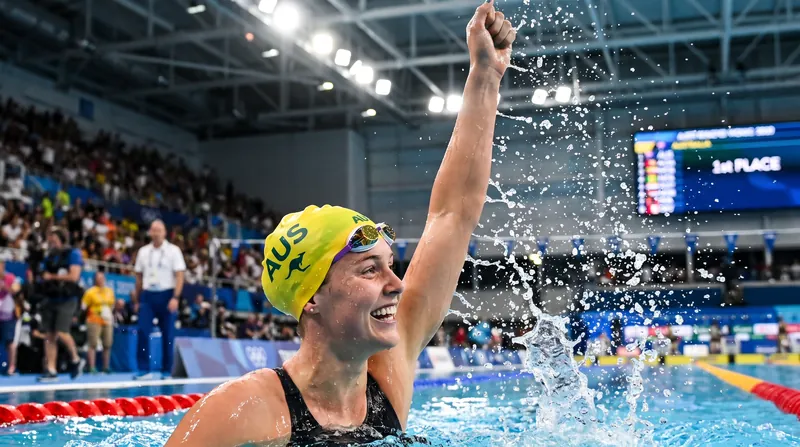
Ludovica Terlizzi and Mate Karpati Capture 10km Titles at Junior Open Water World Championships
7 sources
Power ranking
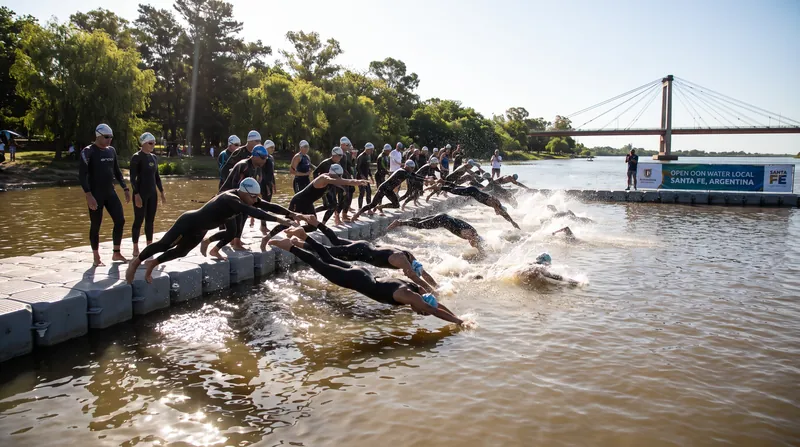
Global Women's Backstroke Power Rankings: Berkoff and Smith Set the Standard as Short Course Season Looms
5 sources
Power ranking
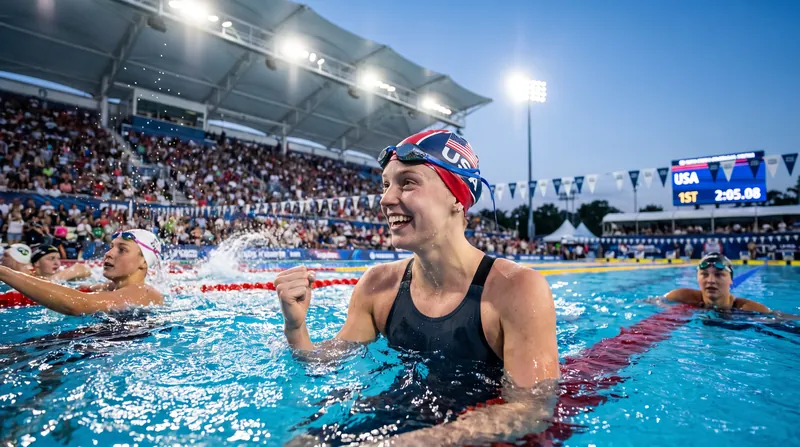
Global Men's Sprint Freestyle Power Rankings: Alexy and Jack Ignite a New US-Australia Rivalry
3 sources
Standings
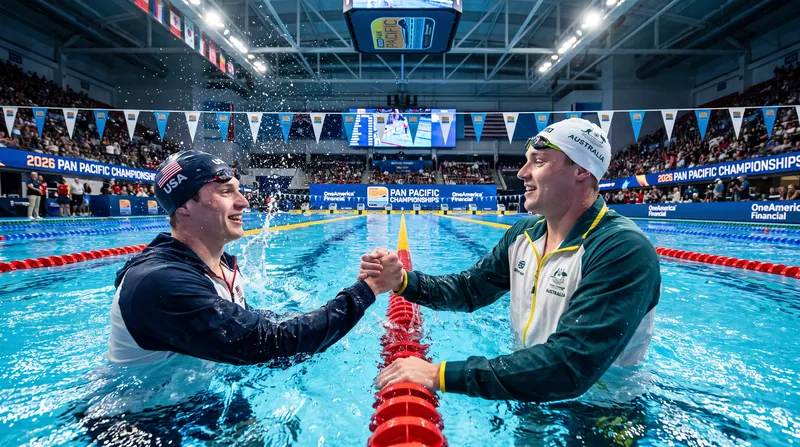
Global Distance Freestyle Standings Upended: Liebmann Demolishes 1500m World Record as Short Dominates Pan Pacs
5 sources
Comments
Every angle. Every day.
Get Sports stories with full source coverage and perspective breakdowns, free every day.