
Erling Haaland Scores Late Winner as Norway Claims Historic First World Cup Knockout Victory
Erling Haaland's 88th-minute strike secured a 1-0 victory over Ivory Coast in the Round of 32, marking Norway's first-ever knockout stage win at a men's FIFA World Cup.
By Jackson Reed

Share this story
Erling Haaland cemented his legacy in Norwegian sporting history on Tuesday evening, delivering an 88th-minute strike to secure a 1-0 victory over Ivory Coast in the FIFA World Cup Round of 32. The tense, tightly contested match at the 2026 tournament appeared destined for extra time before the Manchester City striker found a sliver of space inside the penalty area.
Latching onto a precise through-ball, Haaland fired a low, powerful shot past the outstretched arms of the Ivorian goalkeeper, sending the traveling Norwegian supporters into absolute delirium and breaking a deadlock that had persisted for nearly an hour and a half. The sheer relief was palpable across the stadium as the ball struck the back of the net.[1][2]
The victory marks a monumental milestone for the Scandinavian nation: it is the first time the Norway men's national team has ever won a knockout stage match at a FIFA World Cup. Having not even qualified for the global tournament since 1998 in France, the sheer scale of the achievement resonated deeply back home.
In Oslo, thousands of fans gathered at outdoor viewing parties erupted as the final whistle blew, celebrating the realization of a dream that had eluded multiple generations of Norwegian footballers. Flares lit up the night sky in the capital, and streets were flooded with supporters draped in red, white, and blue, marking a cultural moment that transcends the sport itself.
The decisive moment was a masterclass in patience and execution from Norway's two biggest stars, who have carried the nation's hopes for years. Arsenal midfielder and national team captain Martin Ødegaard, who had been heavily marked and physically battered throughout the evening, finally found a pocket of space in the dying moments of regulation.
Ødegaard threaded a perfectly weighted pass through a narrow corridor in the Ivorian defense, perfectly anticipating Haaland's explosive run off the shoulder of the last defender. The finish was trademark Haaland—clinical, ruthless, and struck with a velocity that left the defense with absolutely no time to react, showcasing exactly why he is feared by defenders globally.[2]
Following the historic result, Norway head coach Ståle Solbakken was effusive in his praise for his talismanic forward. Acknowledging the immense pressure on his squad to deliver on the world stage, Solbakken highlighted Haaland's unique ability to change a game in a fraction of a second, even when starved of service.
"He is the greatest goalscorer in the world, and I wouldn't swap him for anybody," Solbakken told reporters during his post-match press conference. The manager emphasized that while the team possesses a highly capable supporting cast that worked tirelessly off the ball, having a generational finisher provides a distinct psychological edge in tight, low-scoring knockout fixtures where chances are at a premium.[1]
For Ivory Coast, the late concession was a heartbreaking conclusion to what had been a tactically brilliant performance. The Elephants executed a highly disciplined defensive game plan, deploying a compact low block that frustrated Norway's attacking rhythms for 87 grueling minutes.
Ivorian defenders consistently intercepted key passes, won aerial duels, and physically challenged Haaland, limiting his touches in dangerous areas to a bare minimum. The West African side also posed a persistent threat on the counter-attack, utilizing their pace on the wings to force the Norwegian defense into several desperate, last-ditch clearances during a tense second half where the game hung in the balance.
French and Ivorian sports media praised the immense resilience of the Elephants, noting that they fell "with honors" against one of the tournament's most feared attacking duos. The tactical battle was largely defined by Ivory Coast's successful neutralization of the midfield, forcing Norway to rely on wide areas and hopeful crosses that were easily dealt with by the towering Ivorian center-backs.
It took a momentary lapse in concentration—a split-second where the defensive line lost its shape—and a moment of world-class individual brilliance to undo nearly 90 minutes of flawless defensive execution. The Ivorian players collapsed to the turf at the final whistle, a testament to the physical and emotional toll of the encounter.
The triumph serves as the ultimate validation for Norway's heralded "golden generation," a group of players who have carried the weight of immense national expectations for the past half-decade. For years, domestic and international critics questioned whether the individual brilliance of players like Haaland and Ødegaard could seamlessly translate into collective success on the grandest international stage.
By navigating a grueling group stage and surviving a tense, high-stakes knockout test against a formidable opponent, the squad has definitively answered those doubts. They have proven they possess the mental fortitude and tactical maturity required to grind out results in the unforgiving environment of tournament football.
As the celebrations stretch into the night across Norway and within the team's base camp, the squad must quickly pivot their focus to the upcoming Round of 16. The historic victory not only extends their stay in North America but also sends a clear warning to the remaining contenders in the bracket: Norway is no longer just a team with a superstar striker, but a cohesive, resilient unit capable of winning ugly when necessary.
With the immense pressure of securing that elusive first knockout win now permanently lifted from their shoulders, Solbakken's men march forward with nothing to lose, carrying the momentum of a nation entirely united behind their historic run.[2]
Key points
- Erling Haaland scored in the 88th minute to give Norway a 1-0 victory over Ivory Coast.
- The win marks the first men's World Cup knockout stage victory in Norway's history.
- Ivory Coast deployed a highly disciplined defense that frustrated Norway for most of the match.
- Norway advances to the Round of 16, continuing their historic run in the 2026 tournament.
How we got here
1998
Norway makes its last appearance at a men's FIFA World Cup before the 2026 tournament.
2020-2024
The emergence of a 'golden generation' led by Erling Haaland and Martin Ødegaard raises national expectations.
June 2026
Norway successfully navigates the World Cup group stage to reach the knockout rounds.
June 30, 2026
Haaland scores an 88th-minute winner against Ivory Coast to secure Norway's first-ever knockout win.
- Norwegian Supporters & Media
- Celebrating the historic milestone and the fulfillment of the golden generation's promise.
- Ivorian Supporters & Media
- Proud of the team's tactical discipline and defensive resilience despite the heartbreaking late goal.
- Neutral Tactical Analysts
- Focused on how Norway's patience and individual brilliance eventually broke down a flawless low block.
Perspectives this story doesn't cover
- Traveling Ivorian supporters who made the journey to North America
- Grassroots Norwegian coaches who developed the current generation
Sources
Source coverage
2 outlets
3 viewpoints surfaced


- [1]ESPNNeutral Tactical Analysts
Haaland, 'the greatest goalscorer,' saves Norway
Read on ESPN → - [2]BBC SportNeutral Tactical Analysts
Arias strike sends Colombia into last 16 with victory over Ghana
Read on BBC Sport →
More in Sports
See all →Executive Compensation
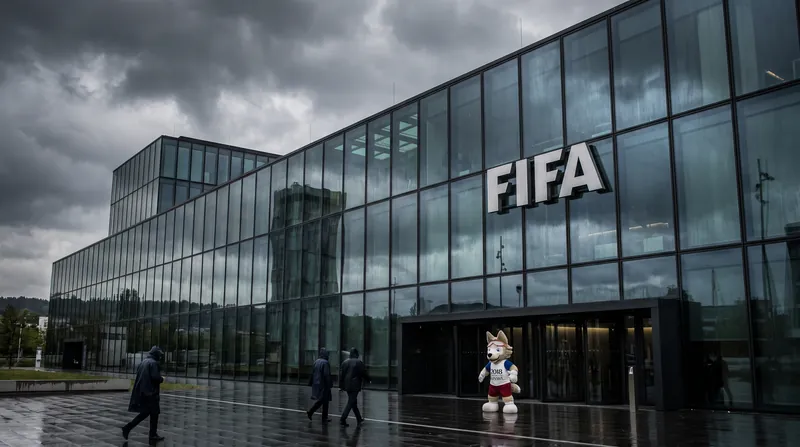
US Filings Reveal Undisclosed $1.76 Million World Cup Payment to FIFA President
4 sources
Pitch Geometry
Enforcing Law 14's 9.15-Metre Buffer: Why Soccer's Penalty Arc Extends Four Yards Beyond the Box
4 sources
Nations League
Can Turkey Finally Break Their Winless Curse Against Italy in Nations League Clash?
6 sources
Nations League
France and Belgium Face Early Nations League Test Without Mbappé and Courtois
5 sources
Comments
Every angle. Every day.
Get Sports stories with full source coverage and perspective breakdowns, free every day.