
Chess Injury Report: Firouzja's Bedside Matches, the Paris Heatwave, and the Physical Toll of the Board
A wave of medical withdrawals and environmental hazards has reshaped the 2026 elite chess season, highlighted by Alireza Firouzja playing from his hotel bed with a sprained ankle and the cancellation of the Paris Masters due to extreme heat.
Share this story
While chess is universally recognized as the ultimate test of cognitive endurance, the physical realities of the sport are often underestimated by casual observers. The 2026 competitive season has starkly highlighted this mind-body connection, as the global chess calendar has been repeatedly reshaped by a wave of health-related withdrawals, medical emergencies, and remarkable displays of physical resilience.
From sprained ankles that severely limit mobility to the cumulative mental fatigue that leads to burnout, elite grandmasters are proving that they are just as susceptible to the physical toll of their profession as athletes in traditional physical sports. The stamina required to sit at a board, calculate complex variations, and manage intense psychological pressure for six to eight hours a day demands peak physical conditioning, making any localized pain or illness a significant competitive handicap.[1][2]
The most dramatic medical saga of the current year belongs to world number five Alireza Firouzja. During the prestigious Super Chess Classic Romania in May, the 22-year-old French-Iranian prodigy suffered an unexplained, severe ankle injury just after the third round of the grueling classical event. The injury left him entirely unable to put weight on his foot, presenting a unique logistical and physical challenge.
Rather than immediately withdrawing and abandoning the $475,000 tournament, Firouzja attempted to play through the agonizing pain in a display of sheer willpower that captivated the chess world. His decision to continue fighting despite the physical limitation underscored the intense dedication required at the absolute pinnacle of the Grand Chess Tour.[1][2]
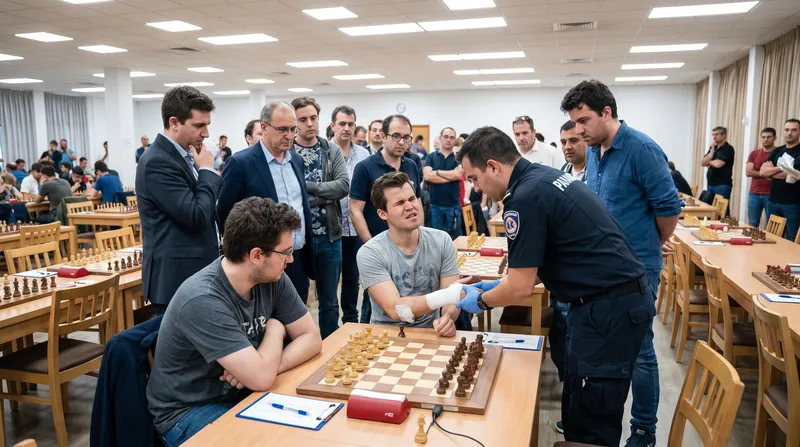
In a scene reminiscent of English grandmaster Tony Miles famously playing from a massage table in 1985 due to severe back pain, Firouzja was granted special medical permission by the Grand Chess Tour organizers to play his fifth-round match against Javokhir Sindarov from his hotel bed.
Photographs of the event showed Firouzja lying sideways, his injured ankle elevated, staring intently at a board set up in his room. Despite the highly unorthodox and uncomfortable playing conditions, Firouzja managed to salvage a draw from a demonstrably lost position. The resilience required to calculate deep endgame variations while managing acute physical pain earned him widespread praise from commentators and fellow players alike.[2]
However, the physical strain of the injury ultimately proved too immense to sustain over a full classical tournament. After losing a rescheduled fourth-round match to Fabiano Caruana—a game also played from his hotel room while wearing a heavy protective medical boot—Firouzja officially withdrew from the Bucharest event. He departed with a score of one point out of five games.
Grand Chess Tour officials released a statement thanking Firouzja for his extraordinary efforts to continue competing despite the severe injury, wishing him a speedy recovery. Because he had completed exactly half of his scheduled games, FIDE regulations dictated that his remaining opponents, beginning with Vincent Keymer, would receive forfeit wins rather than having the previous results annulled.[1][2]
Firouzja’s mid-tournament withdrawal sparked a fascinating debate within the broader chess community regarding pain tolerance and sporting duty. While many fans, medical professionals, and fellow grandmasters defended his decision—citing the intense physical discomfort of a grade-two sprain during hours of sedentary, high-stakes calculation—traditionalists offered a harsher critique.
On competitive forums and social media platforms, some traditional competitors argued that a professional should endure a non-catastrophic injury at the board. They contended that because chess does not require dynamic physical movement, players should simply elevate the injury, apply ice, and play through the pain, viewing the withdrawal as a breach of resilience.[5]
Despite the setback in Romania and the ensuing online debate, Firouzja’s recovery and subsequent return to the board were remarkably swift and undeniably triumphant. Just days after his medical withdrawal, he traveled to Oslo to compete in the Norway Chess tournament.
Still playing through lingering pain and a noticeable limp, Firouzja delivered a stunning upset in the opening round, defeating world number one Magnus Carlsen in classical chess for the very first time in his career. The victory served as a powerful testament to his resilience, proving that his cognitive brilliance remained entirely intact even as his body was still healing from the trauma of the previous week.[3]
Beyond Firouzja’s acute physical injury, the recent chess calendar has seen other prominent figures step away from the board to proactively manage their health. In Azerbaijan, veteran grandmaster Teimour Radjabov was forced to withdraw from the National Chess Championship due to undisclosed medical issues.
Beyond Firouzja’s acute physical injury, the recent chess calendar has seen other prominent figures step away from the board to proactively manage their health.
The 37-year-old formally addressed the tournament's chief referee and organizing committee, requesting an excusable withdrawal just before his scheduled third-place match against Misratdin Iskandarov. Radjabov's decision to forfeit a guaranteed podium finish rather than risk further health complications highlights a modern, health-first approach to a notoriously grueling profession.[4]
The physical dangers of the sport are not limited to individual ailments; environmental factors have also forced unprecedented medical interventions this season. In July 2026, the Paris Masters Championship was abruptly canceled after the French capital was placed under a Red Heatwave Alert.
With outdoor temperatures soaring to 40 degrees Celsius (104 degrees Fahrenheit), the Paris Police Prefecture banned all sporting competitions to protect public health. Recognizing that subjecting chess players to intense heat for prolonged hours in an uncooled facility posed a severe risk of heatstroke and cognitive collapse, organizers fully refunded entry fees and prioritized the safety of the competitors over the completion of the event.
Together, these incidents highlight a vital and growing recognition of the mind-body connection in elite chess. As modern tournaments increasingly resemble endurance marathons—where a single momentary lapse in concentration can ruin weeks of preparation—the stamina required to maintain peak cognitive function demands absolute physical health and safe playing environments. For players like Firouzja and Radjabov, and for organizers facing extreme weather, managing physical well-being and safe conditions has become just as critical to the sport's survival as opening preparation and endgame technique.[1][4]
Key points
- Alireza Firouzja suffered a severe ankle sprain during the Super Chess Classic Romania but remarkably played two rounds from his hotel bed before withdrawing.
- Just days after his medical withdrawal, Firouzja returned at Norway Chess and defeated world number one Magnus Carlsen while playing through pain.
- Veteran grandmaster Teimour Radjabov withdrew from the Azerbaijani National Championship due to undisclosed health issues, forfeiting a podium finish.
- The Paris Masters Championship was abruptly canceled in July 2026 due to a severe heatwave, as organizers prioritized player safety over uncooled tournament conditions.
How we got here
February 2025
Teimour Radjabov withdraws from the Azerbaijani National Championship due to health issues.
May 2026
Alireza Firouzja suffers an ankle injury at the Super Chess Classic Romania.
May 2026
Firouzja plays two rounds from his hotel bed before officially withdrawing from the tournament.
Late May 2026
Firouzja returns at Norway Chess, defeating Magnus Carlsen while playing through pain.
July 2026
The Paris Masters Championship is canceled due to a severe heatwave to protect player health.
- Player Welfare Advocates
- Argue that elite chess is an endurance sport and players must prioritize their physical and mental health over tournament obligations.
- Tournament Organizers
- Focus on maintaining event integrity and accommodating injured players when possible, while managing the logistical fallout of mid-event withdrawals.
- Traditional Competitors
- Believe that unless an injury is catastrophic, professionals should play through the pain, viewing withdrawals as a breach of sporting duty.
Perspectives this story doesn't cover
- Sports Medicine Physicians
- Tournament Arbiters
Sources
Source coverage
5 outlets
3 viewpoints surfaced





- [1]Chess.comPlayer Welfare Advocates
Alireza Firouzja Withdraws From Super Chess Classic Romania
Read on Chess.com → - [2]ChessBasePlayer Welfare Advocates
Alireza Firouzja withdraws from Super Chess Classic Romania 2026
Read on ChessBase → - [3]The GuardianTournament Organizers
Uruguay slump to shock early World Cup exit after Baena strike sends Spain through
Read on The Guardian → - [4]Idman.bizPlayer Welfare Advocates
Teimour Radjabov faces health issues, withdraws from National Chess Championship
Read on Idman.biz → - [5]r/chess CommunityTraditional Competitors
r/chess discussions on Firouzja's withdrawal
Read on r/chess Community →
More in Sports
See all →Standings
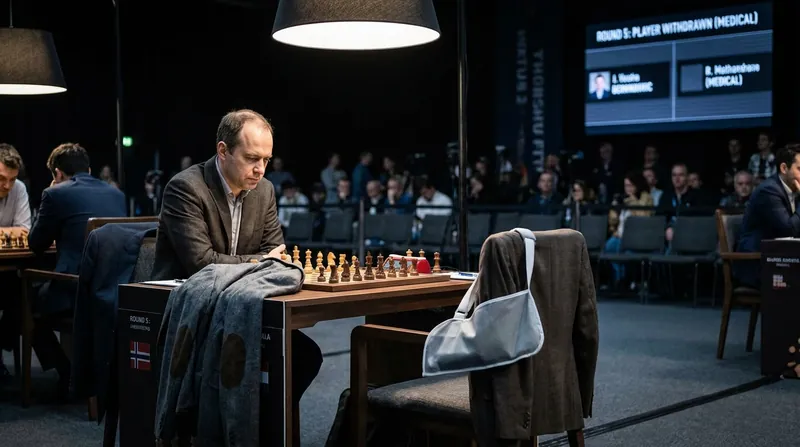
Praggnanandhaa Surges to Second in Grand Chess Tour Standings as Finals Race Heats Up
4 sources
Standings
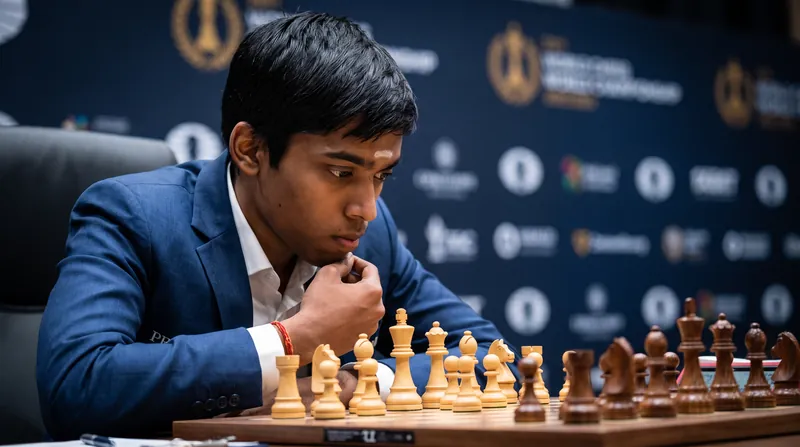
United States Tops Record 400-Team Field in 2026 Chess Olympiad Seedings as Hans Niemann Makes Debut
6 sources
Injury
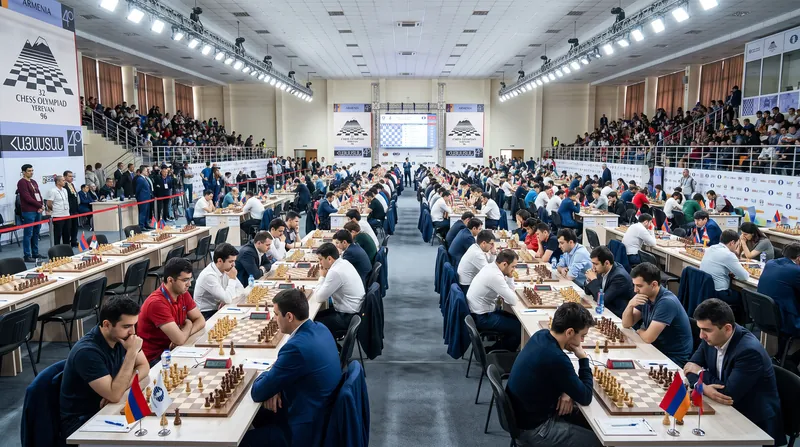
Chess Injury Report: Nakamura Cleared for Speed Chess Championship as Giri Targets Sinquefield Cup Return
2 sources
Standings
Bibisara Assaubayeva Holds Commanding Lead in FIDE Women's Circuit Standings as Race for 2028 Candidates Heats Up
3 sources
Comments
Every angle. Every day.
Get Sports stories with full source coverage and perspective breakdowns, free every day.