
Celebrity-Backed 'Peace for All' Initiative Hits $19 Million Milestone for Global Refugee Support
A global charity apparel project supported by Ke Huy Quan and Cate Blanchett has raised 3 billion yen to fund humanitarian aid and displaced filmmakers.
By Joao Marques
Share this story
In late June 2026, the global "Peace for All" charity initiative reached a historic philanthropic milestone, surpassing 3 billion yen (roughly $19 million) in total donations. The project, which leverages the massive scale of international retail to fund humanitarian causes, has quietly become one of the most successful ongoing charity campaigns in the apparel industry.
The mechanism driving this massive fundraising effort is remarkably straightforward. Since its launch in 2022, the initiative has sold specially designed graphic T-shirts to consumers worldwide, with 100 percent of the profits directed to international humanitarian organizations. To date, more than 10 million of these shirts have been purchased globally.
The June 2026 expansion of the project features new designs contributed by major entertainment figures, including Academy Award-winning actor Ke Huy Quan and acclaimed director Sofia Coppola. They join a sprawling roster of previous collaborators that includes tennis legend Roger Federer, architect Tadao Ando, and novelist Haruki Murakami.[1]
For Ke Huy Quan, the involvement carries a profound personal resonance. Having fled Vietnam as a child and lived in a refugee camp in Hong Kong before relocating to the United States, his participation highlights the immense human potential that can be unlocked when displaced individuals are provided with safety, resources, and opportunity.[1]
A significant portion of the newly generated funds is being directed to the Displacement Film Fund (DFF), an initiative co-created by actor and UNHCR Goodwill Ambassador Cate Blanchett. The DFF was established to address a critical resource gap in the global entertainment industry by providing direct financial backing to artists who have experienced forced displacement.[2]
The DFF champions filmmakers who have been driven from their home countries, ensuring they have the capital and industry support necessary to tell their own stories. This structural shift moves the industry away from narratives about refugees told by outsiders, empowering displaced creators to control their own cinematic representation.[2]
The fund's impact is already highly tangible. Earlier in 2026, the DFF fully supported the production of five short films directed by artists originally from Ukraine, Somalia, Syria, Iran, and Afghanistan. These films premiered to critical acclaim at the International Film Festival Rotterdam, proving the artistic viability of the initiative.[2]
Beyond the arts, the bulk of the $19 million raised continues to support critical frontline humanitarian work. The profits are distributed among major global organizations, primarily the United Nations High Commissioner for Refugees (UNHCR), Save the Children, and Plan International.[2]
These organizations rely heavily on this type of unrestricted funding to deliver life-saving emergency assistance, safeguard fundamental human rights, and develop long-term educational and housing solutions for stateless populations worldwide. Unrestricted funds allow aid groups to pivot immediately when new global crises emerge.[2]
Retail and philanthropy analysts note that this 3 billion yen milestone firmly validates the "everyday philanthropy" model. By integrating charitable giving into accessible, low-cost consumer purchases, the campaign effectively democratizes the act of fundraising on a global scale.
This approach stands in stark contrast to traditional celebrity charity galas, which typically raise funds behind closed doors among the ultra-wealthy. Instead of relying on a few massive checks from billionaires, this model allows everyday fans and consumers to participate directly alongside global icons.[1]
As the initiative crosses the 10 million shirt mark, it demonstrates that sustained, high-volume consumer engagement can generate philanthropic endowments that rival traditional foundation grants. It offers a highly scalable, replicable blueprint for future celebrity-backed activism.
The success of the DFF specifically highlights a growing movement within Hollywood to leverage celebrity influence not just for raising awareness, but for providing structural economic support to marginalized creators who lack access to traditional studio financing.[1]
By funding the actual production of films rather than merely hosting charity screenings, Blanchett, Quan, and their partners are actively reshaping who gets to participate in the global cultural conversation, ensuring that the voices of the displaced are heard on the world stage.
Key points
- The 'Peace for All' charity initiative surpassed 3 billion yen ($19 million) in donations by June 2026.
- Over 10 million graphic T-shirts have been sold globally since the project's launch in 2022.
- New 2026 designs feature contributions from Academy Award winner Ke Huy Quan and director Sofia Coppola.
- Funds directly support the UNHCR, Save the Children, and the Cate Blanchett-backed Displacement Film Fund.
Open questions
- It remains to be seen if the Displacement Film Fund will expand to finance feature-length projects for refugee filmmakers.
- The exact percentage breakdown of how the 3 billion yen is divided among the partner organizations has not been fully detailed.
Timeline
2022
The Peace for All charity T-shirt project is launched to support global humanitarian efforts.
Early 2025
Cate Blanchett co-creates the Displacement Film Fund to support refugee filmmakers.
January 2026
The first five short films supported by the DFF premiere at the International Film Festival Rotterdam.
June 2026
The initiative surpasses 10 million shirts sold and 3 billion yen in total donations.
- Humanitarian Advocates
- Focus on the life-saving assistance and long-term support provided to displaced populations.
- Arts & Film Community
- Emphasize the importance of funding authentic storytelling by filmmakers who have experienced displacement.
- Retail & Philanthropy Analysts
- Highlight the success of democratized, high-volume charitable giving over exclusive celebrity galas.
Perspectives this story doesn't cover
- Grassroots aid workers distributing the funded resources
- Everyday consumers who purchase the apparel
Sources
Source coverage
2 outlets
3 viewpoints surfaced


- [1]The Hollywood ReporterArts & Film Community
Ke Huy Quan and Sofia Coppola Join Cate Blanchett-Backed Refugee Film Fund Initiative
Read on The Hollywood Reporter → - [2]UNHCRHumanitarian Advocates
Goodwill Ambassador Cate Blanchett and Partners Celebrate New Funding for Displaced Artists
Read on UNHCR →
More in Entertainment
See all →Youth Mental Health
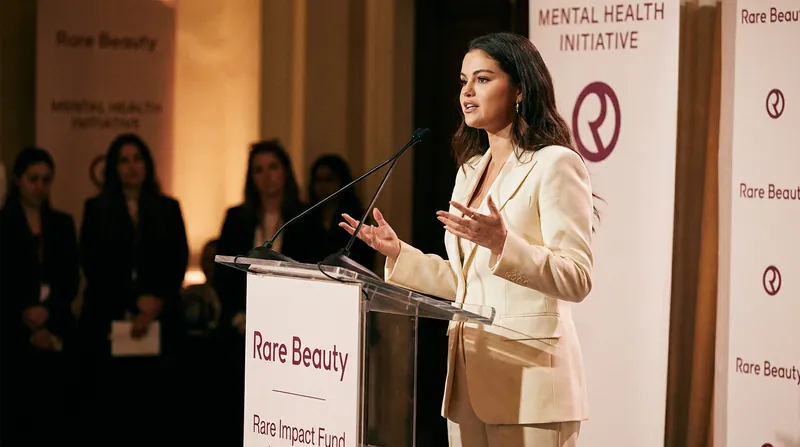
Selena Gomez's Rare Impact Fund Crosses $100 Million Goal Four Years Early, Launches Global School Initiative
2 sources
Music Business
BMG and Concord Agree to $7 Billion Merger, Creating the World's Largest Independent Music Company
1 sources

Music Legacy
Legendary Music Executive Clive Davis Dies at 94, Leaving a Half-Century Legacy of Pop Innovation
2 sources
Hollywood Marketing
Christopher Nolan's 'The Odyssey' Skips Influencer Screenings in Bold Break From Hollywood Trend
3 sources
Comments
Every angle. Every day.
Get Entertainment stories with full source coverage and perspective breakdowns, free every day.