
Canadian Alpine Skier Broderick Thompson Announces Retirement Following Miraculous Brain Injury Recovery
After surviving a near-fatal downhill crash in 2023 and defying medical odds to return to the snow, the two-time Olympian is stepping away from competitive racing to prioritize his long-term health.
By Ryder James
Share this story
Canadian World Cup alpine skier Broderick Thompson has officially announced his retirement from competitive racing, closing the book on a career defined by Olympic appearances, podium finishes, and one of the most remarkable medical recoveries in modern winter sports. The 32-year-old speed specialist confirmed his decision ahead of the 2026–27 Olympic cycle, choosing to prioritize his long-term cognitive health over the inherent dangers of the downhill circuit.
Thompson's retirement marks a triumphant, rather than tragic, conclusion to a harrowing two-and-a-half-year journey. On November 29, 2023, his life was forever altered during a downhill training run on the notoriously unforgiving Birds of Prey course in Beaver Creek, Colorado. A catastrophic crash left him with a severe spinal injury and a traumatic brain injury. He was airlifted to a Denver trauma center before being transferred to the GF Strong Rehabilitation Centre in Vancouver.
The initial prognosis was grim. Medical specialists warned Thompson that he might never ski again, and the early weeks of his recovery were spent immobilized in a neck brace. The physical toll was immense, but the neurological uncertainty was even more daunting. Stripped of his memories from the year leading up to the crash, Thompson had to relearn basic motor functions, including walking and driving, while grappling with the sudden halt of his athletic prime.
Despite the medical odds, the two-time Olympian refused to let the Beaver Creek crash dictate his exit from the sport. Driven by a lifelong passion for skiing—a sport he began as soon as he could walk—Thompson embarked on a grueling rehabilitation program. Exactly one year after his near-fatal accident, he defied expectations by returning to the snow, posting a quiet update to his supporters that he was finally back on skis.[1][3]
Rather than immediately chasing the 130 km/h speeds of the World Cup downhill circuit, Thompson orchestrated a measured, localized comeback. During the 2025–26 season, he entered a series of lower-tier FIS slalom races across British Columbia, including stops at Panorama, Kimberley, and his home mountain of Whistler. The technical slalom discipline offered a safer, slower environment to test his physical and cognitive limits.[2]
The comeback culminated in April 2026 at Sun Peaks Resort. While his first three FIS starts ended in "Did Not Finish" results, Thompson successfully navigated the two-run slalom course at Sun Peaks, crossing the finish line in 44th place. It was far from the World Cup podiums of his prime, but getting down the mountain safely represented a monumental personal victory and the closure he needed to move forward.[2]
With that final race behind him, Thompson faced a critical juncture regarding his future. In his retirement announcement, he admitted that he still feels physically capable of pushing out of the legendary Kitzbühel start gate tomorrow. However, the cumulative risk of sustaining another head impact is simply too high. Acknowledging the doctors who saved his life, Thompson wrote that he respects the science and the care he has been provided.
The decision to step away from elite competition is a calculated pivot toward longevity. By retiring on his own terms, Thompson preserves his health for a future that includes mentoring the next generation of Canadian speed skiers and enjoying the mountains with "softer landings." He expressed deep gratitude to his supporters, noting that he is stepping away from the risk to find other rewards and let his life evolve.
Thompson leaves behind a deeply respected legacy within Alpine Canada. Over a decade on the national team, he amassed 78 World Cup starts, represented Canada at the PyeongChang 2018 and Beijing 2022 Winter Olympics, and secured a memorable World Cup super-G bronze medal at Beaver Creek in 2021. His resilience through multiple career-threatening injuries—including a devastating knee rupture in 2018—cemented his reputation as a cornerstone of the Canadian speed program.[1][3]
The international ski racing community has rallied around Thompson's announcement, celebrating his survival and his impact on the sport. Norwegian speed star Aleksander Aamodt Kilde was among the many peers who paid tribute, publicly wishing Thompson well on the other side of competitive racing. As the World Cup circuit prepares for the Milano-Cortina 2026 Winter Games, Thompson will be watching safely from the sidelines, having already won the most important battle of his life.[1]
Key points
- Canadian alpine skier Broderick Thompson has retired to protect his long-term cognitive health.
- He survived a near-fatal crash at Beaver Creek in November 2023 that resulted in a traumatic brain injury.
- After relearning to walk and drive, he returned to the snow exactly one year later.
- Thompson completed his comeback by racing in four FIS-level slalom events in early 2026.
- He retires with 78 World Cup starts, two Olympic appearances, and one World Cup podium.
- He plans to transition into a coaching and mentorship role within Canadian skiing.
How we got here
Nov 2023
Crashes during a downhill training run at Beaver Creek, sustaining severe brain and spinal injuries.
Nov 2024
Returns to the snow exactly one year after his near-fatal accident.
Dec 2025
Enters his first FIS-level slalom race of the comeback season at Panorama.
Apr 2026
Completes his final competitive slalom race at Sun Peaks Resort.
May 2026
Officially announces his retirement from competitive alpine ski racing.
- The Athlete's View
- Thompson's perspective on prioritizing long-term cognitive health and finding closure after proving he could return to the slopes.
- Medical Consensus
- The medical community's stance on the severe risks of secondary impacts following traumatic brain injuries, validating his decision to step away from high-speed downhill racing.
- Ski Racing Community
- Teammates, competitors, and Alpine Canada officials celebrating his resilience, legacy, and transition into a mentorship role.
Perspectives this story doesn't cover
- Neurologists specializing in extreme sports trauma
- Current junior athletes who will benefit from his future coaching
Sources
Source coverage
3 outlets
3 viewpoints surfaced



- [1]Alpine CanadaSki Racing Community
Broderick Thompson - Alpine Canada Alpin
Read on Alpine Canada → - [2]FISSki Racing Community
Broderick THOMPSON - Athlete Biography
Read on FIS → - [3]Olympic.caMedical Consensus
Broderick Thompson - Team Canada
Read on Olympic.ca →
More in Sports
See all →Injury
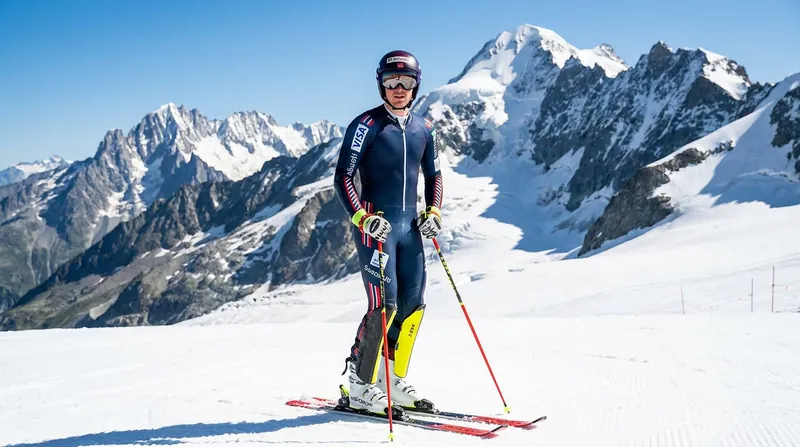
Alpine Skiing Injury Report: Federica Brignone Returns to Snow as World Cup Veterans Target 2026-27 Comebacks
4 sources
Standings
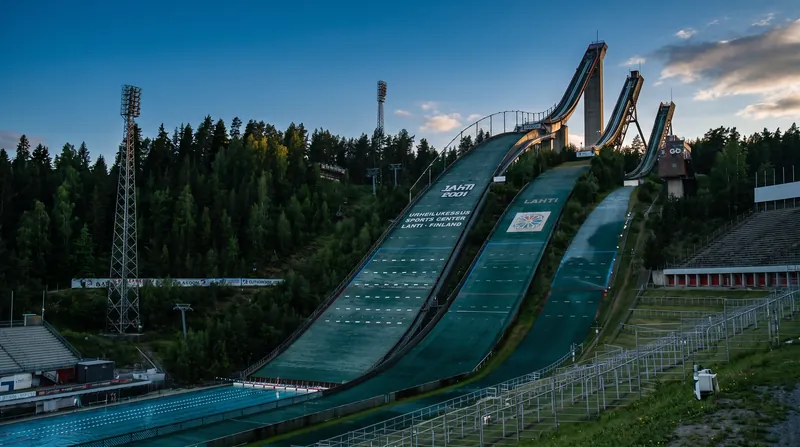
Naoki Nakamura and Nika Vodan Take Early Lead in FIS Ski Jumping Summer Grand Prix Standings
5 sources
Injury
Alpine Skiing Injury Report: Cyprien Sarrazin and Alexander Steen Olsen Hit Major Milestones in Summer Rehab
5 sources
Injury
Australian Snow Sports Injury Report: Bolton, Peel, and Thomas Target Comebacks After Olympic Heartbreak
5 sources
Comments
Every angle. Every day.
Get Sports stories with full source coverage and perspective breakdowns, free every day.