
Argentina Unveils 85-Foot Lionel Messi Statue in Patagonia, Breaking Global Record
A 70-ton concrete and steel monument dedicated to the Argentine captain has been inaugurated in Cutral Co, becoming the tallest football statue in the world.
Share this story
In the windswept expanses of Argentine Patagonia, a new monolith has altered the horizon. The city of Cutral Co, located in the Neuquén province, has officially unveiled an 85-foot (26-meter) statue dedicated to national football captain Lionel Messi. Towering over the surrounding landscape and weighing more than 70 tons, the concrete and steel structure is now the tallest monument to a football player anywhere in the world.
Inaugurated to coincide with Argentina's campaign in the 2026 FIFA World Cup, the colossal tribute serves as both a permanent marker of the nation's sporting glory and a bold bid to transform a regional oil hub into a global tourist destination.[1]
The monument captures the Argentine captain in a moment of profound triumph and personal reflection. Sculpted to depict Messi kneeling on the pitch, the figure wears the iconic light-blue and white striped national jersey, now updated to feature the three stars representing Argentina's World Cup victories.
The 2022 FIFA World Cup trophy rests securely between his knees, while his right arm is raised, pointing a single finger toward the sky—a signature gesture the forward has used throughout his career to honor his late grandmother. The sheer scale of the artwork ensures that this deeply personal celebration is visible from miles away along National Route 22, one of the country's primary highways.
With its staggering 26-meter height, the Cutral Co monument shatters previous records for sports-related statues. It comfortably eclipses the former record holder: a 21-meter (69-foot) iron sculpture of Messi that was erected in Kolkata, India, in late 2025 as part of a global initiative honoring the sport's greatest players.
While the Indian monument was constructed in a rapid 40-day sprint by the Sree Bhumi Sporting Club to celebrate the player's massive South Asian fanbase, the Argentine project was a much longer, more deliberate endeavor designed to serve as a permanent architectural anchor for the Neuquén province.
The ambitious project was spearheaded by local sculptor Aldo Beroisa, an artist already renowned in the region for his monumental public artworks. Beroisa and his team of construction crews and local residents spent 18 months meticulously designing, framing, and casting the tribute.
Beroisa noted during the unveiling ceremonies that the player serves as Argentina's natural ambassador, emphasizing that the project was driven as much by national pride as it was by artistic ambition. The extended timeline allowed the team to refine the facial features and the intricate details of the trophy, ensuring the massive scale did not compromise the recognizable likeness of the eight-time Ballon d'Or winner.
Erecting a structure of this magnitude in Patagonia required significant engineering foresight. The region is notorious for its harsh weather conditions, particularly the relentless, high-velocity winds that sweep across the southern steppes. To ensure the monument could withstand these environmental stressors, Beroisa's team constructed a heavy-duty reinforced steel skeleton, which was then encased in specialized concrete coatings. The resulting 70-ton mass provides the necessary low center of gravity and structural integrity to endure the Patagonian gales, guaranteeing that the tribute will remain standing for generations of football fans to visit.[2]
The decision to place the world's largest football statue in Cutral Co—a city historically known for its oil and gas production rather than international tourism—is part of a calculated civic strategy. Local authorities have been actively working to rebrand the municipality as the "Capital of Monuments," investing in large-scale public art to diversify the local economy.
By positioning the statue directly adjacent to a major travel artery, the city government anticipates drawing thousands of domestic and international travelers who are exploring the broader Patagonian region, turning a highway transit route into a mandatory pilgrimage site for sports enthusiasts.
Beyond its economic utility, the monument underscores Messi's unique status as a unifying cultural force in a country often fractured by economic volatility and political polarization. At the inauguration, crowds of fans draped in flags and replica jerseys gathered at the base of the statue, celebrating a figure who transcends traditional societal divides.
As one local organizer involved in a separate fan-funded mural project in Buenos Aires noted, the current era in Argentina presents daily hardships for many, but the shared memory of the 2022 World Cup victory—and the captain who delivered it—remains a rare, universally celebrated touchstone that brings together people from every social class.
The unveiling of the Cutral Co statue was strategically timed to harness the fervor of the 2026 FIFA World Cup, currently underway in North America. As the 38-year-old forward continues to break records on the pitch—recently scoring a hat-trick in Argentina's opening group-stage match to tie the all-time tournament scoring record—his physical likeness now stands watch over his homeland.
The simultaneous occurrence of his ongoing heroics in the United States and the inauguration of his monument in Patagonia has created a surreal feedback loop of national celebration, amplifying the media coverage of both events.
The Patagonian monolith is the crown jewel in a broader, global trend of monumentalizing modern sports icons, a phenomenon that has accelerated in the twilight of Messi's career. From the massive 70-foot iron tribute in West Bengal to interactive, fan-signed murals in the suburbs of Buenos Aires that feature the names of over 1,300 contributors, the scale of public art dedicated to the footballer has grown exponentially.
This global proliferation of statues reflects a shift in how modern societies canonize athletes, treating them not just as entertainers, but as historical figures worthy of the same civic real estate traditionally reserved for generals and heads of state.
Ultimately, the 85-foot concrete giant in Neuquén serves as a permanent resolution to the complicated relationship Messi once had with his home country. Early in his career, he faced criticism from some domestic factions who questioned his dedication to the national team compared to his club successes in Europe.
Ultimately, the 85-foot concrete giant in Neuquén serves as a permanent resolution to the complicated relationship Messi once had with his home country.
Today, those doubts have been entirely paved over by international triumphs and, quite literally, thousands of tons of concrete and steel. Regardless of how the final chapters of his playing career unfold, the Cutral Co monument ensures that his legacy is permanently anchored in the bedrock of Argentina.
Key points
- An 85-foot (26-meter) concrete statue of Lionel Messi has been unveiled in Cutral Co, Argentina.
- Weighing over 70 tons, it is now officially the tallest football monument in the world.
- The structure surpasses a 21-meter iron statue erected in Kolkata, India, in late 2025.
- Local sculptor Aldo Beroisa spent 18 months designing and building the tribute.
- The monument aims to boost tourism in the Patagonian region along National Route 22.
- The unveiling coincides with Argentina's ongoing campaign in the 2026 FIFA World Cup.
How we got here
December 2022
The Argentine national team wins the FIFA World Cup in Qatar, cementing their captain's legacy.
Late 2025
A 21-meter iron statue is unveiled in Kolkata, India, briefly holding the record for the world's tallest football monument.
June 2026
The 26-meter concrete monument is inaugurated in Cutral Co, Argentina, coinciding with the 2026 World Cup.
- Global Football Devotees
- Celebrate the statue as the ultimate physical manifestation of the player's legacy and his historic World Cup triumphs.
- Patagonian Tourism Advocates
- View the monument as a strategic economic driver to transform Cutral Co from an oil hub into a global pilgrimage site.
- Monumental Artists & Engineers
- Focus on the logistical and structural achievement of erecting a 70-ton, 85-foot concrete sculpture in a high-wind region.
Perspectives this story doesn't cover
- Local residents concerned about the allocation of municipal funds for massive public art instead of infrastructure.
- Environmental groups monitoring the impact of increased tourist traffic on the Patagonian steppes.
Sources
Source coverage
2 outlets
3 viewpoints surfaced


- [1]ESPNGlobal Football Devotees
Messi gets new 85-foot statue in Argentina, even taller than torn India sculpture
Read on ESPN → - [2]Caliber.AzMonumental Artists & Engineers
Argentina unveils world's tallest Lionel Messi statue
Read on Caliber.Az →
More in Sports
See all →Executive Compensation
US Filings Reveal Undisclosed $1.76 Million World Cup Payment to FIFA President
4 sources
Pitch Geometry
Enforcing Law 14's 9.15-Metre Buffer: Why Soccer's Penalty Arc Extends Four Yards Beyond the Box
4 sources

Nations League
Can Turkey Finally Break Their Winless Curse Against Italy in Nations League Clash?
6 sources
Nations League
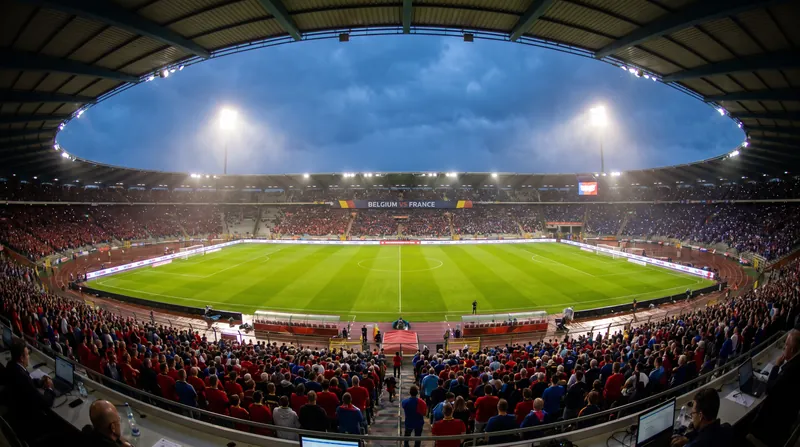
France and Belgium Face Early Nations League Test Without Mbappé and Courtois
5 sources
Comments
Every angle. Every day.
Get Sports stories with full source coverage and perspective breakdowns, free every day.