full timeline
US midterm elections
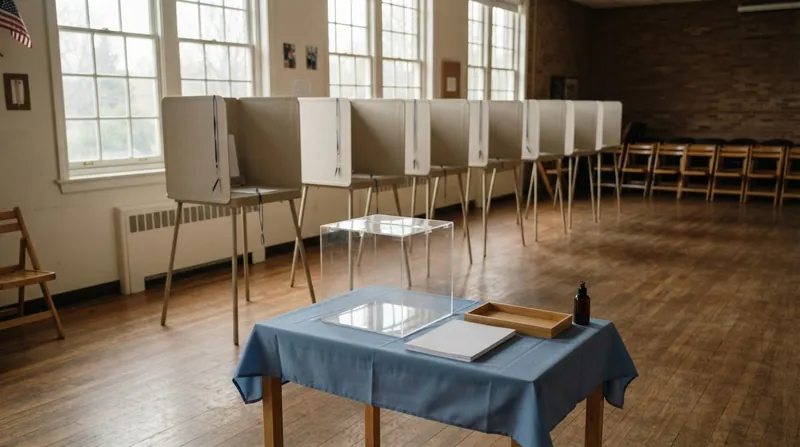
Voters across the United States began casting their ballots on Tuesday morning to determine control of both chambers of Congress.
Follow US midterm elections in the Factlen app and get an alert when there is news. Get the app
Share this story
Latest
By 05:48 UTC on November 4, the Democratic Party secured control of both the US House of Representatives and the Senate, gaining the legislative power to block President Donald Trump's agenda. Top House Democrat Hakeem Jeffries celebrated the sweeping victory and vowed to investigate individuals he accused of enriching themselves. Trump acknowledged the outcome, stating Democrats did a good job while blaming individual Republican candidates for the widespread losses.
By 08:25 UTC, Democrat Abdul El-Sayed defeated Republican Mike Rogers to win Michigan's Senate race, becoming the first Muslim elected to the upper chamber. El-Sayed, a 42-year-old medical administrator who campaigned on universal healthcare, secured the seat previously held by retiring Democratic Senator Gary Peters, making him the first Democratic doctor to serve in the Senate since 1969. During his victory speech, El-Sayed addressed Vice President JD Vance, stating Vance is constitutionally obligated to swear him in in January.
El-Sayed's victory followed a highly polarized campaign. Trump repeatedly mocked El-Sayed's Arabic name, labeled him a "jihadist," and joked he would need to pass through a metal detector to enter the Senate floor. El-Sayed also faced scrutiny after reports revealed his mother worked for a charity designated by the U.S. Treasury as a terrorist organization, and over an interview where he stated Israel is "not our friend."
How the story developed
The campaign cycle was dominated by domestic economic concerns, including inflation and housing costs, as well as escalating foreign policy tensions and the economic impacts of Trump's war against Iran. By October 16, an AP-NORC survey indicated that 80 percent of registered voters wanted substantial change or complete upheaval in how the United States is governed. Trump's overall job approval stood at 36 percent, with 74 percent of voters disapproving of his economic management. An enthusiasm gap favored the opposition, with 76 percent of Democrats calling the election extremely important compared to 63 percent of Republicans.
Ahead of Election Day, more than 54 million Americans cast early ballots, setting a record pace for a non-presidential cycle. Trump concluded a 19-state rally blitz with weekend stops in Iowa and Kansas to defend vulnerable Republican incumbents. Going into the elections, Republicans held a narrow 218-214 House majority and a 53-47 Senate advantage, though nearly half of the electorate preferred the Democratic Party to take control of both chambers.
Election Day voting commenced on November 3 to determine control of the 435-seat House and 34 Senate seats. By 03:56 UTC on November 4, early returns showed Democrats flipping Senate seats in North and South Carolina. Roy Cooper won in North Carolina, while Annie Andrews defeated Darline Graham in South Carolina. The South Carolina result was a significant upset for Trump, who had handpicked Graham for the race for the seat previously held by her late brother, Senator Lindsey Graham.
Early House results on November 4 included key upsets, such as Democratic challenger Janelle Stelson defeating Republican incumbent Scott Perry in Pennsylvania's 10th Congressional District. Trump argued on social media that the early Republican losses occurred because he was not personally on the ballot, claiming they would have won in a landslide otherwise.
Further Democratic gains materialized throughout November 4. By 04:48 UTC, Democrat Keisha Lance Bottoms won the Georgia gubernatorial election over Republican Rick Jackson, flipping the governor's mansion to the Democratic Party for the first time in nearly thirty years. Bottoms became the first Black woman to be elected as a state governor in United States history.
The shifting congressional balance was fueled by stunning statewide upsets. In the Texas Senate race, Democrat James Talarico defeated Republican Ken Paxton, while megachurch pastor Adam Hamilton ousted GOP Senator Roger Marshall in Kansas. In Michigan, the Senate race saw a late curveball when Democratic Representative Haley Stevens publicly endorsed Republican Mike Rogers over her former primary rival.
What to watch
- Vice President JD Vance is scheduled to swear Abdul El-Sayed into the Senate in January.
- Newly empowered congressional Democrats plan to launch investigations into alleged corruption during the final two years of Trump's presidency.
Where things stand
Democrat Abdul El-Sayed Wins Michigan Senate Seat, Becoming First Muslim Senator
Key point: Democrat Abdul El-Sayed has defeated Republican Mike Rogers in Michigan, becoming the first Muslim elected to the U.S. Senate.
Democrat Abdul El-Sayed has defeated Republican Mike Rogers to win Michigan's U.S. Senate race, networks projected early Wednesday. The victory makes El-Sayed the first Muslim elected to the upper chamber of Congress.
El-Sayed, a 42-year-old medical administrator, campaigned heavily on leftist promises, including the implementation of universal healthcare to help voters navigate the for-profit medical system. He secured the seat previously held by retiring Democratic Senator Gary Peters, holding a nearly six-point lead when the race was called. The win makes him the first Democratic doctor to serve in the Senate since 1969. In his victory speech to supporters in Detroit, El-Sayed celebrated the historic milestone and directly addressed Vice President JD Vance, stating, "You're constitutionally obligated to swear me in in January."
El-Sayed's success in the battleground state successfully holds the seat for the Democrats, bolstering their incoming majorities in Congress following a night of sweeping midterm victories. He managed to secure the win despite a late curveball in his campaign when Congresswoman Haley Stevens, who had lost the Democratic primary to El-Sayed, publicly endorsed Rogers at the eleventh hour.
The Senate race was marked by highly polarized rhetoric and personal attacks. Trump repeatedly mocked El-Sayed's Arabic name, labeled him a "jihadist," and joked at a rally that the Democrat would have to pass through a metal detector before being allowed onto the Senate floor. El-Sayed also faced intense scrutiny over his family history after reports revealed his mother previously worked for a charity designated by the U.S. Treasury as a terrorist organization, and he drew criticism for stating in an interview that Israel is "not our friend."
Democrats Win Control of House and Senate in Major Midterm Rebuke to Trump
Key point: Democrats have secured full control of the US Congress in the 2026 midterms, gaining the power to block President Donald Trump's agenda.
The Democratic Party has won control of both the US House of Representatives and the Senate in the 2026 midterm elections. The sweeping victory secures full Democratic control of Congress, delivering a historic reversal and a major rebuke to President Donald Trump.
Following the results, Trump acknowledged the outcome by stating that Democrats did a good job, while blaming individual Republican candidates for the party's widespread losses. Top House Democrat Hakeem Jeffries celebrated the sweeping victory and vowed to investigate those he accused of enriching themselves.
The newly secured majorities grant Democrats the legislative power to block Trump's agenda and launch investigations into alleged corruption during the final two years of his presidency. The congressional takeover was fueled by stunning statewide upsets, including Democrat James Talarico defeating Republican Ken Paxton in the Texas Senate race, and megachurch pastor Adam Hamilton ousting GOP Senator Roger Marshall in Kansas.
Voter turnout and sentiment were heavily driven by deep public anger over the rising cost of living, punishing tariff policies, and the economic impacts of Trump's war against Iran. Before Tuesday's blue wave, Republicans controlled the outgoing 119th Congress with a 53-seat Senate majority.
Keisha Lance Bottoms Wins Georgia Governorship, Making US History
Key point: Democrat Keisha Lance Bottoms has been elected governor of Georgia, becoming the first Black woman to serve as a state chief executive in US history.
Democrat Keisha Lance Bottoms has won the Georgia gubernatorial election, securing a historic victory over her opponent, Rick Jackson. By winning the race, Bottoms becomes the first Black woman to be elected as a state governor in United States history, and the first woman to serve as the chief executive of Georgia.
The outcome of the highly anticipated midterm contest was solidified after Jackson formally conceded the race. Bottoms's triumph successfully flips the Georgia governor's mansion to the Democratic Party, marking the first time in nearly thirty years that a Democrat will hold the state's highest office.
Prior to this election, no Black woman had ever served as the chief executive of any American state. Bottoms has now broken that barrier, adding a landmark achievement to the broader Democratic successes in the ongoing midterm elections.
Democrats Flip US House of Representatives in Midterm Rebuke to Trump
Key point: The Democratic Party has regained control of the US House of Representatives, delivering a significant midterm rebuke to the Trump administration.
The Democratic Party has regained majority control of the United States House of Representatives after four years. Media projections confirmed the chamber flipped during the 2026 midterm elections, marking a significant shift in congressional power.
The election results are being widely interpreted as a sweeping rebuke to President Donald Trump and the Republican-led Congress. As the blue wave materialized, Trump responded on social media, arguing that the Republican losses occurred because he was not personally on the ballot and claiming they would have won in a landslide otherwise.
The Democratic majority was secured through critical victories in highly competitive races across the country. In one notable upset contributing to the shift, Democratic challenger Janelle Stelson defeated Republican incumbent Scott Perry to capture Pennsylvania's 10th Congressional District.
This House victory follows two turbulent years since Trump's return to the White House. The shift in the lower chamber aligns with broader Democratic gains, as the party also moves closer to a Senate majority following early seat flips in North and South Carolina.
Democrats Flip Senate Seats in North and South Carolina in Early Midterm Returns
Key point: Democratic candidates Roy Cooper and Annie Andrews have flipped Republican-held Senate seats in North and South Carolina, signaling early momentum for their party.
Democrats have secured crucial victories in the US midterm elections by flipping Senate seats in both North and South Carolina. Roy Cooper won the Senate race in North Carolina, while Annie Andrews defeated Republican Darline Graham in South Carolina.
The South Carolina result is considered a stunning upset and a significant blow to Donald Trump, who had handpicked Graham for the race. The seat was previously held by Graham's late brother, Senator Lindsey Graham, and Republicans had worked extensively to keep it in their control.
These early returns move Democrats significantly closer to securing a Senate majority. The dual victories in the Carolinas represent a major rebuke to the Republican party and highlight a surging blue wave as the midterm elections unfold.
Graham's campaign had faced tightening polls in its final days, with the Republican party fracturing over her candidacy and observers pointing to her own missteps. The loss of these traditionally conservative and battleground seats underscores the challenges the GOP faces as the remaining national results are tallied.
Charts, maps and images
Timeline
November 2026
Democrats Flip Senate Seats in North and South Carolina in Early Midterm Returns
- Democrats Flip Senate Seats in North and South Carolina in Early Midterm ReturnsKey point: Democratic candidates Roy Cooper and Annie Andrews have flipped Republican-held Senate seats in North and South Carolina, signaling early momentum for their party.
- Democrats Flip US House of Representatives in Midterm Rebuke to TrumpKey point: The Democratic Party has regained control of the US House of Representatives, delivering a significant midterm rebuke to the Trump administration.
- Keisha Lance Bottoms Wins Georgia Governorship, Making US HistoryKey point: Democrat Keisha Lance Bottoms has been elected governor of Georgia, becoming the first Black woman to serve as a state chief executive in US history.
- Democrats Win Control of House and Senate in Major Midterm Rebuke to TrumpKey point: Democrats have secured full control of the US Congress in the 2026 midterms, gaining the power to block President Donald Trump's agenda.
- Democrat Abdul El-Sayed Wins Michigan Senate Seat, Becoming First Muslim SenatorKey point: Democrat Abdul El-Sayed has defeated Republican Mike Rogers in Michigan, becoming the first Muslim elected to the U.S. Senate.
Americans Cast Midterm Ballots With Partisan Balance of Congress at Stake
Parties Stage Final Rallies as Over 54 Million Vote Early Ahead of US Midterm Elections
October 2026
Eighty Percent of US Voters Demand Major Political Change as Trump Approval Falls Ahead of Midterms