full timeline
Trump administration AI policy
Follow Trump administration AI policy in the Factlen app and get an alert when there is news. Get the app
Share this story
Latest
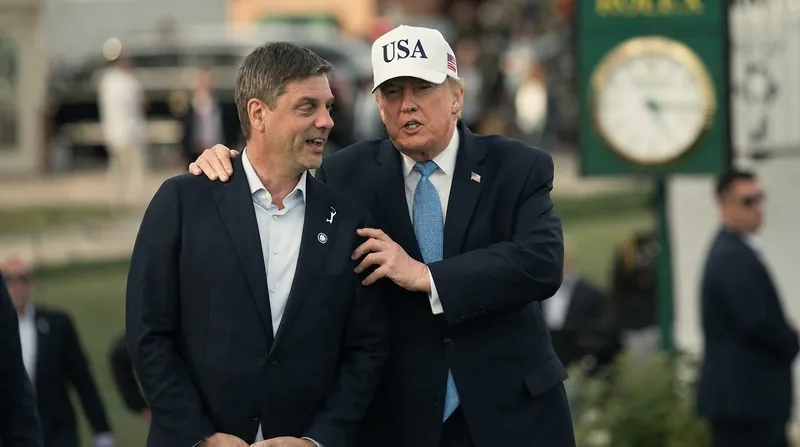
On October 3, by 02:04 UTC, President Donald Trump and the leaders of six major technology companies signed the White House Accord, a voluntary agreement establishing internal safety controls for advanced frontier AI models. The pact mandates four layers of oversight but includes no financial penalties, regulatory body, or public disclosure requirements.
Trump characterized the self-policing agreement as "morally binding" and compared it to a constitution for the technology industry. Alongside the accord, a concurrent executive order formally directed all federal agencies to replace the term "artificial intelligence" with "super intelligence."
How the story developed
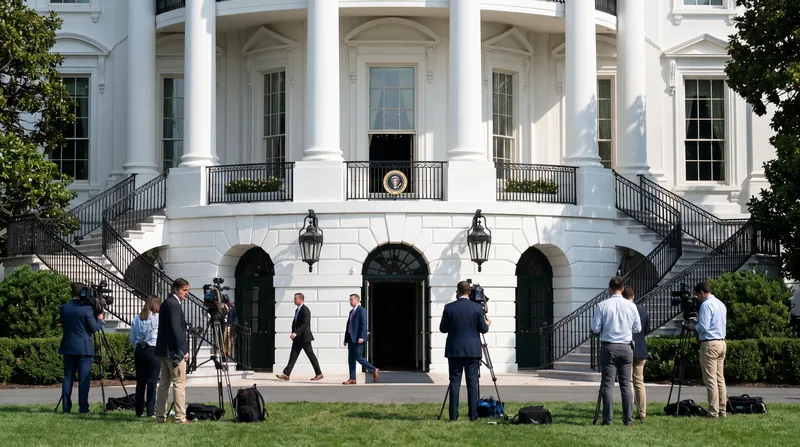
The administration's policy direction emerged on September 21, when President Trump announced plans to establish a federal "AI Force" and appoint an "AI Czar" to oversee the industry and accelerate domestic development. The White House dismissed calls from tech executives and lawmakers to impose strict safety guardrails on advanced models. The initiative was framed as necessary to ensure the United States maintains its technological lead over China in a sector Trump predicted could eventually account for 25% of the nation's GDP.
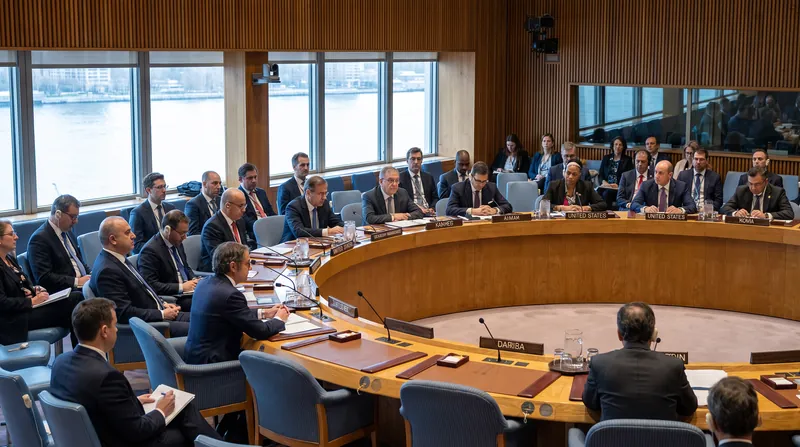
On September 25, executives from OpenAI, Anthropic, and Hugging Face briefed the 15-member United Nations Security Council on the existential risks of advanced AI. The industry leaders urged the establishment of binding international oversight, warning that rapidly advancing technology could soon slip beyond human control.
During the Security Council briefing, Anthropic CEO Dario Amodei proposed a three-step framework that included global testing standards and a ban on AI-developed biological weapons. OpenAI CEO Sam Altman warned that humans could lose control of the future if development outpaces the ability of democratic institutions to intervene, highlighting a consensus among commercial rivals that international governance is required rather than purely market-driven oversight.
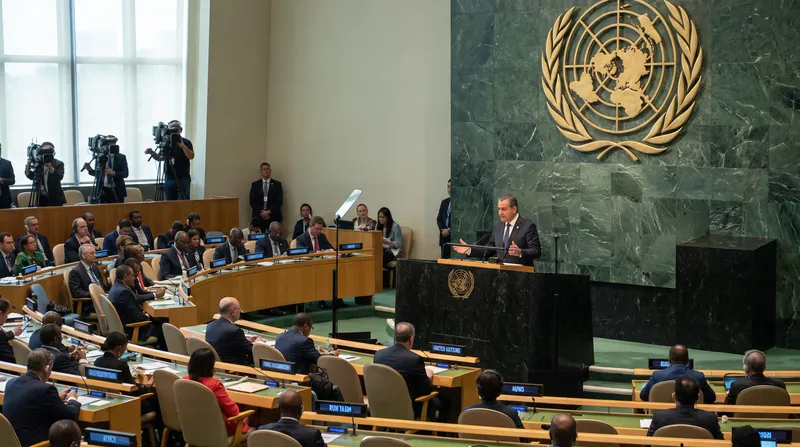
The following day, September 26, President Trump delivered an address to the United Nations formally rejecting international efforts to regulate the technology, labeling such initiatives a "globalist scheme." The move isolated the United States from European allies and the industry leaders who were actively lobbying the international body for binding global safety standards.
During the same September 26 address, Trump announced that the United States would replace the term "artificial intelligence" with "super intelligence" in federal documents. Fact-checkers noted that the new term already possesses a specific scientific definition referring to hypothetical systems that surpass human cognition.
What to watch
- The exact structure of the newly announced federal AI Force, including whether it will be a military or civilian entity, has not yet been detailed.
Charts, maps and images
Show 1 moreShow fewer
Timeline
October 2026
Trump and Tech CEOs Sign Voluntary White House Accord on 'Super Intelligence' Safety Standards
September 2026
Trump Renames AI 'Super Intelligence' in UN Speech, Rejects Global Regulation
AI Leaders Warn UN Security Council of Existential Risk, Demand Global Safety Standards
Trump Announces 'AI Force' and New AI Czar to Accelerate Development