full timeline
Global container shipping crisis
Follow Global container shipping crisis in the Factlen app and get an alert when there is news. Get the app
Share this story
Latest
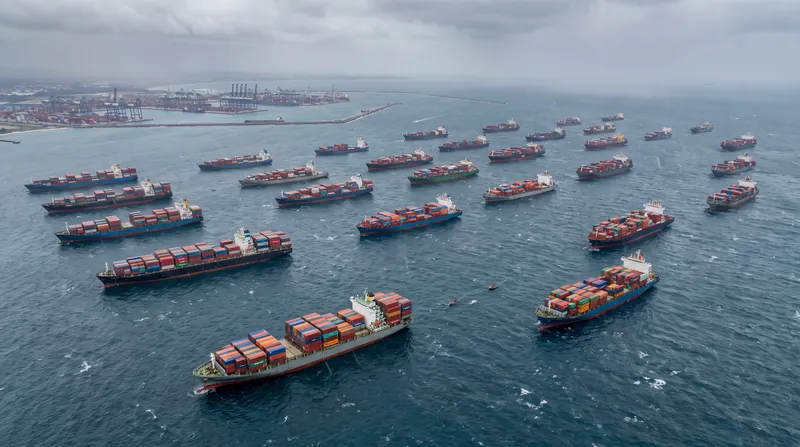
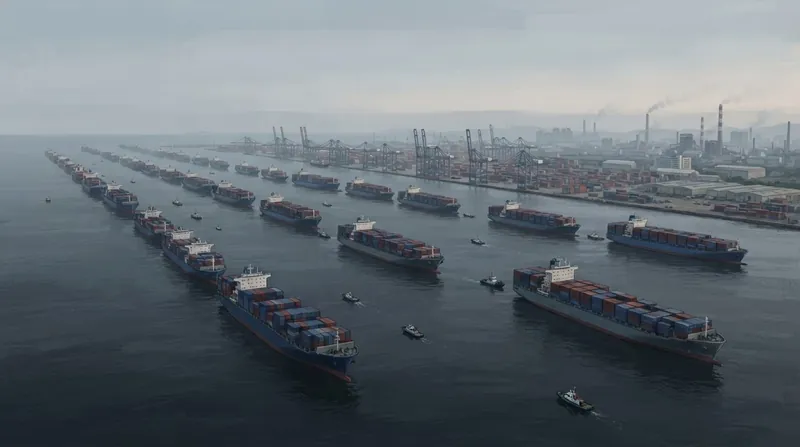
On September 29, vessel delays driven by typhoons and operational bottlenecks in Asia absorbed 8.5 percent of the global containership fleet capacity. This effectively removed 3 million twenty-foot equivalent units (TEU) from the market. In late September, average vessel waiting times reached 83 hours in Shanghai and 38 hours in Ningbo.
The current delays are temporarily masking a massive influx of new vessel deliveries that equal 40 percent of the existing fleet. Global schedule reliability was recorded at 49.9 percent in August following a stream of typhoons in Asia.
How the story developed
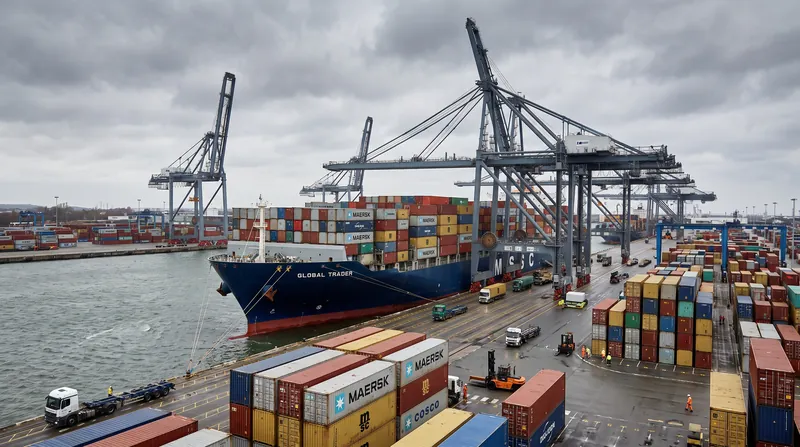
The crisis escalated on August 27, when global port congestion stranded a record 4.31 million TEU of container capacity worldwide, surpassing the absolute volume of the 2022 pandemic peak. The primary causes were severe typhoons in East Asia, which heavily impacted major Chinese export hubs, alongside ongoing Red Sea rerouting.
While the stranded volume exceeded the pandemic peak, it represented 12.6 percent of the current, larger global shipping fleet, which is lower than the 15.7 percent peak recorded in 2022. At that time, the delays removed 1.7 million TEU of effective capacity and pushed freight rates up by 156 percent.
Disruptions compounded into the following month due to Red Sea diversions, Asian typhoons, and localized port strikes. On September 26, global container shipping schedule reliability was reported to have fallen for a third consecutive month, dropping to 29 percent in August from 33 percent in July.
During this period, the Far East to Europe trade lane experienced a drop in on-time performance to just 6 percent. Average vessel delays globally increased from 4.2 days to 5.1 days, with Maersk remaining the most reliable major carrier at a 51 percent on-time performance.
What to watch
- Analysts project the congestion will take seven to ten months to clear, persisting into the 2027 Chinese New Year.
Charts, maps and images
Timeline
September 2026
Asian Port Congestion Absorbs 8.5% of Global Fleet Capacity, Expected to Persist Into 2027
Global Container Shipping Reliability Collapses to 29% Amid Compounding Disruptions
August 2026
Global Container Port Congestion Reaches 4.3 Million TEU, Surpassing COVID-19 Peak