
World Rugby U20 Championship: How Argentina, Australia, Wales, and South Africa Remained Unbeaten in Georgia
The expanded 16-team World Rugby Junior World Championship has reached a critical juncture, with traditional powerhouses dominating Matchday Two amidst new tackle laws and high-scoring tactical shifts.

Share this story
The landscape of international rugby is shifting, and the epicenter of that transformation is currently nestled in the vibrant Georgian cities of Tbilisi and Kutaisi. The World Rugby Junior World Championship, rebranded and expanded for 2026, has reached a critical juncture following a pulsating Matchday Two.
For the first time since 2009, the tournament features a 16-team format, a deliberate move by the sport's governing body to accelerate the development of emerging nations and broaden the global footprint of the game. As the dust settles on the second round of pool matches, a clear hierarchy is beginning to emerge, with traditional powerhouses asserting their dominance while navigating the unique pressures of a high-stakes, condensed tournament.[1]
The expansion to 16 teams is not merely a cosmetic change; it represents a fundamental shift in the tournament's ecosystem. By welcoming nations like Fiji, the United States, Japan, and Uruguay into the top tier, World Rugby has created a more diverse and unpredictable competitive environment.
This structural evolution means that the pathway to the knockout stages is more arduous, requiring profound squad depth and tactical adaptability. The sheer volume of matches, played across three venues including the AIA Arena and Avchala Stadium, tests the physical and mental resilience of the sport's brightest young prospects.
Amidst this expanded field, the defending champions have quickly reminded the world why they wear the crown. South Africa's Junior Springboks entered the tournament with a target on their backs, and their Matchday Two encounter against host nation Georgia was a crucible of physical intensity. Playing in front of a raucous, partisan crowd at Avchala Stadium, the South Africans were forced to weather an early storm. Georgia, buoyed by their home support, struck first with a clinical finish in the corner, signaling their intent to disrupt the established order.[1]
However, the hallmark of championship teams is their ability to absorb pressure and respond with calculated precision. South Africa's class gradually surfaced, orchestrated by the inspirational leadership of captain Siphosethu Mnebelele. The dynamic hooker led by example, crossing the try line twice in the first half from point-blank range to wrestle control of the contest. The Junior Springboks' eventual 33-5 victory was a testament to their structural discipline and their ruthless exploitation of Georgian indiscipline, which culminated in a red card for the hosts just before halftime.[1]
South Africa's formidable form in Georgia is a continuation of their recent success on the global stage. Earlier in the year, the Junior Springboks claimed their first title in the U20 Rugby Championship—the underage equivalent of The Rugby Championship—by navigating a grueling schedule against their Southern Hemisphere rivals. That experience, forged in the fires of intense regional competition, has clearly hardened Kevin Foote's squad, equipping them with the tactical maturity required to navigate the unique challenges of a World Cup environment.[2]
While South Africa relied on physical dominance, Argentina's Los Pumitas delivered a masterclass in attacking brilliance. Their Matchday Two clash against Ireland was a breathtaking spectacle of open-field running and intricate handling, culminating in a staggering 62-40 victory. The South Americans have embraced a high-tempo, expansive game plan that has left opposing defenses scrambling for answers. This tactical evolution reflects a broader shift within Argentine rugby, prioritizing skill execution and spatial awareness alongside their traditional set-piece strength.[1]
At the heart of Argentina's offensive explosion is full-back Simon Pfister, who has rapidly emerged as one of the tournament's standout performers. Pfister's ability to inject pace into the backline and finish complex attacking sequences was on full display against Ireland, where he scored twice to take his tournament tally to five tries. Supported by the playmaking vision of captain Tomas Dande, Los Pumitas have signaled their intent to not just compete, but to entertain and overwhelm their opponents with sheer attacking volume.
Australia's Junior Wallabies have mirrored Argentina's offensive output, albeit with a slightly different stylistic approach. Having never won the Junior World Championship, the Australians arrived in Georgia with a palpable sense of determination. Following a record-breaking 90-22 demolition of Spain in their opening fixture, they faced a different challenge against a physical Fijian outfit. The resulting 53-17 victory at the AIA Arena in Kutaisi was a statement of intent, showcasing their ability to blend structured phase play with moments of individual brilliance.[1]
The foundation of Australia's success against Fiji was laid early in the contest, with second-row Toby Brial and winger Tom Farr-Jones crossing the whitewash to establish a commanding 36-3 halftime lead. While the second half devolved into an untidy affair marred by multiple sin-bins for both sides, the Junior Wallabies' early dominance ensured the result was never in doubt. Their clinical edge in the red zone and their ability to generate quick ruck ball have made them a nightmare to defend against.[1]
The Northern Hemisphere's response to this Southern dominance has been spearheaded by Wales, who have navigated a tumultuous start to their campaign to remain unbeaten. The Welsh squad faced significant adversity in their opening match against Georgia, losing winger Tom Bowen to a red card. However, they demonstrated remarkable resilience to secure a victory and carried that momentum into Matchday Two, where they dispatched Uruguay with a disciplined and pragmatic performance.[1]
Wales' ability to adapt to the officiating and maintain their composure under pressure will be severely tested in the coming days. Their upcoming pool decider against South Africa is a winner-takes-all encounter that will define their tournament. For the Welsh management, the focus has been on minimizing unforced errors and ensuring their set-piece operates at maximum efficiency, knowing that any lapse in concentration will be ruthlessly punished by the Junior Springboks.[1][3]
Beyond the individual team narratives, the 2026 Junior World Championship is serving as a crucial testing ground for World Rugby's new tackle height trial. Implemented at the international level for the first time, the law variation aims to reduce the risk of head impacts by lowering the legal tackle height. This regulatory shift has forced teams to adjust their defensive techniques on the fly, leading to an initial spike in penalties and cards as players recalibrate their muscle memory in the heat of competition.[3]
The adaptation to the new tackle laws has been a defining tactical sub-plot of the tournament. Teams that have successfully lowered their point of contact are not only avoiding disciplinary sanctions but are also finding new ways to generate turnovers at the breakdown. Conversely, sides that have struggled to adjust, such as Georgia in their match against South Africa, have found themselves severely disadvantaged by numerical deficits. This dynamic is reshaping the strategic landscape of underage international rugby.[1][3]
As the tournament hurtles toward Matchday Three, the stakes have never been higher. The expanded 16-team format means that only the four pool winners are guaranteed a spot in the semi-finals, leaving zero margin for error. The upcoming fixtures are effectively quarter-finals, with heavyweights colliding in a desperate bid to keep their championship dreams alive. The clash between Australia and France, a repeat of the 2019 final, looms as a particularly mouthwatering prospect.[1]
Ultimately, the World Rugby Junior World Championship is about more than just lifting a trophy; it is the premier incubator for the sport's next generation of superstars. The players currently lighting up the stadiums in Tbilisi and Kutaisi are the same athletes who will define the senior international game in the years to come. As Argentina, Australia, Wales, and South Africa prepare for their defining pool matches, they are not just playing for immediate glory, but for the opportunity to etch their names into the foundational lore of global rugby.[3]
Key points
- The 2026 World Rugby Junior World Championship features an expanded 16-team format hosted in Georgia.
- South Africa, Argentina, Australia, and Wales all secured crucial victories to remain undefeated after Matchday Two.
- Argentina's Simon Pfister leads the tournament with five tries following a 62-40 win over Ireland.
- The tournament is serving as the first international testing ground for World Rugby's new lowered tackle height laws.
How we got here
January 2026
World Rugby announces the expansion of the U20 Championship to 16 teams and rebranding.
May 2026
South Africa claims the U20 Rugby Championship title against Southern Hemisphere rivals.
June 27, 2026
The Junior World Championship kicks off in Tbilisi and Kutaisi, Georgia.
July 2, 2026
Matchday Two concludes with seven teams, including South Africa and Argentina, remaining unbeaten.
- Southern Hemisphere Powerhouses
- Focuses on the physical and attacking dominance of the SANZAAR nations.
- Northern Hemisphere Challengers
- Emphasizes tactical discipline and resilience from European squads.
- Development Advocates
- Values the expanded 16-team format for growing the game globally.
- Player Welfare Focus
- Highlights the importance of the new tackle height laws in protecting young athletes.
Perspectives this story doesn't cover
- Local Georgian fans and organizers hosting the expanded tournament.
- Medical staff monitoring the impact of the new tackle height trial.
Sources
Source coverage
3 outlets
4 viewpoints surfaced



- [1]World RugbyNorthern Hemisphere Challengers
Argentina, Wales, Australia and South Africa enjoy statement wins on matchday two in Georgia
Read on World Rugby → - [2]Wikipedia
2026 U20 Rugby Championship
Read on Wikipedia → - [3]Factlen Editorial TeamPlayer Welfare Focus
Synthesis by Factlen editorial team
Read on Factlen Editorial Team →
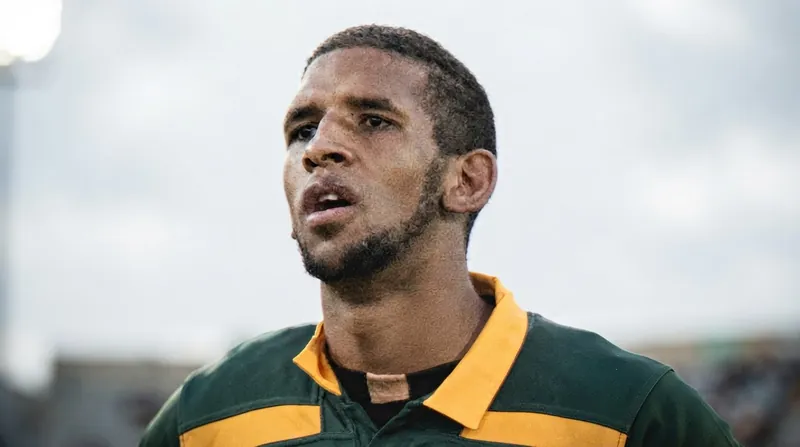
More in Sports
See all →WXV Global Series
Canada Halts England's Historic 41-Test Women's Rugby Winning Streak in Toronto
8 sources

Storyline
Wallabies Hold Off Springboks 42-38 in 11-Man Perth Miracle
2 sources
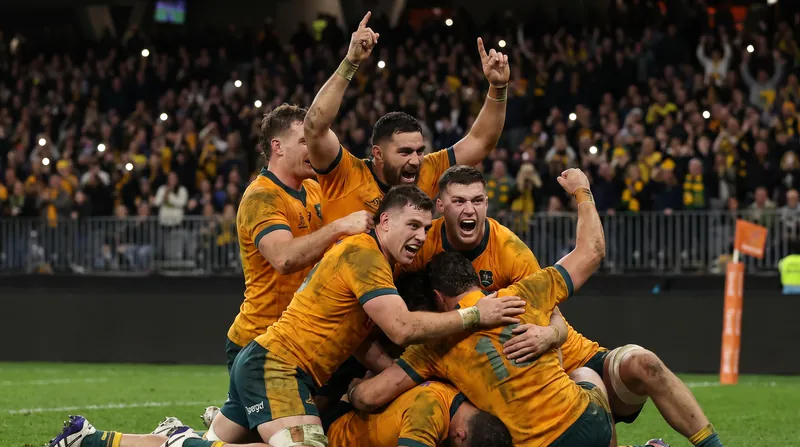
Preview
Newcastle Knights and Sydney Roosters Set for Historic 2026 NRL Grand Final Clash
3 sources
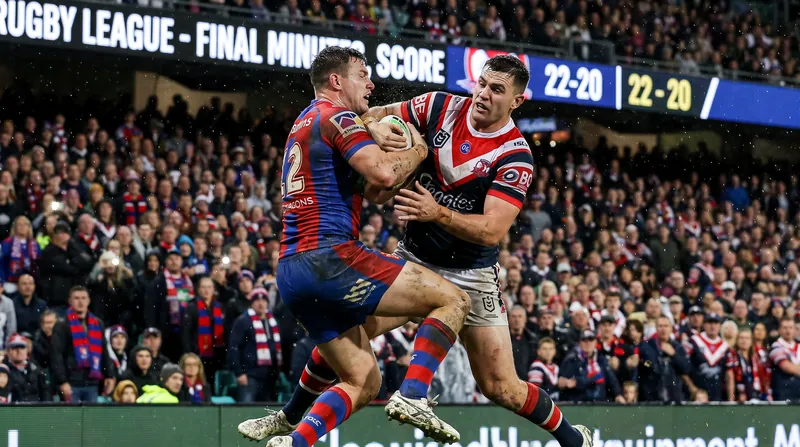
Recap
Northampton Saints Open Title Defense With 59-26 Demolition of Newcastle Red Bulls
5 sources

Comments
Every angle. Every day.
Get Sports stories with full source coverage and perspective breakdowns, free every day.