
Wallabies Navigate Injury Crisis as Slipper Un-Retires and Amatosero Steps Up for Nations Championship
A string of severe injuries to key Australian players has forced a major squad reshuffle ahead of the 2026 Nations Championship. The crisis has sparked remarkable stories of resilience, headlined by 37-year-old James Slipper coming out of retirement and uncapped lock Miles Amatosero earning his first call-up.
By Omar Haddad

Share this story
The Wallabies' preparation for the inaugural 2026 Nations Championship has been severely disrupted by a mounting injury toll. With the July Test window looming against heavyweights Ireland, France, and Italy, head coach Joe Schmidt has been forced to navigate the loss of several first-choice stars. Yet, rather than a narrative of despair, the casualty ward has birthed a squad defined by remarkable resilience, unexpected returns, and the injection of raw talent.[3]
The most devastating blow came during the final round of the Super Rugby Pacific season, when Waratahs scrumhalf Jake Gordon ruptured his Achilles tendon. Gordon, who had established himself as Schmidt's preferred No. 9, went down clutching his leg after attempting a quick tap against the Western Force. The 32-year-old underwent successful surgery but will miss the entire international season, leaving a significant void in Australia's playmaking ranks.[1]
Gordon's absence compounds the loss of colossal lock Will Skelton, who also suffered a ruptured Achilles earlier in the year while playing for La Rochelle. Furthermore, a severe prop crisis has gripped the squad, with looseheads Blake Schoupp and Tom Robertson sidelined for extended periods with Lisfranc and calf injuries, respectively. Faced with a depleted front row, Schmidt made a phone call that altered the trajectory of the Wallabies' season.[2]
"It cost me a coffee," Schmidt joked to reporters, detailing how he coaxed 37-year-old James Slipper out of international retirement. Slipper, Australia's most-capped player with 151 Test appearances, had bid an emotional farewell to the gold jersey following the 2025 season. However, a stellar Super Rugby campaign with the ACT Brumbies and the team's desperate need for loosehead cover convinced the veteran to return to the fold.[3]
Slipper admitted he surprised himself with his physical form this year. "I know I am not the best prop running around, but I still felt I was moving well," he told the media. The veteran emphasized that his return was driven entirely by the team's needs, adding that if his form holds, he would even consider pushing for a historic fifth Rugby World Cup appearance in 2027—a feat achieved by only three players in the sport's history.
While Slipper provides a comforting anchor, the injuries have also forced Schmidt to cast a wider net, resulting in the call-up of three uncapped players. The most notable inclusion is 24-year-old Waratahs lock Miles Amatosero, who has been tasked with filling the physical void left by Skelton. Standing at 203cm and weighing 125kg, Amatosero brings a raw, combative edge to a Wallabies pack desperate for consistent forward dominance.[2]
Amatosero's selection is a testament to his personal resilience. The lock spent the early part of the 2026 season suspended and training alone at a local park following a training ground scuffle. "It was so tough... seeing how it affected the team really hurt," Amatosero reflected. He channeled that frustration into a dominant Super Rugby campaign, starting 12 matches for the Waratahs and earning his place in the national squad.
The theme of grueling rehabilitation and triumphant returns extends beyond the men's game this month. In the Super Rugby Women's competition, Western Force flyhalf Grace Freeman has been named to return to the pitch after more than 450 days on the sidelines. Freeman suffered a severe foot injury against the Fijian Drua in early 2025, enduring a grueling 15-month recovery process to reclaim her spot in the starting XV.[2]
Freeman's return against the Queensland Reds serves as a powerful parallel to the Wallabies' current predicament. In rugby, the physical toll is an unavoidable reality, but the space vacated by injury is invariably filled by players who have fought tirelessly in the shadows. Whether it is a 37-year-old veteran answering an SOS call or a 24-year-old rookie seizing a long-awaited opportunity, the Australian rugby landscape in June 2026 is defined not by who is missing, but by who is stepping up.[2]
Key points
- Wallabies scrumhalf Jake Gordon and lock Will Skelton have been ruled out of the 2026 international season with ruptured Achilles tendons.
- Facing a severe injury crisis among loosehead props, 37-year-old James Slipper has come out of international retirement.
- Uncapped 24-year-old lock Miles Amatosero has been called up to help fill the physical void left by Skelton's absence.
- In the Super Rugby Women's competition, Western Force flyhalf Grace Freeman is returning after a grueling 450-day injury layoff.
How we got here
March 2026
Will Skelton ruptures his Achilles while playing for La Rochelle, ruling him out of the international season.
May 2026
Wallabies loosehead prop Blake Schoupp suffers a severe Lisfranc injury, compounding Australia's front-row crisis.
June 1, 2026
Jake Gordon undergoes surgery for a torn Achilles sustained in the final round of Super Rugby Pacific.
June 18, 2026
James Slipper officially un-retires and is named in the Wallabies' 37-man squad alongside uncapped lock Miles Amatosero.
June 20, 2026
Grace Freeman returns to the pitch for the Western Force after a 450-day injury layoff.
- Wallabies Management
- Focuses on managing the injury toll, maintaining squad depth, and leaning on veteran leadership to guide the team.
- Veteran Leadership
- Views the injury crisis as a call to duty, emphasizing loyalty to the national team and the willingness to step back into the fray.
- Emerging Players
- Sees the squad vacancies as a hard-earned opportunity to prove their resilience and establish themselves at the international level.
Perspectives this story doesn't cover
- Domestic Club Coaches
- Medical Staff
Sources
Source coverage
3 outlets
3 viewpoints surfaced



- [1]The Straits TimesWallabies Management
Wallabies scrumhalf Gordon ruled out of July tests after Achilles surgery
Read on The Straits Times → - [2]RugbyPassEmerging Players
Freeman set for Western Force return more than 450 days after injury
Read on RugbyPass → - [3]The Washington PostVeteran Leadership
Veteran prop James Slipper returns to international rugby
Read on The Washington Post →
More in Sports
See all →WXV Global Series
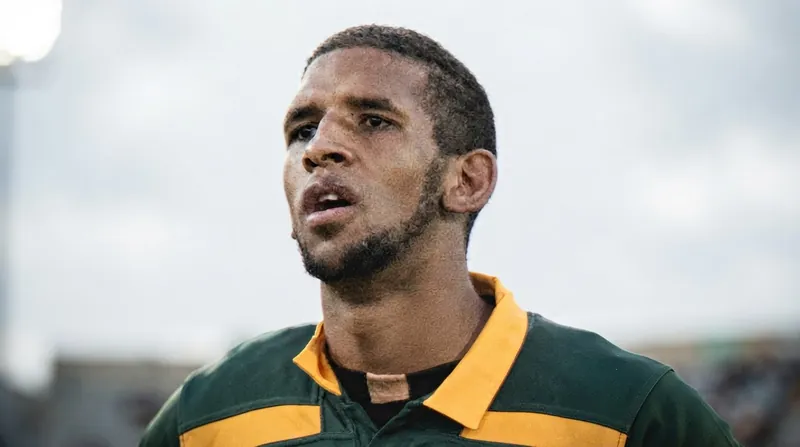
Canada Halts England's Historic 41-Test Women's Rugby Winning Streak in Toronto
8 sources

Storyline
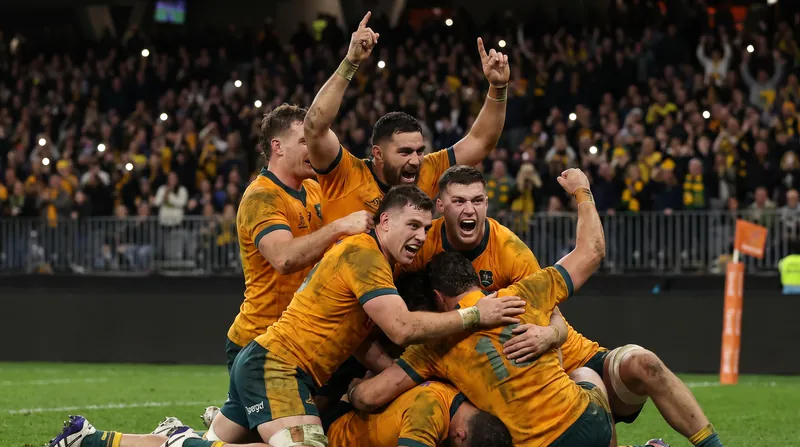
Wallabies Hold Off Springboks 42-38 in 11-Man Perth Miracle
2 sources
Preview
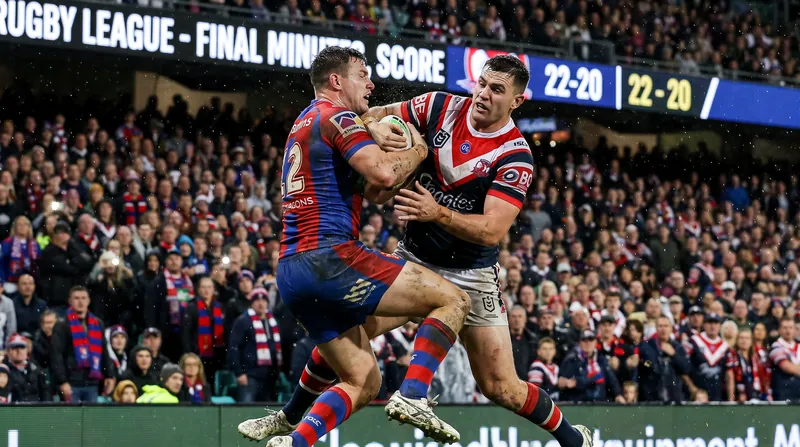
Newcastle Knights and Sydney Roosters Set for Historic 2026 NRL Grand Final Clash
3 sources
Recap
Northampton Saints Open Title Defense With 59-26 Demolition of Newcastle Red Bulls
5 sources

Comments
Every angle. Every day.
Get Sports stories with full source coverage and perspective breakdowns, free every day.